- Between 80,000 and 100,000 boreholes are drilled in South Africa every year, most of them unregistered (The Citizen / Department of Water and Sanitation).
- There are currently zero licensing requirements for borehole drilling companies in South Africa (Groundwater Division of South Africa).
- A pre-drill geophysical survey raises success rates from 50-60% to 85-95% (BoreholeHub / Raeli Hydro Engineering).
- The Consumer Protection Act 68 of 2008 gives you the right to demand re-performance or a price reduction for defective services, and a six-month implied warranty on installed goods.
- A blanket “no refund if no water” clause is legally vulnerable under CPA Section 48, and any exclusion of gross negligence is void.
- SANS 10299:2003 is the binding technical standard for construction, testing, and decommissioning of boreholes; compliance is mandatory under proposed National Water Act regulations (Government Gazette No. 53828, December 2025).
- Court is a last resort: you must first approach the Consumer Goods and Services Ombud (CGSO) or a consumer court under CPA Section 69.
- Non-compliance penalties for suppliers under the CPA reach R1 million or 10% of annual turnover, whichever is greater.
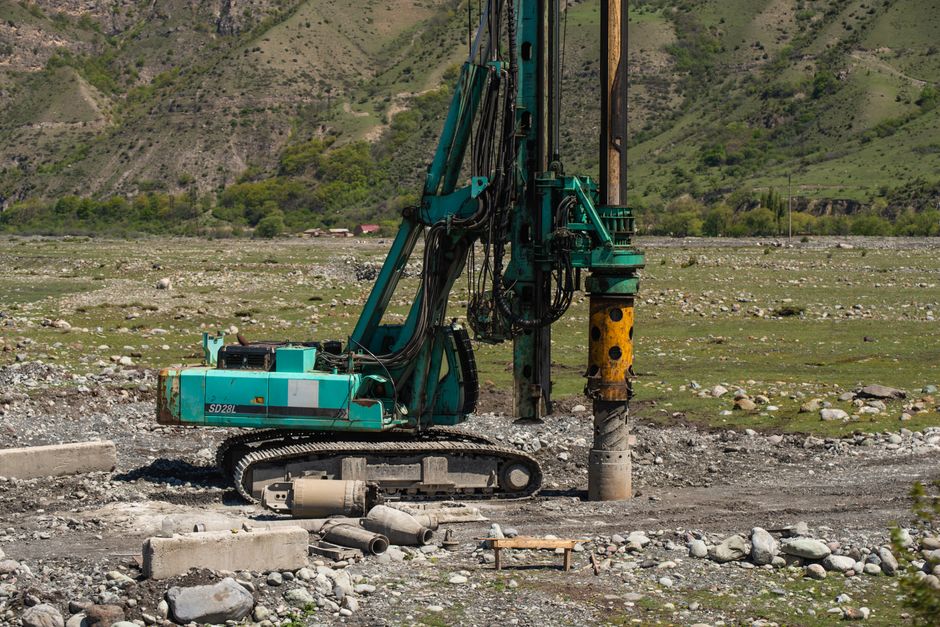
Why Borehole Disputes Are Exploding Across South Africa
The surge in load-shedding and municipal water interruptions has turned borehole drilling into a boom industry. Upwards of 80,000 new boreholes are drilled every year in South Africa, and the National Groundwater Archive held only 282,630 records as of October 2024 (Moneyweb, citing the Department of Water and Sanitation), meaning the vast majority are installed completely off the books. Into that vacuum have rushed contractors with varying levels of skill, honesty, and equipment.
“It’s a knee-jerk reaction, like when solar started here. Everybody is now in the borehole business, not understanding that there are guidelines to borehole drilling or that you have to do a desktop geological assessment before you come and drill.”
The consequences range from a dry hole at R70,000 to a collapsed borehole on the day of installation. And because there are no licensing requirements for drilling companies (Groundwater Division of South Africa), consumers have no quick way to distinguish a reputable contractor from a fly-by-night operator before they sign anything.
This guide sets out, with precision, what the law actually says, what it does not say, and how to pursue a claim when things go wrong.
What the Law Guarantees You: The Consumer Protection Act 68 of 2008
The Consumer Protection Act (CPA), which came into force on 1 April 2011, is your primary legal shield when a borehole contractor fails to deliver (MNS Attorneys). It applies to any individual or household hiring a driller for personal or domestic use. Several sections are directly relevant to borehole disputes.
Section 54: Service quality
CPA Section 54 requires a borehole drilling contractor to perform work in the manner and quality generally expected of a competent professional, to complete it on time, to supply any installed goods free from defects, and to return all goods used in the same condition (De Rebus). This is not a soft obligation; it is a statutory baseline that cannot be contracted away.
Under Section 54(2), if the service is defective you may require the supplier to either remedy the defect (specific performance) or pay a reasonable portion of the price back. The Act does not expressly provide for cancellation or damages for defective services; those remedies live in the common law, which operates alongside the CPA rather than being replaced by it (MHi Attorneys).
Section 56: The six-month implied warranty on installed goods
If the pump, casing, or any other goods installed in your borehole fail within six months of delivery, CPA Section 56 allows you to elect repair, replacement, or a full refund. Critically, the choice of remedy belongs to you, not the supplier (MHi Attorneys). If you choose repair and the supplier fails to fix the problem within three months, you may then insist on replacement or a refund.
Any contractor who tells you their own “7-day” or “no refund after work commences” policy overrides this is simply wrong. CPA Section 56’s implied warranty applies irrespective of the supplier’s refund policy (DML Attorneys).
Sections 48 and 49: Unfair contract terms and the voetstoots trap
Section 48(1) prohibits suppliers from requiring consumers to waive any right or assume any obligation on terms that are unfair, unreasonable, or unjust (Mondaq/Dentons). A blanket “no refund if no water” clause is exactly the kind of term that is legally vulnerable under this section, particularly where no pre-drill survey was conducted and no geological risk was disclosed.
Section 49 adds a procedural requirement: any clause limiting the supplier’s liability must be actively drawn to your attention in plain language before you sign. If it was buried in fine print, it is not enforceable (GoLegal). The CPA goes further still: gross negligence exclusion clauses are blacklisted and void, full stop (Shepstone and Wylie). Courts may also strike or amend unjust terms under Section 52 (Engelsman Magabane Inc).
The voetstoots clause, which allowed sellers to disclaim responsibility for defects by selling “as is,” is equally void under the CPA’s warranty provisions (LegalWise / De Rebus).
“Non-refundable deposits are there for a myth and together with forfeiture clauses, subject to scrutiny by the Courts.”
Section 47: When the contractor simply does not pitch up
If a supplier fails to supply goods or services on an agreed date due to incapacity, Section 47 requires them to refund all amounts paid with prescribed interest and incidental costs, unless the circumstances were genuinely beyond their control and they took reasonable steps to inform you (De Rebus). A contractor who takes your deposit and disappears cannot rely on force majeure unless they can prove both conditions.
Three simultaneous causes of action
In a borehole dispute involving defective goods or substandard services, you can simultaneously pursue a claim under the CPA itself, under common law, and under the manufacturer’s warranty on any installed equipment (LegalX). These are independent causes of action and do not cancel each other out.
Common Law Remedies: What the CPA Does Not Cover
The common law fills the gaps the CPA leaves, particularly for service failures that go beyond defective goods. Under South African contract law, a borehole contractor who fails to drill to the agreed depth commits breach of contract, and the burden of proof lies with the contractor to demonstrate they fulfilled the agreement (JustAnswer, admitted SA attorney).
“I hired a contractor to drill a 150m borehole. After two days, he claims he is finished and there is no water. I asked for proof that he indeed drilled 150m as agreed, but he says his word is his proof and has not provided any documentation.”
The attorney who responded to that query was unequivocal:
“Indeed, the phrase ‘my word is my proof’ is insufficient, particularly for something as quantifiable, technical, and costly as a 150m borehole.”
South African common law provides three main remedies for breach of contract: (1) specific performance, meaning you compel the contractor to re-drill or complete; (2) cancellation with damages, where the breach is material; or (3) damages alone. Before cancelling, you must give the contractor written notice of the breach and a reasonable opportunity to remedy it (Meyer Attorneys).
The purpose of damages in contract law is to restore you to the position you would have been in had the contract been properly performed. This covers both direct losses (damnum emergens) and foreseeable loss of profit (lucrum cessans). Punitive damages are not available in private South African contract claims (Lexology).
The No-Water Problem: What Your Contract Actually Says (and Should Say)
This is where many homeowners get a painful surprise. Under standard borehole contracts, drilling is priced per metre, not per litre of water found. Unless a contractor explicitly warranted water in writing, the absence of water does not automatically excuse you from paying.
“We’ve just drilled to 120 meters and there is very little water and now they’re saying that can’t guarantee water. I am afraid that without a guarantee of water, you have very little recourse. I understand that the service provider provided a verbal guarantee, but since you need to rely on that guarantee, the onus to prove it is on you. That may be possible if you have witnesses who are willing to testify to the guarantee.”
Verbal guarantees of water are actionable but the burden of proof lies entirely with the consumer. The Borehole Water Association of Southern Africa (BWA) Standard Form of Contract addresses this directly: you only have to pay if the driller drills to the depth specified in the contract, unless the driller finds water at a lesser depth and it is agreed in writing to stop drilling (BWA Layperson’s Guide). If your contract does not mirror this structure, you are exposed.
“You search for water first, then drill. That’s their job. If there’s no water, what are you paying for?”
That sentiment is understandable, but legally it is only correct if the contractor either contracted on a “no water, no fee” basis or failed to perform the agreed scope of work. At least one SA contractor, Borehole Africa, does market a genuinely risk-free model where geological analysis comes first and drilling is at the contractor’s risk, with the full process taking 30 to 60 days (Borehole Africa). These arrangements exist, but they are not the market default.
Yield Testing Fraud: The “Farmer’s Test” Problem
Even where water is found, many homeowners discover months later that the promised yield was fabricated. The mechanism is a practice called the “Farmer’s Test” or “blow yield” assessment, which involves dropping the water level to pump depth at maximum capacity, measuring flow for a few hours, and then recommending 50 to 100 percent of that rate as the “tested yield” (GEOSS South Africa).
“You can take out two thirds and leave one third behind for the aquifer, or three quarters, depending on their favourite fraction.”
This is not a yield test. It is a systematic overstatement of sustainable yield. GEOSS South Africa documented that the average recommended pumping rate from a Farmer’s Test was more than double the rate recommended from proper SANS 10299 analysis for the same 25 boreholes in the Western Cape. The legal standard for yield testing is SANS 10299-4:2003, which requires four to six stepped tests at incrementally increasing rates plus 12-hour recovery monitoring. The Department of Water and Sanitation will only authorise groundwater use on the basis of this method (GEOSS South Africa).
Sizing a pump to a blow yield causes over-abstraction and pump burn-out. The “blow yield” is a short-term surge; sustainable yield can only be determined by a proper constant discharge test (Borehole Repairs Johannesburg).
If a contractor sold you a pump installation based on a Farmer’s Test reading and your pump subsequently failed, you have grounds for a defective service claim under CPA Section 54 and potentially a negligence claim at common law.
SANS 10299:2003: The Technical Standard That Governs Everything
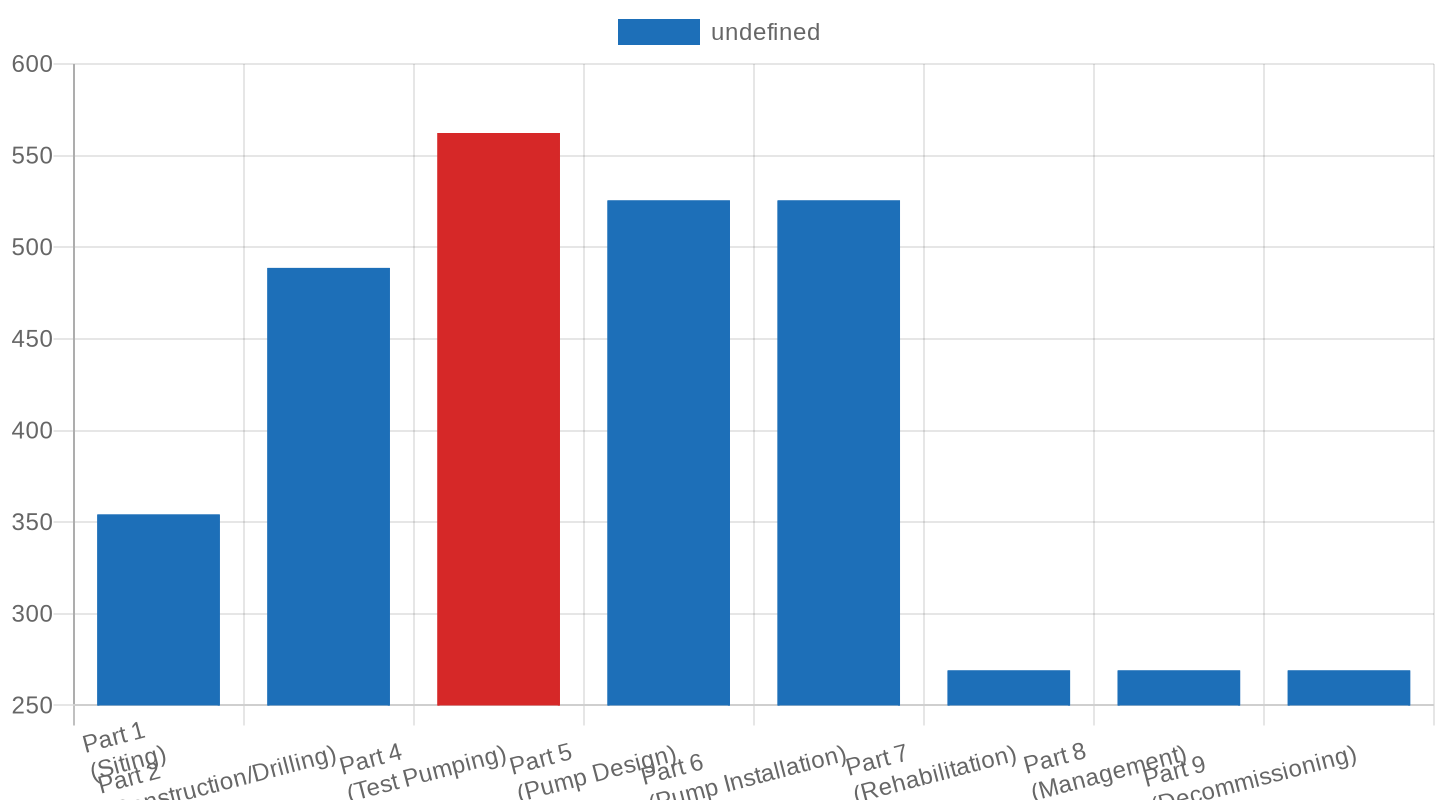
The Borehole Water Association of Southern Africa states that the standard diameter for a domestic borehole is 152mm (six inches) and that the binding technical standard is SANS 10299:2003, covering Development, Maintenance and Management of Groundwater Resources (BWA Layperson’s Guide). The standard runs across nine parts:
| SANS 10299 Part | Subject |
|---|---|
| Part 1 | Siting |
| Part 2 | Design, construction and drilling |
| Part 4 | Test-pumping (legal standard for yield testing) |
| Part 5 | Pump equipment design |
| Part 6 | Pump installation |
| Part 7 | Rehabilitation |
| Part 8 | Management |
| Part 9 | Decommissioning |
Compliance with SANS 10299 is now mandatory under proposed National Water Act regulations published in Government Gazette No. 53828 (December 2025). Dry or unused boreholes must be decommissioned within 60 days of final use in accordance with Part 9 of that standard.
Non-compliance has insurance consequences that many homeowners discover only when they need to claim:
“Many insurance policies may not cover damages caused by non-compliant boreholes. Just like with any structural insurance claim, where we’d look into whether your home was built by a registered builder, the same applies to borehole installations. Homeowners need to make sure the installation was done by a qualified, reputable contractor, and that all the necessary permissions and legislative requirements, such as those outlined in SANS 10299, were met.”
Non-compliance also affects property sales. When selling or buying a property with a borehole, a Certificate of Compliance (COC) stating that the installation conforms to SANS 10299-4:2003 is required for transfer. Banks and insurers require it to attach any value to the borehole (Stark Borehole). Specifically, the law requires a borehole yield test when the borehole delivers 300 litres or more per hour (Stark Borehole). A non-SANS-compliant borehole without a COC is effectively a liability, not an asset, when you sell.
Municipal Bylaws: What Your City Actually Requires Before Anyone Drills
Beyond national law, compliance requirements vary sharply by municipality. Borehole drilling must comply with the National Water Act (Act 36 of 1998), municipal bylaws, and SANS 10299. The IOL has summarised the key municipal variations: the City of Cape Town requires 14-day notification before drilling begins; the City of Johannesburg requires written consent; in Tshwane, eThekwini, and Nelson Mandela Bay, registration of the borehole is compulsory once drilling is complete.
The City of Johannesburg borehole application requires a fee of R1,185 and submission of a title deed, zoning details, motivation memorandum, and drawings. Applications are reviewed by Johannesburg Water, Johannesburg Roads Agency, City Power, the EISD, and a geologist checking for dolomite risk. The City aims to process applications within 28 days (Daily Maverick / Renico Construction). In Tshwane, extraction below 50 kilolitres per day requires no registration; between 50 and 100 kilolitres per day requires registration with the Department of Water and Sanitation; above 100 kilolitres per day requires a full water licence (City of Tshwane Regulations 2022).
Dolomite zones carry additional absolute prohibitions. In Johannesburg, the Dolomite Risk Management By-law 2022 (Section 9) prohibits groundwater abstraction boreholes on dolomite land without written consent of the Dolomite Risk Management Section (Open By-laws South Africa). In Tshwane, a long list of suburbs including Valhalla, Erasmia, Laudium, Wierdapark, Eldoraigne, Lyttelton, Irene, and Rietvalleirand are underlain by dolomite and borehole drilling is prohibited unless certified safe (BWA Registration Requirements).
The consequences of ignoring these requirements are not theoretical. On 15 February 2025, an illegally drilled borehole penetrated the Gautrain tunnel in Killarney, suspending services between Park Station and Rosebank with repair costs estimated at over R1 million. Drillers were arrested (IOL / Cliffe Dekker Hofmeyr).
“The unfortunate incident involving a non-member of the BWA drilling into the Gautrain tunnel has highlighted the consent process, leading to a standstill in the borehole drilling industry in Gauteng. As a consequence of this incident, drillers have been arrested and police officials are demanding to see proof of consent.”
Attorney Cor van Deventer, director at Van Deventer Dowlath and Marx Incorporated, has consistently emphasised the shared nature of liability in these situations:
“Homeowners often don’t know what lies beneath their properties. A reputable driller will check for servitudes, but the owner has to ensure this is done. If drilling damages infrastructure, both parties can face claims.”
Shared Liability: When the Homeowner Is Also at Fault
A point that catches many property owners off guard is that the law places primary obligation on the property owner, not solely the contractor. Van Deventer has explained this plainly:
“The law places the main obligation on the property owner, who must ensure that permission was obtained, the borehole was registered, drilling complied with bylaws, that SANS standards were followed, and the installation does not interfere with servitudes.”
This means that even if your contractor drilled without conducting the required checks, you as the property owner may be jointly liable for any resulting damage. Under private domestic use rules, a household borehole is exempt from a Water Use Licence provided extraction stays below 150,000 litres per year (approximately 416 litres per day) under the National Water Act Schedule 1 (Property Professional / Van Deventer Dowlath and Marx Inc). Commercial or agricultural use above this threshold requires a licence from the Department of Water and Sanitation.
Cost and Loss Comparison: What a Failed Borehole Actually Costs You
| Scenario | Typical Cost Range | Source |
|---|---|---|
| Residential drilling only (no pump, no survey) | R20,000 to R60,000 | Moneyweb / Renico / Enviroleg |
| Full installation, Johannesburg / Pretoria | R60,000 to R120,000 | Moneyweb / Renico / Enviroleg |
| Agricultural borehole | R80,000 to R150,000 | Moneyweb / Renico / Enviroleg |
| Hydrogeological survey (standard) | R5,000 to R10,000 | Enviroleg / Limpopo Boreholes |
| Geophysical survey (per metre) | R500 to R1,500 per metre | Enviroleg |
| Johannesburg borehole application fee | R1,185 | Daily Maverick / Renico Construction |
| Illegal borehole: Gautrain tunnel damage (February 2025) | Over R1,000,000 in repair costs | IOL / Cliffe Dekker Hofmeyr |
| CPA penalty for supplier non-compliance | Up to R1,000,000 or 10% of annual turnover | MNS Attorneys |
Cost-of-ownership comparison: compliant vs non-compliant installation
| Factor | Compliant Installation (SANS 10299 + Survey) | Non-Compliant / No Survey |
|---|---|---|
| Success rate | 85 to 95% | 50 to 60% |
| Upfront survey cost | R5,000 to R10,000 | R0 (but risk absorbed by owner) |
| Expected lifespan | 50 to 80 years (very low maintenance cost first 10 to 15 years) | Unknown; pump burn-out and collapse documented |
| Insurance cover | Maintained (SANS compliant) | Potentially void (FA News) |
| Property sale | COC issued; adds value | No COC possible; liability on transfer |
| Yield testing standard | SANS 10299-4:2003 (stepped, 12-hour recovery) | Farmer’s Test (documented to overstate yield by over 100%) |
| DWS water-use authorisation | Available | Not available without SANS 10299-4 test |
Evidence You Must Collect: Protecting Your Position from Day One
The BWA recommends that the driller provide samples of material from each metre drilled. These chip samples are useful to geohydrologists and experienced contractors as proof of depth and geology (BWA Layperson’s Guide). A driller’s log must give details of the construction including total depth, diameter, casing types, size and length, and types of screens installed at specified depths (BWA Layperson’s Guide).
If a contractor refuses to provide a driller’s log or chip samples, this is not merely a contractual inconvenience: it is a red flag that the work may not have been performed as contracted, and it is the kind of conduct that South African courts treat seriously. WhatsApp messages, as the Western Cape High Court confirmed in Gerritsen Trading CC t/a Gerritsen Drilling SA v Blydskap Holdings [2025] ZAWCHC 400, constitute decisive evidence of both indebtedness and conduct in drilling disputes.
Preserve every communication from the moment you engage a contractor, including quotes, verbal commitments recorded in writing, photographs, videos, and any site visit notes.
Step-by-Step: How to Pursue Your Claim
Below is a practical sequence, anchored to the legal framework above.
- Document everything immediately. Photograph or video the site, the rig, the depth counter, any chip samples retained, and all equipment. Note the date and time of every interaction.
- Send a written notice of breach. Under common law you must give the contractor written notice of the breach and a reasonable opportunity to remedy it before you can cancel or claim damages (Meyer Attorneys). Do this by email with a read receipt, or by registered mail.
- Request the driller’s log and chip samples. This is standard practice and, per the BWA, is your right. A contractor who refuses to provide this documentation is weakening their own legal position.
- Invoke your CPA Section 54 rights. Demand either re-performance to the agreed standard or a reasonable price reduction. Do this in writing, referencing the specific statutory provision.
- For installed goods failures, invoke CPA Section 56. State your elected remedy: repair, replacement, or refund. If you choose repair, note the three-month clock that starts running.
- Approach the Consumer Goods and Services Ombud (CGSO). CPA Section 69 requires that you exhaust alternative dispute resolution before approaching a court. The CGSO handles borehole service disputes and the process is free to consumers.
- Consider the consumer court or magistrate’s court. If the CGSO process does not resolve matters, you may approach the consumer court in your province. For claims under R200,000 the magistrate’s court is a practical option without needing an attorney.
- For larger losses, instruct an attorney. Common law damages, including consequential losses from pump failure or contaminated groundwater, can escalate quickly. An attorney can quantify your claim for both damnum emergens (direct losses) and, where provable, lucrum cessans (foreseeable lost profit on agricultural or commercial water use).
Misleading Advertising: A Separate Weapon
If a contractor marketed a “100% success rate” and then failed to deliver, you have an additional avenue through the Advertising Regulatory Board. In December 2024, a South African consumer lodged exactly this complaint against a Gauteng borehole company after her installation collapsed despite the “100% success rate” promise:
“100% success rate was advertised. This is why I used their services, and they collapsed the borehole, underestimated depth on the survey and are now threatening me as I have asked them to remove ‘100% success rate’ as this is misleading and against the Consumer Protection Act.”
The ARB found in that case that the “100% success rate” claim was unclear and misleading. Misleading advertising is prohibited under the CPA (Section 29) independently of any contract dispute, so a complaint to the ARB does not affect your rights under Sections 54 or 56.
The Pre-Drill Survey: Your Single Most Important Protection
Every legal remedy described above is a remedy for something that has already gone wrong. Prevention is cheaper and more reliable than litigation. A pre-drill geophysical survey costs R5,000 to R10,000 (Enviroleg) and raises success rates from 50-60% to 85-95% (BoreholeHub South Africa). That is a 30 to 35 percentage point swing for an investment that represents a fraction of the total drilling cost.
Contractors who insist on performing their own survey before drilling are, in fact, aligning with best practice:
“We drill boreholes and do water surveys. Unfortunately, clients have to pay the full amount if the survey was not done by us. If it’s us, there’s no way we can drill a dry borehole; if the survey says no water, we don’t attempt at all.”
Be cautious, however, of operators using cheap “groundwater detector” devices as a substitute for a legitimate geophysical survey. As Dr Roger Parsons, hydrogeologist with over 40 years’ experience and recipient of the Ground Water Medal, wrote in the Daily Maverick (April 2026):
“Even with my training, I no longer conduct geophysical surveys myself, the equipment is costly, increasingly complex and requires specialist interpretation. When needed, I subcontract qualified geophysicists. That’s why I’m astonished by the borehole siting reports that land on my desk.”
A proper geophysical survey is performed by a qualified geophysicist using calibrated equipment and produces a written interpretive report. A contractor waving a handheld device and pointing at a spot is not conducting a survey.
Geology Is Not Negligence: Understanding the Honest Dry Hole
One important distinction must be made honestly. Not every dry borehole is the result of contractor negligence or fraud. In Karoo formations, water is only found if the borehole intersects a horizontal fracture; no fracture intersection means a genuinely dry hole even after drilling to the full contracted depth (Water Research Commission Report). The majority of boreholes drilled in Karoo sediments have very low yields below 3.6 cubic metres per hour (WRC Report No. 487-1-98). A Karoo borehole pumped at 8.3 cubic metres per hour for eight hours per day will fail in less than six years; sustainable pumping rates should not exceed 1.4 cubic metres per hour (WRC Report).
This geological reality is precisely why the pre-drill survey matters and why the BWA’s standard contract form requires the driller to prove they reached the agreed depth, not merely claim it. If a contractor drilled honestly to the agreed depth, conducted a proper SANS 10299-4 yield test, and disclosed the geological risk in advance, the dry-hole cost is a shared geological risk. If the contractor skipped the survey, inflated the yield, or cannot prove the agreed depth, the loss belongs to them.
What to Look for in a Contract Before You Sign
- Is the drilling depth specified in metres, not as an estimate or a range?
- Is payment conditional on reaching the specified depth, as the BWA Standard Form requires?
- Is there a clause requiring the driller to provide chip samples from each metre drilled and a written driller’s log?
- Is yield testing specified as SANS 10299-4:2003 compliant, with a written report?
- Does the contractor commit to obtaining required municipal consents (Cape Town: 14-day notice; Johannesburg: written consent) and SANS 10299 compliance?
- Are any liability-limitation clauses drawn to your attention explicitly and in plain language before signing, as required by CPA Section 49?
- Is the contractor registered with the Borehole Water Association of Southern Africa?
A reputable contractor will have straightforward answers to all of these questions. One who evades them is giving you useful information.
Find a vetted borehole driller before disputes start
Every installer we recommend meets industry standards and legal compliance.
Vetted local installers · honest advice first