- Drilling-only costs R20,000 to R60,000-plus in 2026; a complete turnkey system runs R60,000 to R120,000.
- Standard soil drilling rates are R300 to R500 per metre; hard rock (granite, dolomite) costs R1,000 to R1,500 per metre.
- The Borehole Water Association of Southern Africa (BWA) is the primary recognised industry body. Verify membership by emailing info@bwa.co.za before you sign anything.
- No deposit above 20 to 30 percent is industry standard. Any contractor demanding 50 percent or more upfront is a red flag.
- There is no statutory Borehole Compliance Certificate in South Africa. Anyone selling you one is running a scam.
- The single most protective contract clause is a milestone-based payment schedule tied to measurable, on-site completions.
- You bear the cost risk if the borehole is dry. A professional geophysical survey reduces that risk substantially.
South Africa’s municipal water crisis has created a gold rush for borehole drillers. For every legitimate, experienced contractor submitting data to the National Groundwater Archive and drilling to SANS 10299-2 standards, there is at least one operator willing to take your deposit and disappear. The Special Investigating Unit (SIU) documented a R100 million borehole fraud involving the Lepelle Northern Water Board in Limpopo alone. That was a government-scale theft. At the residential level, the scams are smaller but proportionally just as devastating.
This article gives you the specific numbers, the verified warning signs, and the one contract clause that experienced buyers use to protect themselves.
What a borehole actually costs in 2026
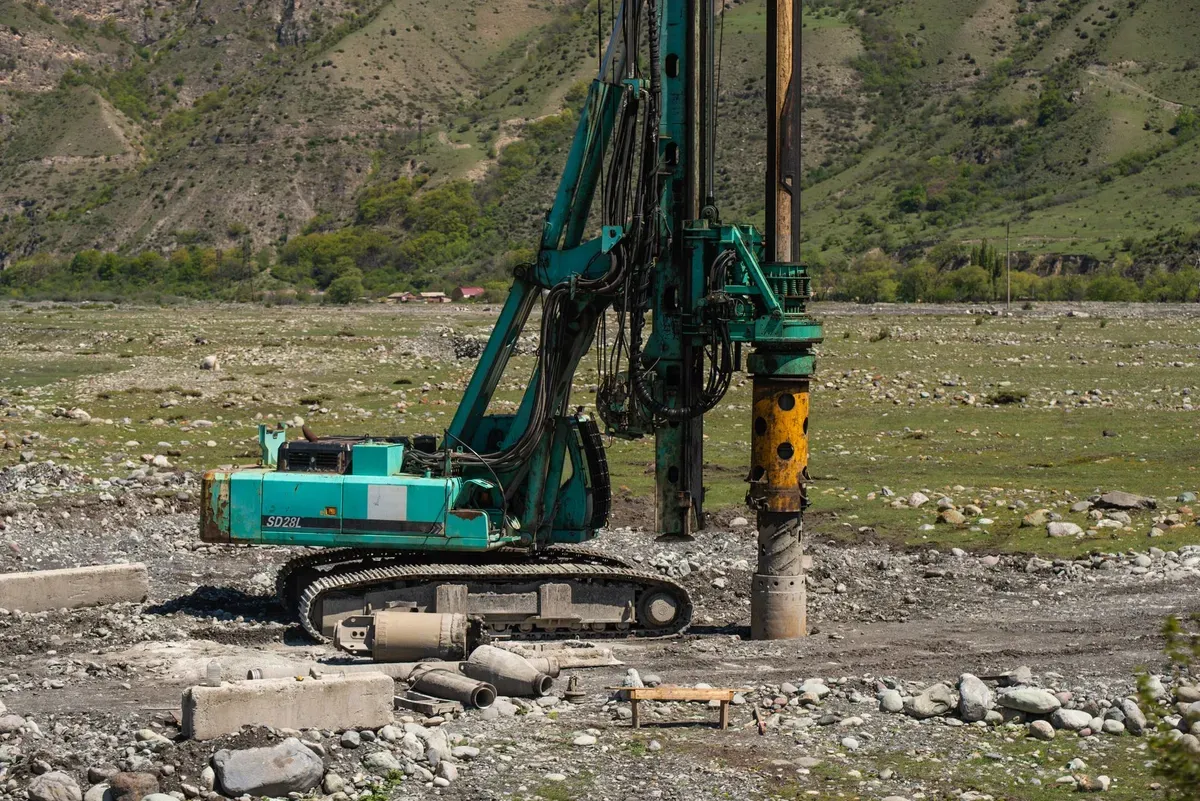
Before you can spot an inflated or suspiciously low quote, you need reliable benchmarks. Here is what the market looks like in 2026.
| Item | Cost range (2026) | Source |
|---|---|---|
| Drilling, standard soil | R300 to R500 per metre | boreholehub.co.za, 2026 market estimates |
| Drilling, hard rock (granite, dolomite) | R1,000 to R1,500 per metre | boreholeguide.co.za, 2026 market estimates |
| Solid steel casing | R450 to R600 per metre | 2026 market estimates |
| Drilling only (30m borehole, 12m steel casing) | From R13,000 | BoreholeHub |
| Drilling and casing total (hole only) | R20,000 to R60,000-plus | 2026 market estimates |
| Complete turnkey system (drilling, pump, tank, filtration) | R60,000 to R120,000 | 2026 market estimates |
| Yield test and certification | R1,650 to R3,300 | 2026 market estimates |
| Professional 4-hour yield test | R1,500 to R10,000 | geoss.co.za |
| Comprehensive water chemistry and microbiology test | R2,300 to R2,850 | h2oguru.co.za |
| Annual maintenance plan (basic) | R1,000 to R1,500 per year | boreholeguide.co.za |
| Borehole cleaning and flushing (every 3 to 5 years) | R3,000 to R10,000 | boreholeguide.co.za |
| Submersible pump replacement (after 10 to 15 years) | Separate cost; budget accordingly | boreholesure-pumps.co.za |
One homeowner’s real breakdown illustrates exactly how these numbers play out in practice:
“I paid around 55k for 50m – 60m drilling, with casing. Borehole pump was around 30k. Filtration system around 27k. My water was too sulphuric and irony.”
Note that his filtration system cost R27,000 on its own, a figure that surprises many buyers who budget only for the hole and the pump. Water chemistry problems are common and expensive to fix. The bwa.co.za drilling guide specifies that contractors often bill at R600 to R900 per metre depending on depth and formation, so the range in the table above represents realistic minimums rather than worst-case figures.
Another owner who negotiated carefully still found a cost that many do not anticipate:
“I went for the company that charged 320 per meter for drilling and 600 per meter for casing and no setup fee… Drilling started and solid rock was reached at 21 meters so 21 meters of casing were installed = R12 600. Total depth 45 meters = R14 400. The drilling took about 5 hours to complete. The drilling in total cost R27000. Here is the hidden cost: All the drill cuttings needs to be removed and cleaned. I did this myself but you require help and a trailer…”
Drill cuttings removal, site rehabilitation, and connection to your existing plumbing rarely appear in the headline quote. Always ask for a fully itemised written quotation that includes these items.
The cost-of-ownership comparison
A borehole is not a once-off purchase. Below is a realistic cost-of-ownership view over 15 years for a typical suburban household in Gauteng, compared against the ongoing municipal water bill that motivated the investment.
| Cost item | Borehole (15-year total) |
|---|---|
| Initial drilling and casing (mid-range) | R40,000 |
| Pump and installation | R15,000 to R30,000 |
| Filtration system (depends on water chemistry) | R10,000 to R30,000 |
| Annual maintenance (R1,250 average x 15 years) | R18,750 |
| Borehole cleaning (3 x over 15 years at R6,500 average) | R19,500 |
| Pump replacement at year 12 to 15 (boreholesure-pumps.co.za: 10 to 15 year lifespan) | R15,000 to R25,000 |
| Electricity (1.25 kW pump, typical daily use, at current tariffs) | Variable, see note below |
| Indicative 15-year total (mid-range, no dry hole) | R118,250 to R163,250 |
On electricity: one owner calculated his pump running costs precisely:
“E.g. my borehole pump has a 1.25 KW/h rating and I pay R1.83 per Kw/h. So my pump costs R2.29 per hour to run.”
At R2.29 per hour, running the pump for two hours daily costs roughly R1,670 per year. Over 15 years that is approximately R25,000, assuming tariffs stay flat (they will not, so budget higher). One experienced owner found a way to reduce this substantially:
“I went with a higher pressure, lower delivery borehole pump so that a smaller motor could be used. This allows me to power the 0.75kW pump off my home solar during the day. It takes 5 hours to fill a 5000 litre tank but I’m in no hurry while the sun is shining… gives the water more time to seep through the rock to keep the hole filled so there is less risk of running dry. I’ve saved around R50K in water in two years so the break even point… is very short (around 4 years for me).”
Another owner who invested more heavily upfront reached a similar conclusion on the return:
“Total cost was around R100K but I drilled nearly 100 meters deep even though the water table is around 40 meters deep in case my neighbours started drilling boreholes… I could have used cheaper components and saved R30K in the short term… I’ve saved around R50K in water in two years so the break even point on a borehole is very short (around 4 years for me).”
The ROI picture is genuinely strong for productive boreholes with good yield. The problem is that not every borehole is productive, and a poor drilling experience can mean you pay for all of the above and receive none of the benefit.
The fundamental risk no contractor can remove
The most important fact about borehole drilling in South Africa is one that unscrupulous salespeople actively obscure. The Borehole Water Association of Southern Africa (BWA) at bwa.co.za states it plainly:
“The drilling contractor can never guarantee that he will strike water, and therefore it is the client who is at risk for cost of the borehole, regardless of whether it is wet or dry. Insist that the driller provide a record of the exact depth at which the most promising water fissure is located.”
This is not small print. It is the central commercial reality of borehole drilling. Any contractor who tells you he guarantees water is either misstating the technical facts or setting you up for a dispute. One homeowner learned this the hard way by watching his neighbours:
“4 of the boreholes near me came back dry. I’d have lost R60k. Went with a tank instead.”
A professional hydrogeological siting survey reduces, but does not eliminate, this risk. As one forum contributor noted:
“A reputable hydrologist to find a site with more than 90% probability is R20k. Most will balk at this until they drill a dry hole. You pay for the drilling whether you hit water or not…”
The R20,000 survey cost is painful upfront. It is considerably less painful than paying R40,000 to R60,000 for a dry hole. The National Groundwater Archive (NGA), maintained by the Department of Water and Sanitation (dws.gov.za), holds drilling data on yields, depths, and local geology. A legitimate hydrogeologist or driller should be referencing this database when advising you on siting.
The 7 red flags: how to spot a borehole scam before you sign

Red flag 1: No BWA membership or refusal to verify
The Borehole Water Association of Southern Africa (BWA) is the primary recognised industry body for legitimate drillers in South Africa. The BWA itself has said: “Membership of the Association shows that the driller you are dealing with is committed to the long-term viability and professionalism of the industry.” Any contractor who is evasive about their membership status is a concern. Verify membership directly: email the BWA Administrator at info@bwa.co.za and request the current membership list. Do not accept a photocopy of a certificate as sole proof, because certificates can be fabricated.
Red flag 2: A guarantee of water
As established above, no ethical driller guarantees water. A guarantee of water is either a sales tactic or evidence that the contractor does not understand the hydrogeology. If the guarantee comes with conditions buried in the contract (such as a minimum depth clause that they will never actually reach), it is not a guarantee at all.
Red flag 3: A large upfront deposit demand
This is the most common mechanism for outright theft. Two complaint reports on Snupit SA illustrate what happens:
“Paid deposit in June 2024. I was assured by salesperson… that work will commence shortly thereafter. After an agonising 2-month period, Jed arrived and drilled about 20m. It is now November and they have not come back to continue the work. The manager Chris is full of excuses and empty promises.”
“Worse contractors one can work with… I paid a deposit of R35,000 beginning of October. The job was supposed to be for the 12/15 Oct. Now he is not answering my calls. I have asked for my money back no response.”
Industry-standard deposit is 20 to 30 percent of the total quoted price. That deposit covers mobilisation of the drilling rig and initial materials. Any contractor requesting 50 percent or more before a single metre is drilled should be declined.
Red flag 4: No itemised, written quotation
A legitimate driller can and will provide a written quotation that lists: drilling cost per metre (with a specified rate for when hard rock is struck), casing type and cost per metre, setup or mobilisation fee, yield test cost, site cleanup, and any pump or filtration work as separate line items. A verbal quote, or a single lump-sum figure with no breakdown, makes it impossible to verify what you are paying for or to dispute overcharges later.
Red flag 5: No reference to SANS standards
Borehole construction and casing should adhere to SANS 10299-2, and yield testing to SANS 10299-4:2003. These are the standards specified by bwa.co.za. A contractor who has never heard of SANS 10299-2 has almost certainly never met it either. Ask specifically: which construction standard will you drill to? The answer should be immediate and confident.
Red flag 6: Selling you a statutory Borehole Compliance Certificate
According to hbgschindlers.com, there is no statutory Borehole Compliance Certificate in South Africa. The only electrical document required at a property transfer is an Electrical Certificate of Compliance (CoC) for the pump’s wiring, which is a standard electrical CoC issued by a registered electrician, not a specialist borehole document. Anyone charging you for a bespoke Borehole CoC is charging you for a document that has no legal standing. This scam often surfaces at property sale time, as one compliance expert noted: “The call comes the week the client sells the house: the transfer attorney ‘needs the borehole compliance certificate’ before lodgement.”
Red flag 7: No mention of municipal registration requirements
In Johannesburg, drilling requires Application Form 10 (Consent Borehole) and Form A (Application Information Borehole), as confirmed by hbgschindlers.com. In Cape Town, you must register at least 14 days before drilling by emailing water@capetown.gov.za with your property’s Erf number (capetown.gov.za). A legitimate driller operating in these metros will know this and will either handle the registration themselves or tell you clearly that it is your responsibility. A contractor who dismisses municipal registration as unnecessary is either ignorant of the law or indifferent to your legal exposure.
The contract clause that protects you from abandonment and poor workmanship
The single most effective protective measure is a milestone-based payment schedule written into the contract before any work begins. Here is what it must contain and why each element matters.
The clause structure:
Payment shall be made in four tranches, each conditional on written sign-off by the client following physical verification of the completed milestone on site:
- Tranche 1 (20 to 30 percent of total): On mobilisation of the drilling rig to site, confirmed by client inspection.
- Tranche 2 (30 percent): On completion of drilling to the agreed target depth, confirmed by client inspection and written drilling log showing depth, geological formations encountered, and depth of water fissures located. The driller must provide this log; bwa.co.za specifically advises homeowners to insist on a record of the exact depth at which the most promising water fissure is located.
- Tranche 3 (20 percent): On completion of casing installation and development (bailing or air-lifting to clear drilling fluids and cuttings), confirmed by client inspection.
- Tranche 4 (20 to 30 percent): On delivery of the completed yield test report, conducted to SANS 10299-4:2003, and sign-off that the site has been cleared of all cuttings and equipment.
The contract must also include: a fixed per-metre rate for standard drilling, a separate agreed per-metre rate if hard rock is encountered (so you are not ambushed by a sudden rate increase), a definition of what constitutes a completed milestone, a timeline with named milestone dates and a penalty or contract-exit clause if those dates are missed by more than a specified number of days, and a clear dispute resolution process referencing the Consumer Protection Act.
Why does this work? Because the pattern in every abandonment complaint is the same: the contractor takes a large upfront payment, performs partial or no work, and then becomes unreachable. A milestone-based payment structure means that at every stage, the contractor only holds the money for work already physically verified. If they walk away after Tranche 1, you have lost only 20 to 30 percent of the total cost, not everything. That is still painful, but it is recoverable. Losing R35,000 upfront on a job that never starts, as happened to the Snupit SA complainant above, is a fundamentally different outcome.
Municipal registration: what you must do before drilling starts
Getting this wrong creates legal liability that can affect a future property sale. The requirements vary by municipality.
In the City of Johannesburg: submit Application Form 10 (Consent Borehole) and Form A (Application Information Borehole) before drilling commences (hbgschindlers.com). In the City of Cape Town: register at least 14 days before sinking the borehole by emailing water@capetown.gov.za with the property’s Erf number (capetown.gov.za). Other municipalities have their own requirements; contact your local water services authority and get written confirmation of what is needed, because verbal clearance is not useful evidence if a dispute arises later.
Water quality: the cost most buyers underestimate
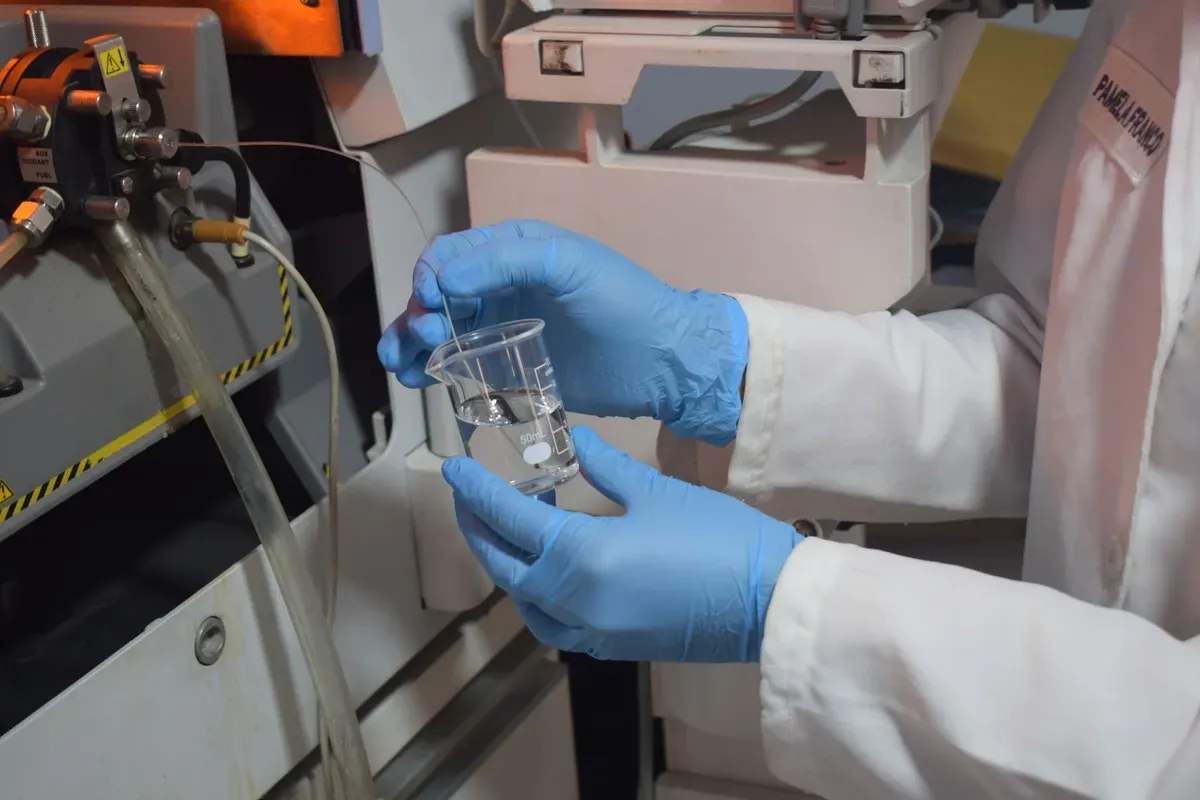
Striking water is not the same as having usable water. Several common South African borehole problems require costly treatment systems before the water is safe or practical for household use.
One owner described the warning signs of corrosive, acidic water:
“very bad taste, small green lines running where a tap drips… It will eat your geyser quickly as well, and replacing pipes in your walls is an expensive problem to create… Ph is just easy to measure with a pool testing kit – so do that first”
Shallow boreholes carry a specific risk that many buyers overlook entirely:
“Our borehole is only 30 meters, and it actually runs dry fairly often. I’m guessing there must be a lot of other houses on the same vein as us. There is e-coli in the borehole water from sewage contamination… that’s why we had the UV filtration system installed.”
E. coli from sewage contamination is a real risk in urban and peri-urban areas, particularly where ageing municipal infrastructure allows cross-contamination. A comprehensive chemistry and microbiology water test costs R2,300 to R2,850 (h2oguru.co.za) and should be conducted before you connect borehole water to any household plumbing, and periodically thereafter.
Correcting poor water chemistry adds meaningfully to total cost. One owner quantified it specifically:
“To increase relatively clean borehole water with a Ph of 6.6 to about 7.4 requires at least a 1000l settling tank, about 750kg of lime rocks (Aqua Stab)… This alone will cost about R6500 with piping and DIY labour… if your Ph is low – 5.5 or so – you have to go chemical.”
Budget for filtration before you commit, not after you are already dealing with sulphuric or iron-heavy water and have no choice but to spend.
How to verify your contractor before you sign
The process is short and takes less than one working day:
- Ask the contractor for their BWA membership number.
- Email info@bwa.co.za and ask the BWA Administrator to confirm that the contractor is on the current membership list.
- Request three recent local references (within 10 km of your property if possible) and call at least two of them. Ask specifically: did the contractor finish on time, did they leave the site clean, and would you use them again?
- Cross-check the contractor’s business registration against CIPC records. A registered company is not automatically legitimate, but an unregistered one is a significant additional risk.
- Ask whether they submit drilling data to the National Groundwater Archive (NGA) at dws.gov.za. Legitimate operators do. Fly-by-night operations do not.
Find a vetted borehole contractor before you drill
The pre-drilling checklist
- Obtain a geophysical or hydrogeological siting survey, especially if neighbours have had dry holes.
- Submit all required municipal registration forms before drilling starts and retain copies.
- Obtain a fully itemised written quotation listing separate rates for standard soil and hard rock.
- Verify BWA membership by emailing info@bwa.co.za directly.
- Insert a milestone-based payment schedule into the contract. Do not accept standard terms that require large upfront payment.
- Ensure the contract references SANS 10299-2 for construction and SANS 10299-4:2003 for yield testing.
- Budget for a comprehensive water test (R2,300 to R2,850) and potential filtration costs before the project starts, not after.
- Confirm that any pump wiring will receive a proper Electrical Certificate of Compliance from a registered electrician. That is the only CoC you are legally required to have.
Getting a borehole drilled in South Africa is a legitimate and often financially sound investment in water security. The risks are real, but they are manageable when you know what to check, what to pay, and what to put in writing before anyone turns on a drill. The homeowners who regret their boreholes almost universally share one thing in common: they signed a contract that handed over control and money before any meaningful work had been done.
If you are ready to move forward and want to speak with a contractor who has been independently vetted, Talk to a vetted installer.
Get started
Find a vetted borehole contractor before you drill
Vetted local installers · honest advice first
Photo: Павел Хлыстунов / Pexels