Key points
- A feasibility report has four distinct phases: desktop study, geophysical survey, yield test, and water quality analysis. Each has its own cost and can be done independently.
- The “blown yield” figure a driller quotes on the day is not the same as safe yield. Safe yield is typically 60 to 70 percent of maximum flow (Provided Research Findings).
- Less than 500 litres per day is generally considered a dry hole for residential purposes.
- A standard household needs 900 to 1,000 litres per day. A borehole yielding 500 to 1,000 L/hr is the bare minimum for residential viability and requires a trickle-feed buffer tank setup.
- Water quality results must be read against SANS 241. Iron and manganese are the two contaminants most likely to destroy appliances and inflate your treatment costs after installation.
- A drilling quote is not a project budget. A realistic all-in budget for a metropolitan installation in 2026 runs from R98,200 to R169,000 (boreholehub.co.za).
- The national standard governing yield testing is SANS 10299-4:2003. A report that does not reference this standard has not been done properly.
Why most people read these reports wrong
A borehole feasibility report lands in your inbox as a PDF full of numbers, geological cross-sections, and water chemistry tables. Most buyers do one of two things: they skip straight to the yield figure and feel relieved, or they feel overwhelmed and hand the whole thing to the drilling contractor to interpret. Both approaches cost money.
The contractor who drilled the hole has a financial interest in you proceeding. A good feasibility report is designed to give you leverage, not just a green light. This guide walks through every section in the order it appears, explains what each number is actually measuring, and tells you the thresholds that separate a viable project from an expensive disappointment.
The South African groundwater context matters here. The Water Research Commission estimates the country’s renewable groundwater capacity at roughly 10 million cubic metres annually, dropping to 7 million or lower during severe droughts. That capacity is not evenly distributed. Geology varies enormously between, say, the fractured quartzite of the Cape Fold Belt, the dolomite of Gauteng’s West Rand, and the sandy coastal aquifers of KwaZulu-Natal. A report written for your stand, not a generic region, is the only one worth paying for.
“There is a reason why you need a water site survey first for borehole drilling, you can’t just pick a spot and drill with an expectation to hit water. My neighbour diagonally behind us has a borehole with a yield of 500 litres per day apparently, neighbour next to us has a well, neighbour two doors up went down more than 90 metres and found absolutely nothing.”
Phase one: the desktop study
The first deliverable in any credible feasibility process is a desktop study. This costs between R2,000 and R5,000 (Enviroleg) and involves no physical site work. The hydrogeologist reviews regional geological maps, aerial photography, existing borehole records in the National Groundwater Archive, and rainfall data to identify whether groundwater is likely to exist at your location and at what depth.
What you should see in this section of the report:
- The geological formation underlying your property (granite, dolerite, sandstone, alluvium, dolomite, etc.).
- The historical yield range for boreholes within a two to five kilometre radius.
- Any known contamination risks: landfills, petrol stations, agricultural chemical use, or sewer infrastructure nearby.
- A probability of success rating, sometimes expressed as a percentage.
A desktop study that gives you a yield probability of 60 percent is useful. One that gives you 95 percent without explaining the geology behind that number is not. Ask how the probability was derived.
One number to look for in this section is the recommended drilling depth. In Gauteng’s dolomitic areas, productive fractures are commonly found between 40 and 80 metres. In the Western Cape’s Table Mountain Group sandstone, you may need to go 80 to 120 metres. The desktop study should give you a target depth range, which directly determines your drilling budget.
Phase two: the geophysical survey and siting
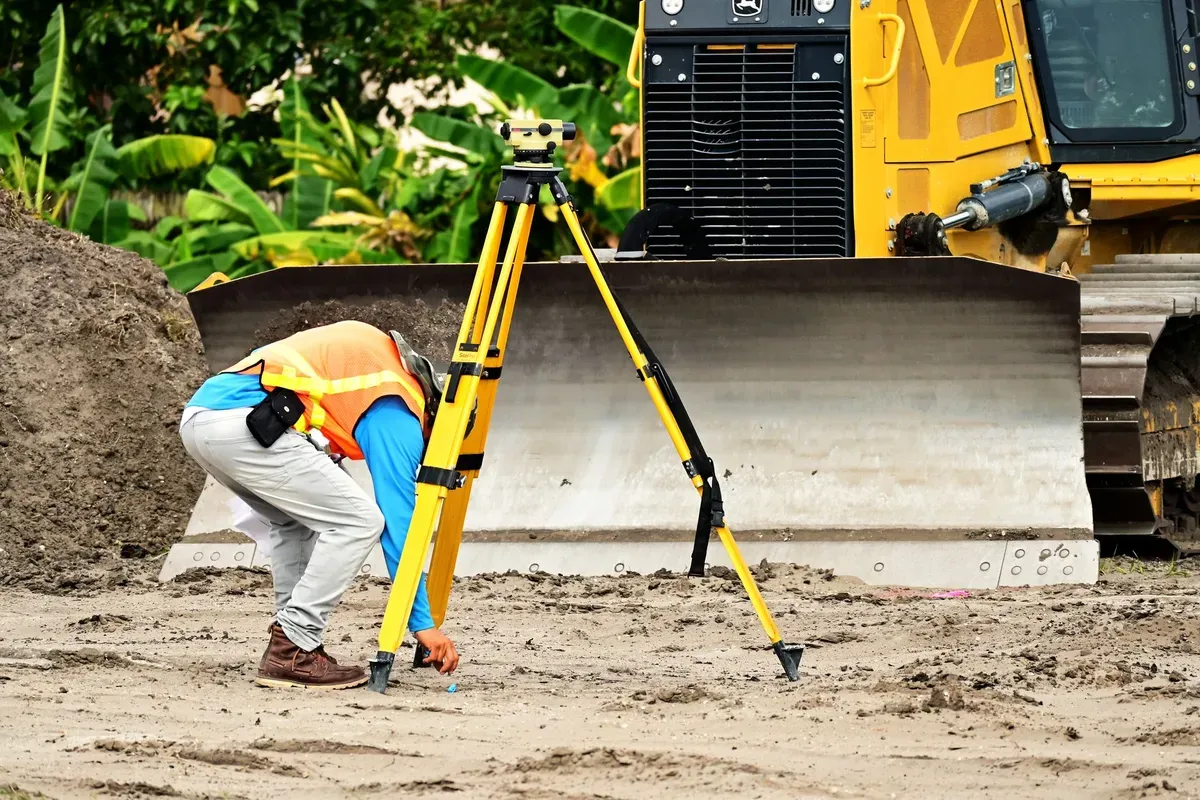
Once the desktop study identifies a promising area, physical siting is done on your property. This involves one or more geophysical methods: electrical resistivity tomography (ERT), magnetic surveys, or seismic refraction. The goal is to identify the precise location most likely to intersect a productive fracture or aquifer.
Physical and geophysical siting costs between R3,500 and R10,000 (Aqua Precision / Enviroleg). A proper geophysical survey in 2026 can range from R3,000 to R28,000 depending on the methods used and the complexity of the geology (2026 industry data). The higher end of that range is appropriate for dolomitic ground or large commercial sites where a dry hole would be catastrophic.
“The article did not mention the cost of finding a drill site. A reputable hydrologist to find a site with more than 90 percent probability is R20k. Most will balk at this until they drill a dry hole. You pay for the drilling whether you hit water or not. My neighbor paid for 3 dry holes, because he believes in his mom’s uncle’s cousin that throws a hat.”
This is one of the most under-appreciated costs in the entire project. The siting report should contain the specific recommended drill point (GPS coordinates), the recommended drilling direction if the target is an inclined fracture, and the interpreted depth to the aquifer. If the report just says “drill here” with no supporting geophysical data, you have paid for a guess.
What the siting report will not tell you is the actual yield. That only comes from drilling and testing. Any contractor who quotes a yield before the hole is drilled is estimating from regional data at best, and exaggerating at worst.
Phase three: reading the yield test results
This is the section of the feasibility report that most buyers misread, and where the most money is lost.
After drilling, the borehole must be yield-tested according to SANS 10299-4:2003. This is the national standard mandated for borehole test-pumping in South Africa. The test produces the data required to calculate safe yield, static and dynamic water levels, and transmissivity. It also produces the Certificate of Compliance (COC) that some municipalities require before you can connect to your reticulation.
Yield testing costs between R1,500 and R8,000 (BoreholeHub), with the Gauteng and Tshwane market currently pricing this service at R1,500 to R10,000 (Market data) depending on test duration. A standard test runs for four to eight hours. An extended constant-rate test runs for 24 to 72 hours and is far more informative for anyone planning full household reliance.
The four numbers that matter
Static water level: The depth to water before any pumping begins. This tells you how deep the pump must be installed and gives you an indication of how hard the pump motor will work. A static level of 45 metres means the pump is lifting water 45 metres before it even reaches the surface.
Dynamic water level: The depth to water during pumping at a specified rate. The difference between static and dynamic level is drawdown. Large drawdown at a modest pumping rate is a warning sign that the aquifer is not very transmissive and the borehole may not sustain domestic demand over an extended dry period.
“The water table level after drilling is about 45 metres deep but I installed the pump at 93 metres deep so I have 48 metres of water table level to play with in case there are any major dry spells or my neighbours decide to go crazy with water usage. In the last month alone three of my neighbours have drilled boreholes.”
Maximum yield (blown yield): The peak flow rate recorded during the air-lift or pump test, usually expressed in litres per hour or litres per second. This is the number drilling contractors most commonly quote in their reports, and it is the number most likely to mislead you.
Safe yield: The sustained, long-term extraction rate the aquifer can support without degradation. Safe yield is calculated at 60 to 70 percent of the maximum flow (Provided Research Findings). A borehole with a maximum yield of 5,000 L/hr has a safe yield of 3,000 to 3,500 L/hr. Any system designed to pump at maximum yield is a system designed to damage the aquifer over time.
“We often joke that drilling contractors find it easier to get paid if they report a higher blown yield rather than saying there is little or no water. For example, we had a case where a driller reported a blown yield of around 30,000 litres per hour. However, after completing an extended constant drawdown test, we found that the borehole yielded 30,000 litres per hour for about eight hours, and then dropped off completely.”
This is not a hypothetical risk. The scenario above, a borehole that produces strongly for a few hours and then fails, would destroy a household or agricultural system that was sized on the initial figure.
Yield thresholds: what the numbers mean in practice
Use these benchmarks when reading the yield section of your report:
- Less than 500 litres per day: Generally considered a dry hole for residential purposes. The cost of pumping infrastructure cannot be justified by the water recovered.
- 500 to 1,000 L/hr: Baseline residential viability. Requires a trickle-feed setup into buffer tanks, and daily household demand of 900 to 1,000 litres means the borehole is running near its limit. No irrigation margin.
- 2,000 to 5,000 L/hr: Suitable for large suburban homes or smallholding irrigation. This is the range where full household replacement of municipal water becomes comfortable.
- Greater than 10,000 L/hr: Required for commercial agriculture or large estates (Provided Research Findings).
Remember that these are safe yield figures. If the report quotes 5,000 L/hr as a maximum, the safe yield is 3,000 to 3,500 L/hr. Plan your pump specification and tank sizing against the safe yield, not the maximum.
“Where my house is, used to be a marsh. So far I’ve been pumping 2kl or more a day into a 2.2kl jojo tank. It yields between 500 to 700 litres per hour. Somehow this varies, but there are many factors that can influence that. The wellpoint pump is a 450w and it sprays the water into the tank. I get rid of all sediment.”
Phase four: the water quality report
Yield tells you how much water is there. Quality tells you what it will cost you to use it. These are equally important, and a feasibility report that contains only yield data is incomplete.
Water quality laboratory testing costs between R1,000 and R3,000 (Enviroleg). Basic testing covering pH, total dissolved solids (TDS), and bacteria starts at around R850 (Research Findings). A full SANS 241 profile, which is what you need before using the water for household consumption, costs between R1,450 and R2,850 (Research Findings).
SANS 241 is the South African National Standard for drinking water quality. The feasibility report should present results in a table that lists each parameter alongside the SANS 241 limit. Parameters to focus on:
- Iron (Fe): Limit is 0.2 mg/L. Borehole water in large parts of Gauteng, Limpopo, and Mpumalanga commonly tests two to ten times above this. High iron stains laundry, blocks irrigation nozzles, and destroys gas geysers and heat pumps.
- Manganese (Mn): Limit is 0.1 mg/L. Often found alongside iron. Even at levels that technically pass SANS 241, manganese causes scale buildup that shortens appliance lifespans.
- Nitrates: Limit is 11 mg/L. Elevated nitrates usually indicate agricultural or septic contamination and are a health concern, especially for infants.
- E. coli and total coliform: Must be zero in a compliant drinking water supply. Presence indicates surface water contamination, usually through a poorly sealed borehole collar.
- Electrical conductivity (EC) and TDS: High EC means dissolved salts. Water above 500 microsiemens per centimetre starts to taste brackish and will affect crop yields in irrigation applications.
“Have it tested for minerals as well as contamination. Should be about R1,000 for both. Iron problems raise its ugly head much later. Even if it is inside the parameter I recommend that you put a filter in place. My gas geyser bombed out because of this. And a 1 micron filter system is a must.”
The treatment section of the feasibility report should match the identified quality problems to specific treatment solutions and their costs. If it does not, commission that analysis separately before finalising your project budget.
When treatment costs kill the business case
Water quality problems are not always solvable at a sensible cost. Two scenarios that frequently turn a viable yield into an unviable project:
High iron and manganese requiring filtration: A basic 8×44 FRP filter vessel with manual backwash and Birm media costs around R4,000 (Research Findings). That is the entry-level solution for moderate iron contamination. Severe cases require multi-stage filtration, UV sterilisation costing R3,000 to R8,000 (Research Findings), and ongoing media replacement. The total treatment system can push R100,000 and beyond.
High TDS or brackish water requiring reverse osmosis: RO systems capable of 2,000 litres per day in high-salinity applications cost between R92,000 and R120,000 (Research Findings). More critically, RO wastes up to 80 percent of the water it processes (Research Findings). A homeowner in the Western Cape discovered this directly:
“We had our borehole water tested. It will cost us R60,000 for units to filter the water (reverse osmosis), but the worst part is that only 200 litres out of 1,000 litres filtered will be usable.”
If your feasibility report shows TDS above 1,000 mg/L and the report’s recommendation is a full RO system, run the numbers carefully against your yield. If your borehole’s safe yield is 3,000 L/hr but 80 percent is wasted through RO, your effective usable yield is closer to 600 L/hr. That changes the entire project economics.
The casing specification: what the report should specify
The feasibility report or drilling specification should state whether steel or PVC casing is recommended and for how many metres from the surface. This is a cost item that is frequently omitted from initial quotations and catches buyers by surprise.
Steel casing costs between R450 and R570 per metre (madimaboreholeandsolargeysers.co.za). In rocky formations where the competent rock begins at shallow depth, you may only need three to five metres of casing, a manageable additional cost. In coastal areas with thick sand profiles, PVC casing may be compulsory for the full depth of the soft formation, which can run to 40 or 50 metres.
Drilling in softer soils such as those found in the Free State and Limpopo costs R300 to R350 per metre (madimaboreholeandsolargeysers.co.za). Add casing requirements on top of the per-metre drilling rate and the cost of a 60 metre hole can vary by R30,000 to R50,000 depending on whether you are in competent rock at 10 metres or sand all the way down.
The cost table: what a complete feasibility process costs
| Phase | What it produces | Typical cost (2026) |
|---|---|---|
| Desktop study | Regional geology, probability assessment, depth target | R2,000 to R5,000 (Enviroleg) |
| Geophysical siting survey | Recommended drill point and depth, fracture interpretation | R3,000 to R28,000 (2026 industry data) |
| Drilling (quoted separately) | The hole itself, no pump, no casing above rock | R20,000 to R40,000 (2026 industry data) |
| Yield testing (SANS 10299-4) | Safe yield, static and dynamic levels, COC | R1,500 to R8,000 (BoreholeHub) |
| Water quality analysis (basic) | pH, TDS, bacteria | From R850 (Research Findings) |
| Water quality analysis (SANS 241 full profile) | Drinking water compliance assessment | R1,450 to R2,850 (Research Findings) |
| Iron and manganese filtration (entry level) | Birm media vessel, manual backwash | From R4,000 (Research Findings) |
| UV sterilisation (domestic) | E. coli and bacteria elimination | R3,000 to R8,000 (Research Findings) |
| Full metropolitan installation (all-in) | Hole, casing, pump, tank, plumbing, treatment | R98,200 to R169,000 (boreholehub.co.za) |
Cost of ownership: borehole versus continued municipal supply
The feasibility report will not include a cost-of-ownership comparison. That is your job as the buyer. Here is a framework based on the verified figures above.
Upfront capital cost: A standard 60 metre borehole installation in 2026 runs between R100,000 and R150,000 all-in (2026 industry data). The BoreholeHub ROI calculator puts the realistic metropolitan budget at R98,200 to R169,000 (boreholehub.co.za), depending on treatment requirements. A drilling-only quote of R20,000 to R40,000 (2026 industry data) is the cost of making the hole, nothing else.
The Fairland, Randburg case documented by andyplumbers.co.za illustrates this gap precisely:
“The drilling company quoted R45,000 and we thought that was the total cost. Then we found out we still needed a pump, a tank, plumbing to the house, and water treatment. Total: roughly R100k plus. The system works beautifully. They have been off municipal water for two years. But they wished they had the full picture upfront.”
Ongoing operating costs: Submersible pump electricity consumption at standard South African residential tariffs, annual water quality retesting at R850 to R2,850 (Research Findings), filter media replacement every one to three years, and periodic pump servicing. These are real costs that municipal water does not carry directly, though they are offset by the removal of a monthly water account.
Break-even: At a saving of R2,500 per month on water bills, the capital outlay of R100,000 to R150,000 is recovered in 40 to 60 months, or three to five years. That figure is realistic for a household running full irrigation plus domestic supply. For a household using the borehole only for garden irrigation on a mixed supply, the saving is lower and the break-even longer.
Risk factors that extend or eliminate break-even:
- A dry hole. You pay the drilling cost (R20,000 to R40,000) whether water is found or not.
- Water quality requiring expensive treatment. An RO system at R60,000 to R120,000 on top of drilling costs pushes break-even beyond 10 years in most residential scenarios.
- Aquifer depletion from neighbouring extraction. The Water Research Commission’s data on drought-period capacity reductions, combined with the rapid pace of residential borehole installation across Gauteng and Cape Town, makes this a concrete planning risk rather than a theoretical one.
“Looked inside the well and it was running dry. I think we had less rain and a few more properties in the street dug wells since I did mine. It’s still deep enough to keep my water tank topped up that feeds the house but just not enough to sustain a continuous flow such as filling a pool.”
Regulatory position: what the feasibility report should address
A complete feasibility report will note the legal framework for groundwater use on your property. The key instrument is the National Water Act (Act 36 of 1998). For domestic use and stock watering, no water use licence is required. This is a Schedule 1 use under the Act. Commercial extraction above specified thresholds requires a licence from the Department of Water and Sanitation (DWS, formerly DWAF).
A common source of confusion is the relationship between municipal bylaws and national water law. Municipalities regulate what connects to their reticulation and stormwater systems. They do not regulate groundwater extraction itself. DWS does. Misunderstanding this distinction can lead to unnecessary licence applications or, in the opposite direction, non-compliance with DWS registration requirements for larger systems.
The feasibility report should specify whether your intended use falls under Schedule 1 (no licence required), Schedule 1 with registration, or a full water use licence. If it does not address this question, ask the hydrogeologist to clarify in writing before you commit to drilling.
Five questions to ask before accepting any feasibility report
- Does the yield test reference SANS 10299-4:2003? If the test was not conducted to this standard, the safe yield figure is not defensible and the COC cannot be issued.
- Is the quoted yield the safe yield or the maximum (blown) yield? Always ask this directly. The answer tells you immediately how trustworthy the number is.
- What is the recommended pump setting depth, and why? The pump should be set well below the dynamic water level at maximum test rate, with a margin for drought and neighbouring extraction. A setting depth equal to or slightly below the dynamic level is a red flag.
- Does the water quality report include SANS 241 compliance columns? A raw chemistry table without compliance assessment shifts the analysis burden onto you.
- What is the all-in project budget, including treatment? Any contractor who cannot give you a complete system quote, including pump, tank, plumbing, filtration, and UV, is either inexperienced or hoping you will commit before you see the full number.
Ready to commission a borehole feasibility report?
A note on geological risk by province
South Africa’s hydrogeology is not uniform, and a feasibility report written for one province is not directly applicable in another.
Gauteng and North West: Dolomite is the dominant geological hazard. Boreholes intersecting dolomite require sinkhole risk assessment in addition to standard hydrogeological work. The Geotechnical Division of local councils may have requirements above the standard SANS 10299-4 process.
Western Cape: Table Mountain Group quartzite and sandstone aquifers are generally clean but can be low-yielding in drier years. Coastal areas around Cape Town, Hermanus, and Mossel Bay may have saline intrusion, particularly as water tables are drawn down by dense urban extraction.
KwaZulu-Natal coast: Sandy alluvial aquifers with shallow water tables are common. PVC casing is frequently required for the full soft-formation depth. Bacteriological contamination risk is higher than in hard-rock aquifers.
Limpopo and Mpumalanga: Crystalline basement rock. Yields are highly variable and depend almost entirely on intersecting productive fractures. Drilling costs per metre are lower (R300 to R350 per metre in softer zones, per madimaboreholeandsolargeysers.co.za), but probability of a dry hole without proper siting is high.
Northern Cape and Karoo: Deep fractured aquifers, variable salinity, and long recharge cycles. Safe yield calculations must account for the fact that recharge in these areas can be measured in decades, not seasons. A borehole that tests well in a good rainfall year may not sustain that yield over a five-year drought cycle.
The bottom line
A borehole feasibility report is not a sales document. It is a decision framework. The key output is a safe yield figure calculated to at least 60 to 70 percent of the tested maximum, a SANS 241-referenced water quality assessment, a treatment cost estimate, and a clear statement of the regulatory position. Any report that is missing one of those elements is incomplete, and you should ask for it to be completed before making a drilling decision.
The cost of a proper feasibility process, desktop study, geophysical survey, yield test, and full water quality analysis, sits between R8,000 and R25,000 depending on scope. That is the due diligence cost on a project that will likely run R100,000 to R169,000 all-in. Skipping or shortcutting the feasibility process to save R5,000 upfront is the single most common cause of expensive dry holes, undersized pumps, appliance failures from untreated water, and broken break-even calculations across the country.
Know your geology, test the water before you design the treatment system, and never accept a blown yield figure as your planning number.
Before you go further, check whether your address sits over a viable aquifer zone: Check my address.
Get started
Ready to commission a borehole feasibility report?
Vetted local installers · honest advice first
Photo: Павел Хлыстунов / Pexels