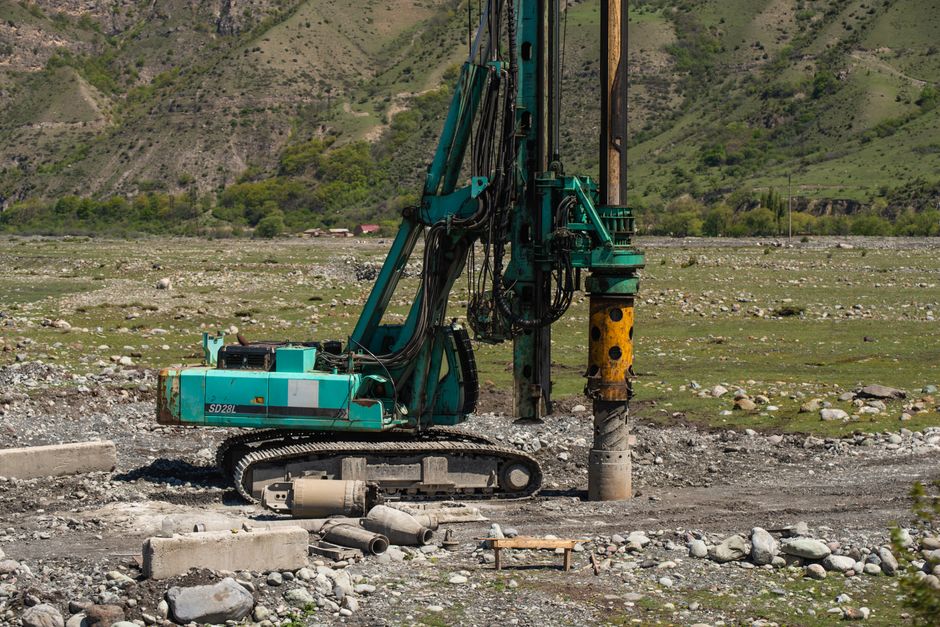
Key points
- A full residential borehole system costs R50,000 to R100,000 nationally, with a wider range of R30,000 to R150,000 depending on depth, geology, and region.
- Drilling rates run from R300 to R1,500 per metre; the national average for most projects sits at R800 to R1,000 per metre.
- Annual operating costs include electricity (R300 to R600 per month on the grid) and routine maintenance (R1,000 to R2,500 per year), the Borehole Water Association of Southern Africa confirms energy makes up more than half of the total life-cycle cost.
- Documented savings range from roughly R19,542 over three years for a Bryanston home to R101,742 over three years for a Gauteng office building, your borehole payback period depends almost entirely on how much water you currently buy from the municipality.
Why the borehole payback period question matters right now
South African municipal water tariffs are rising sharply. BusinessTech reports that from 1 July 2026, Johannesburg tariffs rise 12.5%, eThekwini 12%, and Cape Town 4.5%, directly shortening the payback period for any borehole investment. PowerOptimal’s 2026 analysis confirms that water tariffs across SA’s four largest municipalities have risen six times faster than inflation since 1996, and the trend is accelerating. Pressure drops, unannounced restrictions, and load-shedding-related pump station outages have made municipal unreliability feel worse by the year.
But the question is not whether boreholes are fashionable. It is whether the numbers actually work for your specific property, usage pattern, and region. This article runs that calculation honestly, using verified costs and real owner experiences, not marketing copy.
What you actually pay to install a borehole in 2025 and 2026
The single most important thing to understand about borehole pricing is that every quote has multiple moving parts: drilling cost per metre, the depth drilled, casing, pump, pump installation, survey, testing, filtration, and compliance. Comparing quotes without aligning these components is how homeowners end up surprised.
Drilling cost per metre
Multiple contractor networks and aggregators publish rate cards. Here is what verified sources show for 2025 and 2026:
- R300 to R500 per metre (groundwatersurveys.co.za, lower-range referral networks)
- R500 to R1,500 per metre, averaging R800 to R1,000 for most projects (boreholehub.co.za)
- R550 to R1,650 per metre (localpros.co.za aggregator network)
- R600 to R1,500 per metre for SABS SANS 10299-compliant drillers (LiquaFlo Borehole Solutions)
Boreholehub.co.za reports that costs have remained relatively stable from 2025 into 2026, with only minor inflation adjustments of 2 to 5 percent.
“I am amazed at this cost, R1000/m just to drill? Is that because you are drilling in town? Dust from the borehole would need to be filtered etc. Obviously also depends on how much casing. Is the casing cost included in the R1000/m? As said in the previous post, make sure whether casing/lining is included in the price. Depending on the soil you might have to line the hole and that gets very expensive very quickly.”
That question about casing is critical. Casing costs R400 to R700 per metre for steel or uPVC (boreholerepair.co.za), and the total casing bill runs from R5,000 to R20,000 depending on depth and material (LiquaFlo Borehole Solutions). For a 40m borehole, casing alone can cost R16,000 to R28,000 (rainbow-reservoirs.co.za). Always ask your driller for a line-item breakdown.
Depth benchmarks: what specific depths cost to drill
Using enviroleg.co.za and boreholerepairspretoria.co.za pricing as a guide:
| Depth | Drilling cost (typical range) | Source |
|---|---|---|
| 30m (incl. casing and pump) | R20,000 to R30,000 | enviroleg.co.za |
| 40m (Gauteng benchmark) | ~R29,790 | boreholerepairs.co.za |
| 60m (drilling only) | R30,000 to R45,000 | enviroleg.co.za |
| 70m (Gauteng benchmark) | ~R42,390 | boreholerepairs.co.za |
| 90m (drilling only) | R50,000 to R75,000 | enviroleg.co.za |
| 120m (drilling only) | R60,000 to R90,000 | boreholerepairspretoria.co.za |
“R30,000 for a 60 m deep borehole seems way too cheap, I would double that cost. If your borehole supplies in the region of 3000+ litres per hour, go with direct irrigation and skip the tanks. I have drilled two domestic boreholes one on property I previously owned and one at my current residence. One was direct irrigation and the other indirect, with 5000l tank and secondary pump, both worked very well.”
That experienced owner’s instinct is backed by the numbers. A 60m borehole with drilling at R800 per metre already costs R48,000 for drilling alone, before casing, a pump, installation labour, or any filtration.
What a complete system actually costs: the full component breakdown
| Component | Typical cost range | Source |
|---|---|---|
| Geo or hydrogeological survey | R5,000 to R10,000 (full report: R10,450 to R13,200) | enviroleg.co.za / localpros.co.za |
| Aquifer depth testing | R1,500 to R10,000 | borehole-repair.co.za |
| Drilling (90m at R800/m average) | ~R72,000 (varies by depth and geology) | boreholehub.co.za |
| Casing (steel or uPVC) | R5,000 to R20,000 | LiquaFlo Borehole Solutions |
| Submersible pump unit (0.75kW to 2.2kW) | R5,000 to R25,000 | rainbow-reservoirs.co.za |
| Pump installation (labour) | R2,000 to R5,000 (complex setups higher) | enviroleg.co.za |
| Complete pump system (pump, install, accessories) | R15,000 to R45,000 | boreholehub.co.za |
| Yield testing | R2,000 to R5,000 | borehole-repairs.co.za |
| Water quality testing | R1,500 to R3,000 | boreholerepairspretoria.co.za |
| Water storage tank (e.g. 5,000L JoJo) | R4,500 to R10,000 (JoJo 5250L: R6,199) | enviroleg.co.za |
| Tank installation | R3,000 to R15,000 | borehole-repairs.co.za |
| Filtration system | R5,000 to R20,000 | boreholerepairspretoria.co.za |
| DWS permit | R500 to R2,000 | boreholehub.co.za |
| Remote/rural site surcharge | R3,000 to R8,000 extra | boreholepros.co.za |
The Singh family in Alberton, Gauteng installed a 60m borehole with casing, pumps, tanks, filtration, and purification and came in just under R100,000 total (LiquaFlo Borehole Solutions).
“We thought it would just be drilling a hole and putting in a pump. But LiquaFlo explained everything: from the geo survey to the pressure systems.”
“We never thought we’d say this, but this borehole gave us peace of mind. That’s priceless.”
Regional cost differences across South Africa
Where you live has a large effect on what you pay, driven by aquifer depth, geology, and contractor supply in the area.
| Region | Typical depth | Rate per metre | Full installation range | Source |
|---|---|---|---|---|
| Johannesburg | 60m to 120m | R1,000 to R1,500/m (granite) | R60,000 to R100,000 | boreholerepairsjohannesburg.co.za / boreholehub.co.za |
| Pretoria | 60m to 90m+ | R800 to R1,500/m | R60,000 to R100,000 | Borehole Repairs Pretoria |
| Cape Town / Western Cape | 80m to 120m | Rocky ground premium applies | R20,000 to R90,000 (residential); R90,000 to R180,000 (commercial) | borehole-repair.co.za |
| KwaZulu-Natal (Durban) | Varies coastal vs inland | Lower coastal, higher inland | R25,000 to R75,000; Durban R65,000 to R110,000 | enviroleg.co.za |
| Eastern Cape (Gqeberha) | 80m to 100m | R450 to R1,500/m | R30,000 to R150,000 | enviroleg.co.za / boreholerepair.co.za |
| Limpopo | Varies | R600 to R1,000/m | R36,000 to R60,000 (60m) | boreholerepair.co.za |
| Mpumalanga | Varies | R500 to R1,000/m | Project-dependent | boreholerepair.co.za |
| Northern Cape | Varies | R300 to R500/m (residential) | R30,000 to R45,000 (60m) | boreholerepair.co.za / borehole-repairs.co.za |
| Free State (Bloemfontein) | Varies | Varies | R45,000 to R85,000 | borehole-repair.co.za |
| North West (Rustenburg) | Varies (rocky) | Rocky terrain premium | ~R80,000 (60m incl. casing and pump) | enviroleg.co.za |
Geology drives cost as much as geography. Percussion drilling for hard rock adds 20 to 40 percent to the cost of a project, and hard-rock formations like granite or quartzite cost 30 to 50 percent more to drill than soft soils, according to boreholehub.co.za. Challenging terrain adds a further 15 to 40 percent to the overall project cost (enviroleg.co.za). Remote or rural sites carry an additional surcharge of R3,000 to R8,000 for equipment transport alone (boreholepros.co.za).
The real ongoing costs: what installers rarely lead with
Electricity
A typical residential borehole pump draws 0.75 kW to 1.5 kW per hour when running (LiquaFlo Borehole Solutions). At the grid benchmark rate of R2.779 per kWh used by Enviroleg and Borehole Repairs Johannesburg in their calculations, running a 1kW pump for four hours a day costs roughly R3.34 per day. In practice, OurPower.co.za’s borehole cost calculator puts monthly electricity cost for a domestic submersible pump at R300 to R600 per month on the grid.
That range adds up to R3,600 to R7,200 per year in electricity, and it compounds over the borehole’s lifetime. The Borehole Water Association of Southern Africa (BWA) makes the point plainly:
“Energy being the major cost in the operation of a borehole installation… the pie chart shows that energy makes up more than half of the costs of owning a borehole. What the buyer takes out their pocket to pay for the complete installation will be a relatively small percentage of what the total cost will be over the installation’s life cycle.”
“The real sting comes after the borehole has been installed.”
The BWA also flags a subtler electricity risk: as the water table drops over time, the pump works harder per cubic metre pumped. At its worst, the water-to-energy ratio can fall to 2.5 cubic metres per kWh, representing a 60 percent increase in the effective cost of water from the borehole versus optimal conditions (BWA, Borehole Water Journal).
This is why solar-powered pump systems are gaining traction. One forum member’s parents run a 72V system at 65m depth:
“My parents are running a 72V system at ±65m deep filling a 5000l tank in 2-3 hours……..works very well and never have to worry about load shedding.”
Maintenance and pump replacement
Annual routine maintenance runs R1,000 to R2,500 per year, covering inspections, pump checks, borehole cleaning, and minor repairs (Enviroleg, Borehole Pump Installation Prices 2026). Over a 20-year borehole lifespan, that is R20,000 to R50,000 in maintenance alone, before any component failures.
Pumps need replacement every 10 to 15 years (boreholehub.co.za). One forum owner shared an actual recent replacement cost:
“I replace a submersible pump last week,.75Kw motor and wet end 2.5cub/hour at 64m, cost me R4100.00”
That R4,100 is for the unit itself. Installation labour adds R2,000 to R5,000 on top of that. Budget R6,000 to R15,000 for a full pump replacement cycle, depending on pump size and depth.
Water quality testing is a recurring cost that often surprises new owners. One owner reported:
“Last test was 8 months ago and that lab cost R2,600. A pretty penny if you want to do it twice a year.”
Water quality testing is verified at R1,500 to R3,000 per test (boreholerepairspretoria.co.za). For potable use, annual testing against SANS 241 is the accepted standard.
Borehole payback period compared: municipal water vs borehole over 10 years
The following comparison uses a mid-range residential scenario: a 90m borehole in Gauteng, a household using 30 kilolitres per month, and municipal tariffs based on verified published figures. All figures are in 2025 rands without inflation adjustment, to keep the comparison conservative and comparable.
| Cost item | Municipal water (10 years) | Borehole system (10 years) |
|---|---|---|
| Capital installation cost | R0 | R75,000 to R100,000 (90m Gauteng project) |
| Municipal water bill (30kL/month at ~R28/kL upper block, Pretoria) | R840/month = R100,800 over 10 years | Reduced to R0 to R300/month supplementary = R0 to R36,000 over 10 years |
| Electricity to run borehole pump | R0 | R300 to R600/month = R36,000 to R72,000 over 10 years |
| Annual maintenance | R0 | R1,000 to R2,500/year = R10,000 to R25,000 over 10 years |
| Water quality testing (annual, potable use) | R0 | R1,500 to R2,600/year = R15,000 to R26,000 over 10 years |
| Pump replacement (once in 10 years, mid-range) | R0 | R6,000 to R15,000 |
| Total 10-year cost (illustrative midpoints) | ~R100,800 | ~R87,500 to ~R174,000 (wide range reflects depth, usage, and whether potable) |
The Pretoria payback scenario published by OurPower.co.za summarises the inland reality clearly:
“At Pretoria’s upper-block municipal tariff of around R28/kL, a household using 30 kL/month spends roughly R840/month or R10,080/year on water alone. Against a typical 90m project at R99,020, the simple payback is around 6.0 years.”
For a Gauteng office building, the documented savings are larger in absolute terms: R101,742 saved over three years (boreholerepair.co.za). For a Bryanston residential home, documented savings were approximately R19,542 over three years (enviroleg.co.za). That Bryanston figure implies a payback period of roughly 15 years on a R90,000 system at that savings rate, which is why usage level matters enormously. High-usage households and businesses recoup their investment far faster than low-usage ones.
Check my address to get an instant picture of the borehole potential and typical project costs for your property, before you commit to a driller’s quote.
BoreholeHub puts the high-usage Sandton scenario this way:
“A typical Sandton household spending R4,800/month on municipal water can reduce that to R1,300/month (supplementary use only), saving R3,500/month or R42,000 per year.”
At R42,000 per year in savings, a R90,000 installation pays back in just over two years. At R19,542 over three years (around R6,500 per year), the same system takes 13 to 14 years. Both of these are real documented cases. Your payback period depends almost entirely on how much water you currently buy from the municipality.
The cost of getting it wrong: dry boreholes, poor construction, and legal exposure
The honest payback calculation has to account for the scenarios where the investment returns nothing or incurs additional costs. These are not edge cases.
The dry borehole risk
In October 2025, a viral TikTok showed a homeowner who spent R70,000 drilling 200m and found no water. A commenter captured the frustration:
“They robbed you. If there is no water, you pay only for diesel.”
A drilling professional responding to that same video explained what should have happened first:
“We drill boreholes and do water surveys. Unfortunately, clients have to pay the full amount if the survey was not done by us. If it’s us, there’s no way we can drill a dry borehole; if the survey says no water, we don’t attempt at all.”
A geo or hydrogeological survey costs R5,000 to R10,000, or up to R13,200 with a full travelling survey and report (enviroleg.co.za, localpros.co.za). That is cheap insurance against a R70,000 write-off. Engineering News notes that the Borehole Water Association has launched DWS-backed driller training programmes precisely to address the shortage of certified contractors, another reason to verify credentials before you sign anything.
Poor construction and over-pumping
The Borehole Water Association of Southern Africa issued a warning that captures the long-term risk of cutting corners at installation:
“A borehole is an asset that should last you at least 10 to 15 years at very little ongoing cost, provided you buy correctly at the start. If you don’t, it can become a very expensive and time-consuming liability with continual repair or replacement of pumps, the causes of which could either be traced back to poor borehole construction or incorrect pumping or pump installation.”
One owner on the 4×4 Community forum described the lived experience of a borehole that had defeated multiple owners across many years:
“The previous owners had lived here for around 10 years and could never get the borehole to work, they tried once and installed a new pump to no avail and weren’t bothered to get it working since. The owners before them also had issues with the borehole apparently.”
Legal compliance: it is the owner’s responsibility
South African law is clear that groundwater is a national resource. Legal expert Cor van Deventer of Van Deventer Dowlath and Marx Inc., writing in IOL in May 2026, put the compliance burden plainly:
“The law places the main obligation on the property owner, who must ensure that permission was obtained, the borehole was registered, drilling complied with bylaws, that SANS standards were followed, and the installation does not interfere with servitudes.”
DWS permit costs range from R500 to R2,000 depending on province (boreholehub.co.za). The Mercury reports that DWS draft rules gazetted in December 2025 would require every new borehole to obtain a geosite identifier before drilling begins, with non-compliance risking fines or up to five years’ imprisonment, a material new cost and risk factor in any honest payback calculation. Registering and testing the borehole is not a bureaucratic formality. It is a legal obligation that sits with you as the property owner, not with the driller.
Borehole as water security: the Cape Town precedent
The financial case for a borehole is clearest when you factor in water security, not just water cost. During Cape Town’s Day Zero crisis in 2018, borehole drilling demand spiked so hard that contractors stopped taking new orders entirely. The households that had already installed boreholes held a measurable advantage. A peer-reviewed finding published in the IWA Publishing journal H2Open confirmed it:
“Higher-income suburbs were able to reduce their water demand by 58% in part, because they had the financial means to invest in alternative supply sources, e.g. by installing boreholes in their backyards and acquiring tanks for rainwater harvesting.”
In Pretoria, 37.5 percent of homes already have boreholes (enviroleg.co.za). Those homes use 1.78 kilolitres per day from their borehole alongside 0.82 kilolitres per day from the municipal supply, compared to 1.04 kilolitres total for non-borehole homes. They are not replacing municipal water entirely; they are buffering against it.
The honest summary: who this investment works for
A borehole makes clear financial sense if:
- Your current monthly municipal water bill is above R1,500 and the borehole can replace most of that usage.
- You have a property that supports irrigation, a pool, or other high-volume non-potable uses where borehole water does not need expensive filtration to SANS 241.
- You are in a region with consistent aquifer data and a reputable local contractor market.
- You are prepared to do a geo-survey first, get a yield test after drilling, and budget for ongoing electricity and maintenance.
It is a harder case to make if:
- Your water usage is low (under 15 kilolitres per month), making the payback period very long.
- You need potable-quality water and your local geology produces high-iron or otherwise problematic groundwater, requiring expensive ongoing filtration.
- You are in an urban area with documented sewer line issues near the water table.
- You are comparing quotes without asking whether casing, survey, testing, and filtration are included in each one.
As one community voice on Reddit put it: “The savings are substantial over a period of time, the stress of no water and the freedom to use as you desire is priceless.” But that verdict holds for high-usage households. For a household saving a modest amount per month, the borehole payback period stretches considerably, and a R7,000 backup tank may solve the immediate crisis at a fraction of the cost and risk.
LiquaFlo Borehole Solutions, writing about Gauteng specifically, captures the longer-term arithmetic:
“You break even in 5 years, then save R18,000+ per year after that. And your borehole system? It can last 15-20 years with proper maintenance. That’s hundreds of thousands of rands in potential savings over time.”
That calculation holds for a household saving R1,500 per month on a R90,000 system. It does not hold for a household saving R500 per month. Know your number before you commit.
The first step is understanding what lies beneath your specific address: whether there is water, how deep it sits, and what it would cost to reach it at your location. Check my address to get an instant picture of the borehole potential and typical project costs for your property.
Ready to size and cost your borehole system?
Every installer we recommend is vetted and experienced with payback modelling.
Vetted local installers · honest advice first