- Emergency callout fees start at R450 to R950 for standard plumbers and jump to R2,000 to R3,000 for specialized borehole contractors (boreholepros.co.za).
- A full submersible pump replacement, parts and labour, costs R15,000 to R35,000 for most residential depths, rising to R45,000 or more in difficult conditions.
- Top-side faults are resolved in 1 to 2 hours; a below-ground pump pull takes 1 to 3 days; full replacement takes 2 to 5 days (rafsun.com).
- Dry running is the single most common and expensive cause of premature pump failure in South Africa (enviroleg.co.za).
- Interim water tanker hire costs R2,450 to R6,600 per day depending on truck size (basaltplanthire.co.za), a 5-day repair window can cost R12,250 to R33,000 in water supply alone.
- A neglected borehole system lasts 8 to 12 years; a professionally maintained one lasts 25 to 30 years (BoreholeHub).
- The 50-percent rule: if repairing a pulled pump costs more than half the price of a new equivalent, replace it (enviroleg.co.za).
- waterquotes.co.za recommends a minimum of 3 days of reserve water storage for any property reliant on groundwater.
Turn on a tap and get nothing. That is the moment most South African borehole owners discover they have been treating a critical infrastructure asset like a household appliance. The pump is underground, out of sight, and, until it stops, out of mind. When it does fail, the financial damage rarely stops at the pump itself. Emergency labour rates, diagnostic fees, downtime costs, and emergency water supply pile up quickly, often reaching R20,000 to R50,000 before a drop of water flows again.
This article puts actual ZAR figures on every stage of a borehole pump failure: from the first panicked phone call to the final commissioning test. It also compares the interim water supply options that genuinely bridge the gap against those that waste money, and it closes with a cost-of-ownership comparison that shows exactly why prevention is not just cheaper in theory, it is cheaper by a factor of ten in practice.
Stage 1: The Emergency Call, What You Pay in the First 24 Hours
The first cost most owners encounter is the callout fee. For a standard registered plumber or pump technician, insly.co.za records callout fees of R450 to R950 in 2026. That rate applies during business hours. After hours, evenings, weekends, public holidays, kandua.com records an additional surcharge of R250 to R500 per hour on top of the base callout.
If you need a specialist borehole contractor rather than a generalist plumber, boreholepros.co.za charges a priority response fee of R2,000 to R3,000 just to mobilize. That fee is separate from the diagnostic work. The flat diagnostic fee for a full electrical and mechanical assessment sits at R800 to R1,500 (boreholepros.co.za).
For properties in rural Limpopo or similar areas far from service centres, liquaflo.co.za adds a travel fee of R8 to R15 per kilometre from the contractor’s base. A farm 80 km from Polokwane could face a travel charge of R640 to R1,200 on top of everything else.
Combining a priority response fee, diagnostics, travel, and the first hour of labour on a Saturday afternoon, it is entirely realistic to spend R4,000 to R6,000 before anyone has identified the fault. localpros.co.za estimates R2,000 to R5,000 for labour and callout on an unplanned failure, and that assumes the problem is straightforward.
“My parents have had to buy water when the borehole pump packed up. We replaced it soon after. Of the 4 closest neighbours, 2 have boreholes and the rest buy from tanker operators.”
MyBroadband forum user, on the immediate consequence of a pump failure
Stage 2: Diagnosis, What Is Actually Wrong?
Not every pump failure means a dead pump. Faults split into two broad categories: top-side (electrical panel, pressure switch, capacitor, pressure bladder, wiring) and below-ground (the submersible pump unit itself, rising main, cables inside the casing). The distinction matters enormously for cost and downtime.
Top-side faults resolve in 1 to 2 hours according to enviroleg.co.za. Common culprits include a tripped breaker, a failed capacitor (R200 to R600 for the part), a faulty pressure switch, or a blown pressure bladder. Replacing a pressure bladder costs R1,200 to R2,400 all-in (boreholehub.co.za). These are frustrating but cheap problems.
Below-ground faults require pulling the pump from the casing, which is a physically demanding job involving a tripod or hoist, pipe wrenches, and in deep holes (60m to 100m), a significant amount of time. rafsun.com puts the mean time to repair for a pump pull and repair at 1 to 3 days. Full replacement runs 2 to 5 days.
The most dangerous and most expensive root cause is dry running. When a borehole is pumped below its recovery level, because someone set the pump too deep, or the yield was never properly tested, or drought has lowered the water table, the pump runs hot and burns out its windings. enviroleg.co.za identifies dry running as the single most common and expensive cause of premature pump failure in South Africa. rafsun.com recommends never drawing more than 70 to 80 percent of the borehole’s tested yield to protect against this.
“We installed a 130 Micron Disc filter before the water enters the Tanks, but seems like we are getting a lot of sediment, and this requires weekly cleaning… Not too expensive, but a lot of effort to pull up the borehole pump from 75M and fit this thing…”
MyBroadband user ‘rh1’, on the labour involved in pulling a deep pump even for routine maintenance
Voltage problems, spikes, undervoltage on farm lines, lightning strikes, are the second major culprit. A voltage relay and surge arrestor costs R1,500 to R3,000 installed (waterquotes.co.za). Without one, a single lightning event or Eskom voltage spike can destroy a R15,000 to R40,000 pump overnight.
“They are very common on Farms and rural areas where farm lines cause these types of issues, usually leaving you with a burnt-out motor or borehole pump. [You need an] over voltage / undervoltage relay.”
MyBroadband user ‘Steamy Tom’, on voltage-related pump destruction in rural areas
“The consequences of a blown borehole pump are catastrophic and far-reaching. Added to the initial financial outlay of up to R60,000 to replace a pump are the effects of not being able to water crops and livestock… A scenario like this can be easily avoided through the purchasing and correct installation of quality surge arresters.”
Paul van As from Surgetek, speaking to ProAgri about the commercial impact of neglecting electrical surge protection
Stage 3: Repair or Replace? Applying the 50-Percent Rule
Once the pump is on the surface, you face a decision: repair the existing unit or buy a new one. enviroleg.co.za formalises this as the 50-percent rule: if the repair cost exceeds 50 percent of the price of a brand-new equivalent pump, replacement is the economically rational choice.
To apply the rule, you need current pump prices. Here is what the market looks like in late 2026:
| Pump / Component | Supply Cost | Installed Cost (incl. labour) | Source |
|---|---|---|---|
| 1.0 HP (0.75 kW) submersible pump end only | R1,640 | R5,640 to R7,640 | jordangroup.co.za |
| 0.5 HP (0.37 kW) submersible combo kit | R3,635 (range R3,600 to R7,800) | R7,635 to R13,800 | waterpumps.co.za |
| Complete replacement, shallow depth (up to 30m) | Included | R12,000 to R18,000 | waterquotes.co.za |
| Complete replacement, standard depth (Johannesburg / Polokwane) | Included | R15,000 to R35,000 | boreholeza.co.za |
| Quality residential pump (supply only, full range) | R15,000 to R40,000 | R19,000 to R46,000 | waterquotes.co.za |
| Professional plumber installation labour only | N/A | R4,000 to R6,000 | atkinsplumbing.co.za |
| Pressure bladder replacement | Included | R1,200 to R2,400 | boreholehub.co.za |
| Voltage relay and surge arrestor | R1,500 to R3,000 | R1,500 to R3,000 | waterquotes.co.za |
Applying the 50-percent rule practically: if a technician quotes R9,000 to rewind the stator of a pump whose new replacement would cost R18,000, the numbers say replace. The repaired unit will also carry less service life than a new pump, and you have already paid R2,000 to R5,000 in callout and diagnostic costs that do not apply toward the repair quote.
“I paid around 55k for 50m to 60m drilling, with casing. Borehole pump was around 30k. Filtration system around 27k. My water was too sulphuric and irony.”
Leisure Larry on MyBroadband, detailing the cumulative capital costs of a full borehole installation in difficult ground conditions
Stage 4: The Downtime Gap, What Does Water Cost While You Wait?
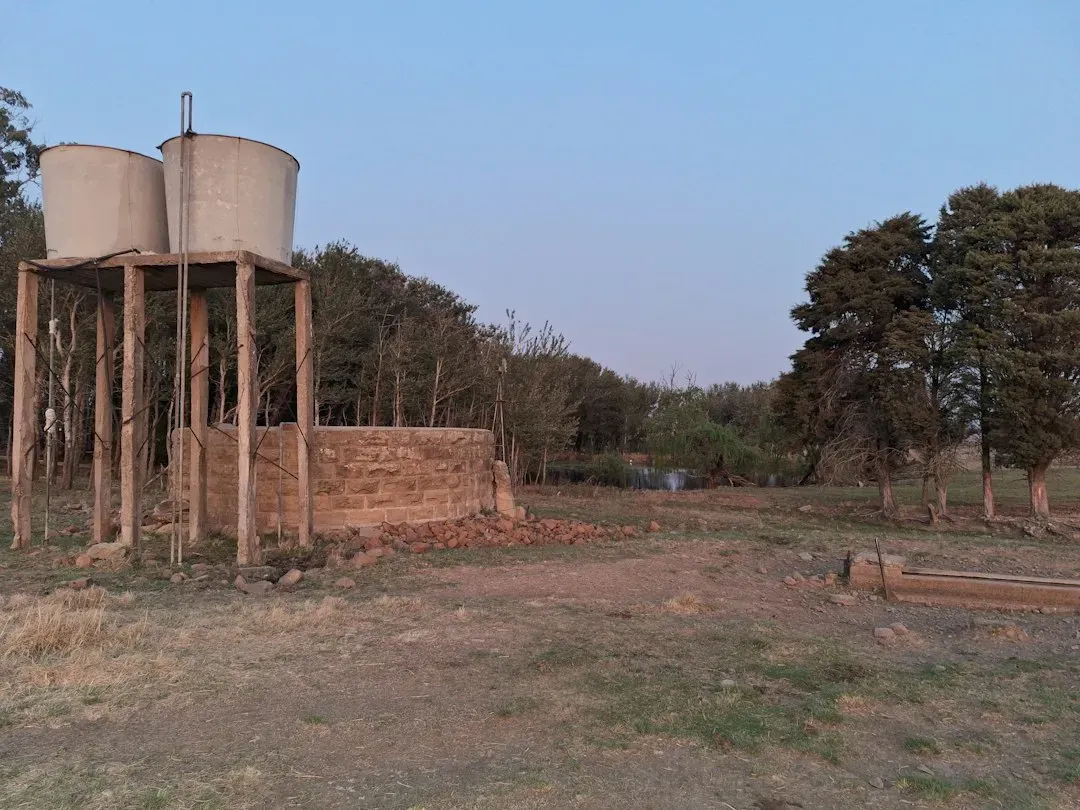
This is where most cost estimates fall apart. Owners focus on the pump replacement bill and forget that repair timelines of 2 to 5 days (rafsun.com) mean the property has no water supply for that entire period. If you have no stored reserve, and waterquotes.co.za recommends a minimum of 3 days of reserve water for any groundwater-dependent property, you are buying water commercially from day one.
Option A: Water Tanker Delivery
For a one-off emergency, a bulk delivery makes sense. blix.co.za prices single emergency bulk water delivery loads for SMEs at R1,000 to R2,000 per load. For a household using 500 to 800 litres per day, one load may stretch to 2 days if used carefully.
For larger properties or businesses, Basalt Plant Hire (Gauteng and Cape Town) offers the following day-rate hire with driver in late 2026:
| Tanker Size | Daily Rate | 5-Day Repair Window Total | Source |
|---|---|---|---|
| 8,000 to 12,000L | R2,450 to R2,600 | R12,250 to R13,000 | basaltplanthire.co.za |
| 14,000 to 18,000L | R2,950 to R3,200 | R14,750 to R16,000 | basaltplanthire.co.za |
| 23,000 to 25,000L | R5,600 to R6,600 | R28,000 to R33,000 | basaltplanthire.co.za |
In KwaZulu-Natal, WeTransport offers self-drive dry hire at R840 per day plus R14.00 per kilometre (wetransport.co.za), this is cheaper if you have a driver and the tanker does not need to travel far. wetransport.co.za also quotes R840 to R980 per day for a professionally driven tanker hire, though this excludes the cost of the water itself.
The key takeaway: a 5-day pump replacement on a medium-sized property could add R12,000 to R33,000 in water supply costs alone on top of the R15,000 to R35,000 repair bill. Total crisis cost: R27,000 to R68,000.
Option B: Stored Reserve, The Cheapest Interim Solution
The most cost-effective interim supply is water you already have stored. sapropertytools.co.za prices JoJo-type tanks in late 2026 as follows: 2,500L at R2,800 to R4,500, 5,000L at R4,500 to R7,500, and 10,000L tanks starting from R18,000. A 5,000L tank installed with a transfer pump and plumber’s labour costs roughly R8,500 to R13,500 total, a one-time investment that eliminates the need for tanker hire during any repair window of 3 to 5 days for most households.
Option C: Hand Pump Retrofit, The Genuine Emergency Backstop
A hand pump retrofit onto an existing borehole casing provides water even when the submersible is pulled for repair. id.org.za prices a retrofit at R8,000 to R25,000 depending on depth and pump specification. Standard community-grade hand pump hardware costs R6,000 to R15,000 (osmotech.co.za); heavy-duty high-lift versions run R15,000 to R35,000 (osmotech.co.za). This is not a comfortable solution, pumping 500 litres by hand per day is hard work, but it keeps livestock watered and essential sanitation functional while the submersible is being replaced.
Option D: Rainwater Harvesting as Supplementary Buffer
A basic residential rainwater harvesting system (2,500L to 5,000L capacity) costs R8,000 to R25,000 installed (enviroleg.co.za), including gutters, first-flush diverters (R300 to R800 per downpipe from irrigation.africa), and tank. It is not an on-demand supply, it depends on rainfall, but in Gauteng and KZN where summer storms are reliable, a 5,000L rainwater tank that fills during the wet season provides a meaningful buffer during dry-season pump failures.
The Full Emergency Scenario: A Worked Cost Example
Here is a realistic mid-range scenario: a property in Pretoria with a pump at 50m depth, failing on a Friday evening after a voltage spike.
- After-hours callout fee: R950
- After-hours labour surcharge (2 hours): R1,000
- Priority response fee (specialist contractor Saturday morning): R2,500
- Diagnostic assessment: R1,200
- Pump pull (Monday, 1 day): included in replacement quote
- Pump replacement (Pretoria, 50m): R25,000
- Surge arrestor fitted at same time: R2,000
- Water tanker hire, 3 days (8,000L daily): R7,500
- Total: R40,150
That is the mid-range outcome for a failure that could have been prevented with a R2,000 surge arrestor and a R4,500 storage tank already in place. The preventive spend: R6,500. The emergency spend: R40,150. The difference: R33,650, plus 3 to 4 days without reliable water.
Cost-of-Ownership Comparison: Maintained vs Neglected
| Cost Category | Maintained System | Neglected System |
|---|---|---|
| Annual service contract | R1,500 to R2,200/year (Borehole Pros) | R0 (until failure) |
| Surge and voltage protection | R800 to R3,000 once-off (proagrimedia.com) | R0 (until failure) |
| Average emergency repair callout per incident | Rare; R0 to R2,000 for minor faults | R8,000 to R15,000 per incident (Borehole Pros) |
| Pump replacement (burnt-out) | Unlikely before year 20 to 25 | R15,000 to R40,000 at year 8 to 12 (BoreholeHub) |
| Interim water during downtime | Covered by storage tank (R4,500 to R7,500 once-off) | R12,000 to R33,000 per repair event |
| System lifespan | 25 to 30 years (BoreholeHub) | 8 to 12 years (BoreholeHub) |
| 25-year estimated total spend | R55,000 to R85,000 | R120,000 to R200,000+ |
The neglected system is not cheap, it simply defers its costs into larger, more disruptive lump sums. BoreholeHub’s data is blunt: 8 to 12 years versus 25 to 30 years. The difference in usable life more than pays for every service contract and surge protector a maintained system ever needs.
“What annual maintenance? We’ve had a borehole for 20 years and only opened it once to replace a short circuited pump.”
MyBroadband forum user, illustrating how easily owners conflate good luck with the absence of maintenance need
That owner got lucky. A short-circuited pump at any depth still means a 2-to-5-day repair window, a R15,000 to R35,000 replacement cost, and no water in the interim. The fact it only happened once in 20 years does not mean maintenance was unnecessary, it means the system tolerated neglect longer than average.
Insurance: What You Need to Know Before You Make the Call
Many owners assume a lightning-damaged pump is an automatic insurance claim. The reality is more complicated. miway.co.za notes that borehole claims are assessed exactly like structural home claims and will likely be repudiated if the borehole was drilled without a municipal Drilling Permit, a hydrogeological study, or if it fails to comply with SANS 10299. An assessor who arrives and finds no surge protection device on the AC side may use that as grounds to challenge the claim.
“I would lodge an insurance claim, they may send an assessor out who would pick up that there was no SPD [Surge Protection Device] on the AC side, they will either repudiate the claim with reasons (get it in writing), or they will pay (and you pay excess).”
Forum user, explaining the insurance assessor process for surge damage claims
When documentation is in order and surge protection was fitted, claims do succeed. boreholehub.co.za also points out that the Consumer Protection Act 68 of 2008 provides a 6-month implied warranty on installed goods, meaning a pump that fails within 6 months of installation may be a supplier’s liability, not yours, if the failure traces to a manufacturing defect or improper installation.
What Actually Prevents the Most Expensive Failures
Three preventive measures eliminate the majority of catastrophic pump failures:
- Surge and voltage protection: A surge arrestor costs R800 to R2,000 (local pricing guides). A voltage relay that cuts power during over-voltage or under-voltage events costs R1,500 to R3,000 installed (waterquotes.co.za). These devices sit between the pump and anything Eskom’s grid throws at it. Without them, one thunderstorm can cost R40,000.
- Dry-run protection: A float switch or pressure sensor that cuts the pump when the water level drops below a safe threshold costs R800 to R2,500 installed. Never draw more than 70 to 80 percent of the borehole’s tested yield (rafsun.com).
- Annual servicing: A routine service contract at R1,500 to R2,200 per year (Borehole Pros) covers inspection of pump condition, cable insulation, pressure settings, and water quality. It is the only way to catch a pump showing early signs of wear before it fails at midnight on a long weekend.
“There is also very little maintenance as a decent borehole pump should last 20+ years with zero maintenance and a borehole may only need rehabilitation after 10+ years of use…”
MyBroadband forum user, sharing the common misconception that borehole systems are fit-and-forget infrastructure
The sentiment is understandable. A well-installed pump running in clean water with stable voltage and proper dry-run protection can go many years between service calls. But “zero maintenance” is a survivorship story, you hear from the owners who got lucky, not the ones who paid R40,000 to fix a problem a R2,000 surge arrestor would have prevented.
Avoid R15,000–R35,000 pump replacement costs with preventive
Putting It All Together: What to Do in the First 72 Hours
When your pump fails, work through this sequence to control costs:
- Check top-side first (Hours 0 to 2): Inspect the electrical panel, circuit breakers, capacitor, and pressure switch before calling anyone. A tripped breaker costs nothing to reset. A blown capacitor costs R200 to R600 and a qualified electrician 30 minutes.
- Confirm water levels (Hours 1 to 3): If you have a water level sensor or can measure manually, check whether the borehole has water. A dry borehole in drought conditions means a different problem than a failed pump in a full borehole.
- Call a registered specialist, not a generalist plumber (Hours 2 to 6): A borehole-specific contractor has a tripod, the right pull-rope, and experience with submersible pumps. A generalist plumber may charge R2,000 to R3,000 for a callout and then tell you they cannot help.
- Arrange interim water supply (Hours 4 to 12): If you have no storage tank, contact a water tanker service immediately. Availability fills up fast in a drought or during summer when multiple properties are affected simultaneously.
- Apply the 50-percent rule before authorising repairs: Get the repair quote in writing before the pump goes back down. If it exceeds half the replacement cost, buy new.
- Fit surge and dry-run protection with the new pump: Any replacement installation that does not include a voltage relay and dry-run cutoff is an incomplete installation. Add these at the time, the marginal cost is R2,500 to R5,000 on top of a R15,000 to R35,000 job, and they can double the pump’s service life.
If the whole experience has made you think seriously about backup storage, the numbers are clear. A 5,000L JoJo tank at R4,500 to R7,500 (sapropertytools.co.za) plus plumber installation at R4,000 to R6,000 (atkinsplumbing.co.za) gives you a total installed cost of R8,500 to R13,500, less than the emergency water tanker bill for a 5-day repair event at the small truck rate. A complete backup system in Johannesburg for a straightforward setup runs R20,000 to R40,000 (waterquotes.co.za), rising to R55,000 for a highly integrated whole-house configuration.
“Borehole and pump, so zero water bills for me. Cost around R40k to get the borehole drilled (equipment hire and wages) and a few k for tanks and pumps.”
MyBroadband forum user, on the capital outlay that eliminates ongoing municipal water bills, when the system is maintained
The maths of borehole ownership still works in favour of the homeowner over a 25-year horizon. It just works much better when the system is treated as infrastructure that requires protection, not as an appliance that runs forever without attention.
To get quotes from vetted borehole and backup water specialists in your area, and to avoid the emergency contractor premium when things go wrong at the worst possible time, Talk to a vetted installer.
Get started
Avoid R15,000–R35,000 pump replacement costs with preventive
Vetted local installers · honest advice first
Photo: masudar rahman / Pexels