- A complete borehole system in Johannesburg costs R55,000 to R130,000 installed (boreholehub.co.za), not the R20,000 figure that keeps circulating on social media.
- A 5,000-litre JoJo tank setup installed costs R22,000 to R25,000 (mortgagecalculator.co.za), the cheapest path to meaningful backup storage with the least risk.
- Wellpoints start at R6,850 installed in Cape Town (waterquotes.co.za) but are physically limited to water tables shallower than roughly 10 metres.
- Running a 1.1 kW borehole pump five hours a day adds roughly R580 per month to your electricity bill (The Sun Pays), on top of R3,000 to R6,000 in annual maintenance (BoreholeHub and Andy Plumbers).
- 64% of South Africa’s wastewater treatment works are at high or critical risk of discharging untreated water (2024 Green Drop Progress Assessment report), backup water is no longer optional for most households.
- SARS Section 12B tax deductions do not apply to water storage tanks or solar water heaters (sars.gov.za), do not let a salesperson imply otherwise.
Why this decision matters more than ever
Johannesburg Water loses 44.8% of its treated water before it reaches a tap (Johannesburg Water). That is not a rounding error; it is nearly half of every litre pumped, disappearing through aging pipes, illegal connections, and metering failures. Combined with the finding that 64% of South Africa’s wastewater treatment works are at high or critical risk of discharging untreated water into river systems (2024 Green Drop Progress Assessment report), the pressure on households to secure their own water supply has become structural rather than seasonal.
The problem with most online guides is that they treat the three main residential options, boreholes, storage tanks, and wellpoints, as interchangeable. They are not. Each solution serves a different water-stress scenario, works better in some geologies than others, and carries a very different total cost of ownership over five years. This guide lays out the real numbers so you can make a decision that fits your suburb, your soil, and your budget, not the best-case scenario in a brochure.
Option 1: The storage tank (JoJo and similar)
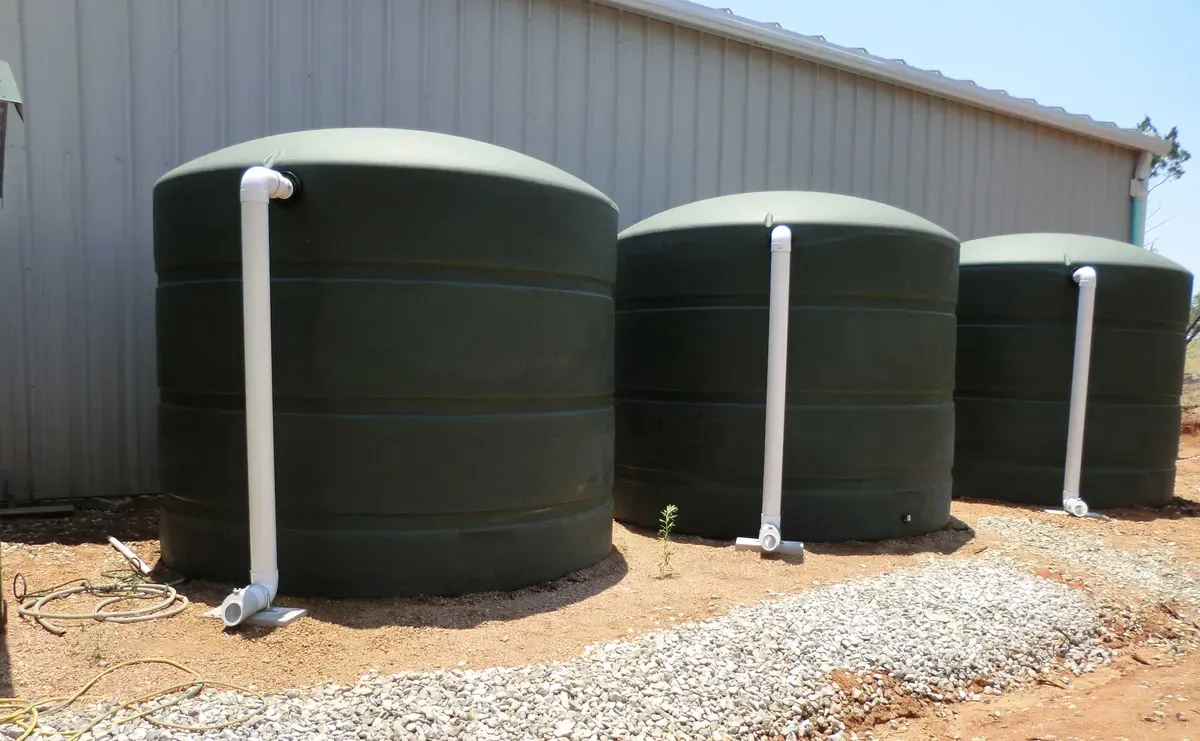
A storage tank does not produce water; it buffers whatever supply you already have. That distinction matters enormously. If your municipality delivers water reliably except during scheduled outages or occasional pressure drops, a tank solves your problem cheaply and with minimal ongoing complexity. If your municipality delivers water erratically or not at all for days at a time, a tank merely delays the crisis.
The entry point for a vertical 2,500-litre JoJo tank is R4,140 to R5,200 for the tank alone (justmoney.co.za). Once you add a concrete plinth, pipework, a booster pump, fittings, and labour, the realistic installed cost of a 5,000-litre system sits at R22,000 to R25,000 (mortgagecalculator.co.za).
“I think you are looking closer to R15k for installation and supply… I did mine myself and it cost me probably about R11k. Concrete slab – R2500… 2500L africa tank – R2000, DAB Pump – R2000 (usually R4500, got it on clearance), Jojo tank float – R300.”
MyBroadband Forum, user Fcon_Vpro breaking down the individual costs of installing a backup tank system.
That DIY figure assumes mechanical confidence, correct plumbing permits where required, and no surprises on the slab. For most homeowners, the professional installed range is the safer estimate.
Tanks are not maintenance-free. Blu Water Technologies recommends professional cleaning every two years, and Andy Plumbers prices a standard 5,000-litre JoJo tank clean at R3,420. Skip that cleaning and you get what one homeowner discovered:
“Haven’t cleaned my JoJo tank for a while. Found black algae where I had the hose pipe in the deep end.”
MyBroadband Forum user, on algae buildup from light exposure.
Noise is another real-world issue. External pressure pumps can generate enough vibration to annoy neighbours:
“I am just waiting for the neighbour’s complaint letters!… If I close the water supply a bit that goes into the pump from the Jojo, it gets quieter…”
MyBroadband Forum user, on managing pressure pump noise.
One important tax note: SARS Section 12B deductions apply strictly to electricity-generating assets and expressly exclude residential water storage tanks (sars.gov.za). No rebate or accelerated depreciation applies to your JoJo.
A simpler buffer-tank approach avoids most of these complications:
“I know my plans for a ‘buffer’ tank will not have an issue with backflow, purely because I will fill the JoJo tank from municipal supply and pull all my normal usage off the JoJo tank. It’s a much cheaper and simpler solution in my opinion.”
MyBroadband user, on the gravity-fed buffer configuration.
Option 2: The wellpoint
A wellpoint is a narrow-diameter pipe driven into a shallow, sandy aquifer, typically the same near-surface water table that fills after rain and that your neighbour’s garden drains into. The defining physical constraint is depth: suction pumps cannot lift water from more than roughly 7 to 8 metres below the pump, and even with a jet pump the practical limit is around 10 metres. Where that shallow water table exists and is reliably recharged, a wellpoint is extraordinary value for money.
Budget residential installations in Cape Town start at R6,850 for a 0.75 kW cast-iron pump setup (waterquotes.co.za). One homeowner describes an even lower-cost scenario:
“A wellpoint pump cost on its own is from R2000… I just had a black pipe and galvanise bend sticking out of the ground. There was a rusty pump in the garage. After speaking to my neighbour, I bought a pump, connected it to the black pipe, primed it and have free water since.”
MyBroadband Forum, user William1102, on a minimal DIY wellpoint setup.
That same user summarised the fundamental constraint clearly: “Wellpoint (inexpensive, where water is less than 10 metres underground).”
The main maintenance headache with wellpoints is prime loss. The pump must maintain a continuous seal to draw water upward, and when that seal fails the system stops delivering water:
“I’ve just had pump primed this past Sunday at a cost. Pump has lost prime again.”
MyBroadband Forum, user Masu, on repeated prime loss.
Water quality is the other serious concern. Shallow aquifers are vulnerable to surface contamination, agricultural runoff, and septic tank leachate. One owner who had lab tests done reported a sobering finding:
“Lab tests determined that there is e-coli in the water… I’ll start by saying to get water drinkable is not easy or cheap (even if you DIY), honestly if its for consumption: rather buy bottled water until the dams fill up.”
MyBroadband Forum user, on the cost and difficulty of treating shallow wellpoint water.
Wellpoints are best used for garden irrigation, toilet flushing, and car washing, not for drinking or cooking without thorough and regularly tested treatment.
Option 3: The borehole
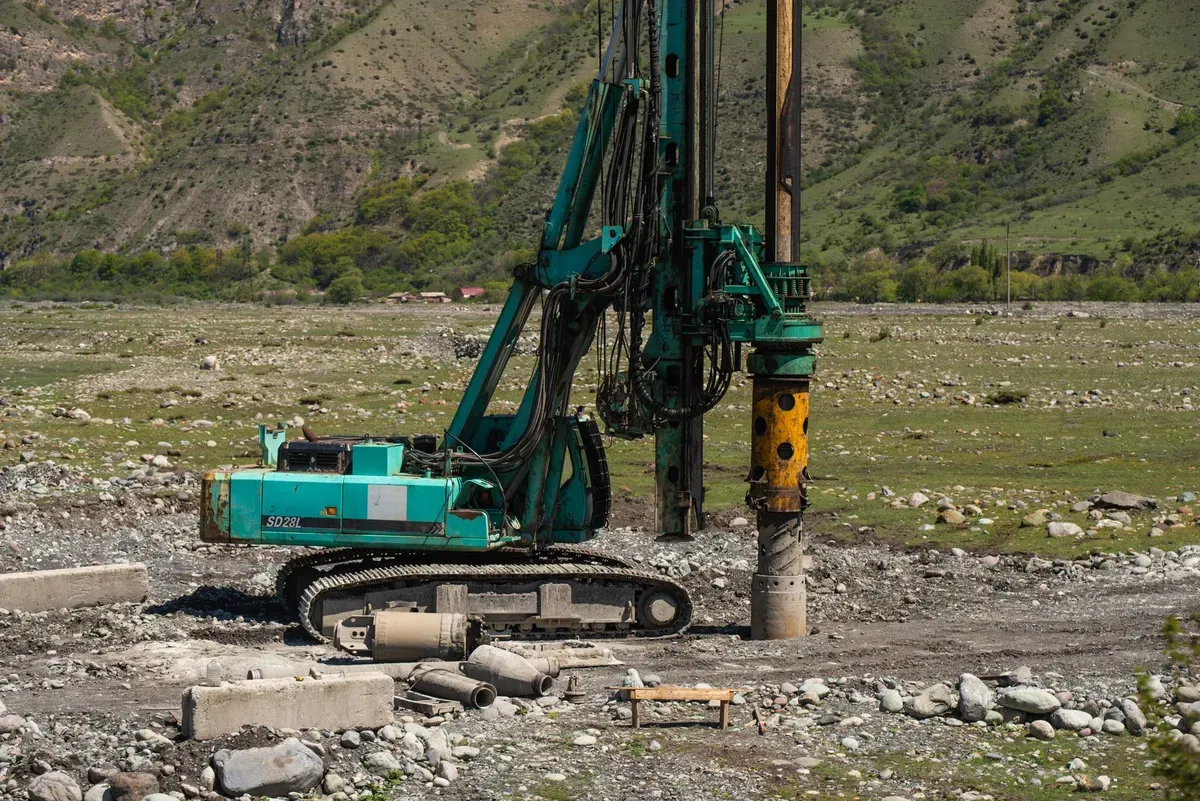
A borehole accesses deep confined or semi-confined aquifers that are largely independent of surface contamination and seasonal rainfall patterns. The water is typically cleaner and more consistent than a wellpoint, and in many parts of Gauteng, the Western Cape, and KwaZulu-Natal the yield is enough to supply an entire household year-round.
The costs are proportionally larger. A complete residential borehole system in Johannesburg runs R55,000 to R130,000 (boreholehub.co.za), and in granite-heavy terrain like the Johannesburg Dome, drilling alone costs R1,000 to R1,500 per metre (boreholepros.co.za). The drilling invoice is unavoidable whether the contractor hits water or not:
“You pay for the drilling whether you hit water or not. Most drill operators will require full payment before starting the drilling… My neighbor paid for 3 dry holes…”
MyBroadband Forum, user McRuder, on the financial risk of dry boreholes.
Unexpected geology can also push the total well past what a headline quote implies:
“I paid around 55k for 50m – 60m drilling, with casing. Borehole pump was around 30k. Filtration system around 27k. My water was too sulphuric and irony.”
MyBroadband Forum, user Leisure Larry, on borehole hidden costs and filtration.
That is R112,000 all in, well within the boreholehub.co.za range, but a long way from the low-end figure. Poor water chemistry requiring a full filtration system is not unusual; it is simply not advertised.
Electricity is the ongoing cost that catches people. Residential borehole pumps draw between 0.75 kW and 2.2 kW (WaterQuotes), and running a 1.1 kW AC pump for five hours a day adds roughly R580 per month to your bill (The Sun Pays). One homeowner running a larger unit found the combined burden harder to absorb:
“the 1.7KW Borehole pump runs For 4 to 5 hours per day depending on the season… my electricity bill and loadshedding is killing me…”
PowerForum user, on the monthly electricity drain of a borehole pump.
Annual maintenance costs for a borehole system sit at R3,000 to R6,000 (BoreholeHub and Andy Plumbers). Premature pump replacement, caused by running the pump dry, poor water quality, or voltage spikes, costs R18,000 to R40,000 (BoreholeHub and Andy Plumbers).
One arrangement that can lower the entry cost is sharing a borehole with a neighbour, but waterquotes.co.za is frank about the risk: “Sharing a borehole with a neighbour can halve installation costs, but without a written agreement covering metering, maintenance cost-splits, and exit terms, the arrangement regularly collapses into disputes… Done on a handshake, it tends to end badly.”
Spec and cost comparison table
| Factor | Storage Tank (5,000L) | Wellpoint | Borehole |
|---|---|---|---|
| Entry installed cost | R22,000 to R25,000 | From R6,850 | R55,000 to R130,000 |
| Water source | Municipal supply buffered | Shallow aquifer (max ~10m) | Deep aquifer (20m to 150m+) |
| Independent of municipality? | No | Yes (where aquifer exists) | Yes |
| Typical pump draw | 0.75 kW booster | 0.75 kW to 1.1 kW | 0.75 kW to 2.2 kW |
| Monthly electricity add (est.) | Low (pump runs only on demand) | Low to moderate | ~R580/month at 1.1 kW, 5 hrs/day |
| Annual maintenance | R1,710/yr (clean every 2 yrs at R3,420) | Priming, filter checks | R3,000 to R6,000/yr |
| Major replacement risk | Pump: R2,000 to R5,000 | Pump: R2,000 to R5,000 | Pump: R18,000 to R40,000 |
| Potable without treatment? | Yes (if municipal supply is treated) | Rarely, test first | Usually, test and filter |
| Planning approval required? | Usually no, check municipality | Check local bylaws | Yes, DWS licence required |
| SARS Section 12B rebate? | No (sars.gov.za) | No | No |
Five-year cost of ownership: an honest comparison

The numbers below use the mid-point of installed cost ranges, the R580 per month electricity estimate from The Sun Pays for the borehole pump, and the maintenance figures from BoreholeHub and Andy Plumbers. Tank electricity is treated as negligible (booster pump runs only during draw). All figures are in today’s rands and do not inflate for tariff increases.
| Cost item | Tank (5,000L) | Wellpoint | Borehole |
|---|---|---|---|
| Installed cost (mid-range) | R23,500 | R10,000 | R92,500 |
| Electricity over 5 years | ~R3,500 (est.) | ~R15,000 (est.) | R34,800 (R580 x 60 months) |
| Maintenance over 5 years | R6,840 (2 cleans + minor) | R5,000 (est. priming + filters) | R22,500 (mid at R4,500/yr) |
| Filtration (if needed) | Nil (municipal already treated) | Variable, often R5,000 to R15,000 | Variable, R0 to R27,000+ |
| 5-year total (base case) | ~R33,840 | ~R30,000 to R45,000 | ~R149,800 to R177,000+ |
The takeaway is not that boreholes are a bad investment. It is that a borehole only makes financial sense if your municipality’s supply is so unreliable that you are spending significant money on bottled water, trucked water, or productivity losses, or if your property has a confirmed high-yield aquifer that enables you to eliminate your municipal water account almost entirely. For most suburban homeowners facing occasional cuts or low-pressure events, a tank delivers the best cost-per-litre-of-security of the three options.
Rebates, bylaws, and the fine print you need to know
Municipal rebates for water infrastructure are limited and inconsistent. The underground leak rebate that exists in some municipalities splits the billed amount for water wasted above average consumption 50/50 between the City and the owner (stbb.co.za). Overstrand municipality, for example, requires the leak to be repaired within 10 working days of detection to qualify (overstrand.gov.za). One Cape Town homeowner who went through the process shared a realistic warning:
“Yes, you can apply for a rebate, once only… Speaking from experience, it takes about 6 months and lots of follow-ups to get them to process the claim. They turned mine down even though I used 21KL more than usual… I disputed this and went to the ombuds. This went on for more months. If you had to pay R10,000 more than usual, go for the rebate, but don’t expect it to be soon.”
Reddit Cape Town community, user Equivalent-Loan1287, June 2026, on the municipal leak rebate process.
Registered indigent households receive 6 kilolitres of free water per month under the national standard (www.gov.za), and the City of Cape Town has set aside R3.8 million in its 2026/2027 budget to repair private plumbing leaks at registered indigent properties (capetown.gov.za). If your household qualifies, check with your municipality before spending anything on a private solution.
For boreholes specifically, a licence from the Department of Water and Sanitation is required for extraction above a threshold volume. Unlicensed commercial use carries penalties. For domestic use the threshold is generous, but check your municipal bylaws before connecting borehole water to your internal plumbing without a backflow preventer, most municipalities require one to protect the reticulation network.
Warranty and retailer risk: a buyer’s warning
Cheap booster pumps sourced from online retailers carry real warranty risk that is worth understanding before purchase:
“I purchased a booster pump from Takealot that failed after two weeks… The request for a replacement… was denied by Takealot, citing ‘damage arising from sea air corrosion.’ Living a fair distance from the sea, I experience negligible sea air corrosion…”
MyBroadband Forum user, on a booster pump warranty claim being denied.
Buy pumps from suppliers who provide local technical support and whose warranty terms do not include blanket environmental exclusion clauses. For borehole pumps particularly, where replacement costs run R18,000 to R40,000 (BoreholeHub and Andy Plumbers), the brand and installer relationship matters far more than the sticker price.
Which option fits which situation?
Choose a storage tank if: your municipality supplies water most of the time but has scheduled outages, low-pressure windows, or occasional multi-day interruptions. You want the lowest entry cost, the least regulatory complexity, and the most predictable maintenance bill. The water you store is already treated, so there is no filtration requirement for drinking use.
Choose a wellpoint if: you are in a sandy coastal or alluvial area (parts of Cape Town, Durban North, East London) where the shallow water table is reliably high, you have confirmed from neighbours that the aquifer is productive, and your primary need is irrigation or toilet flushing rather than potable supply. Budget for water quality testing and treat the results honestly.
Choose a borehole if: your municipal supply is structurally unreliable for extended periods, your property is large enough to justify the capital cost, you have done a hydrogeological assessment (not just asked a driller), and you are prepared for the ongoing electricity and maintenance commitment. Commission a geohydrological survey, typically R3,000 to R8,000, before any drilling contract is signed. It is the best R5,000 you can spend to avoid your neighbour’s fate of paying for three dry holes.
The true installed cost for standard backup systems nationwide, including the pump and integration work beyond just the tank or borehole itself, runs R20,000 to R40,000 for most suburban properties (waterpointsa.co.za). That is the realistic planning figure to use before you request quotes.
To find out which solutions are physically viable at your specific address, check your property against local aquifer maps, municipal pressure zone data, and installer coverage areas now. Check my address
Get started
Which backup water solution fits your home?
Vetted local installers · honest advice first
Photo: Павел Хлыстунов / Pexels