- SANS 241 is the mandatory national standard for ALL drinking water in South Africa, including private borehole supplies, under the Water Services Act 108 of 1997.
- Private borehole owners bear full legal responsibility for testing and compliance. No government authority monitors your supply for you.
- E. coli must be completely absent (zero count per 100 mL). Nitrates must stay below 11 mg/L. Fluoride below 1.5 mg/L. TDS below 1,200 mg/L.
- A comprehensive SANS 241 water quality test costs R1,500 to R3,000 at most accredited labs, and should be done at least once a year.
- 73% of boreholes tested for the first time show some form of contamination, according to Borehole Pros data from over 3,500 tests.
- Banks can refuse to finance a property sale if the borehole fails water quality standards. Landlords who supply untested borehole water to tenants face criminal exposure.
- DIY test strips cannot substitute for accredited lab analysis and create a dangerous false sense of security.
South Africa is in the middle of a borehole boom. Rising municipal tariffs, persistent supply interruptions, and the memory of Day Zero have pushed hundreds of thousands of households to drill their own water source. But the question that follows every borehole is the one too many owners avoid asking directly: is this water actually safe to drink?
“Since the drought, more South Africans have turned to borehole water for household use and garden irrigation. Having a reliable backup source, and even the possibility of going off-grid, has made boreholes an appealing option, especially with rising municipal water costs and ongoing supply issues. But one important question remains: Is your borehole water safe to drink?”
GEOSS South Africa, hydrogeological consulting firm
The short answer is: maybe. Borehole water is not inherently safe or unsafe. It depends entirely on the geology beneath your property, what sits on the land around you, how your borehole is constructed, and how recently it was tested. This article gives you the facts you need to make that call properly.
What SANS 241 Actually Is, and Why It Applies to Your Borehole
SANS 241 is the South African National Standard for drinking water quality. The current version, SANS 241:2024 (Edition 7), is a single unified document that supersedes the previous two-part standard (SANS 241-1:2015 and SANS 241-2:2015), according to the draft published by SABS/TC147 in July 2024. Critically, it applies to ALL water used for drinking, regardless of source or system capacity. Municipal water, borehole water, rainwater harvesting: if people drink it, SANS 241 governs it.
This is not a voluntary guideline. Under Government Notice No. 509 in Government Gazette No. 22355 of 8 June 2001, SANS 241 is referenced in the Regulations relating to the Compulsory National Standards and Measures to Conserve Water. It is binding under the Water Services Act 108 of 1997, the Foodstuffs Cosmetics and Disinfectants Act 54 of 1972, and the National Health Act 61 of 2003, as confirmed by Rand Water water quality specialist Mariette Swart in a 2024 SABS/TC147 presentation.
The critical legal gap for borehole owners is this: while municipalities are audited and reported on through the Blue Drop programme, private borehole and well water supplies are NOT regulated or monitored by any government authority, according to Vinlab H2O. The responsibility for testing and compliance falls entirely on the homeowner. There is no inspector coming. There is no annual notice. If your water makes someone ill, the liability is yours.
“Water can look clean and still be unsafe. Testing against SANS 241:2025 helps observe what we cannot see before it becomes a problem.”
South African Bureau of Standards (SABS), on the updated SANS 241 standard
What Contaminants You Actually Need to Test For
Borehole water quality is not one problem. It is a constellation of potential problems that vary dramatically by province, geology, and land use. Here are the categories that matter most, with the specific SANS 241 limits you are measured against.
Microbiological parameters
These are the most urgent. According to the Integral Labs SANS 241 drinking water specification summary, the limits are:
- E. coli and faecal coliforms: Not Detected (zero count per 100 mL). Acute health risk category. There is no acceptable level.
- Total Coliforms: No more than 10 count per 100 mL. Operational risk category.
- Heterotrophic Plate Count (HPC): No more than 1,000 count per 1 mL. Operational risk category.
The scale of microbiological failure in South African boreholes is not theoretical. A peer-reviewed 2023 study published in Water Environment Research by Sekgobela et al. found that 87.5% of boreholes sampled across 70 sites in Vhembe District Municipality, Limpopo, were contaminated with E. coli during the wet season, dropping to 72.5% in the dry season. The primary sources were humans and animals including pigs, dogs, and chickens, contaminating groundwater via pit latrines and septic tanks.
“Harmful bacteria, parasites, and viruses are invisible to the naked eye, so water which looks and tastes good may not necessarily be safe to drink. These microbes can exist in surface and groundwater supplies, and can cause immediate sickness in humans if not properly treated.”
H2OGuru, SANAS-accredited South African water testing laboratory
Chemical and heavy metal parameters
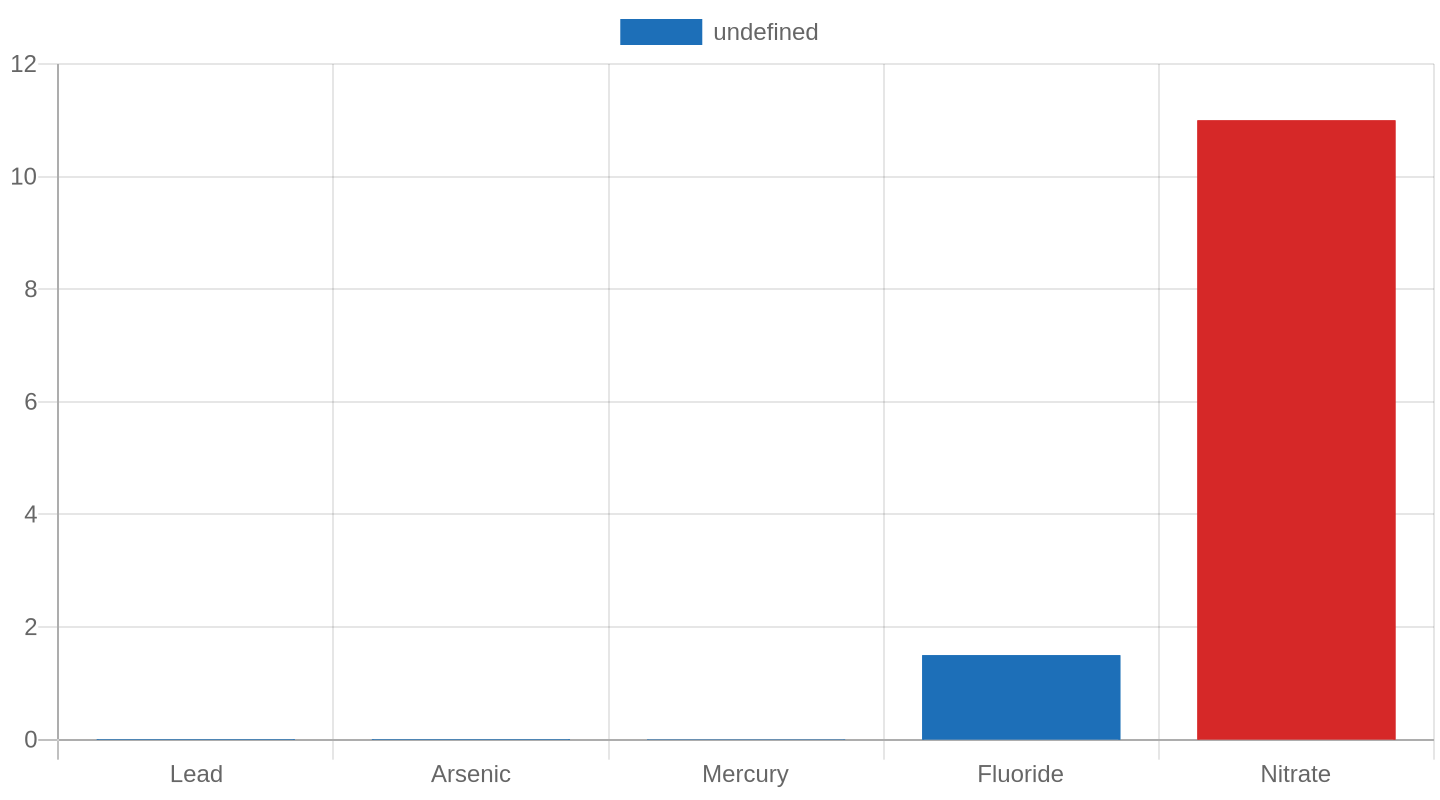
According to GEOSS South Africa, the SANS 241 limits for key chemical parameters are:
- Nitrates: Below 11 mg/L. Note that SANS 241 is stricter than the WHO guideline of 50 mg/L. In the Vyeboom region of Limpopo, a 2023 peer-reviewed study by Mutileni, Mudau and Edokpayi at the University of Venda found nitrate concentrations across 17 boreholes ranging from 7.29 to 163.14 mg/L, with the majority exceeding the SANS 241 limit.
- Fluoride: Below 1.5 mg/L. Naturally high fluoride levels are common in Limpopo, Northern Cape, North West, and KwaZulu-Natal, according to NCBI PMC research. In Siloam Village, Limpopo, 87% of households use groundwater and 85% of those households have family members with mottled teeth from dental fluorosis, according to a SciELO South Africa study.
- Lead: Below 0.01 mg/L.
- Arsenic: Below 0.01 mg/L.
- Mercury: Below 0.006 mg/L.
- Total Dissolved Solids (TDS): Below 1,200 mg/L.
- Electrical Conductivity (EC): Below 170 mS/m.
“Certain chemical contaminants that are sometimes found in a water source can cause long term health problems that take years to develop.”
H2OGuru, SANAS-accredited laboratory
The 2023 University of Venda study also found that carcinogenic risk for chromium and lead in Limpopo borehole water exceeded carcinogenic indices of 10 to the power of minus 6 and 10 to the power of minus 4, posing adverse effects for both children and adults. Aluminium in non-compliant boreholes in the same study measured 0.41 to 0.88 mg/L, exceeding regulatory standards.
Region-specific threats you may not have considered
Geography adds another layer of risk that a generic checklist will not reveal:
Gauteng: Johannesburg sits above 278 abandoned mines and 200 mine dumps, according to Phys.org reporting on University of the Witwatersrand research published in May 2024. Acid mine drainage (AMD) can pollute land and water sources up to 20 kilometres from the source. It carries uranium, arsenic, copper, cobalt, nickel, lead, and zinc. In Krugersdorp, borehole users reported skin problems from bathing or washing clothes in acidic, sulphurous water, with contamination confirmed as far back as 2005, according to BGS Earthwise. Gauteng and Mpumalanga boreholes in the Olifants and Vaal catchments face ongoing AMD inputs confirmed in studies from 1998 through 2025, per MDPI Water research published in July 2025.
KwaZulu-Natal: Manganese, iron, and zinc cause aesthetic and possible health problems in sensitive individuals, derived from weathering of bedrock and corrosion of metal pipes, according to UKZN research. The April 2022 floods critically damaged more than a fifth of eThekwini’s wastewater pump stations and thousands of kilometres of sewage piping, leading to confirmed contamination of rivers and groundwater, per Medecins Sans Frontieres reporting in November 2022.
Western Cape: The Cape Flats Aquifer carries industry, agriculture, and residential pollution. Pesticide endosulfan has been detected intermittently in the stream feeding Theewaterskloof Dam and in dams in the Grabouw region well beyond the application period, according to a UCT study published on NCBI PMC. Coastal boreholes in the Breede Water Management Area must be treated before domestic use due to saline intrusion, even though 94% of boreholes in the broader Breede area rated excellent in a 2025 ResearchGate study.
Eastern Cape: Saline intrusion is a documented historical problem in coastal areas, according to International Journal of Business and Economic Sciences Applied Research research. No Blue Drop certificate was awarded to any Eastern Cape municipality in the 2023 Blue Drop Report, according to Daily Maverick, with Gqeberha scoring 85% and East London 83% at best.
“A lot of people don’t realise that in urban areas, failing sewer lines can contaminate groundwater.”
Cor van Deventer, director at Van Deventer Dowlath & Marx Incorporated, speaking to IOL (May 2026)
The Case Against DIY Test Kits
Hardware store test strips and basic home kits measure a handful of indicators such as pH and total hardness. They will not detect bacteria, nitrates, or heavy metals. According to SANS Water, DIY kits create a false sense of security and cannot substitute for accredited SANS 241 laboratory analysis for health-safety compliance.
“We’re seeing a crisis of misinformation. 73% of the boreholes we test for the first time show some form of contamination, yet homeowners have been drinking that water for years without testing.”
Johan van der Merwe, Technical Director of Borehole Pros, in a December 2024 press release covering findings from over 3,500 water quality tests across South Africa
The same authority adds important context: “Homeowners need complete transparency. Yes, there are challenges, but for 89% of South African properties, the advantages dramatically outweigh the disadvantages when done professionally.” Testing does not mean your borehole is condemned. It means you know exactly what you are dealing with.
How Borehole Water Testing Works: What to Send, Where to Send It, and How Long It Takes
Sampling procedure
According to H2O BWT International, correct sampling procedure is essential for a valid result. Let the pump run for 20 minutes before taking the sample, at a point close to the pump. Keep the sample away from sunlight and in a cool place below 20 degrees Celsius until courier dispatch. Use the sterile containers supplied by the laboratory.
On volume: labs prefer 1 litre but can work with 750 ml. Below 750 ml, some parameters must be omitted from the analysis, according to H2O BWT International. Do not guess or improvise the container.
What the packages cover
Different labs bundle parameters differently. H2O Guru (SANAS Lab T0647) offers three packages as examples of what is typically available:
- Chemistry only: Covers EC, pH, SAR, Langelier, Ryznar, turbidity, colour, odour, TDS, TSS, free chlorine, fluoride, chloride, sulphate, ammonia nitrogen, nitrate nitrogen, nitrite nitrogen, acidity, alkalinity, calcium, magnesium, sodium, potassium, manganese, iron, and aluminium. Turnaround approximately 5 to 7 working days.
- Microbiology only: Covers HPC heterotrophic plate count, total coliforms, faecal coliforms, and E. coli. Turnaround approximately 5 to 7 working days.
- Chemistry plus microbiology: All of the above combined. Turnaround approximately 7 to 10 working days.
Note that Vinlab in Stellenbosch specifically excludes odour and taste from their standard SANS 241 packages; those parameters must be outsourced at extra cost if required. Always confirm the parameter list with your chosen lab before submitting.
Stark Borehole in Gauteng (a registered BWASA member) advises that results can take between 16 and 21 working days, so plan accordingly if you need a result before a property transaction deadline. SABS (accreditation number T0866, ISO 17025) also operates a Food and Water laboratory for testing.
SANS Water in Cape Town offers a more comprehensive audit service that includes Legionella pneumophila, water audit, leak test, and water pressure test in addition to standard SANS 241 parameters. This is worth considering for guest houses, schools, or multi-unit rental properties where Legionella in hot water systems is an additional liability.
“It is critically important to complete a yield test and water analysis because this information helps prevent unwanted surprises. You won’t waste money on an oversized pump system or discover, after spending money on installation, that the water quality is unsuitable for your intended purpose, resulting in additional, unforeseen water treatment expenses.”
J. Gey van Pittius, borehole specialist, Western Cape
How Often Must You Test?
The minimum consensus from multiple independent South African industry sources is once per year for a full SANS 241 water analysis, confirmed by both H2O BWT International and GEOSS South Africa, and echoed by JustMoney citing the Borehole Water Association of South Africa: annual water quality testing is vital for human and animal consumption from borehole sources. The WHO also recommends at least once per year for unregulated private borehole water, according to Aquatico.
WearCheck Laboratories (SANAS ISO 17025:2017 accredited) recommends monthly testing, noting that external contaminants can affect drinking water quality at any time. That frequency is more practical for commercial or institutional users than for typical homeowners, but it reflects the underlying reality that groundwater is not static.
You should test immediately, outside the annual cycle, if any of the following occur, according to GEOSS South Africa:
- Any change in the taste, colour, or odour of your water
- Nearby land-use changes such as new farming activity, construction, or industrial operations
- After water supply disruptions, low pressure events, or municipal boil advisories that could indicate area-wide contamination
What Testing Actually Costs: A Complete Cost Table
| Item | Cost range | Source |
|---|---|---|
| Annual SANS 241 water quality test (standard) | R1,500 to R3,000 | Rainbow Reservoirs, Enviroleg, Borehole Repairs Pretoria (2025 to 2026) |
| Detailed / extended water analysis | Up to R10,000 | Enviroleg 2025 |
| Bundled yield test plus drinking water analysis | Approximately R7,500 (6 to 8 hours) | J. Gey van Pittius, Western Cape |
| Yield test only (Johannesburg and Pretoria) | R3,000 to R7,500 | Rainbow Reservoirs 2026 |
| Annual maintenance inspection (cap, odour, wiring, pad) | R500 to R2,500 | Borehole Repairs Pretoria 2025 |
| Annual filtration system maintenance (UV bulb, filter, tank cleaning) | R1,000 to R2,500 | Rainbow Reservoirs, Enviroleg 2025 |
| UV steriliser lamp replacement (every 12 months) | Included in above maintenance range | Enviroleg 2025 |
| Remediation treatment system (if water fails SANS 241) | R5,000 to R20,000 | Rainbow Reservoirs |
| Whole-house filtration system example (Mega Char, 50L, activated carbon and UV) | R12,775 (sale price, was R23,849) | Pure Water 4 Life 2026 |
| Borehole rehabilitation (cleaning), basic | From R2,000 | Rainbow Reservoirs |
| Borehole rehabilitation, complex | Up to R50,000 | Rainbow Reservoirs |
Cost-of-Ownership Comparison: Testing vs. Not Testing
The reluctance to spend R1,500 to R3,000 on an annual water test is understandable. It is easier to assume the water is fine. But the comparison below shows what that assumption actually costs when it goes wrong.
| Scenario | Annual cost (tested borehole) | Potential cost (untested borehole) |
|---|---|---|
| SANS 241 water quality test | R1,500 to R3,000 per year | R0 (until something goes wrong) |
| Filtration system maintenance | R1,000 to R2,500 per year | R0 per year until system fails or water quality deteriorates undetected |
| Remediation system if failure detected early | R5,000 to R20,000 (one-off, installed knowing the problem) | Same cost, but now installed reactively after illness or property transaction failure |
| Property transaction failure (bank financing denied) | Avoided: certificate issued after passing test (Stark Borehole) | Sale collapses or is significantly delayed; urgent remediation under time pressure |
| Potential savings on municipal water (Johannesburg residential example) | Up to R19,542 per year (Borehole Repairs Johannesburg 2026) | Same saving, but realised at unknown health risk |
| Insurance claim rejection risk | Low: documented compliance history supports claims | High: non-compliant borehole can void related claims entirely |
| Legal liability (landlord supplying borehole water to tenants) | Mitigated by documented testing and treatment | Criminal negligence proceedings possible in event of illness or death (Andre van Breda, Minde Schapiro & Smith) |
Put simply: households with boreholes in Johannesburg can save up to R19,542 per year on municipal water bills, according to Borehole Repairs Johannesburg 2026 figures. An annual test at R1,500 to R3,000 represents between 8% and 15% of that saving. It is the cheapest insurance on the list.
“Regular testing is the key to maintaining a healthy and efficient borehole system.”
Rainbow Reservoirs, borehole services provider, Pretoria and Centurion, 2026 yield testing prices guide
The Legal and Insurance Dimension You Cannot Ignore
Testing is not only a health matter. It is a property and liability matter with direct financial consequences.
South African banks require a water quality and yield test certificate before approving financing on a property with a borehole, according to H2O Guru. Stark Borehole specifically issues valid certificates of compliance for insurers and banks, required when buying or selling a property with a borehole. If your borehole fails standards, bank financing can be denied and your sale can collapse.
“A borehole can add value to a property, but only if it’s compliant. Buyers, therefore, need to ask for the paperwork up front. And if the borehole isn’t registered or doesn’t meet standards, they need to know that before they sign.”
Cor van Deventer, director at Van Deventer Dowlath & Marx Incorporated, speaking to Property Professional (May 2026)
For landlords, the exposure is even more serious. Andre van Breda, Senior Associate at Minde Schapiro and Smith Incorporated, states the legal position plainly:
“The basic principle is that a landlord has a duty to deliver and maintain a property in a condition that is reasonably fit for the purpose for which it has been let. This includes that a lessee is not exposed to unnecessary risk to life and safety.”
Andre van Breda, Senior Associate at Minde Schapiro & Smith Incorporated (Private Property)
He goes further: “Should a death occur due to a lack of maintenance, an inquest docket will be opened by the police, and investigation will follow. A landlord could be found liable for negligence that resulted in the death of the tenant, and the state will then institute criminal proceedings.” There is no disclaimer clause in a lease agreement that removes this obligation: “There is no blanket indemnity that can completely absolve a landlord of all liability should an injury or death manifest.”
On the insurance side, Youlon Naidoo, Executive Head of Claims and Procurement at MiWay, advises: “As an insurer, we play an important role in helping homeowners understand these factors so that they can avoid being underinsured or having a related claim declined due to a lack of due diligence. From an insurer’s perspective, if you can tick the compliance boxes, you’re on the right track.”
The Context Driving Borehole Dependence: Why Testing Has Become More Urgent
The Department of Water and Sanitation’s 2023 Blue Drop Report, released on 5 December 2023, confirmed that 46% of South Africa’s water supply systems showed poor or bad microbiological water quality compliance during the audit period, up from just 5% in 2014. The department’s own statement in the report was unambiguous:
“It was not microbiologically safe to drink the water in almost half (46%) of our drinking water systems at times during 2022 when the Blue Drop audit was done, which resulted in increased risk of life-threatening water-borne diseases such as cholera and chronic diarrhoea.”
Department of Water and Sanitation, 2023 Blue Drop Report (released 5 December 2023)
This collapse in municipal reliability is pushing more households to boreholes as a survival strategy. But it also changes the contamination environment around those boreholes. Failing sewer infrastructure leaks into groundwater. Compromised municipal pipes mean more intrusion events. The 2022 KwaZulu-Natal floods that damaged more than a fifth of eThekwini’s wastewater pump stations are an extreme example of how quickly the contamination landscape around a borehole can change.
“Due to fluctuating dam levels, climate changes, changes in water sources and the shortage of water, our water can no longer be viewed as ‘Safe/Clean’. It is important to really KNOW your water.”
LABCO water testing laboratory, Port Elizabeth/Gqeberha
In the Mpumalanga municipality of KwaMhlanga, Zodwa, a resident of KwaZanele township, described her situation to Daily Maverick in April 2026: “Right now I have water, but not every day. Over the last year there have been times when there has been no water for up to three months. At other times it’s cut off for two days.” Across the border in Limpopo, Themba, a taxi driver from Mahlathi village in Greater Giyani Local Municipality, told the same publication in February 2026: “They have made many promises, but they have not fixed anything. When there is water on one side of the village, there is no water on the other side. Sometimes we can go almost a month with no tap water.”
Eight municipalities in Mpumalanga scored below 31% (critical or high risk) in the 2023 Blue Drop Report. In these conditions, boreholes are not a lifestyle upgrade. They are the only option. And in those exact conditions, the aquifer is under the most stress from contamination.
What Happens After You Get Your Test Results
A SANS 241 test result is not a binary pass or fail verdict that leaves you stranded. It is a diagnostic. Different failures require different responses:
- E. coli detected: UV sterilisation plus a point-of-use filter is the standard response. Do not drink the water until treated. Identify and address the contamination pathway (pit latrine proximity, borehole casing integrity).
- Elevated nitrates: Reverse osmosis or ion exchange treatment. Check for agricultural runoff, fertiliser use, or septic tank proximity.
- High iron or manganese: Oxidation and filtration. Elevated manganese is common in Gauteng and KwaZulu-Natal boreholes and is both an aesthetic problem and a potential health risk.
- High fluoride: Reverse osmosis or activated alumina filtration. Particularly relevant in Limpopo, Northern Cape, North West, and KwaZulu-Natal.
- High TDS or EC (salinity): Reverse osmosis or desalination. Particularly relevant in coastal Western Cape and Eastern Cape boreholes.
“Guessing at your water quality often leads to expensive equipment failure.”
Monster Mechanical (MME), South African borehole water treatment specialist
Treatment system hardware costs R5,000 to R20,000 depending on what the test reveals, according to Rainbow Reservoirs. A whole-house system such as the Mega Char 50L unit with activated carbon and UV steriliser is currently available for R12,775 from Pure Water 4 Life (originally priced at R23,849). Knowing exactly what you need to treat before purchasing any system is what turns that capital spend into a correct solution rather than an expensive guess. iWater Management provides full-service support including sample collection, SANAS-accredited lab analysis, a detailed report, and corrective action guidance nationally, for owners who want end-to-end support after a result comes back out of spec.
“I am thrilled with the exceptional service provided by iWater Management. Their expertise in water treatment solutions and borehole drilling is truly commendable. From start to finish, the team displayed professionalism and a commitment to excellence. They tailored solutions to meet my specific needs, ensuring sustainability and environmental responsibility. The borehole drilling was executed seamlessly, and their water treatment technologies have significantly improved water quality.”
Verified Google review on iWater Management’s SANS 241 water testing page
Choosing a Laboratory: What SANAS Accreditation Means
When selecting a laboratory, SANAS ISO 17025 accreditation is the non-negotiable minimum. It means the lab operates to an independently audited quality management system for water testing. Labs without it cannot issue results that are legally recognised for property transactions, insurance claims, or regulatory compliance.
Waterlab in Pretoria, a long-established SANAS-accredited laboratory, states its core philosophy: “It is not bricks and mortar and equipment that make a good analytical laboratory. It’s the commitment and attitude of good employees that lead to quality results.” A client testimonial on their website adds: “Waterlab is our preferred partner and has been for many years. We appreciate the fact that Waterlab is always available when we need them. Many times, we have needs that are out of our scope and expertise. Dr Louis de Wet and his team is always prepared to help and find a solution.”
Other accredited options active nationally include H2O Guru (SANAS Lab T0647), SABS (SANAS T0866), Vinlab (Stellenbosch, Western Cape), WearCheck/SetPoint Water Laboratories, LABCO (Gqeberha), and SANS Water (Cape Town). Confirm current accreditation on the SANAS register before submitting samples, as accreditations are renewed periodically.
A Note for Rural and Smallholding Owners
Peer-reviewed evidence from across the country is consistent on one point: rural borehole users face disproportionately high contamination risk, yet are the least likely to have tested their water. A 2025 country-wide qualitative study published on ResearchGate, covering focus groups across five South African provinces, found a striking consensus:
“Clean water from boreholes seems to be an illusion, as insinuated by the focus groups.”
ResearchGate, country-wide study on borehole water quality and health risks in rural communities (2025)
And from the same study: “The participants unanimously mention that the water quality in boreholes of government is poor, and that there are dangerous contaminants in the water.”
If you are on a smallholding or farm, your borehole is likely extracting from an aquifer that is also drawing from adjacent agricultural, animal, or septic sources. The Borehole Water Association Journal quotes an expert hydrogeologist on the range of contamination sources: “There are many sources of contamination that could affect the aquifer from which your borehole extracts water, from nearby graveyards and refuse dumps to petrol stations and industrial sites.” Annual testing is the minimum. Trigger-based testing after any land-use change in your area is not paranoia. It is basic due diligence.
A Final Word on the Numbers
The municipal water system is under documented and worsening pressure. Neil Macleod, former head of Durban’s water and sanitation department, framed the trajectory plainly: “You can’t keep running a car if you don’t look after it. It will break down and stop. The same is true for power stations or roads. If you don’t maintain it, the potholes get worse and the road breaks apart. Bang! Suddenly you hit the cliff and the entire asset collapses. I’m worried that our water supply systems in many parts of the country are heading in the same direction.”
Boreholes are a rational response to that trajectory. They can reduce your municipal bill by 30% to 80%, according to Savvy Plumbing data, and save a Johannesburg residential household up to R19,542 per year. But a borehole is only a solution if the water it produces is safe. An annual test at R1,500 to R3,000 is the toll for that assurance. The alternative is assuming your water is fine, which is exactly the assumption that has left 73% of first-time tested boreholes showing contamination that owners were unaware of.
For comprehensive guidance on borehole water management, treatment options, and how to find a SANAS-accredited laboratory near you, read the full guide at Waterpoints SA.
Does your borehole meet SANS 241 standards?
Find out if your water is safe to drink and what testing costs apply.
Vetted local installers · honest advice first