- A residential borehole needs at least 500 L/h (per MyBroadband) to be worth equipping; commercial sites need 5,000+ L/h (boreholeguide.co.za).
- Yield is set by where rock fractures sit, not by how deep you drill, so deeper is not always better.
- Full residential setup runs R65,000 to R140,000 (waterpointsa.co.za); breakeven is 5 to 6 years (liquaflo.co.za).
- Yield tests must comply with SANS 10299-4:2003; a report without a Certificate of Compliance is legally and practically worthless.
- A dry hole drilled without a “No Water, No Pay” clause can still cost you R50,000 to R70,000 (waterpointsa.co.za).
- Drilling below 85 m is statistically unjustified in most South African formations (Water Research Commission).
Rising municipal tariffs are forcing the decision faster than ever. Johannesburg Water has increased its Demand Management Levy by 65.6% (eNCA), and Cape Town’s Level 1 consumptive tariff for domestic households in the 6 to 10.5 kl band now sits at R35.70 per kilolitre (capetown.gov.za). Against that backdrop, the borehole yield test report sitting on your kitchen table is the single most important piece of paper in your water-security journey. Reading it correctly determines whether you spend R65,000 wisely or write off R50,000 on a hole that never produces a drop.
This article walks you through every line of a yield report, translates the geology jargon into rand-and-cents decisions, and gives you a clear framework for calculating real completion costs and return on investment.
What a yield test actually measures
A yield test is a controlled pumping experiment. The driller installs a temporary pump, draws water at a known rate, and measures how fast the water level recovers. The three numbers that matter are:
- Instantaneous yield (L/h): the peak flow rate the borehole can produce at the moment of testing.
- Sustainable yield (L/h): the rate at which the aquifer recharges the borehole. This is the number that governs pump sizing.
- Static water level (m below surface): the depth at which water sits when no pump is running. This determines submersible pump placement and power requirements.
These tests are governed by SANS 10299-4:2003 (waterpointsa.co.za), which specifies minimum test durations, logging intervals and reporting formats. A report that does not reference this standard and does not include a Certificate of Compliance (CoC) is not worth the paper it is printed on, regardless of how impressive the headline yield figure looks.
“If you want a yield test with a CoC / SANS certificate, unfortunately you’ll have to pay up. I’ve seen quite a few drillers who don’t even offer this – they drill, pipe and leave.”
That observation is not a minor gripe. Without a certified yield test, you cannot correctly size your pump, and an oversized pump on a low-yield borehole will run the hole dry, burn out the motor, and leave you with a repair bill on top of the original drilling cost.
“You don’t know if there is water and how much… you need to drain the hole and do a pressure and volume test to see how much water you can pull and spec the pump and motor according to that. Just 2c from an old Senwes irrigation engineer.”
The viability thresholds: what your yield number means in practice

Once you have a certified sustainable yield figure, map it against these benchmarks:
| Yield range | Verdict | Practical application |
|---|---|---|
| Below 500 L/h | Below residential minimum (MyBroadband) | Garden supplementation only; do not connect to home supply |
| 500 to 1,000 L/h | Marginal residential | Viable with storage tank strategy and low-draw pump |
| 1,000 to 5,000 L/h | Typical Gauteng range (boreholehub.co.za) | Full residential supply; smaller properties can irrigate |
| 5,000 to 20,000 L/h | Western Cape TMG aquifer range (geoss.co.za) | Full residential plus irrigation; commercial entry point |
| 5,000+ L/h | Commercial minimum (boreholeguide.co.za) | Agricultural, hospitality and light-industrial supply |
The Water Research Commission applies a safety factor of 1.3 when all hydrogeological variables are known. In practice, this means if your sustainable yield test shows 650 L/h, your usable design yield for pump sizing is 650 divided by 1.3, which gives approximately 500 L/h, right at the residential minimum. Any unexpected aquifer pressure drop during a dry season will push you below viability. That margin matters.
The safety factor and pump sizing: where most DIY projects fail
The most common and most expensive mistake in residential borehole projects is fitting a pump that the aquifer cannot sustain. A driller who does not conduct a proper yield test has no basis for pump selection.
“Field test kit is trrow a pump down hole and drain it. Then connect a manifod with pressure gauges and multiple valves and meassure the water in a bucket with a stopwatch to get the L/h. Everyone I hav seen just includes or sticks a.75 or1.1kW pump in and calls it a day.”
A pump and installation for a standard residential setup costs R10,000 to R25,000 (thehandymanjohannesburg.co.za). Replacing one that has burned out because it was oversized for the aquifer repeats that cost. The correct approach is to test first, then size the pump to the proven sustainable yield, not to the maximum the pump can theoretically pull.
One experienced homeowner describes the alternative strategy for marginal yields:
“I went with a higher pressure, lower delivery borehole pump so that a smaller motor could be used. This allows me to power the 0.75kW pump off my home solar during the day. It takes 5 hours to fill a 5000 litre tank but I’m in no hurry while the sun is shining and it’s automatic. It also gives the water more time to seep through the rock to keep the hole filled so there is less risk of running dry. I’ve saved around R50K in water…”
This strategy, slow fill into buffer storage using a solar-compatible motor, is the correct engineering response to a 500 to 1,000 L/h result. It is not a compromise; it is the right design choice.
Should you drill deeper? What the geology actually says
A disappointing yield test almost always prompts the question: “What if we go another 20 metres?” The answer, in most South African formations, is that deeper drilling is unlikely to help and may actively cause harm. Here is why.
A 2021 hydrogeology study on hard-rock aquifers (mdpi.com) found that drilling deeper only increases borehole volume; it does not tap into new water sources. Water levels in the wells are determined by where rock fractures occur, not by total well depth. The Water Research Commission’s Makoppa Dome aquifer study (wrc.org.za) is even more direct: 90% of water levels are shallower than 90 m, and there is no statistical justification for drilling below approximately 85 m in the majority of cases.
There is also a contamination risk. South African Groundwater Guidelines (hortgro.co.za) warn that drilling deeper can intersect saline water at depth, which then mixes upward into a previously fresh shallow aquifer, permanently compromising water quality. You do not just waste money on the additional metres; you may ruin what you already had.
Deepening costs are real. Rates in Gauteng run R1,200 to R1,800 per metre (waterquotes.co.za). An extra 20 m costs between R24,000 and R36,000, money that would be better spent on buffer storage and proper filtration in most cases.
“I know of 4 houses up the road from me all on the same street where their boreholes have dried up this year, this past week a neighbor drilled a borehole I believe more than 100m and had nothing to show for it.”
The sunk cost trap: when to walk away from a dry or marginal hole
If drilling a 60 m to 100 m residential borehole has already cost you R20,000 to R50,000 (boreholeguide.co.za) and the yield test comes back below 500 L/h, you face a genuine sunk cost decision. The temptation to spend another R24,000 to R36,000 on deepening to “protect the original investment” is understandable but often irrational.
Before drilling, Pieter V from Pretoria East illustrates the alternative approach:
“Knew exactly how deep the water was before I drilled. The driller was shocked I had the data.”
A pre-drill geophysical survey costs a fraction of a failed borehole. For those who did not commission one, the decision matrix after a poor yield test is straightforward. If sustainable yield is below 300 L/h, equipping the borehole for garden-only use at low cost (a basic 5,000 L tank and 0.37 kW pump can be set up for R16,500 per Facebook marketplace comparisons) is worth considering. If yield is zero, walk away. Deepening below the 85 m WRC threshold in hard rock without specific hydrogeological evidence pointing to a deeper fracture zone is throwing good money after bad.
The legal context matters here too. A dry borehole drilled without a written contract and a “No Water, No Pay” clause can still legally incur full drilling fees of R50,000 to R70,000 (waterpointsa.co.za). Decisions about deepening should be made before the drill bit goes in, not after.
Real completion costs and cost-of-ownership comparison
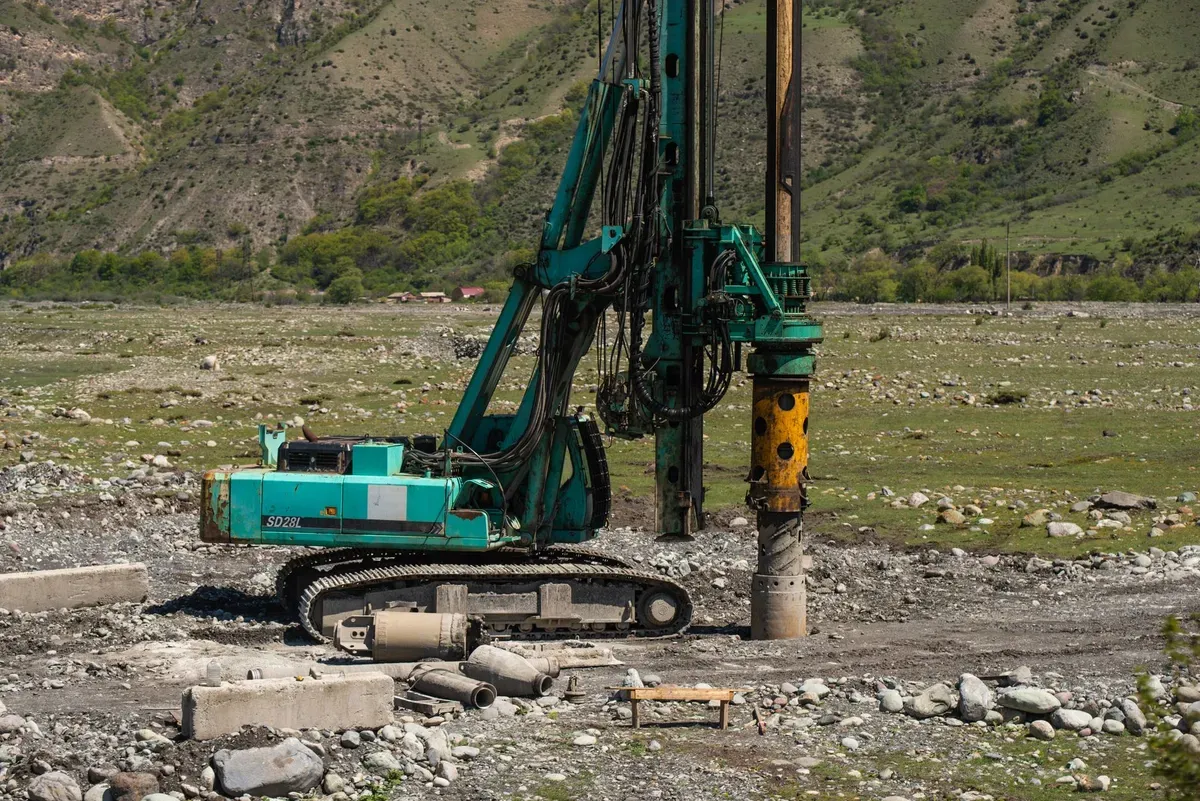
A yield test result is only meaningful when placed in the context of total project economics. Here is what a complete residential borehole setup actually costs:
| Cost component | Typical range | Source |
|---|---|---|
| Drilling (60 to 100 m) | R20,000 to R50,000 | boreholeguide.co.za |
| Pump and installation | R10,000 to R25,000 | thehandymanjohannesburg.co.za |
| Storage tanks, pressure system, filtration, reticulation | Balance to total | Varies by site |
| Total installed (residential) | R65,000 to R140,000 | waterpointsa.co.za |
| Breakeven period | 5 to 6 years | liquaflo.co.za |
Cost-of-ownership comparison over 10 years
| Scenario | Year 1 to 6 cost | Year 6 to 10 position | 10-year outcome |
|---|---|---|---|
| Municipal supply only (Cape Town, 10 kl/month at R35.70/kl) | Approx. R25,700 in water tariffs alone (before future increases) | Fully tariff-exposed; no asset | R50,000+ spent, nothing owned |
| Borehole at R100,000 setup (mid-range) | Capital repaid by tariff savings by year 5 to 6 | Net positive; asset on title deed | Net saving grows every year tariffs rise |
| Marginal borehole (below 500 L/h) plus municipal top-up | Partial offset only; breakeven extends to 8 to 10 years | Partial protection from tariff rises | Viable if correctly equipped; poor if oversized pump fitted |
One homeowner who has passed the breakeven point puts it plainly:
“I don’t count usage now after instaling a Borehole. It will last for another 5 decades according to the soil engineers report! Best R40k I ever spent. It will pay itself over many times over the years. Maintenance is just a change of filters every few months, and checking the pumps.”
That R40,000 figure sits at the lower end of the current range (some setups in favourable geology with shallow water tables do come in below R65,000), and the ongoing maintenance costs are genuinely low when the installation is done correctly with quality components.
Regional context: what your postcode means for expected yield
Your yield test result does not exist in a vacuum. The numbers that are normal in the Western Cape are exceptional in parts of the Highveld, and what looks marginal in Gauteng may be the geological ceiling for your specific formation. A result of 1,500 L/h in Roodepoort is good; the same number in Stellenbosch, where the Table Mountain Group aquifer (geoss.co.za) regularly delivers 5,000 to 20,000 L/h, is a reason to re-examine the borehole siting.
In KwaZulu-Natal, the cautionary tale is worth understanding. During the 2015/2016 drought crisis, 40% of newly drilled boreholes in KZN failed within their first week of operation (Daily Maverick). That failure rate traces directly to rushed drilling without proper geological assessment. A yield test conducted correctly and referenced against regional aquifer data prevents exactly this outcome.
The Cape Flats add another regional complexity: a dense clay layer sitting 15 to 20 m below the surface can trap surface water in a shallow perched aquifer that behaves very differently from a deep fractured-rock system.
“Another factor about well points is that in parts of the cape flats, there is a layer of extremely dense clay about 15 to 20m below the surface, which traps the surface water… It never ran dry, it yielded enough to allow for the watering of the garden three times a week. We tried to penetrate the clay layer… making it no longer a simple exercise.”
Penetrating that clay layer to reach a theoretically larger deeper aquifer can compromise the shallow system entirely. Regional geology dictates strategy; yield test numbers must be interpreted in that context.
What to do with a good yield test result
If your certified SANS 10299-4:2003 test returns a sustainable yield above 1,000 L/h and a water quality result within acceptable potable limits, the path forward is methodical:
- Size your pump to the proven sustainable yield divided by the WRC safety factor of 1.3, not to the instantaneous peak.
- Specify the correct pipe class for the installation depth. Wrong-class pipe is a documented and costly failure mode.
- Install a dry-run protection float switch. Aquifer levels fluctuate seasonally, and a pump running dry destroys itself.
- Budget the full R65,000 to R140,000 (waterpointsa.co.za) for a properly completed system, not just the drilling cost.
- Ensure your contractor carries certified installer credentials and that your contract includes penalty clauses for poor workmanship.
Mr. Singh, a homeowner in Alberton who came in at roughly the mid-point of the cost range, reflects on what made the difference:
“We thought it would just be drilling a hole and putting in a pump. But [our installer] explained everything: from the geo survey to the pressure systems.”
Ready to act on your borehole yield test results?
Red flags in a yield test report
Before accepting any yield test report, check for the following:
- No reference to SANS 10299-4:2003. Without this, the test methodology is unverified.
- No Certificate of Compliance or CoC number. This document is the legal instrument that protects you.
- Only an instantaneous yield reported, with no sustainable yield or recovery rate data. Instantaneous yield is meaningless for pump sizing.
- No static water level measurement. Without this, the driller cannot correctly place the submersible pump.
- No water quality test results. Yield alone does not confirm potability.
- A recommendation to deepen with no hydrogeological justification. Given that the WRC finds no statistical basis for drilling below approximately 85 m in most formations, any recommendation to go deeper should be accompanied by specific geological evidence, not just a sales pitch.
Thabo M. from Centurion learned this lesson by watching his neighbours absorb the losses before making his own decision:
“4 of the boreholes near me came back dry. I’d have lost R60k. Went with a tank instead.”
A tank-based rainwater harvesting system is a legitimate alternative for properties in high-rainfall areas or where geology is unfavourable. It is not a consolation prize; it is the correct engineering answer when the yield test data (or the absence of it pre-drill) points to an unacceptable risk profile.
The ROI calculation: your borehole in numbers
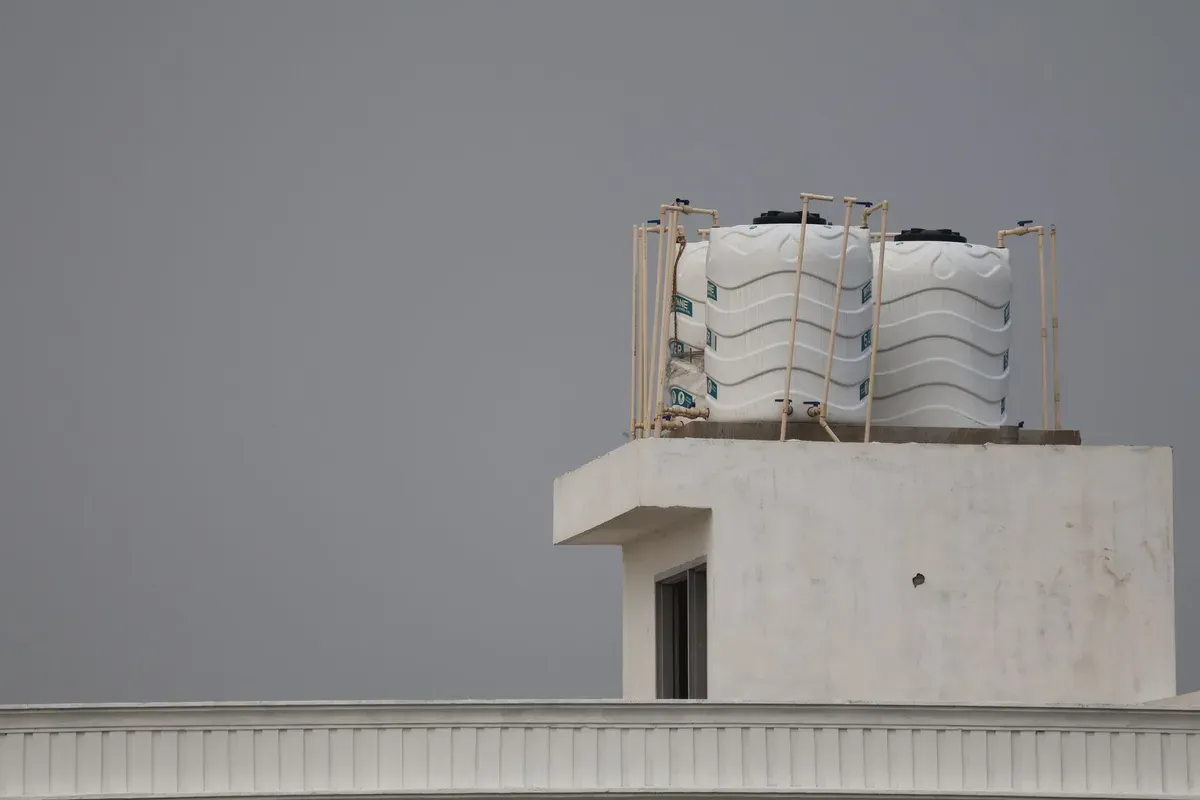
Here is a straightforward framework using verified figures. Assume a Cape Town household using 10 kl per month, paying the Level 1 domestic tariff of R35.70 per kilolitre (capetown.gov.za):
- Monthly municipal water cost: 10 kl x R35.70 = R357
- Annual municipal water cost: R4,284 (before tariff increases)
- Mid-range borehole setup: R100,000
- Simple payback at current tariff: approximately 23 years at this tariff level alone
That looks long, but it ignores three factors that dramatically change the number. First, tariffs rise every year; Johannesburg’s Demand Management Levy alone jumped 65.6% in one review cycle. Second, the borehole saves water across all uses including irrigation, which can triple effective monthly savings. Third, it adds a tangible asset value to the property. The liquaflo.co.za breakeven estimate of 5 to 6 years assumes higher combined household water consumption and includes irrigation savings, which is realistic for a suburban property with garden use.
The honest answer is: run the ROI calculation for your specific consumption, your current municipal tariff, and your total setup cost. Do not rely on industry averages that may not match your usage pattern or your region’s water pricing.
Summary: the decision checklist
After reading your yield test report, work through these questions in order:
- Is the report SANS 10299-4:2003 compliant and does it include a CoC?
- Is the sustainable yield (not instantaneous yield) above 500 L/h for residential use?
- Has the safety factor of 1.3 been applied to produce a design yield for pump sizing?
- Is the total setup budget (pump, tanks, filtration, reticulation) included in your cost model, not just drilling?
- If yield is marginal, is a slow-fill buffer tank strategy with a solar-compatible pump part of the plan?
- If yield is zero or below 300 L/h, has the decision to deepen been supported by specific hydrogeological evidence, not generic optimism?
- Have you calculated ROI against your actual tariff and actual consumption, accounting for annual tariff increases?
A yield test report is not a verdict. It is data. Read correctly, it tells you exactly what system to build, what pump to fit, what storage to size, and whether the economics work for your specific property. Read incorrectly, or ignored in favour of a driller’s upsell pitch to go another 20 metres, it costs you money you cannot recover.
To see what aquifer data is available for your specific address before you commission a test or authorise any deepening, check my address on the WaterPointsSA tool and know what your geology actually supports.
Get started
Ready to act on your borehole yield test results?
Vetted local installers · honest advice first
Illustration: waterpointsa.co.za