Key Points
- Buffalo City is under Stage 3 water restrictions with Punitive Tariff 1B, targeting a 35% demand cut (buffalocity.gov.za).
- Scheduled water-shedding runs from 7:30 PM to 4:30 AM (or 10:00 PM to 4:00 AM in some blocks), but pipe failures add unscheduled dry days.
- Plan for 3 to 7 continuous days without supply when sizing any backup system (watertankcalculator.com).
- A minimum 2,500 to 5,000 litre tank with an inverter-backed or solar-powered booster pump is the recommended starting point.
- Private tanker water costs R350 per kilolitre (mybroadband.co.za). A 5,000 L installed tank system costs R8,000 to R15,000 once.
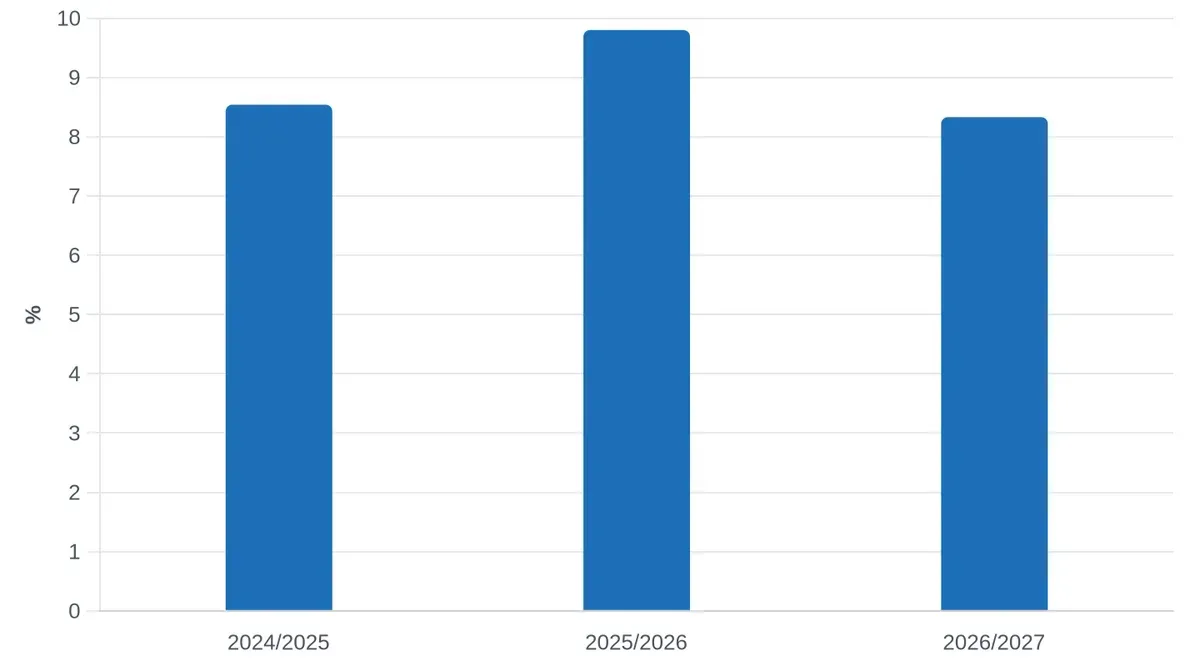
- BCMM tariffs rose 8.54% in 2024/2025 and 9.80% in 2025/2026, with a further 8.33% projected for 2026/2027.
- High-lying zones carry the greatest risk: Nompumelelo, Ducats, and Mdantsane Zones 12 to 18 experience the longest outages.
- BCMM does not offer direct cash rebates for tank installation, but Section 12B and 12L tax deductions and bank green-finance products can reduce your net cost.
Why Buffalo City Residents Cannot Wait Any Longer
Buffalo City Metropolitan Municipality (BCMM) is not experiencing an isolated fault. It is living through the accumulated consequence of decades of infrastructure under-investment, accelerating tariff hikes, and a water network that loses supply simultaneously to pressure failures, burst pipes, and load-shedding-induced pump outages.
“No water in Beacon Bay and many other areas, Dorchester Heights, Vincent… This is not a fault, its poor maintenance.”
That frustration is well-founded. According to the SAHRC’s report flagging the sewage crisis in Eastern Cape municipalities, the West Bank Wastewater Treatment Facility recorded severely elevated E. coli levels. Both the Mdantsane and Zwelitsha sewage works achieved 0% microbiological compliance according to GroundUp’s investigation. The infrastructure that delivers water and treats the water leaving your home is, by measurable standards, failing.
“The local police station cannot operate optimally because its water tanks have run dry… Residents need clear answers… not shifting explanations and vague assurances.”
A Zinyoka resident near King William’s Town captured the longer-term reality in plain terms in January 2026:
“The last time we had running water on our taps was in April. Even though the municipality is trying it’s best to provide water through tankers on trucks, that water is not enough. We have livestock that also needs water to drink.”
Waiting is not a neutral decision. Every month you delay, the tariff baseline rises, tanker operators charge more, and the pool of available installers shrinks as the city-wide rush for tanks accelerates. The Daily Dispatch reported tank retailers being inundated with calls after residents lost confidence in the municipal supply:
“Buffalo City residents trapped in a municipal water quality crisis, took to the phone this week and inundated tank retailers with queries on every aspect of off-grid water supply methods. Do you trust the tap water? Rush on water tanks as few trust mayor’s assurance.”
Understanding the Current Restriction Regime and Its Costs
BCMM is currently enforcing Stage 3 restrictions under Punitive Tariff 1B, with the stated aim of reducing municipal water demand by 35%. The formal scheduled interruption window is 7:30 PM to 4:30 AM, or 10:00 PM to 4:00 AM in certain blocks (buffalocity.gov.za). In practice, residents in high-lying areas experience far longer outages because gravity-fed pressure drops when reservoirs are low.
The areas with the longest documented outages include Nompumelelo, Ducats, and Mdantsane Zones 12 to 18. If you live at elevation in any of these zones, the scheduled window is a minimum, not a maximum.
“Water pressure in Vincent is pathetic.”
The tariff structure compounds the problem. Under the 2024/2025 BCMM Tariff Book, the basic domestic rate for the 0 to 6 kL band is R26.72 per kilolitre. Stage 3 restrictions cap usage at 20 kL in any 30-day period before punitive penalties activate. Exceed that limit and you move into Tariff 1B territory, where the unit cost jumps sharply. Properties located outside the municipal grid area face an additional 25% surcharge on top of standard tariffs.
Looking at the trend: tariffs increased 8.54% in the 2024/2025 financial year, 9.80% in 2025/2026, and a further 8.33% increase is projected for 2026/2027 (BCMM Public Notice and Annexure AC 1). A local resident’s formal submission to the BCMM Draft Rates Policy hearing put the long-run trajectory bluntly:
“The proposed 9.8% increase in water tariffs, justified as being based on costs, is above inflation and raises serious questions about cost transparency. In 1994, the cost of water in Vincent, East London, was R1.30 per kL (including 14% VAT). Adjusted for 31 years of inflation… this should be R7.04 per kL, yet the current charge is R26.96 per kL. This discrepancy suggests systemic overcharging over the past three decades.”
What Emergency Water Actually Costs You Right Now
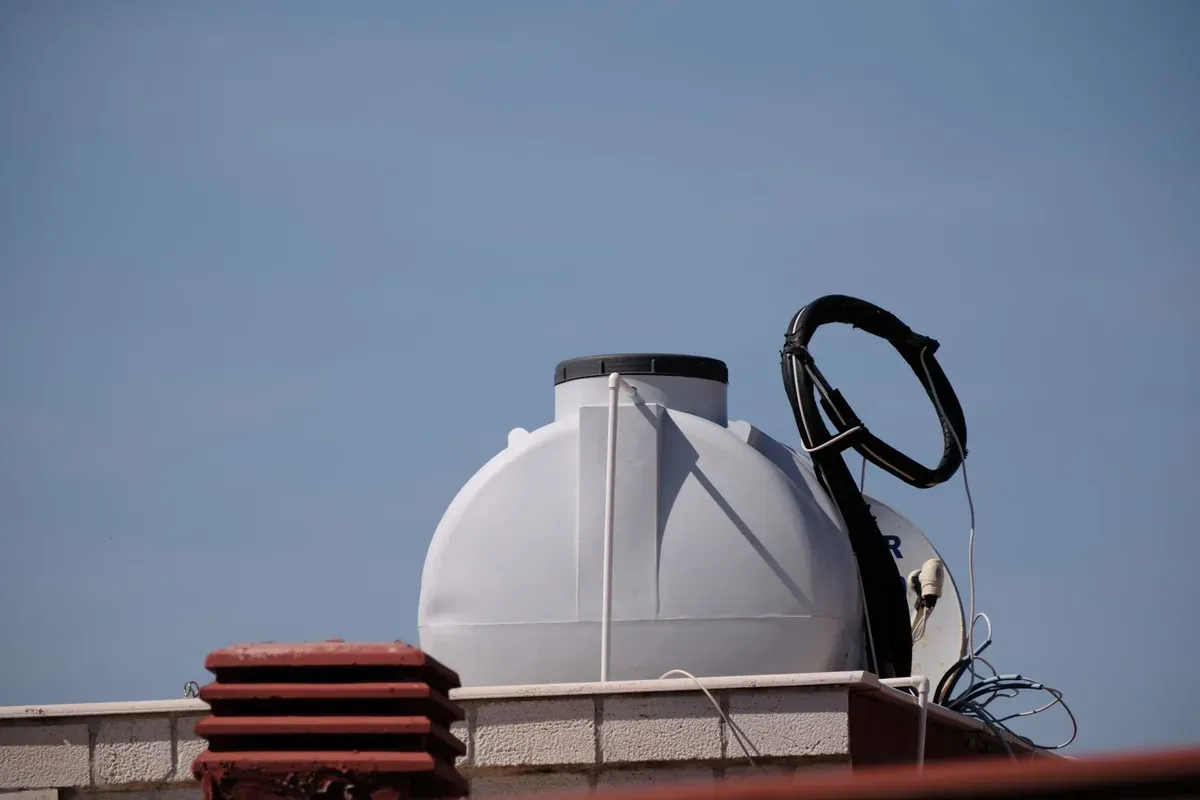
Before comparing backup systems, you need a clear picture of the alternatives, because that is your real cost of doing nothing.
| Water Source | Cost per kilolitre (ZAR) | Notes |
|---|---|---|
| BCMM municipal tariff (0 to 6 kL band) | R26.72 | Rising 8 to 10% annually |
| Private water tanker delivery | R350 | Per kL, subject to availability (mybroadband.co.za) |
A typical household using 15 kL per month pays roughly R401 at the standard tariff. The same volume via private tanker costs R5,250. That contrast is the economic case for every rand you spend on a backup system.
A 5,000 L installed system (R8,000 to R15,000 fully installed) that avoids three months of tanker deliveries pays for itself before the year is out.
Ready to see which backup options make sense at your specific address? Check my address for a feasibility report and priced recommendation.
Backup System Options: Specifications, Costs and Honest Trade-offs
Option 1: Rainwater Harvesting Tank (The Most Practical First Step)
For most Buffalo City households, a vertical polyethylene rainwater tank connected to a booster pump is the fastest, most cost-effective path to water independence during scheduled and unscheduled outages.
| Tank Size | Tank-Only Cost | Fully Installed (tank, pump, controller, plumbing, base) | Recommended Use Case |
|---|---|---|---|
| 1,000 L | R2,469 (ecotanks.co.za) | Approximately R5,000 to R7,000 | Single-person flat, short outages only |
| 5,000 L | R4,672 to R8,000 | R8,000 to R15,000 (servicelinksa.co.za) | Standard family home, 3 to 5 day outages |
| 10,000 L | R18,129 (ecotanks.co.za) | R25,000 to R38,000 estimated | Large household, extended outages, livestock |
| 10,000 to 15,000 L | R20,000 to R30,000 (enviroleg.co.za) | R30,000 to R45,000 estimated | Small business, smallholding, 7-day+ resilience |
The watertankcalculator.com recommendation for this region is 2,500 to 5,000 litres minimum, paired with an inverter-backed or solar-powered booster pump. The pump-inverter pairing is not optional: as one resident noted bluntly in response to the July 2026 BCMM notice:
“First no electricity AND water (no backups on pumps when power is out) now no water.”
A tank without a pump backup on the electrical side solves half the problem. During load shedding, a gravity-fed or inverter-backed pump is what separates a working system from an expensive ornament.
Eco Tanks backs their tanks with a 10-year full replacement guarantee (ecotanks.co.za), which matters when you are making a multi-thousand rand commitment in a corrosive coastal or high-UV inland environment.
One practical note from a local tank owner that every installer should pass on to every buyer:
“A leave catcher and firstflush system is an absolute must as this will elimate lots of headaches down the road with debris and dirty water in the tanks causing blocked waterflow and ineffective pumps. Do not skip this in your initial installation… Clean tank sifs/nets at least every 3 months.”
Budget an extra R800 to R2,500 for leaf catchers, first-flush diverters, and tank screen inserts. Skipping them is a false economy.
Option 2: Borehole (High Upfront Cost, Long-Term Independence)
Boreholes are appealing in principle but carry meaningful risk in the Buffalo City region. The Water Research Commission records general borehole yields here as below 2 litres per second, which is low. The regional groundwater pH reaches up to 8.35 (dws.gov.za), meaning alkaline water that will require treatment before drinking and may affect certain appliances over time.
| Cost Component | Range (ZAR) | Source |
|---|---|---|
| Hydrogeological survey (siting) | R5,000 to R10,000 | enviroleg.co.za |
| Drilling per metre | R500 to R1,500 | enviroleg.co.za |
| Casing per metre | R400 to R700 | enviroleg.co.za |
| Water yield testing | R1,500 to R5,000 | cogta.gov.za |
| Annual service contract (pump maintenance) | R1,000 to R2,500 | savvyplumbing.co.za |
| Replacing a burnt-out submersible pump | R15,000 to R30,000 | enviroleg.co.za |
A 50-metre borehole at mid-range drilling and casing costs, plus siting and yield testing, places your all-in entry cost at roughly R65,000 to R120,000 before any pump or filtration is included. On a yield below 2 L/s, your daily extraction is limited. This is a solution for households with larger properties, higher budgets, and patience. For urban plots in Mdantsane or Zwelitsha, the 5,000 L tank system is almost always the better first investment.
One community member offered a practical middle path for groundwater users:
“With an inexpensive +/-R5000 filter system, I can get a lot of [dirt] out of my ground water making it suitable for everything else and simply buy my drinking water. Should the [situation worsen] I can add the additional filters and a RO [Reverse Osmosis] to get it to drinking quality.”
Option 3: Grey-Water Reuse (Extends What You Have)
Grey-water systems do not create new water, they redirect what you have already paid for, reducing the rate at which your backup tank depletes. They are most effective when combined with a primary storage solution, not as a standalone fix.
| Grey-Water System Type | Cost Range (ZAR) | Source |
|---|---|---|
| Basic DIY diverters | R500 to R2,000 | privateproperty.co.za |
| Mid-range installed irrigation system | R15,000 to R24,000 | property24.com |
| Sophisticated treatment systems | R50,000 to R120,000 | a2v.co.za |
Cost-of-Ownership Comparison Over 5 Years
The comparison below assumes a standard household using approximately 15 kL per month, and uses current tariff baselines with the projected annual increases factored in from 2026/2027 onward.
| Scenario | Year 1 Cost (ZAR) | 5-Year Total (ZAR, estimated) | Notes |
|---|---|---|---|
| Municipal supply only, no backup | R4,812 to R6,000 | R28,000 to R38,000 | Based on R26.72/kL rising 8 to 10% annually, plus risk of R350/kL tanker top-ups during outages |
| 5,000 L tank system, DIY partial | R12,500 to R19,500 (install year) | R16,000 to R24,000 | Includes installation, minimal ongoing costs, annual tank inspection |
| 5,000 L tank, fully installed professional | R15,000 to R22,000 (install year) | R18,000 to R27,000 | Professional install with booster pump, inverter backup, first-flush |
| Borehole (50 m, mid-range) | R65,000 to R120,000 (install year) | R72,000 to R135,000 | Low yield risk in Buffalo City region; pH filtration adds ongoing cost |
| Private tanker dependence (crisis scenario) | R63,000 | R315,000+ | 15 kL x R350/kL x 12 months. This is the true cost of doing nothing during extended outages |
The 5,000 L fully installed system breaks even against tanker dependence in under four months, and against rising municipal tariffs within two to three years. The DIY route cuts that payback period further. One MyBroadband forum user (frankvw) went fully off metered supply:
“I installed a 5,000L rainwater harvesting tank… and we haven’t used a drop of metered water since. I did the work myself… and I broke even on the investment months ago.”
Note: even if you go fully off-grid for water, BCMM’s connection fee remains. One Eastern Cape resident who has submitted zero meter readings for months confirmed:
“To date, we have not yet run out of water, despite the rains being very scarce here in some parts of the Eastern Cape. Sadly we still do pay the mandatory ‘connection’ fee which is ridiculous. We submit a zero reading every month.”
What Happens to Your Backup System When the Municipality Reconnects
There is a hazard most installers do not mention upfront. After pipe repairs or water supply interruptions, dirty or sediment-laden water sometimes enters household systems temporarily. If your backup tank is plumbed into the municipal line with a direct feed, that first flush of restored supply can contaminate stored water.
The correct installation includes a solenoid valve, float switch, and a sediment pre-filter on any municipal top-up line. This is not an optional upgrade. It is what separates a system that works for ten years from one that fails in its first crisis event.
Incentives, Financing and Tax Considerations
BCMM does not offer direct cash subsidies or tariff rebates for residential water tank installation (buffalocity.gov.za). However, the following mechanisms reduce your net cost:
- Section 12B of the Income Tax Act: Allows up to 100% accelerated depreciation in year one on solar components used for agricultural or business purposes (www.gov.za). If your booster pump is solar-powered and you operate any commercial activity from your property, this is worth discussing with your accountant.
- Section 12L of the Income Tax Act: Provides a 95c per verified kilowatt-hour tax deduction for energy efficiency improvements, extended to December 31, 2030 (www.gov.za). An inverter-backed pump system that reduces grid energy draw qualifies for assessment.
- Standard Bank LookSee platform: Offers financing for water backup solutions up to R300,000 without requiring a cash deposit (looksee.co.za).
The municipality’s attitude toward self-sufficient residents has historically been ambivalent, as one resident captured:
“This is the same municipality that wanted to punish households for installing Jojo tanks. Communities go for months without water and there’s no communication as to why.”
That policy environment makes the case for self-reliance even more clearly. Financing options exist. Incentives exist. The only thing that is not guaranteed is that the municipal supply will improve before your next outage.
Practical Installation Checklist for Buffalo City and King William’s Town
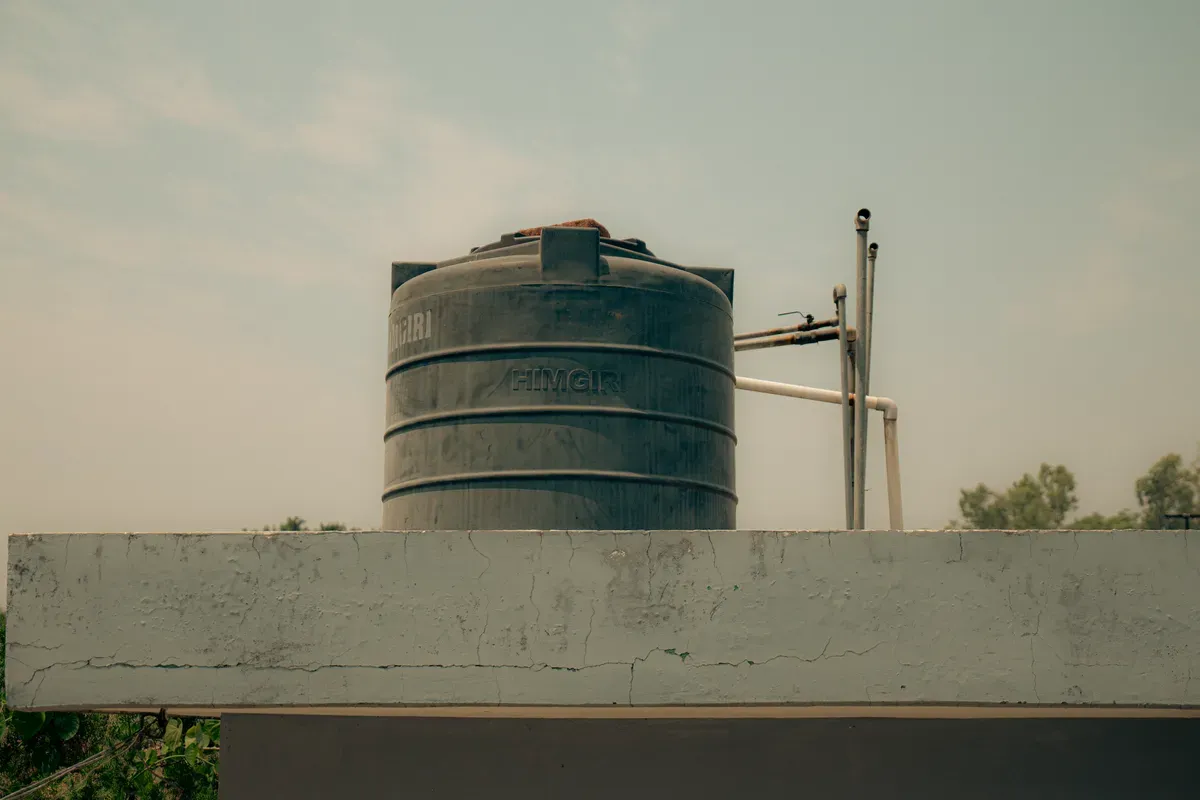
- Size for 3 to 7 days of household consumption, not the scheduled outage window (watertankcalculator.com). A family of four using 250 L per day needs at least 1,750 L for 7 days. A 5,000 L tank provides a meaningful buffer.
- Include an inverter-backed or solar booster pump. A tank without power to the pump is a storage vessel, not a water system.
- Install a first-flush diverter and leaf catcher before the tank inlet. Skipping this step is the single most common cause of pump failure within the first year.
- Use a float switch and solenoid valve on any municipal top-up connection to prevent overfill and contamination from dirty municipal resumptions.
- If using a borehole: budget for pH and sediment filtration given regional groundwater pH up to 8.35. Consider a staged approach: R5,000 basic filter first, reverse osmosis added later if needed.
- Budget for an annual service contract (R1,000 to R2,500 for borehole pumps). Do not skip this. A burnt-out submersible pump costs R15,000 to R30,000 to replace.
- Ask your installer for a 10-year tank warranty in writing. Eco Tanks provides this as standard.
Is your Buffalo City address in a high-risk water zone?
A Realistic Summary of Where Costs Land
There is no single right answer for every Buffalo City household, but the numbers point clearly in one direction. Private tanker water at R350 per kilolitre is not a long-term strategy. Both are symptoms of a system under serious pressure, and both cost multiples of what a properly sized installed backup system costs over any reasonable time horizon.
The 5,000 L fully installed system at R8,000 to R15,000 is the right entry point for most suburban households. It covers the recommended 3 to 7-day outage window, it works through load shedding if paired with an inverter, and it can be financed through Standard Bank LookSee without a deposit. For larger households or those in the highest-risk zones of Nompumelelo, Ducats, or Mdantsane Zones 12 to 18, a 10,000 L system at R25,000 to R38,000 installed is the more honest recommendation.
The tariff trend, rising at 8 to 10% annually against a backdrop of deteriorating infrastructure, means every year you wait resets your payback calculation upward. The SABC News report on the catastrophic drought facing the Amathole District and the national government’s intervention forcing 38 municipalities to produce corrective action plans confirm this is not a short-term disruption. The math already favoured acting in 2024. It favours it more strongly now.
Find out which systems are available and installed in your specific area right now: Check my address.
Get started
Is your Buffalo City address in a high-risk water zone?
Vetted local installers · honest advice first
Illustration: waterpointsa.co.za