Key points
- Drilling rates in Cape Town vary significantly by region and rock hardness, from R400 to R1,000 per metre in the Northern Suburbs to R565 to R750+ per metre in the Southern Suburbs and Atlantic Seaboard, according to Borehole Drilling Cape Town.
- Full turnkey costs range from R45,000 to R140,000 across the three main Cape Town micro-regions, with the Southern Suburbs reaching R80,000 to R140,000 and the Winelands coming in at R45,000 to R95,000.
- The Winelands is typically the most affordable region, with a typical 48-metre borehole costing R45,000 to R95,000 all-in.
- Pump and electrical integration adds R15,000 to R30,000 on top of drilling costs, before solar is considered.
- Water quality testing to SANS 241 standard costs R1,450 to R2,850, never skip it if you plan to drink the water.
- Ordinary households using borehole water for reasonable domestic purposes are exempt from registration, as confirmed by the Department of Water and Sanitation via BusinessTech.
Why Cape Town borehole costs differ from Gauteng
A borehole in Johannesburg and a borehole in Cape Town are not the same project. Gauteng drillers generally work through weathered granite and dolomite at moderate depths. In Cape Town, geology changes sharply within a few kilometres. The Cape Flats sits on relatively shallow sand aquifers, while the Southern Suburbs and Atlantic Seaboard push into hard Table Mountain Sandstone and Cape Granite, both of which are slow to penetrate and expensive to case. The result is a wider price band and more variance in outcome than most homeowners expect.
According to the City of Cape Town’s 2026 Water Outlook, water demand has already exceeded targets and rainfall forecasts point to a drier season, increasing the risk of future restrictions. That pressure is driving more homeowners toward private groundwater, but the worst outcome is spending R100,000 on a dry hole in the wrong formation. A survey-first approach, starting with the National Groundwater Archive, is not optional in Cape Town; it is the difference between a productive borehole and an expensive irrigation project.
The Western Cape Government’s R40.5 million investment in municipal water resilience projects for 2026/27 underscores how seriously groundwater is being taken at a provincial level, and why licensed, compliant contractors matter more than ever as new regulations approach.
2026 drilling costs by region: Southern Suburbs, Northern Suburbs and Winelands
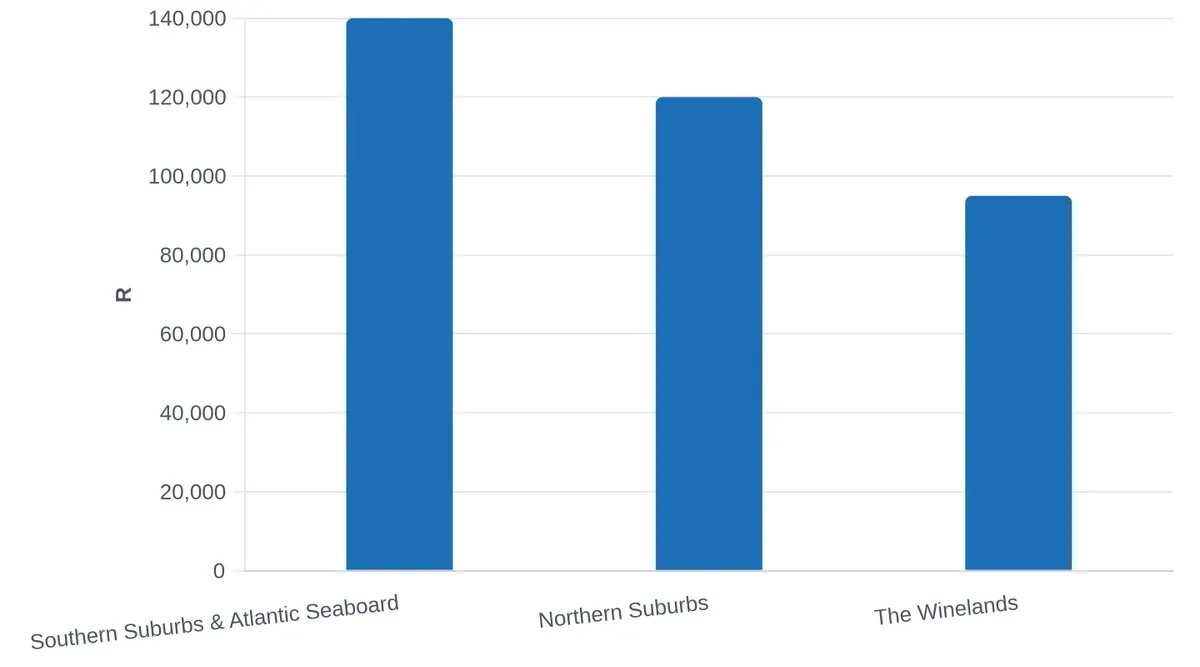
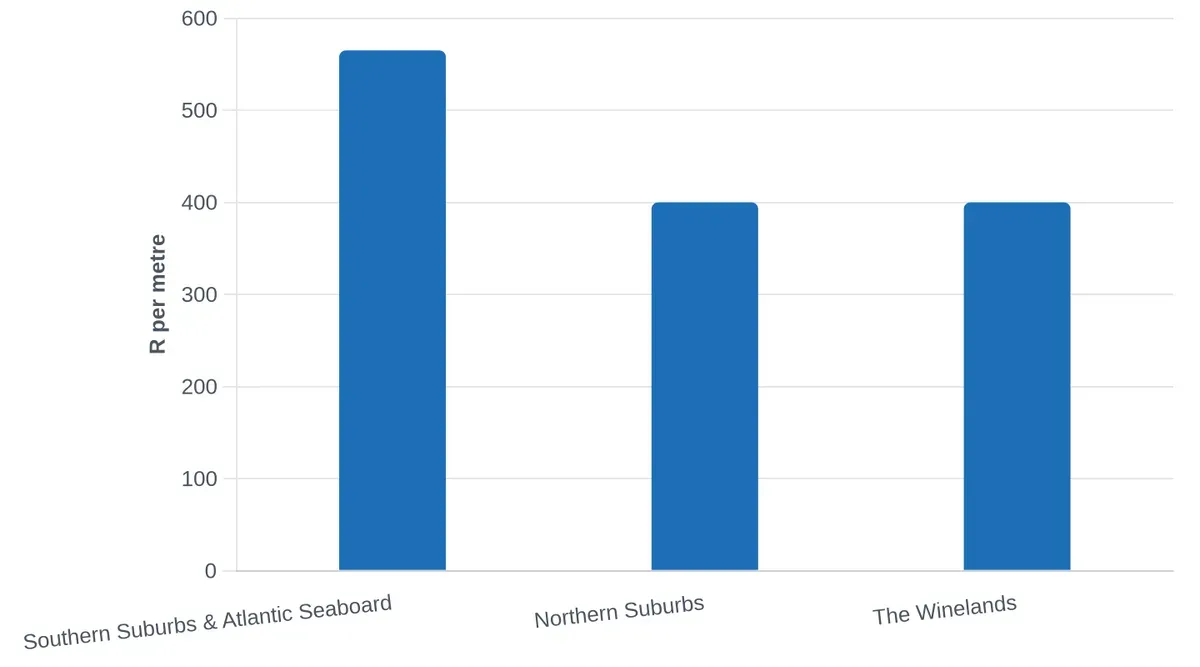
The table below uses confirmed 2026 rates from active Cape Town drilling contractors. Casing costs, pump and electrical integration, and testing are itemised separately below the table because they apply regardless of region.
| Region | Drilling rate per metre | Casing cost per metre | Typical turnkey cost |
|---|---|---|---|
| Southern Suburbs & Atlantic Seaboard | R565-R750+ per metre | R400-R700 per metre | R50,000-R140,000 |
| Northern Suburbs (Durbanville, Bellville, Welgemoed) | R400-R1,000 per metre | R350-R600 per metre | R60,000-R120,000 |
| Winelands (Stellenbosch, Paarl, Franschhoek) | R400-R900 per metre | R350-R600 per metre | R45,000-R95,000 |
Note that the Winelands cost range is based on a typical 48-metre borehole depth. Deeper formations in Stellenbosch granite will push costs toward the upper end. The Southern Suburbs range reflects the significant challenge of hard-rock Table Mountain Sandstone, which demands more rig time and heavier casing. City of Cape Town’s domestic borehole limit is 25,000 litres per day for Schedule 1 private household use without a paid licence.
What else goes on your invoice: pump, casing, testing and mobilisation
The per-metre drilling rate is only one line on a borehole invoice. A realistic Cape Town project budget must account for every item below.
- Rig mobilisation / site setup: approximately R3,500 (source: boreholepros.co.za)
- Steel casing: R350 to R600 per metre (national bracket) to R400-R700 per metre in the Southern Suburbs and Atlantic Seaboard
- Pump and electrical integration: R15,000 to R30,000 depending on depth and pump specification
- Basic domestic yield test (SANS 10299): R1,500 to R5,000, this is not optional; sustainable yield is what you will actually live on
- SANS 241 water quality compliance panel: R1,450 to R2,850, required before any potable use
- Basic safety screen test: R850 for a preliminary indicator before committing to the full panel
- Annual maintenance: R1,000 to R2,500 per year for a standard residential borehole
- Electricity running cost: R300 to R600 per month for a standard residential submersible pump
- Solar pump setup (off-grid): R30,000 to R45,000 if you want to run the pump independently of the grid
One homeowner on Reddit captured the financial reality plainly:
Get started
Get accurate borehole quotes for your Cape Town property
Vetted local installers · honest advice first
Photo: Павел Хлыстунов / Pexels