- Durbanville recorded 10 outages in 90 days, totalling 207 hours without supply, with an average restoration time of 20.7 hours per event (OurPower.co.za).
- A single vandalised 600mm main in January 2026 cut water to 15-plus Southern Suburbs simultaneously, with no estimated restoration time given.
- The Cape Flats valve replacement left 28 suburbs dry for up to 48 hours. Only 6 water tankers were deployed across all affected areas.
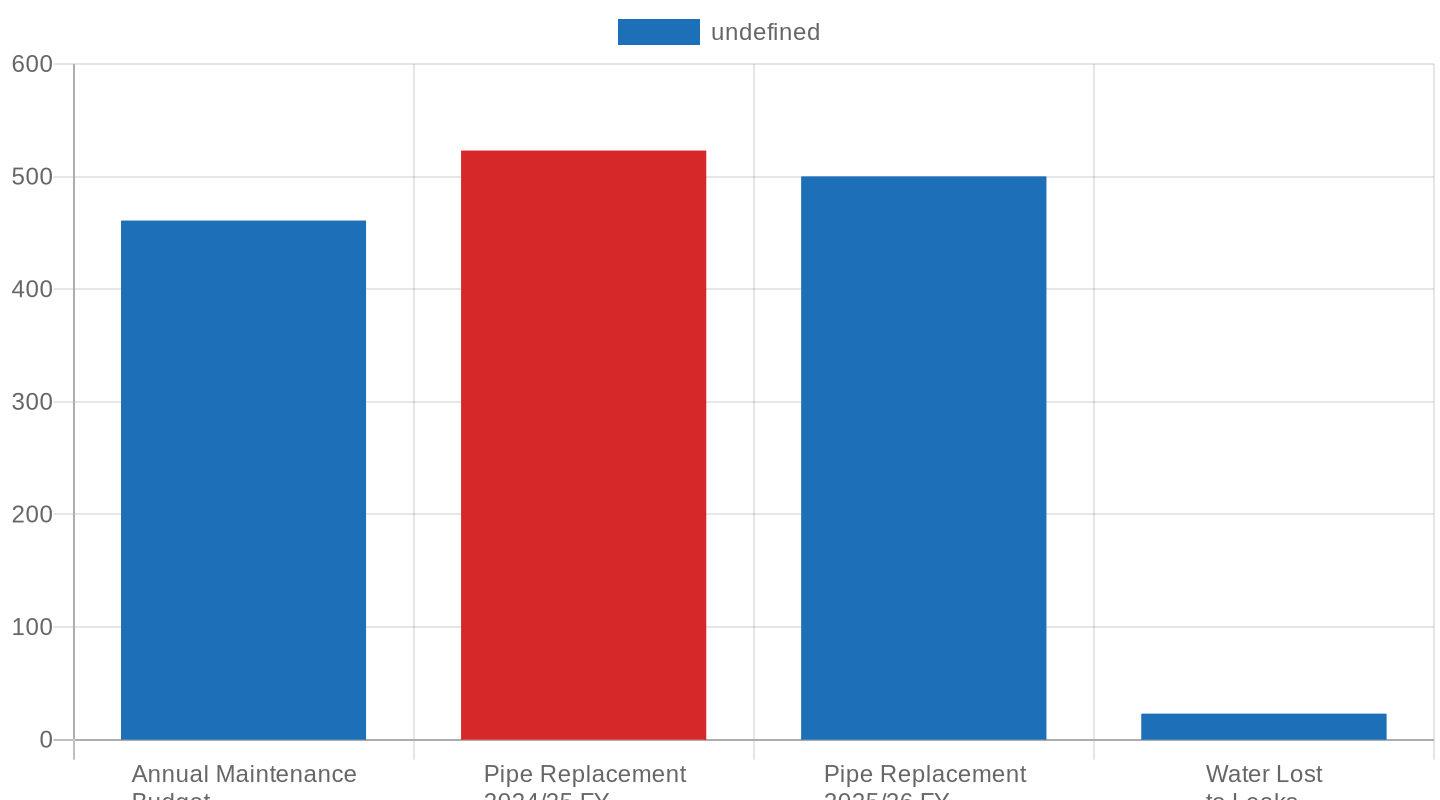
- The City of Cape Town spends R460.8 million per year on water network repairs across 11,253km of ageing pipes, yet roughly 23% of water still disappears through leaks.
- Connecting pumps directly to the municipal main is illegal. A tank-plus-pump system is the only lawful, pressure-independent backup.
- A 1,000-litre tank lasts under 36 hours for a household using 600-700 litres per day. Community installers recommend a 5,000-litre minimum.
- Full home backup systems (tank plus pump) cost R25,000 to R35,000 in 2026. Basic two-to-five-thousand-litre setups with a pump start from R6,500.
Cape Town’s water infrastructure problem is not theoretical. It shows up as a dry tap at 7am on a school day, a geyser that cannot refill, a restaurant that has to close its kitchen. The news cycle covers the dramatic events, the gushing mains and the irate residents on camera, then moves on. What the headlines rarely capture is the compounding arithmetic: how often outages happen, how long they actually last, and what a household needs to survive them without queuing at a tanker.
This article uses verified City of Cape Town data, official outage records and community installer experience to give homeowners a clear picture of the risk and a practical framework for choosing a backup system that works in local conditions.

How bad is the outage problem, in actual numbers?
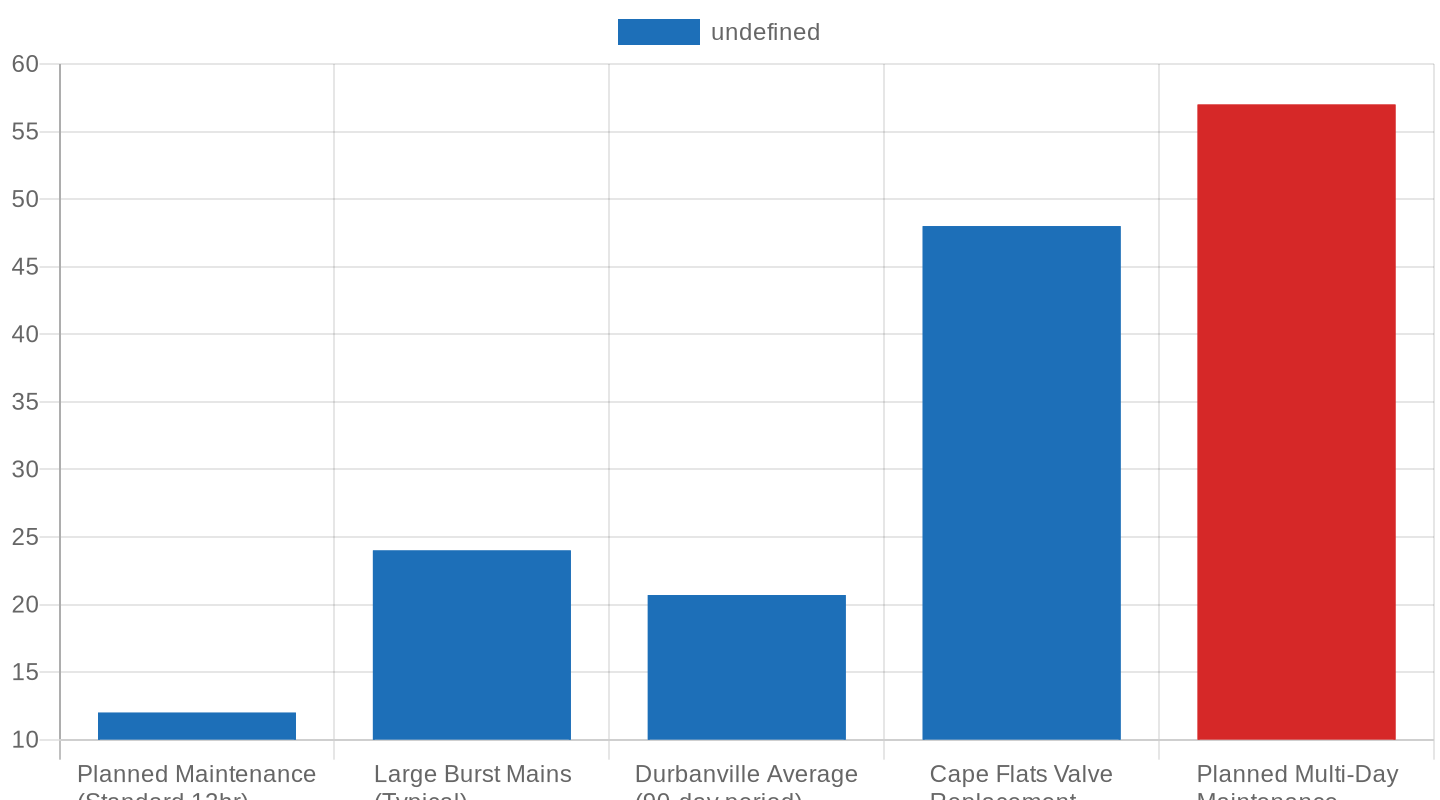
The City’s own service alerts feed, tracked by OurPower.co.za, tells the story more precisely than any single burst-pipe news article. Durbanville alone recorded 10 water outages in 90 days to May 2026, totalling 207 hours without supply. That is an average restoration time of 20.7 hours per event, caused mostly by burst pipes. On one snapshot day in June 2026, OurPower counted 10 active simultaneous disruptions across suburbs including De Tijger, Bellville CBD, Edgemead, Klipkop, Austinville, Durbanville, Epping Industria 1, Gordon’s Bay, Parow East and Tygerdal, with 5 already overdue for restoration, and 27 more restored in the preceding 48 hours.
These are not isolated incidents. Documented multi-week disruption cycles ran from 29 May to 3 June 2024, 3 to 10 May 2026, and 22 to 30 June 2026. The system produces outages on a rolling, near-continuous basis across the metro.
Official guidance from OurPower, citing City of Cape Town service alerts, notes that most unplanned outages are restored within 4 to 12 hours. Large burst mains take 12 to 24 hours. But planned maintenance windows routinely run far longer:
- June 2024 Cape Flats network shutdown: 72 hours, affecting 22 areas including Wynberg, Ottery, Plumstead, Muizenberg, Grassy Park and Lotus River.
- December 2025 Philippi bulk pipeline: 57 hours on a 1,500mm-to-1,220mm pipeline, affecting 10-plus suburbs including Pelican Park, Strandfontein and Lotus River.
- December 2025 Hospital Bend: 57 hours for a 360mm main reinstatement and control valve installation.
- June 2025 Paarden Eiland transfer pump station: 54 hours to replace a 915mm bulk water meter.
- Montague Gardens February 2026: approximately 30 hours for a burst main repair.
- Simon’s Town 375mm emergency burst: multi-day repair continuing into a second week of site work.
“No estimated time of restoration can be determined at this stage.”
That notice was issued to households across Sea Winds, Pelican Park, Pelican Heights, Steenberg, Muizenberg, Kalkfontein, Fish Hoek, Simon’s Town, Strandfontein, Ottery, Lansdowne, Lotus River, Grassy Park, Plumstead and parts of Wynberg. All from a single vandalised valve on one pipe.
Why the infrastructure keeps failing
The root causes are well-documented and, in the City’s own words, decades in the making.
Etienne Hugo, Director of Distribution Services for Water and Sanitation, has identified the highest-burst-frequency areas as being “mainly on old infrastructure and small diameter AC [asbestos cement] pipes.” South Africa’s Plastic Pipe Manufacturers Association warned back in 2013 that pipes installed over fifty years ago were corroding and producing frequent bursts, with aggressive pressure, pipe age and length as the key drivers. Many of those pipes are still in the ground today.
“The unabated and huge number of developments approved by the City in the last decade put the ageing water infrastructure under tremendous pressure. This overload of the water infrastructure came about largely due to new developments being merely hooked up with the already ageing water structure which was already battling to cope, hence overloading it to breaking point.”
“The City had been warned about the unfolding crisis for many years, yet due to lack of oversight and misplaced priorities, it chronically underspent on the maintenance of water infrastructure.”
The City does not dispute the scale of the challenge. The water network spans 11,253km of pipes, 76 pump stations, 134 reservoirs and tanks, and over 90,000 valves. Annual repairs and maintenance spending is R460.8 million (The Citizen). Approximately 23% of water put into the system disappears through leaks and unaccounted-for consumption. Dedicated leak detection teams walk 50% of the network annually and cover up to 30km per day (Etienne Hugo, Cape Owner).
“Currently, approximately 24 percent of the water put into the system is unaccounted for, with about 21 percent attributed to leaks. Dedicated leak detection teams actively walk and monitor 50 percent of the 11,000km water network annually, finding and fixing unreported leaks to curb significant wastage.”
Remedial action is real but slow. The City installed 429 pressure-reducing valves across approximately 8,100km of reticulation network to regulate zone pressures, a programme running for nearly 20 years. The burst rate dropped from 63.9 bursts per 100km of piping in 2010/2011 to 31 bursts per 100km in the latest figures. In the 2024/25 financial year, R523 million was invested in infrastructure replacement. The 2025/26 budget allocates R500 million to replace 50km of ageing pipes, and nearly 47.7km had been replaced in the first 8 months of that year. In the six months to February 2026 alone, nearly 22,000 leaks were repaired.
Progress is real. But Mayoral Committee Member Zahid Badroodien acknowledged the replacement rate is still at 1%, against an internationally recommended rate of 2%, with the 2% target deferred to a future political term.
“Cape Town is not facing an immediate drought emergency, but dam levels are about 20% lower than last year, and the system is entering a phase where early choices will shape the months ahead.”
Dam levels reached approximately 55% in early 2026, a seven-year low, with daily consumption spiking to 1,073 million litres on a single day in February 2026, well above the City’s target of 975 million litres per day. After exceptional rainfall in May 2026, combined storage recovered to 72.3% by 29 May, but the City cautioned that this rested on a single anomalous storm event. The New Water Programme, targeting an additional 300 million litres per day from desalination, groundwater and reuse, has slipped to December 2031.
What the tanker system actually delivers
During the 72-hour June 2024 Cape Flats shutdown, the City deployed 6 water tankers with limited capacity across 22 affected areas. Residents had to travel to tanker points. Roaming tankers were considered but ruled out as unviable.
“I would like to please encourage residents to make use of water tankers, also use the water, and store it sparingly. Remember that there are several residents who will be accessing these water tankers. So only take what you need.”
Six tankers shared across 22 areas, with explicit rationing instructions, is not a backup plan. It is a last resort. For households with elderly members, young children or health conditions, waiting at a tanker point during a 72-hour outage is not viable.
The secondary problem: restoration is not the same as recovery
Official restoration announcements mark when the City considers the repair complete. They do not mark when water actually flows reliably from your tap.
After supply restoration, water may appear cloudy or milky from trapped air. The City warns explicitly that “it is a slow process to purge the trapped air from the network to prevent secondary bursts.” Residents are advised to run the tap for a minute to clear sediment. During the Molteno Pump Station failure in May 2025, the City warned that high demand in restored areas could deplete reservoirs faster than they could be replenished, risking further outages.
“It is a slow process to purge the trapped air from the network to prevent secondary bursts.”
Drainmen Plumbing Services Cape Town notes that secondary water supply issues, including blocked valves and low pressure, can persist for hours or even days beyond the official restoration window. The effective disruption period is consistently longer than the number on the City’s alert.
There is also a post-restoration surge risk. When supply returns after a full system cutoff, pressure can spike sharply. The City advises keeping taps closed during the outage to prevent water loss and damage when supply returns. Pressure surges can damage valves, geyser elements and plumbing fittings that were working fine before the outage.
The Molteno Reservoir: a permanent vulnerability for Atlantic Seaboard and City Bowl
The Molteno Pump Station failure of May 2025 illustrated a specific risk for residents in the City Bowl, Atlantic Seaboard and surrounding suburbs that has nothing to do with burst mains. On 26 May 2025, both transfer pumps failed unexpectedly, alongside a faulty transformer. Restoration was delayed beyond Thursday 29 May when a suction valve was found open during a test run. One pump was then dismantled due to drive-side mechanical seal failure.
Suburbs affected included Gardens, Oranjezicht, Tamboerskloof, Bo-Kaap, Higgovale, Upper City Bowl, District Six, Vredehoek, Bantry Bay, Fresnaye, Green Point, parts of Sea Point, Camps Bay, Oudekraal, Walmer Estate, University Estate and Upper Woodstock (Smile 90.4FM). The Kloofnek Water Treatment Plant ramped production from 14 to 19 million litres per day, restoring partial service at reduced pressure only.
By December 2025, just seven months later, the Molteno Reservoir came under severe strain again from peak demand, triggering a second round of urgent City alerts for the same zone (Cape Town Data). The structural vulnerability is not a one-off: when residents draw water faster than trunk mains can refill the reservoir, pressure drops, air enters the system, and localised outages follow regardless of dam levels. This risk is worst during summer peak demand.
Legal framework: what the City by-law actually requires of you
Before specifying any backup system, Cape Town homeowners need to understand what the City of Cape Town Water By-law permits and prohibits.
- Direct pump connections are illegal. Connecting pumps directly to the municipal supply line is not allowed. The City cannot guarantee a specific pressure or flow rate, making a tank-based backup with an independent pump the only lawful configuration.
- Backflow prevention is mandatory. Reduced Pressure Zone (RPZ) valves, installed above ground, are required for any alternative water system. They must be positioned immediately after the property’s private isolating valve (stopcock).
- Non-return valves must be installed between the pump and mains, and between the house and mains, to prevent back pressure to the municipal system. Minimum 20mm pipe from pump to mains connection is required.
- The City’s obligation if outages exceed 24 hours is to do their best to supply water but this is not guaranteed. The by-law itself confirms that backup systems covering at least 24 to 72 hours are essential for any household wanting a reliable fallback.
Backup system options: what actually works in Cape Town
Cape Town’s conditions place specific demands on backup water systems: intense UV exposure, summer peak demand driving simultaneous water and electricity pressure drops, and the reality that load shedding at Stage 4 and above can interrupt pumping stations and reduce reservoir pressure in higher-lying suburbs. A pump-dependent backup system without battery or solar backup fails during the exact moments when both water and electricity are at risk simultaneously (EcoCycle Water Solutions Cape Town).
Tank sizing: the most common mistake
JoJo Tanks puts average South African daily water consumption at 150 litres per person per day. For a household of four, that is 600 litres per day. For a household using 600 to 700 litres per day: a 1,000-litre tank lasts approximately 1.5 days. A 2,400-litre tank lasts approximately 4 days (Nedbank / Avo Water). During a 72-hour outage, a 1,000-litre tank runs dry in under 36 hours.
AfriPumps recommends a 2,220-litre minimum for a standard 3-bedroom household. Community installers on the 4x4Community forum are more direct:
“Get a 5000L tank. Plumb the tank so that you always use the water from the tank then the water stays fresh. 0.35kw pump uses half the amount of electricity a 0.75kw pump uses.”
“Smaller pumps are a waste of money except if you only have a one bedroom house. Price is not much of a difference.”
JoJo tanks used in Cape Town must be UV-stabilised to resist the Western Cape’s sun intensity. Food-grade black inner linings keep stored municipal water safe for extended periods. With proper care, tanks last over 20 years. The manufacturer recommends bi-annual cleaning and yearly inspections, with internal inspection every 3 months (Treehaven Cape Town / JoJo Tanks).
Pump sizing
AfriPumps recommends a 0.75kW variable-speed pump with 3-stage filtration for a standard home, and a 1kW variable-speed pump for larger detached homes. For backup during load shedding, experts recommend an inverter supplying at least 5kW to run the pump on battery or solar. Minimum 25mm diameter pipe from tank to pump is required (AfriPumps / Nedbank / Avo Water).
Community consensus from the 4x4Community forum: the recommended combination is a 5,000-litre JoJo tank, a booster pump, 2 flapper non-return valves and a float valve.
Costs and cost-of-ownership comparison (2026)
| Option | Upfront cost | Backup duration (4-person household) | Key limitations |
|---|---|---|---|
| No backup (municipal only) | R0 | 0 hours | Full exposure to every outage; 72-hour events have occurred |
| 1,000L JoJo tank only (supply cost) | R2,500 (AfriPumps) | Under 1.5 days at 600L/day | No pump: gravity feed only; inadequate for 48-72 hour events |
| 2,000-5,000L tank, basic install, no pump | R4,000-R7,000 (Treehaven CT) | 3-8 days at 600L/day | No pressure boost; taps and geyser may not function at full flow |
| 2,000-5,000L tank plus pump | R6,500-R9,000 (Treehaven CT) | 3-8 days at 600L/day | Pump fails without electricity; add inverter for load-shedding resilience |
| Full home system (tank + pressure pump in a box) | R25,000-R35,000 (AfriPumps) | Depends on tank size; typically 5,000-10,000L | Requires inverter rated 5kW+ to run pump during load shedding |
| Premium variable-speed system | R16,000-R80,000+ (AfriPumps) | Depends on tank size | Highest efficiency; best for large properties or simultaneous load-shedding risk |
| Water tanker delivery (private supplier) | Variable; per-delivery cost | 1 delivery per event | Delivery delays during city-wide events; requires tank to receive water |
| City tanker relief (public) | Free | Rationed; 6 tankers for 22+ areas in June 2024 | Must travel to collection point; explicitly rationed; not a household backup |
Cost-of-ownership comparison over 5 years
A 5,000-litre JoJo tank at the upper end of Treehaven’s supply range (approximately R4,000) plus a 0.75kW booster pump (mid-range entry at approximately R7,500 from AfriPumps) and basic installation (estimated R2,500 to R3,000 for a plumber fitting non-return valves and float valve) gives a total installed cost of approximately R14,000 to R15,000 for a solid standard-home setup.
Over 5 years, ongoing costs are low: bi-annual tank cleaning (approximately R500 to R800 per clean if done professionally, or DIY), annual inspection, and modest electricity to run the pump during fill cycles. JoJo tanks last over 20 years with proper care. The pump, running only during outages or continuous-cycle fill, faces minimal wear.
By comparison: buying bottled water during a single 72-hour outage for a family of four costs conservatively R800 to R1,500 in supermarket water alone, assuming availability during a metro-wide event. Across 207 hours of outages in 90 days (the Durbanville figure), the cost of not having a backup compounds rapidly.
Property value is also a consideration. Cape Town Data confirms that homes with boreholes, rainwater harvesting or greywater recycling command a property value premium. As the City’s own New Water Programme is years from full delivery and dam levels in late April 2026 sat at 47.3%, a seven-year low for that date, the market increasingly prices water security into residential property.
Goodwood: a close-up of what chronic failure looks like on the ground
Goodwood experienced nearly 30 burst pipes in one month in October 2025, with some streets hit two to three times in a single month. The City traced the surge to performance issues at the Frans Conradie pressure-reducing valve, with a renewed increase in bursts starting from September 2025.
“I want to bring to your attention that Johannesburg isn’t the only city struggling with water supply. For the last five weeks, we’ve had low water pressure during the day and no water at night.”
“I’ve had to buy jugs of water just to get by, even though service costs from the City have gone up.”
This is not an extreme edge case. It is what living on ageing asbestos cement reticulation pipes looks like in practice. The City’s acting Mayco Member Xanthea Limberg responded: “We sincerely apologise for the inconvenience caused to residents. We understand the frustration of living with inconsistent water pressure, and our technical teams are working continuously to stabilise the network.” Goodwood residents are still waiting.
What to do right now: a practical checklist
- Check your suburb’s outage history. Use OurPower.co.za to see how many hours your suburb has been without supply in the last 90 days. This is the most accurate planning input you have.
- Calculate your household’s daily consumption. JoJo Tanks puts the South African average at 150 litres per person per day. Multiply by the number of people and your target backup days to get your minimum tank size.
- Size the tank correctly from the start. Community installers and AfriPumps both point to 5,000 litres as the practical minimum for a standard home. A 1,000-litre tank will not survive a 48-hour event.
- Specify a compliant system. RPZ backflow-prevention valve, non-return valves between pump and mains, float valve in the tank, minimum 25mm pipe from tank to pump. Direct pump-to-mains connection is prohibited under the City’s Water By-law.
- Account for load shedding. If your pump cannot run during a Stage 4 event, you have a backup system that fails precisely when you need it. An inverter rated at least 5kW is required to run a 0.75kW backup pump on battery or solar.
- Plan for post-restoration quality issues. After any major outage, let the tap run for at least a minute before using, and close all taps before the supply returns to avoid surge damage to fittings and your geyser element.
The City of Cape Town’s own by-law confirms that if an outage exceeds 24 hours, it will “do its best” to supply water, but this is not guaranteed. The June 2024 tanker deployment, 6 vehicles for 22 suburbs, shows what “best” looks like in practice. Planning for a 72-hour self-sufficient supply is not excessive preparation. Given the documented outage pattern across the metro, it is a baseline.
If you want to know exactly which backup water products are suited to your property size, suburb and budget, read the full guide at WaterPointSA for a step-by-step breakdown of system options, sizing tools and installer standards for Cape Town conditions.
Is your Cape Town address at risk in the next main burst?
The address check is free and takes under a minute.
Vetted local installers · honest advice first