Key Points
- Drilling rates in Durban range from R320 to R600 per meter (boreholehub.co.za), but total installed costs run R45,000 to R110,000 for most residential projects (waterquotes.co.za), and up to R120,000 in hard-rock suburbs (boreholehub.co.za).
- Umhlanga typically hits usable water at 33m to 40m. Westville and Upper Highway areas commonly require 60m to 150m of drilling, changing the economics entirely.
- eThekwini loses 58.7% of treated water, over 423 million cubic metres annually (durban.gov.za), which explains why pressure collapses frequently, but that municipal failure does not automatically make a borehole profitable for every homeowner.
- Dwyka Tillite geology beneath parts of Durban produces high-salinity water that damages appliances, plumbing, and pools unless treated, adding R1,800 to R3,500 for SANS 241 testing and ongoing filtration costs (Borehole Pros, University of KwaZulu-Natal).
- An unregistered or non-compliant borehole can derail a property sale and attract fines of R3,000 to R6,700 for illegal water usage (propertyprofessional.co.za). A KZN farmer was fined R1.77 million for illegal abstraction (iol.co.za).
- For suburbs with shallow water tables and good water quality, a borehole can genuinely reduce long-term municipal water costs. For deep, saline geology, the numbers rarely work in your favour.
Why eThekwini Homeowners Are Drilling in the First Place
The demand for boreholes across eThekwini is not driven by luxury. It is driven by a municipality that, by its own published figures, loses 58.7% of treated water before it reaches taps, amounting to over 423 million cubic metres per year (durban.gov.za). The result shows up in suburbs across the south, west, and north of the city as multi-week outages that no amount of reporting to the call centre fixes.
“Water is supposed to be a human right, but our municipality does not think so. Thousands of residents in eThekwini, especially those in the northern areas like Chatsworth, Savannah Park, Northdene, and Queensburgh, have had no water for over 42 days. Residents have had enough.”
Ish Prahladh, President of the eThekwini Ratepayers and Residents Association, during a protest captured by iol.co.za
That frustration is shared across the metro. Outages of up to 42 consecutive days have been documented in peripheral and southern suburbs (iol.co.za). Communities in Tongaat, Phoenix, Verulam, and Ntuzuma have faced similar conditions. The cumulative effect is that boreholes have moved from a niche agricultural tool to a mainstream residential conversation.
“You are talking about water restriction, here in ntuzuma we see a week to 2 with no water especialy in this heat wave, please… how can you leave people without water for the hole week.”
Sya Ngelengele Ndiyane, resident of Ntuzuma, via the DA KZN Facebook page
But frustration with municipal supply is not a business case for drilling. The question every homeowner needs to answer first is: what does my suburb’s geology actually look like, and what will it cost me to reach usable water?
Durban’s Geological Patchwork: Why Your Suburb Matters More Than the Driller’s Day Rate
Greater Durban sits on a complex geological mosaic. The coastal strip from Umhlanga south through the Bluff is underlaid by relatively shallow, porous formations where the water table is accessible without extreme depth. Move inland toward Westville, Hillcrest, or the Upper Highway corridor and you encounter deep metamorphic and igneous basement rock. Go further north into parts of Tongaat and Verulam and you hit the Dwyka Tillite formation, a glacially deposited unit with a documented history of high-salinity water due to historical marine influence (University of KwaZulu-Natal).
The practical consequence is that two homeowners paying the same per-metre drilling rate can end up with completely different total bills and completely different water quality outcomes. Three geological realities dominate the eThekwini conversation:
1. The Saprolite Problem: Collapsing Upper Sections
Durban’s deeply weathered saprolite profile is prone to collapse in the upper section of a borehole. iWater Management notes that this requires generous, solid steel casing to prevent structural failure before you even reach the aquifer. That casing costs R400 to R700 per metre (Research Findings), and in a 40-metre saprolite zone, you are looking at R16,000 to R28,000 in casing alone before the pump goes in.
2. The Dwyka Salinity Risk
The University of KwaZulu-Natal’s research on the Dwyka Tillite identifies the highest concentrations of major ions in groundwater due to historical marine influence. In plain terms, borehole water in affected suburbs can be corrosive to copper pipes, geyser elements, dishwashers, washing machines, and pool equipment. This is not a theoretical risk.
“pinholes also tend to come from the water inside the pipe usually from borehole water high in salts or a low pH.”
Forum user warning about the effects of high salinity and untreated borehole water on home plumbing, via mybroadband.co.za
“no..but we use borehole water…hence the stains.”
A homeowner explaining chronic copper and iron staining, attributed to borehole water, via mybroadband.co.za
3. The Depth vs. Cost Cliff
Below roughly 60 metres, drilling costs escalate not just linearly but practically, because harder rock requires slower penetration rates, more air or mud, and greater wear on the drill string. The baseline drilling rate across Durban runs from R320 to R600 per metre for standard formations (boreholehub.co.za). In Umhlanga’s coastal sands and shallow alluvials, that rate applied to a 33m to 40m hole (boreholehub.co.za) produces a manageable drilling invoice. In Westville or Upper Highway, where depths of 60m to 150m are typical (boreholehub.co.za), the same rate applied to a 120-metre hole is a fundamentally different financial exercise.
Suburb-by-Suburb Depth and Cost Reference
The table below maps the key eThekwini zones to their typical drilling depths, per-metre costs, and realistic total installed ranges. All figures draw from boreholehub.co.za, waterquotes.co.za, and Research Findings unless otherwise noted. “Installed” means borehole drilled, cased, pump supplied and fitted, basic pipework to storage tank, and yield test conducted. It excludes filtration, water quality treatment, and compliance costs, which are itemised separately.
| Suburb / Zone | Typical Depth | Drilling Rate / m | Estimated Drilling Cost | Realistic Installed Total | Key Geological Risk |
|---|---|---|---|---|---|
| Umhlanga, La Lucia, Umdloti | 33m to 40m | R500 to R1,500 / m | R16,500 to R60,000 | R45,000 to R85,000 | Coastal sands, salinity near beach |
| Durban North, Redhill, Glen Anil | 40m to 65m | R320 to R600 / m | R12,800 to R39,000 | R50,000 to R95,000 | Saprolite collapse zone |
| Westville, Pinetown, New Germany | 60m to 120m | R320 to R600 / m | R19,200 to R72,000 | R65,000 to R110,000 | Deep basement rock, low yields common |
| Upper Highway (Hillcrest, Waterfall) | 80m to 150m | R320 to R600 / m | R25,600 to R90,000 | R75,000 to R120,000 | Hard metamorphic rock, high casing cost |
| Chatsworth, Shallcross, Queensburgh | 50m to 90m | R320 to R600 / m | R16,000 to R54,000 | R55,000 to R100,000 | Mixed geology, variable yield |
| Tongaat, Verulam, Phoenix | 40m to 80m | R320 to R600 / m | R12,800 to R48,000 | R50,000 to R95,000 | Dwyka Tillite, salinity risk |
| Bluff, Wentworth, Montclair | 35m to 60m | R320 to R600 / m | R11,200 to R36,000 | R45,000 to R85,000 | Industrial contamination risk, test first |
Commercial and institutional installations run significantly higher. The Damorosa Prevocational School installation in Chatsworth, documented by samct.co.za, came in at R161,000, reflecting the higher yield requirements, larger pump infrastructure, and full regulatory compliance needed for a non-residential site.
The Full Cost Stack: What “Installed” Does Not Include
Published drilling rates are a floor, not a ceiling. Below is every cost layer a Durban homeowner needs to budget for, drawn from verified sources.
Pre-Drilling
- Hydrogeological site assessment: A reputable hydrologist charges around R20,000 for a proper site investigation. Skip this and you carry the full risk of a dry hole.
“A reputable hydrologist to find a site… is R20k. Most drill operators will require full payment before starting… My neighbor paid for 3 dry holes, because he believes in his mom’s uncle’s cousin that throws a hat. Haha.”
Forum user on mybroadband.co.za, discussing the financial risk of skipping professional site assessment
During Drilling
- Steel or PVC casing: R400 to R700 per metre (Research Findings). In Durban’s saprolite zones, casing the upper 30m to 50m is not optional.
- Drilling rate: R320 to R600 per metre (boreholehub.co.za) for standard formations, rising toward R1,500 per metre in Umhlanga’s harder coastal rock (boreholehub.co.za).
Post-Drilling
- Yield test: R3,500 to R5,500 (Research Findings). Required before any pump sizing decision and strongly advisable before final payment to the driller.
- SANS 241 water quality test: R1,800 to R3,500 (Borehole Pros). Mandatory if you intend to use the water for drinking or cooking, and practically essential before connecting to any home plumbing.
- Pump, pressure system, tank, and pipework: These are included in the turnkey R35,000 to R85,000 range (Research Findings) for standard residential systems, but a homeowner using the water for the whole house rather than just the garden will need a more robust pressure system.
Filtration
This is where Durban’s geology creates a cost that many homeowners underestimate. Sulphur, iron, salinity, and sediment are all documented in eThekwini boreholes.
“The water quality in Durban has dropped significantly over the years… A month after the installation I opened out the filters to check what’s happening. It was not pleasant at all, a considerable amount of fine sand and sediment had built up already…”
Durban homeowner discussing filtration necessity, via a community forum
“Was quoted R110k yesterday for an 80m deep bore hole… I paid around 55k for 50m – 60m drilling, with casing… Filtration system [was] around 27k. My water was too sulphuric and irony.”
Homeowner on mybroadband.co.za, discussing unexpected filtration costs after discovering sulphur and iron in their borehole water
A basic sediment and UV filter setup costs R3,000 to R8,000. A full reverse osmosis or iron-removal system appropriate for Dwyka-affected water runs R15,000 to R30,000 installed. Budget the upper end if your suburb falls in a salinity-risk zone until you have test results that say otherwise.
Compliance and Registration
- Schedule 1 WARMS registration via a driller or consultant: R500 to R2,500 (propertyprofessional.co.za). This covers low-volume domestic use and is the registration most residential boreholes fall under.
- Section 21(a) Water Use Licence Application (WULA), if required: R5,000 to R50,000 in consulting fees (propertyprofessional.co.za), plus a statutory 300-day processing period (www.gov.za). Most standard residential boreholes do not trigger this, but commercial or high-volume use does.
- Weatherproof signage: Snymans Inc notes that registered borehole owners must display an official weatherproof sign showing their registration number, indicating the water is not suitable for domestic purposes without treatment. This is a legal requirement, not a suggestion.
There is also a property transfer dimension. Cor van Deventer, property attorney, puts it directly:
“There’s a perception that if you own the land, you can drill wherever you want… An illegal or unregistered borehole is no longer a minor issue; it can entirely derail a property sale.”
Cor van Deventer, property attorney, on compliance and property conveyancing risk
Ongoing Annual Costs
- Basic annual service plan: From R1,500 per year (Borehole Pros). Covers visual inspection and basic maintenance.
- Electricity to run the pump: eThekwini’s municipal electricity rate sits at R3.77 per kWh (Ourpower). A 750W submersible pump running four hours per day costs roughly R41 per day, or around R15,000 per year at that tariff. A solar-powered pump setup eliminates this ongoing cost but adds R20,000 to R45,000 to your capital outlay.
- Pump replacement: Submersible pumps have a finite lifespan that mechanical cycling shortens considerably.
“Every time you start the pump it coils up and hits the side/casing damaging it. You have a limited amount of starts on a pump.”
Forum user on mybroadband.co.za, highlighting mechanical wear from frequent pump cycling
Total Cost of Ownership: The Numbers That Determine Whether Drilling Makes Sense
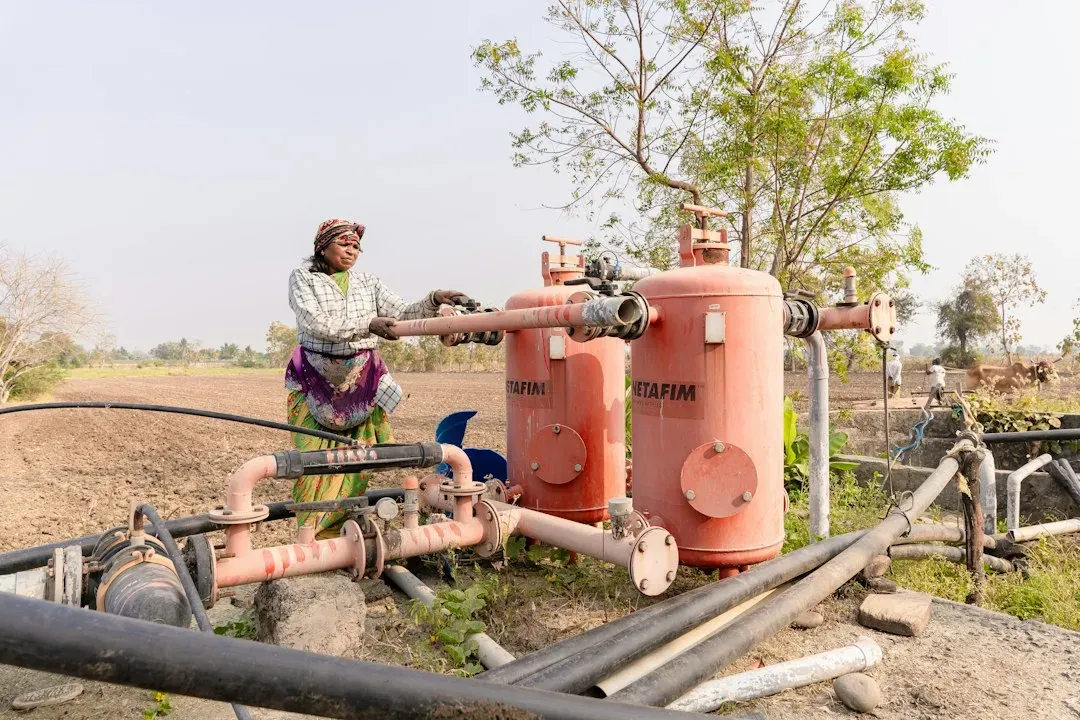
The comparison below models three scenarios over a 10-year horizon for a typical Durban household using approximately 20 kilolitres of water per month. Municipal water tariffs for eThekwini are used as the baseline. Borehole capital costs are amortised over 10 years. All figures are approximate and based on the verified cost data above.
| Scenario | Capital Cost (Year 1) | Annual Operating Cost | 10-Year Total (Capital + Operating) | Viable? |
|---|---|---|---|---|
| Umhlanga shallow borehole (35m, good yield, low salinity, solar pump) | R65,000 to R85,000 | R3,000 to R5,000 (service + filter cartridges) | R95,000 to R135,000 | Yes, if municipal use is fully replaced |
| Westville deep borehole (100m, hard rock, filtration required, grid pump) | R95,000 to R120,000 | R18,000 to R22,000 (electricity + service + filtration) | R275,000 to R340,000 | Marginal to negative vs municipal cost |
| Tank and pressurised municipal backup system (no drilling) | R25,000 to R65,000 (waterpointsa.co.za) | R1,500 to R3,000 (service + electricity) | R40,000 to R95,000 | Yes, for outage resilience without geology risk |
The shallow coastal scenario can produce genuine long-term savings, particularly if the homeowner uses the borehole for all household purposes, eliminates municipal water consumption above the free basic allocation, and invests in a solar pump to remove the electricity variable. The deep inland scenario rarely pencils out on water cost savings alone. The motivation there is resilience, not economics.
“To power the borehole pump and the pressure pump is way, WAY cheaper than paying municipal rates… The downside is the water is hard on my elements (kettle, dishwasher, washing machine and geyser), so I’m now looking at installing a Jojo filter on the line.”
Forum user on the cost savings versus appliance damage trade-off, via a community water forum
That trade-off is the honest picture. Running costs can be lower than municipal rates, but appliance replacement, filtration maintenance, and pump servicing are real expenditure lines that do not appear in the simple payback calculation most drillers present.
Plan your Durban borehole with a vetted driller
The Neighbourhood Saturation Problem
One cost risk that almost no drilling quote mentions is aquifer depletion through neighbourhood saturation. As borehole uptake accelerates across eThekwini, more households are drawing from the same shallow aquifers. Some owners have responded by drilling significantly deeper than the static water level to build in a buffer.
“The water table level after drilling is about 45 meters deep but I installed the pump at 93 meters deep so I have 48 meters of water table level to play with in case there are any major dry spells or my neighbours decide to go crazy with water usage. In the last month alone three of my neighbours have drilled boreholes.”
Resident sharing their drilling strategy on mybroadband.co.za
“Total cost was around R100K but I drilled nearly 100 meters deep even though the water table is around 40 meters deep in case my neighbours started drilling boreholes. Every couple of weeks now, there’s a drilling rig in our neighbourhood.”
South African homeowner on mybroadband.co.za
Drilling deeper as insurance against neighbour extraction is a rational individual response, but it increases capital cost and does not solve the collective problem. If your suburb has seen three or four new boreholes in the past year, a yield test conducted before drilling and a pump installed at a conservative depth are the minimum safeguards.
The DIY and Split-Cost Routes: What They Actually Save
Some homeowners reduce costs by managing the subcontractors themselves rather than using a turnkey provider, or by splitting a borehole with a neighbour. Both routes carry real risks.
“I got someone with a mini-rig to drill a 96m deep hole for R50K and then I installed the borehole pump, pipes, tank… myself. That was about another R45K but I picked decent equipment.”
Homeowner on mybroadband.co.za, describing a DIY subcontractor approach to reduce turnkey margins
The total in that case was R95,000, broadly in line with the waterquotes.co.za range of R45,000 to R110,000. The saving versus a full turnkey quote was real but modest, and it required the homeowner to coordinate compliance, casing specification, pump sizing, and installation themselves. A mistake at any of those stages is expensive to rectify once the hole is in the ground.
The shared-borehole arrangement carries its own risk:
“the arrangement regularly collapses into disputes… Done on a handshake, it tends to end badly.”
WaterQuotes, warning against informal neighbour borehole-sharing agreements
If you pursue a shared borehole, use a written agreement that specifies usage limits, maintenance cost sharing, and what happens if one party wants to sell their property. Without it, the legal and practical complications can cost more than the original saving.
Regulation: The Compliance Floor Has Risen
KwaZulu-Natal’s water regulation environment has hardened in recent years. The R1.77 million fine handed to KZN farmer Roy Braithwaite for illegal water abstraction (iol.co.za) is an outlier in scale but not in direction. Municipal fines for illegal water usage or unregistered bypasses sit at R3,000 to R6,700 (propertyprofessional.co.za) at the residential level, but the risk to property transactions is often more material than the fine itself.
The regulatory picture also affects community-level borehole schemes. Melanie Veness of the Phoenix-area community borehole program captured the tension clearly:
“Look at Phoenix, Verulam, Tongaat, and other areas; if businesses had not helped to put boreholes in schools and special places, then all the communities would have been without water… We will definitely oppose this.”
Melanie Veness of the PMCB, on regulatory pushback against community borehole schemes in KZN, as reported by iol.co.za
For residential owners, the practical compliance checklist is: Schedule 1 WARMS registration (R500 to R2,500 in processing fees), SANS 241 water quality test before domestic use (R1,800 to R3,500), official weatherproof signage displayed at the property boundary (Snymans Inc), and a yield test on file. If your borehole pre-dates the current registration requirements and is not on the register, get it registered before you list your property for sale.
When a Tank System Beats a Borehole
A pressurised municipal backup system, essentially a large storage tank fed from the municipal supply during periods of good pressure, combined with a pressure pump and automatic switchover, delivers outage resilience at R25,000 to R65,000 installed (waterpointsa.co.za). It carries no geological risk, no water quality uncertainty, no registration burden, and no pump-at-depth maintenance schedule.
For homeowners in deep-rock suburbs where borehole capital costs exceed R90,000, where water quality testing indicates filtration costs above R20,000, or where the geology is simply too uncertain to justify the spend, a tank system is the more rational first response to eThekwini’s supply instability. It does not replace a borehole’s long-term water cost benefit in good geology, but it addresses the actual day-to-day problem, which is outage resilience, not water cost reduction.
The question is not whether boreholes work. In the right suburb, with the right geology and proper installation, they work very well. The question is whether your specific suburb’s geology, water quality profile, and depth-to-water make the total cost of ownership competitive with the alternatives. In Umhlanga at 35 metres with clean water, probably yes. In Westville at 120 metres with iron and salinity issues, the honest answer is: probably not on pure economics, though the independence from eThekwini’s failing network has a value that does not show up in a payback table.
Use the tool below to check what the data says about your specific address before you accept a single drilling quote. Check my address
Get started
Plan your Durban borehole with a vetted driller
Vetted local installers · honest advice first
Photo: Павел Хлыстунов / Pexels