Key points
- City of Ekurhuleni raised water tariffs by 11% and sanitation tariffs by 8.35% for 2026, per the municipality’s own schedule.
- The 7 to 15 kilolitre bracket now costs R42.67 per kL, making waste and outage losses more expensive than before.
- A properly installed 5,000L municipal backup system costs R18,000 to R30,000 fully plumbed; the tank alone is roughly R12,000 before any labour or pipework.
- 52% of Ekurhuleni land is dolomitic, which directly affects where and whether you can drill a borehole.
- Drilling a borehole requires prior written permission under Section 85 of the Ekurhuleni Water By-Laws. There is no legal shortcut.
- A Boksburg 60-metre residential borehole installation came in at R82,600 in April 2025, per LiquaFlo Borehole Solutions. Payback in Gauteng ranges from 5.7 to 9.7 years.
- For most suburban households facing outages of a few days at a time, a tank-and-pump system is faster to install, cheaper upfront, and carries far less geological and regulatory risk than a borehole.
Why Ekurhuleni homeowners are at a breaking point right now
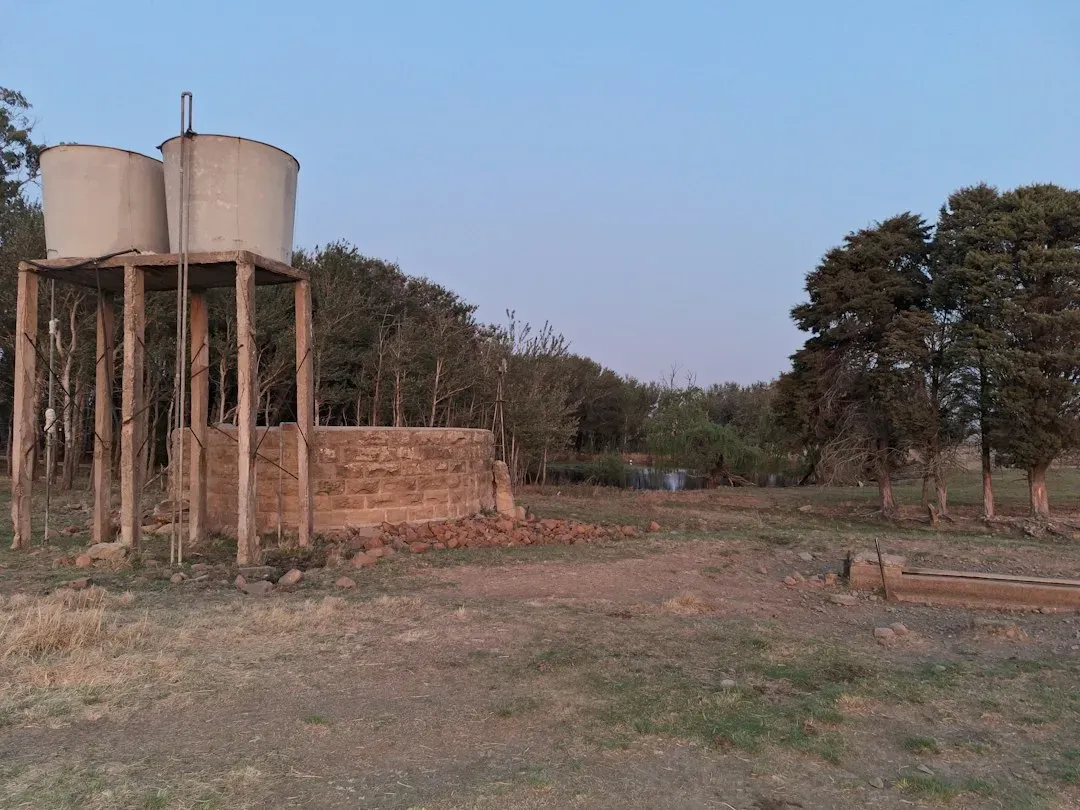
Water outages in Ekurhuleni are not new, but the pattern has changed. What used to be the occasional burst pipe interruption has become a predictable weekly disruption across suburbs like Bedfordview, Casseldale, Benoni Central and Etwatwa. Higher-density development is drawing more water from the same aging network. Maintenance teams are stretched. And the political picture is bleak.
“I am appalled that R659 million worth of publicly funded infrastructure projects in the City of Ekurhuleni remain unopened for years… Many of these community facilities are unopened and unusable just because the City of Ekurhuleni has not connected them to municipal services.”
That R659 million figure, confirmed by polity.org.za, is not an abstract budget line. It represents pumping stations, reservoirs and pipe connections that sit idle while residential pressure drops. The Ekurhuleni spokesperson Zweli Dlamini has acknowledged the operational reality bluntly:
“Systems will require time to rebuild pressure, with some high-lying areas potentially experiencing delayed recovery of up to two weeks.”
Two weeks without reliable pressure is not a planning edge case. It is a design constraint you have to build around. Meanwhile, residents in areas like Etwatwa are dealing with a deeper dysfunction than simple outages:
“We’ve been reporting this problem for the past five years. The municipality would respond, send a team to unblock the drain, but a week later, it’s blocked again.”
And from Casseldale, the story is the same:
“They push plumbing rods through and get it flowing, but it never lasts more than four or five days. Then they have to come back because the blockage isn’t on my side by the house. It is somewhere in the system.”
Bedfordview residents are equally frustrated. One resident, Fulvia Niccoli Tredway, captured the sentiment shared across dozens of Ekurhuleni suburbs:
“Day 7 of no water during the day in Central Bedfordview. More and more development and no upgrading of infrastructure! Where is all our rates money going??”
This is the context in which you are making a backup water decision. The question is not whether to act but which solution is appropriate for your suburb, your property and your budget.
How much water does your household actually use?
Before you size any backup system, you need a consumption baseline. The Gauteng average is 279 litres per person per day, per data from www.gov.za. High-use households in Tshwane suburbs like Amandasig and Danville average 1,020 litres per household per day, per tshwane.gov.za. A household in Ekurhuleni with two adults and two children, running a dishwasher daily and a washing machine twice weekly, could easily land at 600 to 900 litres per day under normal conditions.
One homeowner on MyBroadband put real numbers on a real household:
“I did 23kl from Nov to Dec according to my reading. Big garden, smallish pool, 2 adults and 2 kids. Run dishwasher daily and washing machine twice a week.”
That is roughly 767 litres per day for that specific household. At the City of Ekurhuleni’s 2026 tariff of R42.67 per kL for the 7 to 15 kL bracket, that works out to approximately R32.74 per day in water costs before sanitation charges. The municipality provides a baseline of 6,000 litres per formal connection per month free of charge, per ekurhuleni.gov.za, but a household using 767 litres per day will consume 23,010 litres per month and will be well into the paid tariff bands.
These numbers matter because they tell you how long a given tank will last. A 5,000L tank at 767 litres per day gives you roughly six and a half days of autonomy at normal consumption. If you cut non-essential use during an outage, you can stretch that to eight or nine days. That covers most recorded Ekurhuleni outage windows.
Option 1: Municipal backup tank and pump system
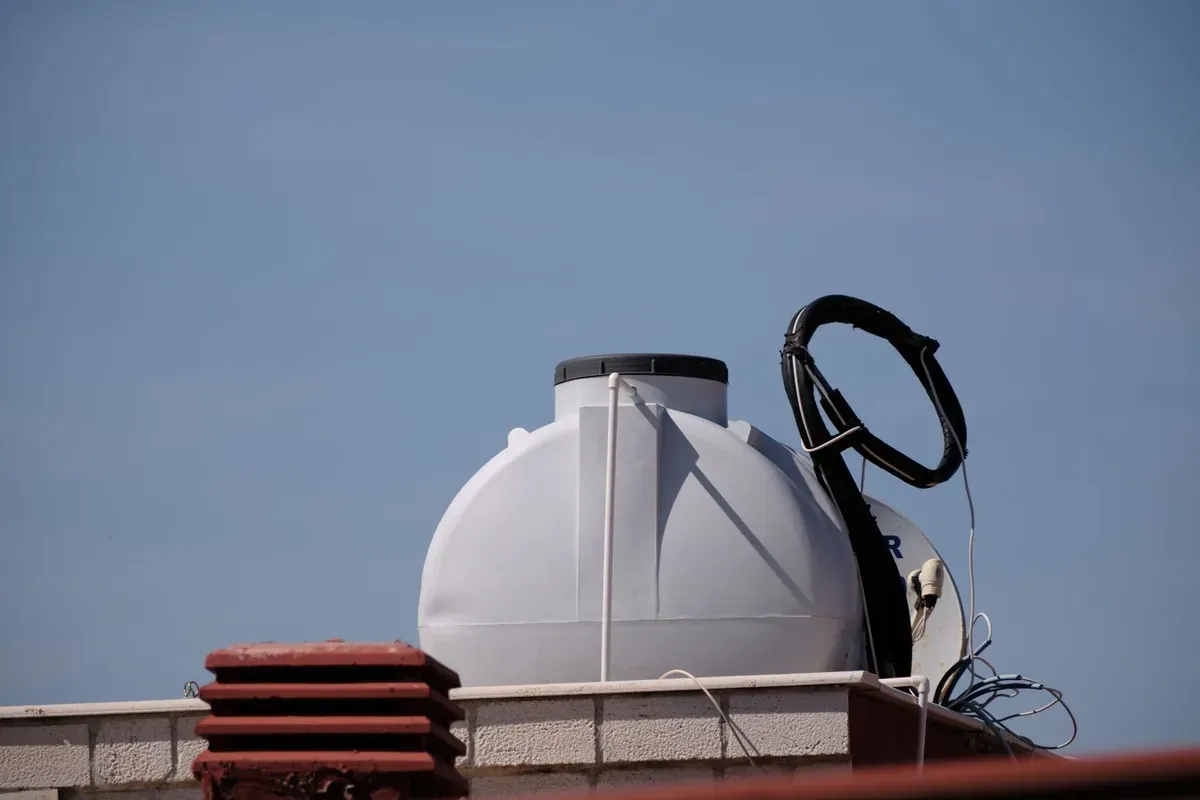
For most Ekurhuleni suburban homeowners facing intermittent outages measured in days rather than weeks, a properly installed tank-and-pump system is the practical first choice. It does not require municipal drilling approval, it works regardless of your suburb’s geological profile, and it can be installed in a day.
The cost range, confirmed by multiple sources, breaks down as follows:
| Component or scenario | Cost (ZAR, incl. VAT unless noted) | Source |
|---|---|---|
| Basic 5,000L JoJo tank supply only | R12,000 | Plumber Quotes |
| Full municipal backup setup (5,000L, plumbed) | R18,000 to R30,000 | Plumber Quotes |
| All-in system quotes (tank, pump, plumbing, civils) | R18,500 to R65,000+ | MyBroadband |
| Average installed JoJo tank (IOL reported) | R20,000 | IOL |
| 2,500L slimline system (installed, verified price) | R29,000 | MyBroadband user Mike Hoxbig, June 2025 |
| DIY 2,500L system (experienced owner, clearance pump) | R11,000 | MyBroadband user Snyper564, Oct 2023 |
| Tank cleaning and sanitisation (annual) | R450 to R1,500 | waterpointsa.co.za |
The spread between R18,000 and R65,000 for nominally similar systems is real, and it comes down to three factors: the type of pump specified, whether the plumber installs an automatic switchover valve (so the system activates without you touching anything when mains pressure drops), and the civils involved in preparing the base and running pipe to the house. A concrete base for a 5,000L tank alone can add R2,500 to R4,000.
A verified Benoni homeowner on Kandua described exactly what a well-specified system looks like in practice:
“After the third week-long outage we’d had enough. The plumber specced a 5,000 litre tank as municipal backup, proper concrete base, pump with automatic switchover, and it just works: the taps don’t know the difference when the water goes off. He talked us out of a bigger tank we didn’t need and into a better pump, which told us we had the right guy.”
Sipho D., also in Benoni, echoes that experience:
“Installed in a morning. First outage after, the family didn’t even know the mains were off.”
One risk worth flagging: the tank price is not the system price. One homeowner’s cautionary account describes this precisely:
“I bought a R6,000 JoJo tank online thinking that was the hard part… Delivery was R800. Total spend: R6,800. Then they called us to connect it… Labour and materials: R48,000. The total system cost R54,800… The lesson: the tank is just a container. The plumbing makes it a water backup system.”
That R48,000 in labour and materials is an outlier (and suggests a complex installation with significant civil works), but the principle is sound. Always get a fully inclusive quote before committing.
On tank placement: a JoJo tank is not classified as a structure under planning bylaws, which means it does not require building plan approval and is not subject to the same boundary wall setback rules that apply to outbuildings. As one respondent on a local property forum clarified:
“It is not considered a structure in terms of the planning bylaw and as such can be on the boundary. Unlike a wendy house which needs planning permission and departures should you want it outside of the erf building lines.”
Option 2: Borehole drilling in Ekurhuleni
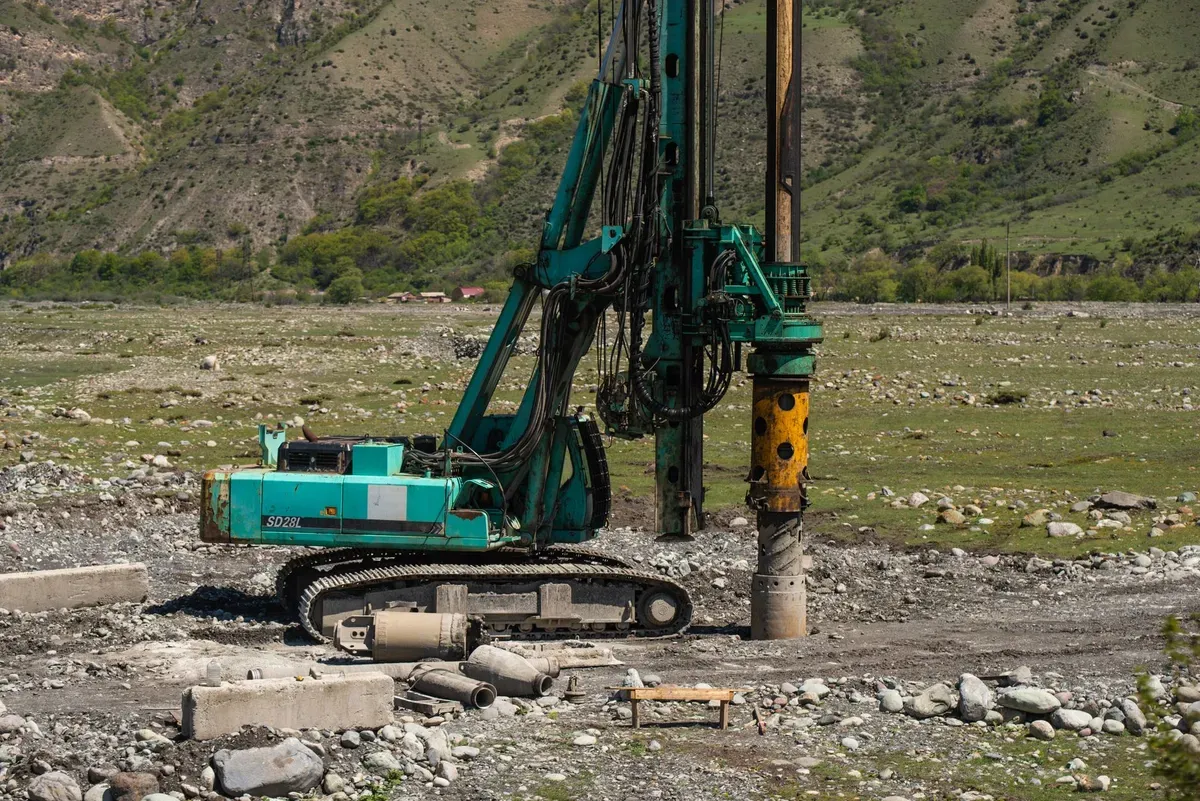
A borehole is the right solution for some homeowners, particularly those with large gardens, irrigation needs, or properties that face extended supply disruptions measured in weeks. But it is not the right first step for most Ekurhuleni suburban households, and the reasons are geological, regulatory and financial.
The dolomite problem
According to the City of Ekurhuleni, 52% of the municipality’s land is classified as dolomitic. Dolomite is soluble. Water moving through dolomitic rock creates voids that can trigger sinkholes, and drilling through dolomite increases that risk. Before any drilling quote is accepted, you need a geotechnical assessment of your specific erf. Some suburbs in Boksburg, Alberton and parts of Germiston fall in high-dolomite zones where insurers may not cover structures on drilled sites, and where the municipality may decline your application on risk grounds alone.
The legal requirement
Drilling a borehole in Ekurhuleni requires prior written permission under Section 85 of the Ekurhuleni Water By-Laws, per ekurhuleni.gov.za. This is mandatory, not optional. You cannot drill and apply later. The municipality will inspect, assess geological risk, and may impose conditions on how the borehole is cased, pumped or used. Proceeding without approval exposes you to enforcement action and potential liability if the drilling contributes to ground subsidence.
What it actually costs
Drilling rates in South Africa range from R350 to R1,000 per metre depending on rock hardness, per LiquaFlo Borehole Solutions. A 50 to 60 metre borehole with casing is quoted at around R55,000 on MyBroadband, and percussion drilling comes in at R71,000 before VAT, per citizen.co.za. A real Boksburg installation logged by LiquaFlo in April 2025, at 60 metres depth, came to R82,600 complete.
Add a reverse osmosis treatment system if borehole water quality requires it (R25,000 to R35,000, per afripumps.co.za), and you are looking at a total installed cost that can exceed R100,000 for a properly specced, legally compliant borehole system.
Payback on that capital, based on boreholehub.co.za analysis for Gauteng, runs from 5.7 years in soft rock to 9.7 years in hard rock conditions. That assumes the borehole yields adequately. The minimum sustained yield most households need is 500 to 1,000 litres per hour, per geoss.co.za. Not every site delivers that.
The MyBroadband community is blunt about this risk:
“Get some good opinions, I know of 4 houses up the road from me all on the same street where their boreholes have dried up this year, this past week a neighbor drilled a borehole I believe more than 100m and had nothing to show for it.”
Poor installation compounds the problem. Another homeowner on the same forum described what happens when a contractor uses the wrong class of pipe at depth:
“The guy pulled the pump and informed me the pipe had burst, the installer used the wrong class pipe… Turns out the pump is fine, just not enough power. So he quoted me on fixing the whole mess on the second hole… About R20k for everything. I asked him how deep is that hole btw? He said 180m.”
Borehole water in Gauteng also frequently requires pH correction. One forum member with direct experience laid out the treatment reality:
“As a best guess, to increase relatively clean borehole water with a pH of 6.6 to about 7.4 requires at least a 1,000L settling tank, about 750kg of lime rocks (Aqua Stab), and this into a 5,000L storage tank with about 300L per day usage. This alone will cost about R6,500 with piping and DIY labour… if your pH is low, 5.5 or so, you have to go chemical.”
Cost-of-ownership comparison: tank backup vs borehole
| Cost category | Tank and pump backup system | Borehole (60m, Ekurhuleni) |
|---|---|---|
| Upfront installation | R18,000 to R30,000 (professionally installed) | R55,000 to R82,600+ (drilling and casing only) |
| Water treatment system | Not usually required (municipal water quality) | R6,500 to R35,000 depending on pH and contaminants |
| Legal approvals and fees | None required for tank | Mandatory written permission under Section 85; geotechnical assessment recommended |
| Annual maintenance | R450 to R1,500 (tank clean and sanitise) | Pump servicing, water testing, filter replacement; budget R2,000 to R5,000 per year |
| Payback period | Difficult to calculate directly (insurance value, outage protection) | 5.7 to 9.7 years at current Ekurhuleni tariffs (boreholehub.co.za) |
| Geological risk | None | High in dolomitic zones (52% of Ekurhuleni land) |
| Installation time | Half a day to one day | Several days plus approval waiting period |
| Regulatory exposure | None if installed by a registered plumber | Fines and enforcement risk if drilled without written permission |
The honest summary: a tank system costs less, installs faster, carries no geological risk, requires no municipal approval, and handles the outage pattern most Ekurhuleni homeowners face. A borehole makes financial sense if your outages are measured in weeks, your site has confirmed yield, you are in a non-dolomitic area, and you need water for irrigation or a pool year-round. It is not a substitute for a backup tank; it is a different category of investment entirely.
Is your Ekurhuleni address eligible for a borehole?
Sizing your backup correctly
The most common mistake homeowners make is undersizing. Forum user marhsava expressed a view that sounds reasonable but generally is not:
“I don’t need a week backup, was thinking 3 to 4 days, and so I was thinking around 1000l would be ok.”
At 279 litres per person per day (www.gov.za), a family of four in conservation mode uses roughly 560 to 700 litres per day. A 1,000L tank gives that family roughly 36 to 42 hours of water. At City of Ekurhuleni’s confirmed recovery language of up to two weeks in high-lying areas, 1,000L is inadequate for anything beyond a brief interruption. The practical minimum for a family of four in a standard Ekurhuleni suburb is 2,500L, with 5,000L recommended for households that include irrigation, a pool top-up, or water-intensive appliances.
The free basic water allocation of 6,000 litres per formal connection per month from the City of Ekurhuleni (ekurhuleni.gov.za) covers only a fraction of the average suburban household’s monthly use. You are paying for the rest at R42.67 per kL (7 to 15 kL bracket), and you are paying whether the supply is reliable or not.
What the broader pattern means for your decision
Ekurhuleni’s water infrastructure problems are structural, not cyclical. The R659 million in unfunded or unconnected infrastructure, the recurring blockages in Casseldale and Etwatwa, the delayed pressure recovery in high-lying suburbs, and the 11% tariff increase for 2026 all point in the same direction: the municipality is asking you to pay more for a service it cannot reliably deliver. That is not a political statement. It is the operational picture that determines your household’s planning horizon.
A Gauteng homeowner commenting via WaterPointSA put the outcome of installing a tank system simply:
“We’ve been water-shedding for years, the tank means we don’t even notice the cuts anymore.”
Lerato N. in Roodepoort described the advice that saved her household R60,000:
“They told me I didn’t need a borehole, just a tank. Saved me R60k and it works perfectly.”
The instinct to go straight to a borehole is understandable. Load shedding normalised the idea that the only permanent fix is complete independence from the grid. But water is more complicated. The geological profile, the regulatory framework, the treatment requirements, and the actual outage durations in most Ekurhuleni suburbs mean a tank-and-pump system resolves the problem for most households at a fraction of the borehole cost and with none of the approval risk.
If you have confirmed that your suburb sits on non-dolomitic ground, you have had your site assessed by a hydrogeologist, and your outages or irrigation needs justify the capital outlay, a borehole is a legitimate long-term investment. If you are responding to recurrent three-to-seven-day outages in a standard residential suburb, a properly installed 5,000L municipal backup system is the right first move.
The next step is to confirm exactly what is happening at your specific address, because Ekurhuleni’s infrastructure quality varies block by block. Check my address to see which backup solutions are recommended for your suburb and get matched with vetted installers in Germiston, Benoni, Boksburg and Alberton.
Get started
Is your Ekurhuleni address eligible for a borehole?
Vetted local installers · honest advice first
Photo: Engin Akyurt / Pexels