Key points
- The R6,850 budget wellpoint installation includes a 0.75kW cast-iron surface centrifugal pump and delivers 0.3 to 0.5 litres per second (1,080 to 1,800 litres per hour) at shallow aquifer depth (mjboreholes.co.za and WaterPointSA).
- Germiston and Boksburg boreholes typically reach 40 to 70 metres; Benoni sits shallower at 20 to 60 metres (boreholedrillingagents.co.za, boreholeinstallers.co.za, boreholehub.co.za).
- East Rand drilling rates run R500 to R1,200 per metre, so a 60-metre Boksburg borehole can cost R30,000 to R72,000 in drilling alone before a pump is fitted (boreholepros.co.za).
- Three years of real ownership adds R5,000 to R30,000 in piping, water quality testing, filtration and maintenance on top of the installation price (waterpointsa.co.za).
- Ekurhuleni bylaws (Section 85) require prior written approval before any drilling. Acid mine drainage (AMD) sits at a critical level of 106 metres below ground in the East Rand basin (ekurhuleni.gov.za, dailymaverick.co.za).
- A properly sized premium setup at R12,000 delivers 2,500 to 4,000 litres per hour at 4 to 5 bar, which changes the payback calculation completely (pedropumps.com).
Ekurhuleni is one of South Africa’s most water-stressed metro districts. Residents in Germiston, Boksburg and Benoni face ageing reticulation infrastructure, load-shedding that knocks municipal pumping stations offline, and a groundwater environment complicated by decades of mine dewatering beneath the East Rand. Into this gap, wellpoint and borehole contractors have flooded the market, and with them have come pricing claims that range from genuinely competitive to outright misleading.
This article pulls apart every line item so you know exactly what R6,850 buys, where that number stops covering you, and what the realistic three-year cost of ownership looks like before you sign anything.
The East Rand aquifer: what is actually under your garden
The geology beneath Germiston, Boksburg and Benoni is not uniform, and that single fact explains most of the price variation you will encounter.
The shallowest option is the perched aquifer, a sand or gravel layer sitting just below the surface. Near Brakpan and Withok this layer averages 4.8 metres deep, with the range running from 1.3 metres to 5.3 metres below ground level (researchgate.net). This is the zone a classic wellpoint targets. It is cheap to reach and yields water quickly, but it is also the first layer to drop during a dry winter and the most exposed to surface contamination.
Deeper lies the fractured rock or Karoo formation aquifer. Shale and Karoo formations in the East Rand carry a safe yield of 0.5 to 2.0 litres per second, or 1,800 to 7,200 litres per hour, when properly intersected (zitholele.co.za). A successfully sunk 75-metre residential borehole in the East Rand produces around 2,000 litres per hour on average (jomt.co.za).
Then there is the complication that defines this region above all others: acid mine drainage. The AMD critical level in the East Rand basin sits at 106 metres below ground (dailymaverick.co.za). In April 2022 all three deep-level abstraction pumps at the Eastern Basin AMD treatment plant failed due to a lack of spare parts (Mail and Guardian). Contaminated water rising toward the surface is not a theoretical risk here. It is a documented, ongoing condition that every East Rand homeowner considering groundwater use must account for.
“Residents who utilise borehole water for hygienic purposes may experience skin problems if this water becomes contaminated.”
The practical implication: a wellpoint targeting the shallow perched aquifer at 4 to 9 metres sits well above the AMD risk zone and is the appropriate tool for garden irrigation in most East Rand suburbs. A borehole drilled past 40 metres for higher yield carries a meaningfully different risk profile and demands proper water quality testing before any household use.
Depth and yield by suburb: realistic numbers
Contractors advertising a single price across the East Rand are averaging over geology that varies suburb by suburb. Here are the verified depth ranges you should benchmark against:
| Area | Typical borehole depth | Realistic yield (fractured rock) | Source |
|---|---|---|---|
| Benoni | 20 to 60 metres | 1,800 to 7,200 L/hour | boreholehub.co.za |
| Boksburg | 40 to 70 metres | 1,800 to 7,200 L/hour | boreholeinstallers.co.za |
| Germiston | 40 to 70 metres | 1,800 to 7,200 L/hour | boreholedrillingagents.co.za |
| Brakpan/Withok (shallow) | 1.3 to 5.3 metres (perched aquifer) | 1,080 to 1,800 L/hour (wellpoint) | researchgate.net, mjboreholes.co.za |
Benoni’s shallower range is the main outlier. Because it often intersects sand and alluvial deposits at 20 to 40 metres, wellpoint-class installations can reach usable water without full borehole drilling costs in some areas. Germiston and Boksburg almost always require the deeper fractured rock target for reliable year-round yield.
“Get some good opinions, I know of 4 houses up the road from me all on the same street where their boreholes have dried up this year, this past week a neighbor drilled a borehole I believe more than 100m and had nothing to show for it.”
That comment underlines why hydrogeological assessment before drilling is not an optional upsell. A dry hole at 100 metres in Germiston at R500 to R1,200 per metre means R50,000 to R120,000 with nothing to show for it.
What R6,850 actually buys: the budget installation unpacked
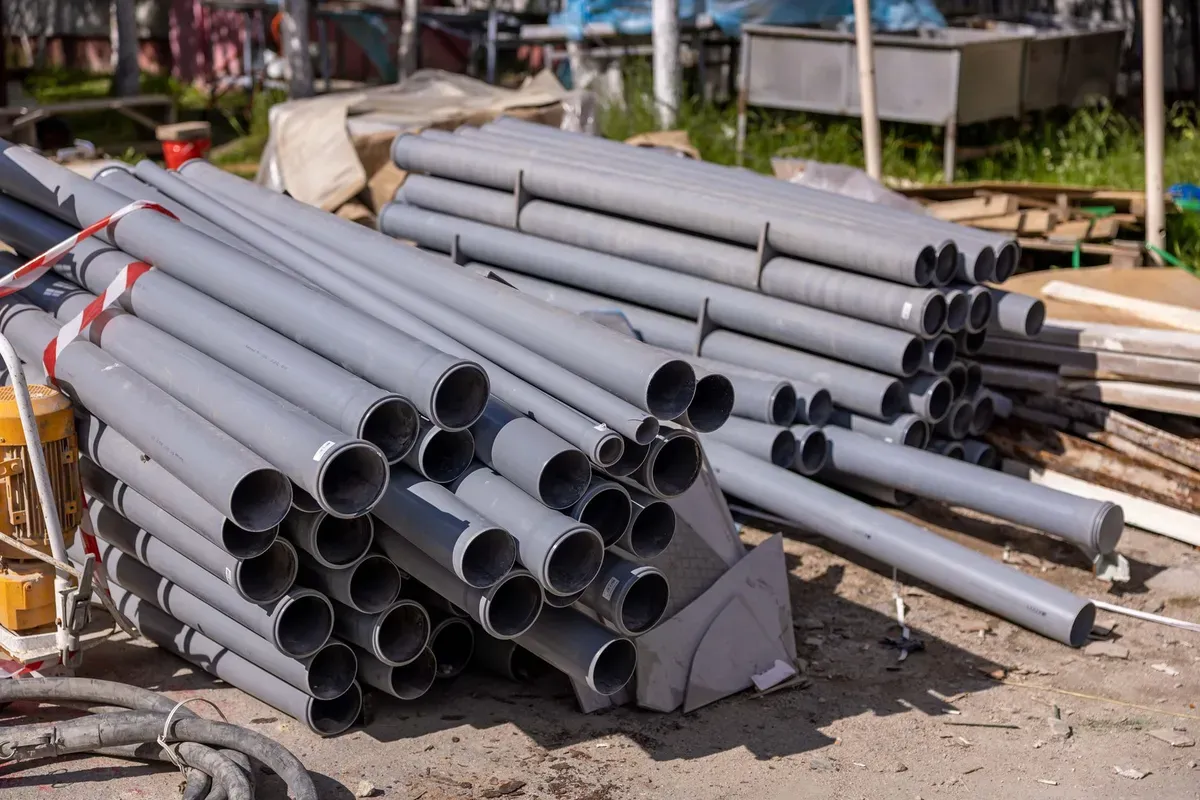
The R6,850 entry-level wellpoint installation (mjboreholes.co.za and WaterPointSA) covers:
- A shallow-drilled wellpoint casing into the perched aquifer
- A 0.75kW cast-iron surface centrifugal pump
- Basic pipework connection to the installation point
- A yield of 0.3 to 0.5 litres per second, or 1,080 to 1,800 litres per hour
That flow rate is meaningful for garden irrigation. An owner running it eight hours per day can move 8,640 to 14,400 litres daily, which is adequate for a medium suburban garden and top-up duties.
“I’ve ran it once for 8 hours straight to fill up my pool and the pump cannot pump out the water faster than it fills in. Pump can run at 60 litres per minute.”
60 litres per minute is 3,600 litres per hour, which sits above the budget tier. That kind of flow requires either a premium pump setup or a deeper fractured-rock borehole, not a standard 0.75kW surface pump.
What the R6,850 price does not include, and this is where most buyers are caught out:
- Blue HDPE pressure piping upgrade: R500 to R1,200 (WaterPointSA)
- Legally mandated SANS 241 water quality test: R1,650 to R2,300 (WaterPointSA)
- Sediment filter housing and cartridge: R1,800 to R4,500 (aquify.co.za)
- Ekurhuleni Section 85 approval and registration costs
- Any electrical supply modifications or automated controller
Add those baseline necessities and the true day-one cost of a compliant, usable R6,850 installation is closer to R11,000 to R14,000.
“My suggestion, use the blue pipes, it can be pvc welded, which is a lot better than the black irrigation pipes (which leaks all the time). Plumbing from blue pipes to copper is easy, just use the correct fittings.”
“When I first started my process, the hardware guys told me to buy black irrigation pipe. Don’t. It is prone to leaking, clamps rusting etc. Rather buy the blue pipes and pvc weld all pipes and fittings.”
The blue HDPE upgrade at R500 to R1,200 is not cosmetic. It is the difference between a system that leaks at every clamp within 18 months and one that holds pressure for a decade.
The premium tier: what R12,000 delivers
The R12,000 premium wellpoint installation (pedropumps.com) steps up to a higher-capacity pump and improved pipework, delivering 2,500 to 4,000 litres per hour at 4 to 5 bar pressure. That pressure range is what allows direct connection to a home’s irrigation manifold or a pressure-fed storage tank without a separate booster pump.
The gap between R6,850 and R12,000 is R5,150. Against the yield improvement (roughly double the litres per hour) and the elimination of a future booster pump purchase (R3,500 to R7,500 supplied and fitted, per justpumpwater.co.za), the premium installation often recovers its premium within the first two years for any household irrigating more than 300 square metres.
“I also used quality parts (e.g. Franklin motor). I could have used cheaper components and saved R30K in the short term. I went with [the quality option]…”
Three-year cost of ownership: the full comparison
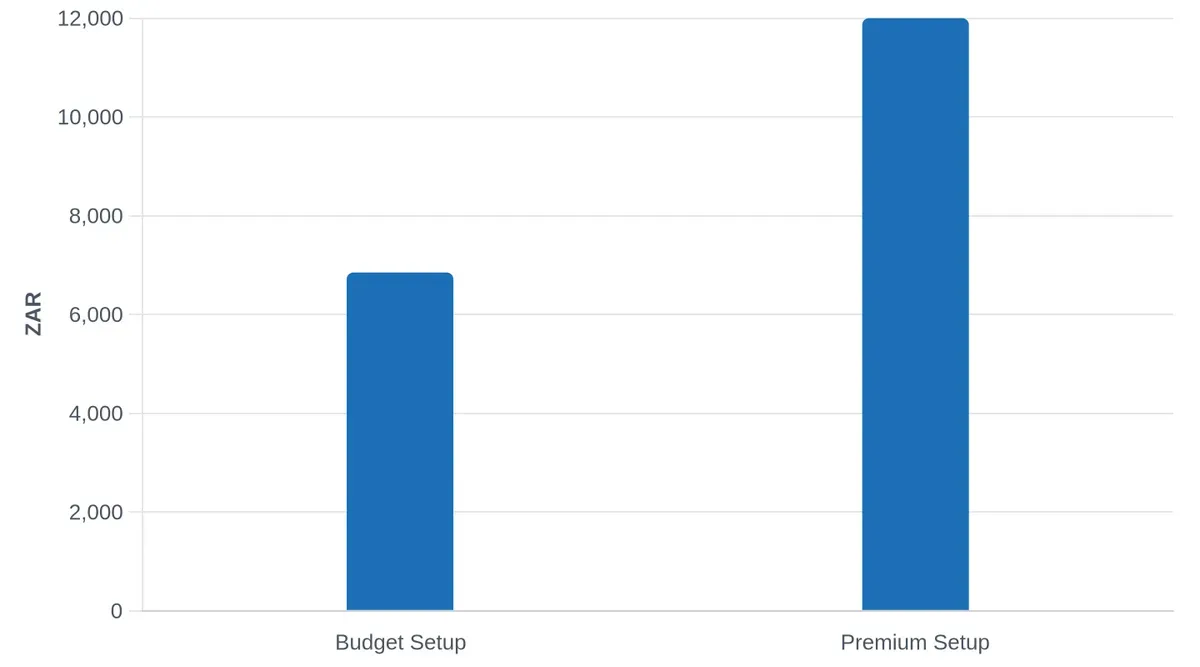
| Cost item | Budget R6,850 setup | Premium R12,000 setup | Source |
|---|---|---|---|
| Installation | R6,850 | R12,000 | mjboreholes.co.za / pedropumps.com |
| Blue HDPE piping upgrade | R500 to R1,200 | Included | WaterPointSA |
| SANS 241 water quality test (year 1) | R1,650 to R2,300 | R1,650 to R2,300 | WaterPointSA |
| Sediment filter and housing | R1,800 to R4,500 | R1,800 to R4,500 | aquify.co.za |
| Annual maintenance service (x3) | R2,550 to R5,400 | R2,550 to R5,400 | wellpointinstallationcapetown.co.za |
| Electricity at R1.00/hour (0.75kW), 6h/day x 365 days x 3 years | R6,570 | R6,570 (similar kW) | De Wet’s Wellpoints and Boreholes |
| One call-out and minor repair (foot valve etc.) | R600 to R1,800 | R600 to R1,800 | wellpointinstallationcapetown.co.za |
| Irrigation-suitability retest (year 3) | R450 to R1,200 | R450 to R1,200 | aquify.co.za |
| Total three-year range | R19,970 to R29,020 | R25,620 to R32,770 | Composite |
The budget installation looks cheaper on day one but lands within R5,000 of the premium setup by year three, while delivering roughly half the flow rate and lower pressure. For a household that only wants to keep a lawn alive during water restrictions, the budget tier is defensible. For anyone with a vegetable garden, pool, or more than two irrigation zones, the premium setup is the rational choice.
Note that the three-year additional ownership cost range of R5,000 to R30,000 cited by waterpointsa.co.za is not marketing inflation. The upper end applies to any installation that hits a blocked wellpoint requiring back-flushing (R1,500 to R3,500) or full re-jetting after collapse (R3,500 to R7,000), or that needs a pump replacement (R3,500 to R7,500 supplied and fitted, justpumpwater.co.za).
The hidden costs that catch East Rand owners off guard
Aquifer seasonality and dry-pump damage
The perched aquifer targeted by shallow wellpoints drops during the Highveld dry season (May to August). Owners who run their pumps without a dry-run protection switch risk burning out the motor.
“My wellpoint for the first time in 10 years of owning a house has run dry – it was initially installed as three points between 7-9m.”
“Currently it is only strong enough to drive a single sprayer @ around 10L/min… To combat the difference, I have now installed a 5000L storage tank and another pump. The wellpoint will fill the tank and the new pump will drive the irrigation system.”
A 5,000-litre JoJo tank plus a booster pump adds R8,000 to R15,000 to an installation that was quoted at R6,850. That is not the contractor’s fault, but it is a cost that a thorough pre-sale consultation should surface.
Inverter and backup power compatibility
“I had previously installed a 2500 litre jojo tank with a 750 Watt booster-pump. Now this 750 Watt booster-pump was too big to handle by my 800 Watt inverter and would not run it.”
A 0.75kW pump draws its rated load plus a startup surge of two to three times that figure. An 800W inverter will not start it reliably. Budget at least a 1,500VA inverter for a 0.75kW pump if load-shedding continuity is part of your plan.
Water quality and the lime problem
“Currently, my wellpoint pump is 1.1kw metabo… My wellpoint water has what I suspect lime in it. We let the water settle in the tanks before using the water for laundry. My grass loves the ground water.”
“We have lime in our borehole water. Just have to soak things like shower head and kettle element in vinegar for a while from time to time and then you’re good to go.”
High calcium hardness is common in East Rand groundwater. For garden-only use it is generally harmless, but for any household application it demands a full SANS 241 laboratory analysis (R1,800 to R4,500, aquify.co.za) before you connect the water to anything indoors. A basic irrigation-suitability test (R450 to R1,200, aquify.co.za) does not cover the full chemical and microbiological picture.
One Impala Park, Boksburg resident documented the filtration complexity that good East Rand groundwater can demand:
“Some resistance from 2 X FRP Clinobrite media filters (Zeolite), 2 X 130µm mesh sediment filters and a 20mm venturi”
Two media filters plus two sediment filters represents R8,000 to R15,000 in hardware and installation, not counting ongoing cartridge replacement. That is a legitimate, documented filtration requirement for one Boksburg suburb.
The permit and approval obligation
Section 85 of Ekurhuleni Municipality’s Water Bylaws requires written prior approval before drilling commences (ekurhuleni.gov.za). Any contractor who skips this step leaves you with an unregistered installation that can create complications when you sell the property and provides no legal protection if the drilling causes a neighbour’s supply to drop.
Wellpoint versus borehole on the East Rand: which one fits your need
| Factor | Wellpoint (shallow) | Borehole (deep) |
|---|---|---|
| Target depth | 1.3 to 9 metres | 20 to 70 metres (East Rand) |
| Drilling cost | Included in R6,850 to R12,000 package | R500 to R1,200/m x 40 to 70m = R20,000 to R84,000 |
| Typical yield | 1,080 to 4,000 L/hour | Up to 7,200 L/hour (fracture-dependent) |
| AMD risk | Very low (well above 106m critical level) | Rises with depth; test mandatory |
| Seasonal reliability | Variable (drops in dry season) | More stable but not guaranteed |
| Ekurhuleni approval | Required (Section 85) | Required (Section 85) |
| Best for | Garden irrigation, pool top-up | Household supplementary supply, high demand |
What a vetted contractor should tell you before you pay
A responsible installer on the East Rand will do three things before quoting: confirm the perched aquifer depth at your specific address using local geological data, advise whether your suburb’s groundwater history supports a wellpoint or requires a deeper borehole, and flag any known AMD risk at your drilling depth.
As one contractor put it plainly:
“First-timers can’t tell a wellpoint from a borehole, so they pay borehole money by default… We check before you spend, so you never pay to drive a pipe into rock that has nothing to give.”
That is the standard you should hold every quote to. If a contractor cannot tell you the likely aquifer depth at your address and the historical yield data for your street before accepting a deposit, move on.
Ready to install a wellpoint on the East Rand?
The real summary: what to budget
For a Germiston, Boksburg or Benoni homeowner wanting reliable garden irrigation from a wellpoint:
- Realistic day-one cost of a compliant, working installation: R11,000 to R16,000 (including piping, testing and filtration basics)
- Three-year total cost of ownership including electricity, maintenance and one minor repair: R20,000 to R33,000
- If a storage tank and booster pump are needed for full irrigation coverage: add R8,000 to R15,000
- If the system needs back-flushing or re-jetting within the first three years: add R1,500 to R7,000
Riaan P from Boksburg put the outcome of a well-planned installation in one sentence:
“Garden’s green again and I kept R50k in the bank.”
That R50,000 saving is real, but it assumes the right system was chosen for the right geology, the piping was done properly from the start, and the water quality was verified before use. Cut any of those corners and the savings shrink fast.
The first step before spending anything is confirming what aquifer sits under your specific address and whether your Germiston, Boksburg or Benoni property can realistically support a wellpoint at the flow rate you need. Check my address to get an instant groundwater suitability result for your stand before you talk to a single contractor.
Get started
Ready to install a wellpoint on the East Rand?
Vetted local installers · honest advice first