Key points
- Collecting rainwater is legal in South Africa, but connecting any tank to your home’s plumbing triggers national standards and municipal bylaw requirements that vary by metro.
- Any system plumbed into your home must have a Reduced Pressure Zone (RPZ) valve or fully separated pipework, plus a Certificate of Compliance (CoC) from a registered plumber, per SANS 10252-1 (source: enviroleg.co.za).
- Cape Town imposes fines of R3,000 to R6,700 for illegal water usage or unregistered bypasses (source: capetown.gov.za).
- Non-compliant plumbing rectification costs R3,000 to R12,000 (source: pirb.co.za), dwarfing the cost of doing it right first time.
- A legally compliant, pressurised home backup system costs R25,000 to R65,000 fully installed (source: andyplumbers.co.za). The tank is the cheapest part.
- No major South African metro currently offers direct cash rebates to private homeowners for installing rainwater tanks (source: servicelinksa.co.za).
- Businesses can write off qualifying systems through Section 12B/12L accelerated depreciation (source: terramanzi.co.za).
The short answer: yes, with conditions
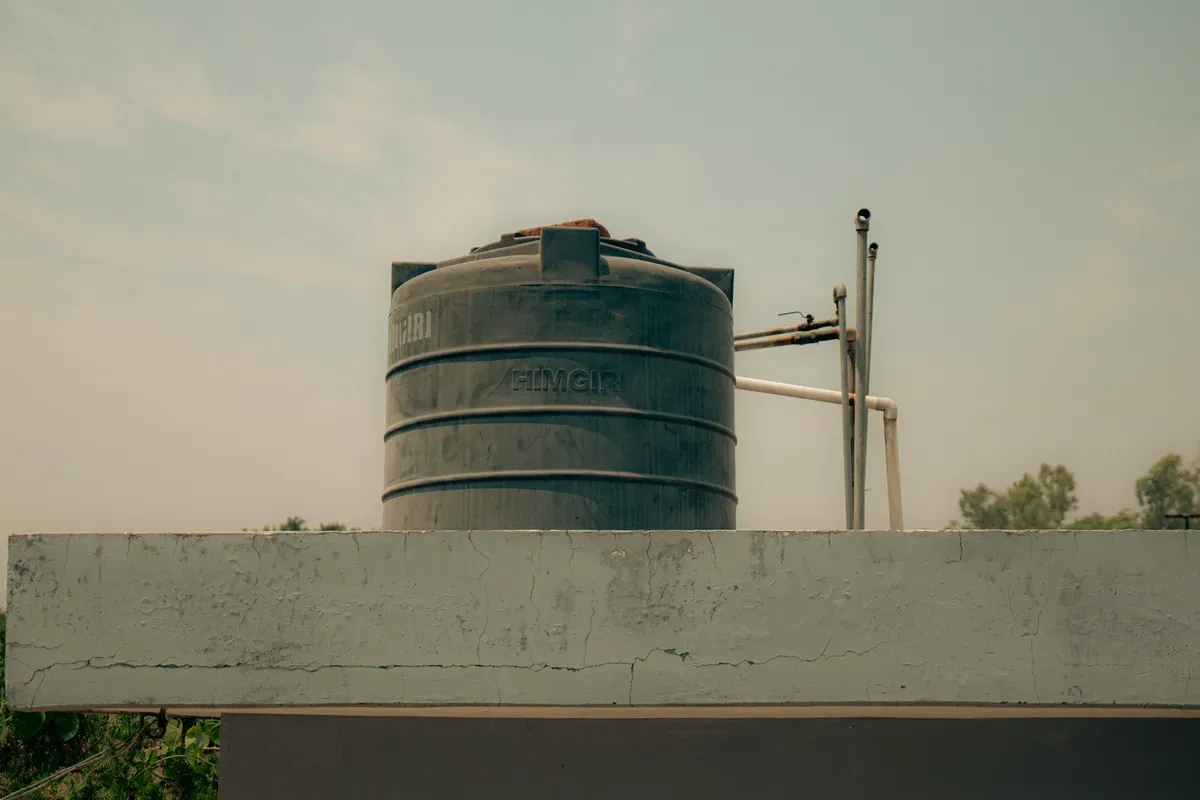
Rainwater harvesting is legal throughout South Africa. There is no national legislation that prohibits a homeowner or business from capturing roof runoff. The complications arise the moment that water touches your internal plumbing. At that point, you enter a web of national building standards, municipal bylaws, and water services regulations that differ meaningfully between Cape Town, Johannesburg, eThekwini, and Tshwane. Getting the compliance layer wrong is expensive. Getting it right gives you a permanent, insurable, property-value-enhancing water asset.
This article maps the full legal framework, lists every standard and permit you need, and gives you real cost figures from South African installers and homeowners so you can budget accurately before calling anyone.
The national legal framework
Three pieces of legislation govern rainwater harvesting in South Africa at a national level.
The National Water Act 36 of 1998 recognises rainwater (precipitation that has not yet entered a watercourse or municipal system) as a resource that any person may use for domestic purposes without a licence. You do not need a water use licence from the Department of Water and Sanitation simply to collect roof runoff in a tank for household use.
The Water Services Act 108 of 1997 becomes relevant once your system interacts with municipal infrastructure. It prohibits any connection that could introduce contamination into the municipal supply, which is why backflow prevention is a hard legal requirement, not merely best practice.
The National Building Regulations and Building Standards Act 103 of 1977, updated through the SANS 10400 series, governs how any plumbing or drainage work is performed on a property. Additions and alterations to plumbing require a building plan amendment in many municipalities, and all plumbing work must be signed off by a registered plumber who issues a Certificate of Compliance.
The standards you must meet
Three SANS standards govern almost every compliant installation.
- SANS 1731:2017: the manufacturing standard for polyethylene storage tanks (source: jojo.co.za). If your installer supplies a tank without this mark, walk away.
- SANS 10252-1: covers water supply and backflow prevention (source: sans10400.co.za). This is the standard that mandates the RPZ valve or complete pipe separation between your harvested water and the municipal supply.
- SANS 10400-R: governs stormwater disposal (source: sans10400.co.za). Your gutters, downpipes, and overflow routing must be designed so excess runoff does not damage neighbouring properties or contribute to urban flooding.
On the backflow question, enviroleg.co.za confirms that systems plumbed into the home must have a Reduced Pressure Zone valve or completely separated plumbing and a Certificate of Compliance. This is the requirement that catches most DIY installers off guard.
“In Cape Town it is explicitly forbidden according to the by-laws to have a buffer tank… if you are going to connect your water storage system to the pipes in your house you will have to pay for a very expensive non-return valve that prevents your house’s water supply from backwashing into the municipal supply.”
How the major metros differ
National standards set the floor. Municipalities can and do add requirements on top of that floor. Here is what you need to know in each major metro as of 2026.
City of Cape Town
Cape Town has the most detailed and strictly enforced regime. The City’s Water and Sanitation bylaws require that any alternative water supply system connected to internal plumbing be notified to the City, installed by a registered plumber, and equipped with backflow prevention that complies with SANS 10252-1. Fines for illegal water usage or unregistered bypasses range from R3,000 to R6,700 (source: capetown.gov.za). The City also introduced fixed monthly network charges based on pipe diameter: a 15mm connection costs R87.29 per month, a 20mm connection R155.87, and a 25mm connection R243.15, regardless of how much municipal water you use (source: businesstech.co.za). This means reducing consumption through rainwater harvesting lowers your variable bill but does not eliminate the fixed network charge.
Cape Town also applies sanitation billing at roughly 70% to 75% of municipal water consumed (source: servicelinksa.co.za), so reducing your metered municipal consumption by 10 kilolitres per month saves you the water tariff on those 10 kilolitres plus approximately 7 to 7.5 kilolitres worth of sanitation charges on top.
“Also without rezoning you cannot apply for exemption to water restrictions in CoCT. So that requires a whole lot of creativity with rain water harvesting by having to take the washing machine, dishwasher and toilets off mains supply.”
eThekwini (Durban)
eThekwini’s Stormwater Design Guidelines set a minimum tank sizing requirement: 1 cubic metre (1,000 litres) for every 27 square metres of roof or hardened area (source: durban.gov.za). This is a planning and development guideline used for new builds and major renovations, not a blanket retrofit requirement for existing homes, but it signals how the municipality thinks about minimum retention capacity. For retrofits, the standard plumbing compliance requirements (registered plumber, CoC, backflow prevention) still apply.
City of Johannesburg and Tshwane
Both metros require registered plumber sign-off and a CoC for any plumbing work. Johannesburg’s bylaws prohibit connections that could contaminate the municipal supply, mirroring the national Water Services Act position. Neither Johannesburg nor Tshwane currently imposes a pre-installation notification requirement comparable to Cape Town’s, but building plan amendments are required if the work involves structural changes (such as a buried or concealed tank). Check with your local JMPD or City of Tshwane water services office before starting work, as bylaws are updated periodically and ward-level requirements sometimes differ from city-level policy.
Nelson Mandela Bay
Nelson Mandela Bay has experienced among the most severe water crises of any major South African metro. The Business Chamber there has been explicit about the stakes.
“Waiting for crisis levels before changing behaviour is a risk our metro cannot afford… The long-term cost of doing nothing is far greater than the cost of acting now.”
In practice, NMB has encouraged private storage and alternative sources. The municipality’s bylaws still require backflow prevention and plumbing compliance for any system connected to internal supply. Given the city’s infrastructure challenges, full meter bypass systems (where rainwater feeds your entire home independently of the municipal connection) are increasingly common and legal, provided the plumbing is correctly separated and certified.
The permit process step by step
- Determine your system type. A standalone tank with a manual tap and garden hose is the simplest case and may require no permit beyond standard plumbing practice. A pressurised system feeding your home’s internal supply requires a CoC and, in some metros, pre-notification.
- Appoint a registered plumber. Check registration with the Plumbing Industry Registration Board (PIRB) or Institute of Plumbing South Africa (IOPSA). An unregistered plumber cannot issue a valid CoC.
- Obtain a CoC. The plumber inspects and certifies the installation. Standard CoC inspection fees range from R850 to R1,500 (source: fdplumbers.co.za). Some plumbers quote CoC as part of the installation package; confirm this before signing a contract.
- Notify your municipality if required. Cape Town requires notification. Confirm with your local water services office whether your metro has a similar requirement.
- Update your building plans if applicable. Permanent structural installations (concrete bases, below-ground tanks) typically require a building plan amendment. Your architect or building contractor can advise on threshold triggers.
- Inform your insurer. A compliant installation with a CoC is an insurable improvement. An unregistered system that causes water damage to a neighbour’s property may not be covered by your household policy.
Get a legal rainwater system installed right the first time
What non-compliance actually costs
The temptation to skip the compliance layer is understandable when you are already spending tens of thousands on hardware and labour. The numbers argue strongly against it.
Rectification costs for non-compliant plumbing run from R3,000 to R12,000 (source: pirb.co.za). Cape Town fines start at R3,000 and reach R6,700 per incident (source: capetown.gov.za). If your non-compliant system contaminates the municipal supply and the City traces it to your property, you face liability for remediation costs that dwarf any plumber’s invoice. Your property sale will also be blocked if a compliance audit reveals unregistered plumbing work, which is now standard in many conveyancing processes.
What does a legal installation actually cost?
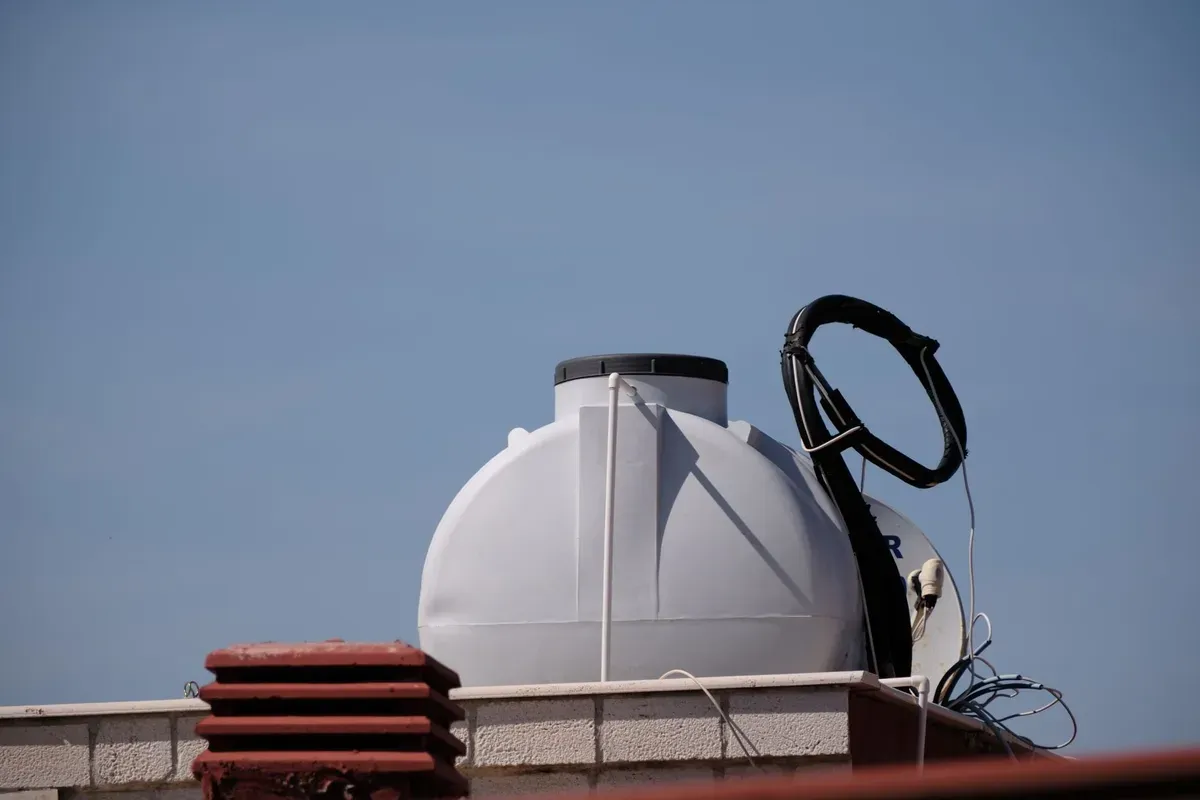
This is where most online guides fail South African homeowners. They quote the tank price and stop there. Here is an honest breakdown.
| Component | Typical cost range | Source |
|---|---|---|
| 2,400L to 2,500L JoJo or Eco tank | R2,400 to R3,200 | sahomebuilderstore.com |
| 5,000L tank | R5,000 to R6,000 | sahomebuilderstore.com |
| Standard 0.37kW to 0.75kW pump | R1,500 to R4,000 | h2owarehouse.co.za |
| DAB Esybox Mini 3 (premium VSD pump) | R15,488 to R21,000 | thewatersolarcompany.co.za |
| 20-inch triple-stage Big Blue filters | R2,000 to R3,500 | reverseosmosis.co.za |
| 55W UV steriliser | R4,200 to R4,700 | osmotech.co.za |
| CoC inspection fee | R850 to R2,500 | fdplumbers.co.za / plumber-pretoria.co.za |
| Full standard pressurised system (installed) | R25,000 to R40,000 | andyplumbers.co.za |
| Premium rainwater / municipal hybrid (installed) | R40,000 to R65,000+ | andyplumbers.co.za |
Real homeowner quotes confirm these ranges. A Fairland homeowner discovered this the hard way.
“I bought a R6,000 JoJo tank online thinking that was the hard part… Delivery was R800. Total spend: R6,800. Then they called us to connect it… Labour and materials: R48,000. The total system cost R54,800… The lesson: the tank is just a container. The plumbing makes it a water backup system.”
At the more accessible end of the market, a MyBroadband user shared a quote from a JoJo-approved installer:
“Received a quote from one of the Jojo approved installers on their website… 2,700 litre tank, 0.55 kW pump, 3 stage big blue UV filter, concrete plinth, electrical connections, piping, valves etc – R23,900. Same as above, replacing the tank with a 2,500 slimline one (the option I’m considering due to space constraints) – R28,700.”
Another user validated that range independently:
“2,500lt system cost me R29k, could have been R24k if I went with a non-slimline tank. And this was on the cheaper side. Filtration alone won’t make up such a big gap, it’s only around R5k extra.”
Cost of ownership: compliant vs. non-compliant
Here is an explicit comparison of what two homeowners with identical 2,500L pressurised systems pay over five years, one who complied from the start and one who skipped the CoC and RPZ valve.
| Cost item | Compliant installation | Non-compliant installation |
|---|---|---|
| Initial hardware and labour | R29,000 | R21,000 (no RPZ, no CoC) |
| CoC fee | R1,200 (included or separate) | R0 |
| Plumbing rectification (when caught) | R0 | R3,000 to R12,000 |
| Municipal fine (Cape Town scenario) | R0 | R3,000 to R6,700 |
| Conveyancing delay / re-compliance at sale | R0 | R5,000 to R15,000 estimated |
| Five-year total (midpoint estimates) | R30,200 | R38,350 |
The non-compliant route is not cheaper. It is more expensive in expectation, and it carries tail risks (insurance voidance, neighbour liability) that are not captured in that table.
Is there a payback? Real owner numbers
The legal compliance framework costs money, but so does not having water. One Cape Town homeowner documented their outcome on a local forum:
“Installed rainwater tank (5,000L, R18,000) and greywater diverter (R3,500). During drought… municipal usage dropped to 12 kilolitres/month. Annual water bill R4,200 vs R9,800 pre-upgrade. Savings: R5,600/year. Payback 4 years on rainwater system.”
Another Cape Town owner confirmed a faster payback driven by consistently high tariffs:
“With Cape Town’s water tariffs I recovered my costs within a year. Been pumping from it now since 2018 at an average of 25kl per month.”
Payback periods vary significantly depending on system size, municipal tariff tier, and how much of the harvested water displaces metered municipal supply. A 2,500L backup system used mainly for toilet flushing and garden irrigation will have a longer payback than a full hybrid system feeding all non-potable end-uses. What does not vary is the legal compliance requirement: the CoC and backflow prevention are mandatory regardless of system size.
SA Property Tools noted in a July 2026 real estate analysis that water security commands measurable premiums:
“Water insecurity has a measurable impact on property values. Properties with established water storage, rainwater harvesting systems and borehole connections command premiums in markets that have experienced restrictions.”
Incentives and rebates: what actually exists in 2026
There is a persistent myth that municipalities offer rebates for installing rainwater tanks. As of 2026, the City of Cape Town, City of Johannesburg, Tshwane, and Nelson Mandela Bay do not offer direct cash rebates or municipal grants to private homeowners for rainwater tank installations (source: servicelinksa.co.za). Some water utilities have run periodic rebate programmes in the past, but none of the four major metros currently operates one open to residential applicants.
For businesses, the picture is more favourable. Section 12B and 12L tax allowances allow companies investing in renewable and eco-infrastructure to write off qualifying assets through accelerated depreciation (source: terramanzi.co.za). If your business installs a rainwater harvesting system that reduces reliance on municipal supply, speak to a tax practitioner about whether the asset qualifies under these provisions.
Practical checklist before you install
- Confirm your system type: standalone/garden use (lower compliance burden) versus plumbed-in pressurised backup (full compliance required).
- Check your municipality’s specific notification requirements. Cape Town is the most demanding; others are less prescriptive but still require a CoC.
- Verify your tank carries the SANS 1731:2017 mark.
- Confirm your plumber is PIRB- or IOPSA-registered before signing anything.
- Budget for the CoC (R850 to R2,500) as a non-negotiable line item, not an optional add-on.
- If your system involves a pump connected to internal supply, budget for an RPZ valve. This is a legal requirement under SANS 10252-1, not an upsell.
- For eThekwini new builds or major renovations, check against the 1,000L per 27sqm roof area guideline when sizing your tank.
- Inform your insurer in writing once the CoC is issued. Keep a copy of the CoC with your property documents.
The bottom line is straightforward. Rainwater harvesting is legal, encouraged by national policy, and financially sensible in most South African metros given current tariff levels. The legal framework is not there to obstruct you. It is there to prevent contamination of shared infrastructure and to ensure that your investment is insurable and transferable at property sale. Budget correctly, use a registered plumber, get your CoC, and your system is a legal, compliant, property-value-enhancing asset from day one.
For a deeper breakdown of system types, sizing guides, and what to ask a registered installer before signing a quote, read the full guide.
Get started
Get a legal rainwater system installed right the first time
Vetted local installers · honest advice first
Illustration: waterpointsa.co.za