Key Points
- Wall thickness across major brands ranges from 4.5 mm to 6.5 mm depending on capacity, and that gap matters more than the brand name on the side.
- JoJo uses food-grade virgin LLDPE with a 10-year UV protection guarantee and a 10-year warranty on material and workmanship (extended from 8 years as of 1 September 2017).
- Eco Tanks is the first South African manufacturer certified under SANS 1731:2017 and backs that with a 10-year full replacement guarantee.
- Nel Tanks explicitly mandates professional installation for the 10-year guarantee to be honoured.
- A complete backup system (tank, pump, fittings, and installation) benchmarks at R20,000 to R40,000 according to waterquotes.co.za.
- The single most common early failure is not the tank wall. It is the base, the fittings, or an unsealed lid allowing algae and silt.
- Liquid contents must not exceed 40 degrees Celsius per JoJo’s own terms, a limit relevant to any tank exposed to direct afternoon sun.
Why This Size, Why Now
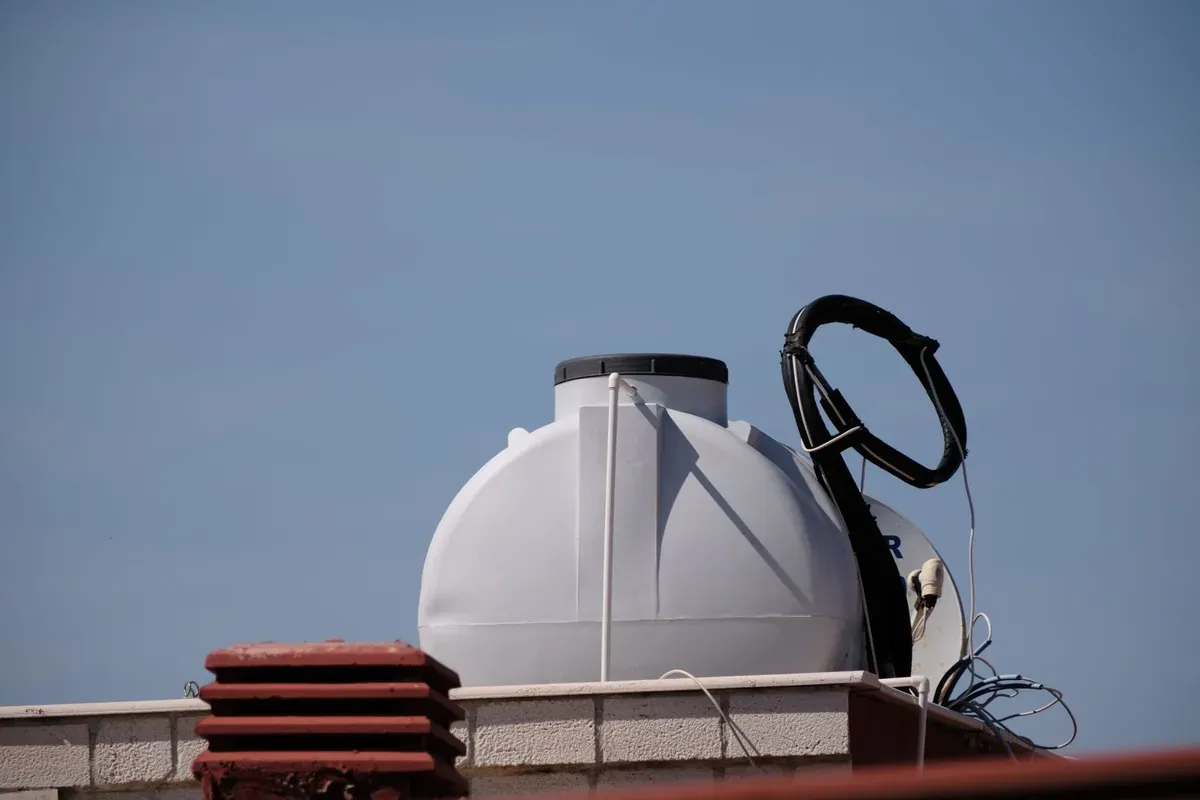
The 2,000L to 2,500L range is the workhorse of South African domestic backup water. It sits at the intersection of affordability, manageable footprint, and genuinely useful storage: roughly 25 to 30 days of bare-minimum drinking and cooking water for a family of four, or five to seven days of near-normal use including showers. Demand surges every time a municipality announces pressure reduction schemes or extended maintenance shutdowns, and reactive buying rarely produces good decisions.
“For our HOA, we received 8 requests for JoJo tank installations in last 2 weeks… No doubt this is happening everywhere and likely to create another crisis soon due to all newly installed tanks.”
MyBroadband user maumau on the surge in reactive tank installations
That surge is the problem this guide addresses. When everyone is buying at once, shelves thin out, installers are overbooked, and buyers settle for whatever brand is available at Cashbuild that Saturday. This guide gives you the information to decide before that pressure hits.
The Three Brands: What They Actually Are
JoJo, Roto, and Vectus are all rotationally moulded polyethylene tanks. The process is essentially identical across manufacturers: LLDPE or HDPE resin is loaded into a mould, heated, and rotated until the polymer coats the interior evenly. The differences come down to resin grade, wall thickness, UV stabiliser quality, fitting tolerances, and the warranty terms the manufacturer is willing to stand behind.
JoJo Tanks
JoJo is South Africa’s dominant brand by installed volume. The company uses food-grade virgin LLDPE and specifies a 10-year UV protection guarantee alongside its 10-year warranty on material and workmanship, per jojo.co.za. The warranty was extended from 8 years in September 2017, which matters for second-hand buyers calculating remaining cover. JoJo also offers certified stands from 1.5 m to 9 m and a 6,000L underground tank for buyers with space constraints. Their accessory ecosystem is the most developed: pump-to-tank connector kits that include flexible hosing specifically designed to absorb pump vibration and prevent cracking the tank wall (per Builders) are a good example of the brand thinking beyond the tank itself.
The warranty, however, comes with hard conditions. Per JoJo’s official FAQ:
“If you drill any additional holes or make any alterations to the tank whatsoever, the integrity of the tank is jeopardised, and your warranty will fall away.”
JoJo official FAQ on tank modifications
And on plumbing connections:
“Unsupported connections (Pipes, etc.) attached to the tank causing the tank to be under stress.”
JoJo’s official warranty exclusion on unsupported plumbing
That second condition is voided constantly by DIY installations where rigid CPVC or copper pipe is attached directly to the tank’s outlet fitting without a flexible coupling. The tank flexes slightly as it fills and empties. Rigid pipe does not. Stress cracks form at the fitting over 12 to 24 months, and by then the warranty discussion becomes difficult.
Roto Tanks
Roto competes on price and geographic availability, with strong distribution in KwaZulu-Natal and the Eastern Cape. Wall thickness and UV additive specifications vary by product line, and Roto does not publish resin grade with the same transparency as JoJo. The practical implication is that you should ask the retailer for the specific product data sheet before buying, not after. Roto tanks are common on rural properties and smallholdings where the brand’s distribution network reaches before JoJo’s does.
Vectus Tanks
Vectus is an Indian-origin brand that has expanded into the South African market, often appearing at competitive price points on e-commerce platforms. Build quality in the mid-range capacity is generally acceptable, but the local spares and fitting ecosystem is thinner than JoJo’s. If a fitting fails at 11 pm during load-shedding, finding a compatible Vectus part at the nearest Chamberlains is less certain than finding a JoJo equivalent. For buyers in major metros, this is a manageable risk. For buyers in secondary towns, it deserves weight.
Eco Tanks: The Certification Outlier
Eco Tanks is not always stocked at the large retail chains, but it deserves mention here because it is the first South African tank manufacturer certified under SANS 1731:2017 (per ecotanks.co.za) and it offers a 10-year full replacement guarantee, not just a material warranty. At the 1,000L size, Cashbuild prices them at R2,374 to R2,469, which provides a useful reference point for scaling costs upward to the 2,500L range.
Specs and 2026 Pricing: Side-by-Side
| Specification | JoJo 2,500L | Roto 2,500L | Vectus 2,500L |
|---|---|---|---|
| Material | Food-grade virgin LLDPE | LLDPE (grade varies by line) | LLDPE |
| Wall thickness range | 4.5 mm to 6.5 mm (capacity-dependent, per waterpointsa.co.za) | 4.5 mm to 6.5 mm (capacity-dependent) | 4.5 mm to 6.5 mm (capacity-dependent) |
| UV protection guarantee | 10 years | Varies by product line | Varies by product line |
| Warranty duration | 10 years (material and workmanship) | Varies, check data sheet | Varies, check data sheet |
| SANS 1731:2017 certification | Yes | Check current data sheet | Check current data sheet |
| Max liquid temperature | 40 degrees Celsius | Typically 40 degrees Celsius | Typically 40 degrees Celsius |
| Approximate tank-only retail price (2026) | R4,500 to R6,500 (estimate based on comparable sizes) | R3,800 to R5,800 (estimate) | R3,500 to R5,500 (estimate) |
| Spares availability in secondary towns | Excellent | Good | Moderate |
| Real-world lifespan with correct base | 20 to 25 years (waterpointsa.co.za) | 20 to 25 years | 15 to 25 years |
Note on tank-only pricing: JoJo’s 10,000L tank retails at R19,902 to R21,756 at Plumblink, which allows rough proportional benchmarking for the 2,500L size. The 2,500L price estimates above should be verified at your nearest Cashbuild, Builders, or Plumblink before purchase. Prices shift with Rand volatility and resin costs.
The Real Cost of Ownership: What the Shelf Tag Hides
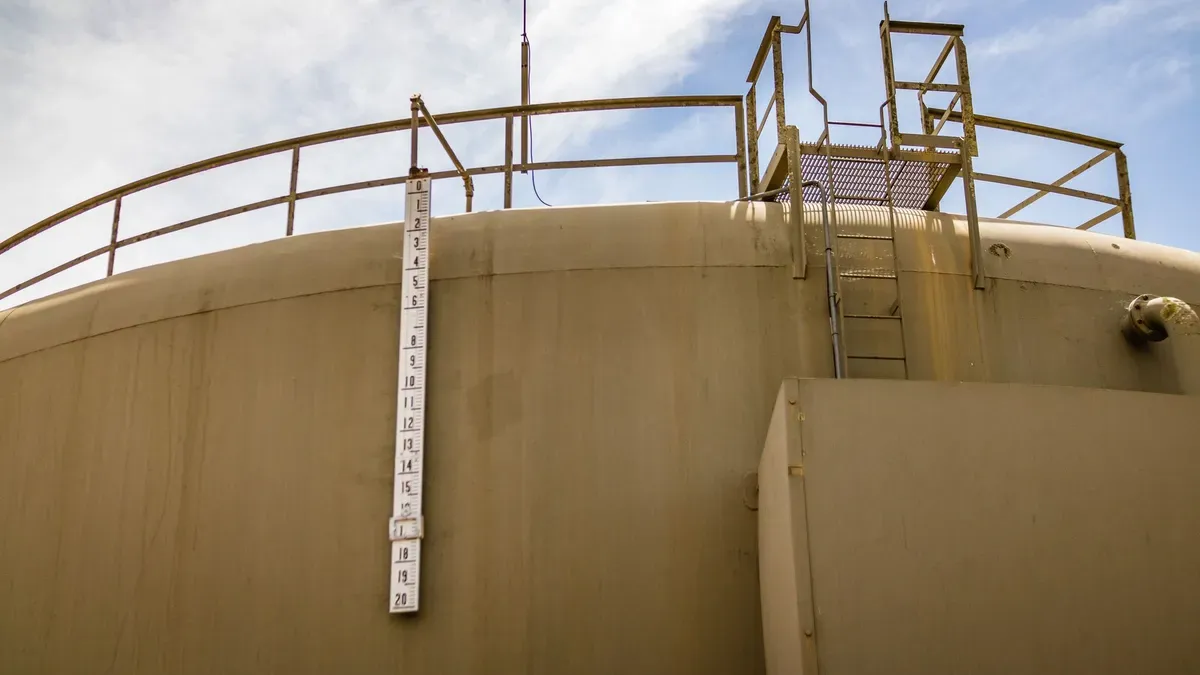
The tank purchase price is typically 15 to 30 percent of the total money you will spend over the first five years. Here is where the rest goes.
Installation
A complete backup system including tank, pump, fittings, and installation benchmarks at R20,000 to R40,000 (waterquotes.co.za). The average upfront price for a full domestic installation including plumbing, a concrete slab, and electrical work is approximately R20,000 (Rainwater Harvester via IOL). The wide range reflects pump choice more than tank choice: a basic pressure pump and the top of the range variable-speed drive pump are not the same purchase.
“I did it DIY a few years ago, wasn’t difficult at all. 2KL JoJo from Builders, a few bags of cement to create a solid base, a booster pump and the associated plumbing…. Labor was my time.”
MyBroadband user Segg, January 2025, on the simplicity and cost of self-installation
DIY installation can reduce that number substantially, but it introduces warranty risk and, in some municipalities, compliance risk. Nel Tanks, for example, explicitly mandates professional installation for the 10-year guarantee to be honoured (neltanks.co.za). JoJo’s terms require the provision of a level, smooth, and robust base. If you pour a 100 mm slab and it cracks under 2.5 tonnes of water, you own that problem. Rain Harvest specifies that concrete slabs for 5,000L tanks must be at least 150 mm thick to prevent rupturing.
“Foundation is critical 5000l = 5 tons etc.”
MyBroadband user selfreliance.co.za, July 2020, on foundation physics
The same geometry applies at 2,500L: 2.5 tonnes on a base that is not perfectly level creates localised stress that polyethylene absorbs initially and then fails at a fitting or a low seam. One owner described the result directly:
“It started to leak wirhin a year due to the weight of water. The contractor made a repair but it’s worse.”
MyBroadband user on tank base failures and stress cracking
Five-Year Cost-of-Ownership Comparison
| Cost Item | DIY Installation | Professional Installation |
|---|---|---|
| Tank purchase (2,500L mid-range brand) | R4,500 to R5,500 | R4,500 to R5,500 |
| Concrete slab (materials) | R800 to R1,500 | Included in labour quote |
| Pump (booster or pressure pump) | R2,500 to R6,000 | R2,500 to R6,000 |
| Plumbing fittings and pipe | R600 to R1,800 | Included in labour quote |
| Total labour | R0 (your time) | R6,000 to R12,000 |
| Float or ball valve replacement (Year 2 to 3) | R450 to R1,400 (Leak Detection Johannesburg) | R450 to R1,400 |
| Outlet or inlet fitting reseal (Year 2 to 4) | R650 to R1,800 (Leak Detection Johannesburg) | R650 to R1,800 |
| Professional tank clean (every 2 years, 5,000L rate is R3,420 at Andy Plumbers; 2,500L lower) | R1,500 to R2,500 | R1,500 to R2,500 |
| Chlorine tablets (slow-release, R160 to R330 per 1.5 kg tub, per The Water Company) | R320 to R660 over 5 years | R320 to R660 over 5 years |
| Pump replacement if unit fails (Leak Detection Johannesburg) | R3,500 to R12,000 (risk) | R3,500 to R12,000 (risk) |
| Catastrophic tank replacement if base fails (Leak Detection Johannesburg) | R6,500 to R14,000 (risk) | Lower risk with compliant slab |
| Approximate 5-year total (excluding catastrophic risks) | R10,820 to R19,460 | R18,420 to R31,860 |
The DIY saving is real, roughly R7,000 to R12,000 upfront, but it concentrates risk in the first two years when base failures and fitting leaks typically emerge. As one forum contributor put it:
“Yeah part of the reason I went DIY is I can afford f’ups as they’re just my time, not my money too!”
MyBroadband user shadow_man, October 2022, on the risks and rewards of DIY
That logic is sound if your time is genuinely available and your slab is genuinely level. It is less sound if your property insurance or home warranty depends on compliant plumbing. A Pretoria plumbing guide notes that an insurance claim rejected because an unregistered plumber worked on your plumbing typically costs far more than the saving on the original quote.
What Owners Actually Complain About After Two to Three Years
Retailer reviews and forum threads, stripped of hyperbole, cluster around five recurring problems across all brands.
1. Algae from Unsealed Setups
This is the most common complaint and almost always traceable to user error, not material failure. Algae require light. A fully sealed, opaque tank with a properly fitted lid and no unsealed pipe penetrations will not grow algae in meaningful quantities. The contrast is stark between installations:
“Haven’t cleaned my JoJo tank for a while. Found black algae where I had the hose pipe in the deep end.”
MyBroadband forum user on algae growth caused by an unsealed setup
“As the tanks are closed with a lid no dirt is detected on the bottom yet and the water is still clear, without any algae after more than a year of non-use.”
MyBroadband forum user on the success of a properly sealed tank
Andy Plumbers describes what an unmanaged tank looks like inside: a few centimetres of silt on the floor, a layer of leaves that got past the gutter screen, and a brown-green film on the walls. Their note on water quality is worth reading carefully: the chlorine in the water fades within days in a warm tank, and a biofilm starts forming on the walls; the water looks clear and smells faintly stale. That biofilm is not harmless. It is the precursor to serious bacterial loading if water is used for anything beyond garden irrigation.
2. Fitting Brittleness and UV Degradation
The tank wall itself is typically the last component to fail. The fittings, tap bosses, and inlet connectors are smaller pieces moulded from the same or cheaper polyethylene, exposed to full UV on the south-facing wall. After two to three years in Gauteng or the Northern Cape, polypropylene fittings become noticeably more brittle.
“Had to repair the JoJo tank tap (my own fault, but it broke due to brittle plastic).”
MyBroadband user on UV degradation and fitting failure
Budget for one fitting replacement per 24 to 36 months. At R450 to R1,400 for a float or ball valve (Leak Detection Johannesburg) and R650 to R1,800 for an outlet or inlet reseal, this is not catastrophic, but it needs to be in your cost model from day one.
3. Pump Electrical Issues
The pump is statistically the most expensive component to fail in a backup water system. Variable-speed drive pumps introduce an additional failure mode: electrical compatibility with South African earthing norms. One owner’s experience is representative of a wider pattern:
“I had a water pump replaced yesterday with the DAB Esybox 1.1kw… the moment a tap is opened, my earth leakage trips instantly. I had none of these issues with the replaced pump.”
MyBroadband user experiencing VSD pump electrical issues after replacement
Pump replacement costs R3,500 to R12,000 depending on specification (Leak Detection Johannesburg). The upper end of that range, for a quality variable-speed unit, represents more than double the original tank purchase price. Skimping on pump brand to save R1,500 upfront is a decision that often reverses itself painfully at the two-year mark.
4. Silt Accumulation and Maintenance Access
Even a well-sealed tank accumulates fine particulate over time, particularly when filled from a roof catchment. The only practical solution, once water is in, is a bilge tap at the base. Installing one before the tank is commissioned is straightforward. Installing one after is awkward and risks voiding the warranty on a JoJo. One owner’s hard-won advice:
“Fit the bilge tap before you put any water in the tank!! Vacuuming is a pain in the derriere, but I just have to wait for the dry season when the tanks are low so I can drain them and fit the bilge tap. So my advice is to fit the bilge tap before you put any water in the tank!! so you can drain all the sludge out of the tank and into your garden every now and then.”
MyBroadband user KantSnyer on DIY tank maintenance and sludge removal
If you opt for professional cleaning, Andy Plumbers quotes R3,420 for a 5,000L tank. A 2,500L clean will be less, but beware the cheap end of the market: as Andy Plumbers warns, with cut-price R600 services, the sludge stays on the floor and nothing is sanitised.
5. Wildlife and Environmental Damage
This one does not appear in manufacturer warranties, but it is a genuine South African-specific risk in peri-urban and rural areas. The lid integrity that protects water quality also needs to resist physical interference.
“I live on a big-5 reserve and baboons have recently worked out how to break the pipes to our jojo tanks. They’ve done so three times in as many weeks… Sooner or later one will break the top lid off a jojo and fall inside the tank unable to get out, and we’ll only notice that there’s a dead baboon inside our water which we shower and brush our teeth with after a week or two.”
MyBroadband forum user on the unique local hazard of wildlife tampering with water tanks
Even in suburban Joburg or Cape Town, lid security matters for preventing contamination from insects, bird droppings, and opportunistic small animals. The polypropylene locking rings on most brands are not designed for sustained mechanical force. Consider secondary locking or a tank enclosure if your property has access concerns.
The Warranty Fine Print: What Voids Cover Across All Brands
Every brand’s warranty is a conditional document. The conditions that most commonly trip up buyers are:
- Unauthorised penetrations: JoJo is explicit: drill any additional holes and the warranty falls away. This means any retrofitted overflow fitting, bilge tap, or second inlet must be planned before the tank leaves the retailer.
- Inadequate base: JoJo requires the provision of a level, smooth, and robust base. Rain Harvest specifies 150 mm thick concrete slabs for tanks from 5,000L upward. At 2,500L, the physics are more forgiving, but a cracked or unlevel slab still voids cover.
- Unsupported pipe connections: Rigid pipe attached directly to a tank fitting puts the fitting under cantilever stress. JoJo lists unsupported connections causing tank stress as an explicit warranty exclusion. Use flexible couplings.
- Non-professional installation (Nel Tanks): Nel Tanks requires professional installation. Keep the installer’s invoice and their PIRB registration number.
- Temperature exceedance: JoJo specifies that liquid contents must not exceed 40 degrees Celsius. A dark-painted tank in full Karoo sun can transfer meaningful heat to stored water. This matters less for backup municipal supply than for solar-heated or industrial applications, but it is worth knowing.
Which Brand Should You Buy at 2,500L?
There is no universally correct answer, but there is a decision framework.
Choose JoJo if: you want the deepest spares ecosystem in South Africa, you are in a secondary town where parts availability matters, you want the most transparent warranty terms in writing, and you are willing to follow those terms precisely.
Choose Roto if: JoJo is out of stock in your size, the price differential is meaningful to your budget, and you are buying in a region where Roto’s distribution is strong. Verify the specific product data sheet, not just the brand name.
Choose Vectus if: you are in a major metro, price is the primary driver, and you have confirmed that local spares are available through your preferred plumbing merchant. Do not buy Vectus for a property outside the major distribution corridors.
Consider Eco Tanks if: SANS 1731:2017 certification and a full replacement guarantee (not just a material warranty) are worth a potential premium to you. The certification claim is verifiable and meaningful.
Across all brands, the real-world lifespan of a premium LLDPE or HDPE tank with correct base and management is 20 to 25 years (waterpointsa.co.za). The brand decision matters less than the base, the fittings, and the maintenance discipline over that period.
Three Things to Do Before You Buy
- Confirm the slab specification with a qualified person before the tank arrives. A cracked base under a full 2,500L tank is a R6,500 to R14,000 problem (Leak Detection Johannesburg) that no warranty will cover.
- Plan every penetration before the tank is filled. Bilge tap, second inlet, overflow: mark them, order the fittings, and install them while the tank is dry and the warranty is intact.
- Get the pump and electrical specification right the first time. The pump is where the real five-year cost variation lives. R3,500 to R12,000 is a wide range, and the wrong choice at installation tends to surface as an earth leakage or pressure failure when you can least afford it.
To see which backup water options are available and priced for your specific address, check my address.
Get started
Ready to install your 2,500L backup tank?
Vetted local installers · honest advice first
Photo: Doğan Alpaslan Demir / Pexels