Key points
- Mangaung loses between 48% and 49% of its bulk water supply to leaks and unmetered consumption every single day, according to infrastructurenews.co.za.
- As of September 2026, that waste equals 112 million litres per day (GroundUp), draining a system that already has a R4 billion infrastructure backlog.
- The R1.6 billion Welbedacht pipeline Phase 2 fix is not scheduled to begin delivering water until somewhere between 2027 and 2032.
- A fully landed surface backup tank system for a family of four costs between R14,000 and R55,000 all-in (waterpointsa.co.za), while a borehole runs to roughly R82,600 for a 60m example (liquaflo.co.za).
- Municipal water tariffs are proposed to rise by 11% for 2026/2027, making the cost-of-ownership calculation for backup water more urgent than ever.
- Any municipal plumbing connection requires a Plumbing Certificate of Compliance issued by a PIRB-registered plumber. Skipping this exposes you to fines of R1,000 to R2,000 for using an unregistered plumber and R2,000 to R4,000 per offense for illegal cross-connections.
Bloemfontein residents have a phrase for it now. When the municipal prepaid meter ticks upward but no water comes out of the tap, locals describe themselves as “paying for air.” That phrase is not a complaint from a single frustrated homeowner. It has become the working description of daily life in Mangaung for tens of thousands of people. This article gives you the exact numbers, the realistic options, and the real costs, so you can make a decision that fits your household rather than a vendor’s sales target.
Why Mangaung’s water outages are structural, not seasonal
It is tempting to frame water outages as a drought problem or a wet-season maintenance issue. In Mangaung the evidence points somewhere else entirely. According to infrastructurenews.co.za, between 48% and 49% of the metro’s entire bulk water supply disappears before it reaches a paying customer. By September 2026, GroundUp put a volume figure on that loss: 112 million litres per day. To put that in context, a standard South African household consumes between 12,000 and 20,000 litres per month. The water evaporating daily from Mangaung’s broken pipes could serve somewhere between 180,000 and 280,000 households every single month.
The DA’s infrastructure audit pegged the repair bill at R4 billion. The timeline for the flagship Welbedacht pipeline expansion sits between 2027 and 2032. That is a five-year window in which the municipality’s own best-case engineering project may not yet be fully operational. These are not political arguments. They are the planning horizons every Bloemfontein homeowner needs to understand before deciding whether to wait or act.
AfriForum placed Mangaung Metropolitan Municipality on legal terms and lodged Human Rights Commission complaints after residential suburbs in Bloemfontein endured multi-week water supply failures in mid-2026. An oversight visit by the Deputy Minister of Water and Sanitation, reported by OFM in October 2026, exposed severe infrastructure failures across the metro, where municipal underspending and vandalised pump stations continue to disrupt supply and degrade water quality. National Blue Drop data showed that 25 of the Free State’s 78 water supply systems are in high or critical risk, reinforcing why Bloemfontein homeowners must invest in private backup storage and filtration.
Most recently, OFM reported in November 2026 that Mangaung Metro announced water supply disruptions across several Bloemfontein suburbs for reservoir maintenance, underscoring how routine municipal maintenance cycles compound the existing 48-49% leak rate to leave households without tap water at regular intervals.
How much backup water does your household actually need?
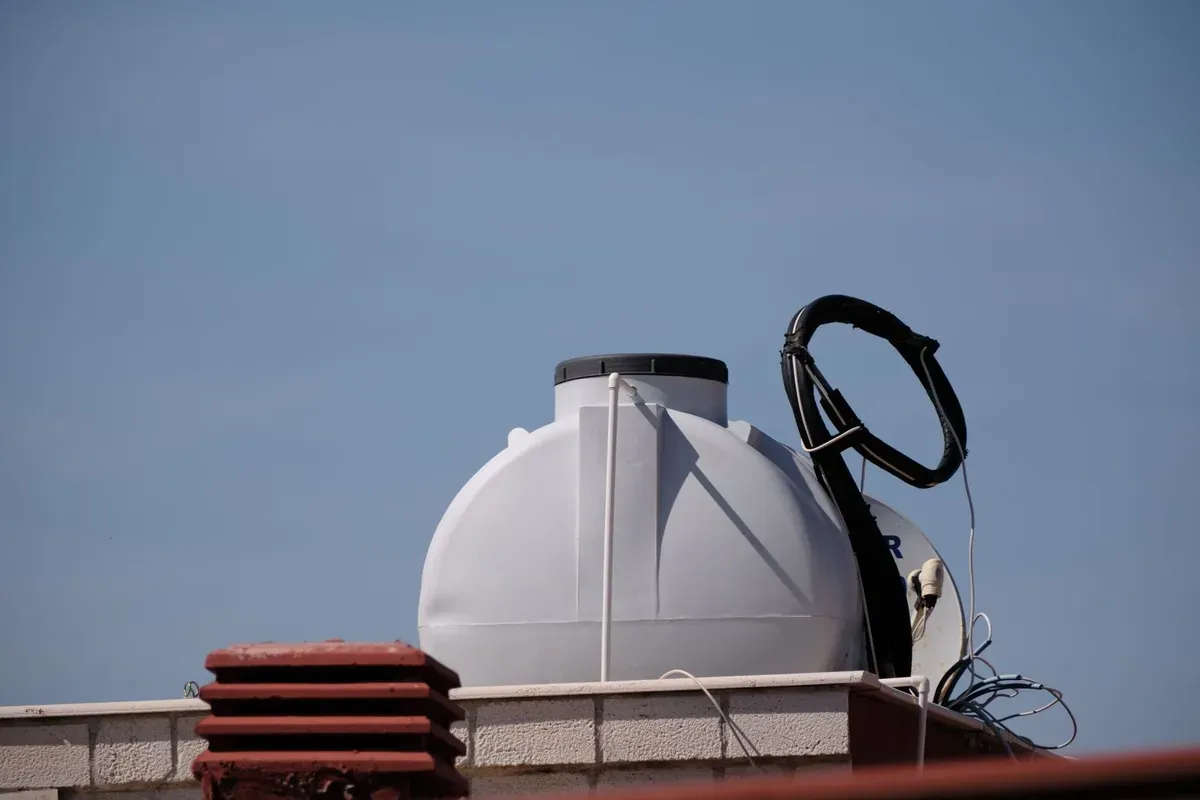
Tank suppliers and JoJo Tanks installation partners use 150 litres per person per day as their standard backup sizing metric. The IWA Water Policy research figure for South African national average consumption is higher, at 237 litres per person per day, but that includes garden irrigation and other non-essential uses. For a pure outage survival calculation, 150 litres per person per day is the working number.
A family of four over three days therefore needs 1,800 litres at the absolute minimum. Local plumbing engineers recommend a 2,400L or 2,500L tank as the minimum for that household, allowing a small buffer. For a 48- to 72-hour commercial backup window, which waterquotes.co.za recommends for Bloemfontein businesses, the volume requirement scales quickly with staff count and operational use.
Mangaung’s Indigent Management Programme provides qualifying low-income households with 6 kilolitres per month of Free Basic Water (mangaung.co.za). For households receiving that subsidy, any backup system needs to be sized and filled carefully to avoid unintentionally consuming beyond the free allocation, since the proposed 11% tariff increase for 2026/2027 makes every kilolitre above the free band more expensive.
The three realistic options: costs, timelines, and honest trade-offs
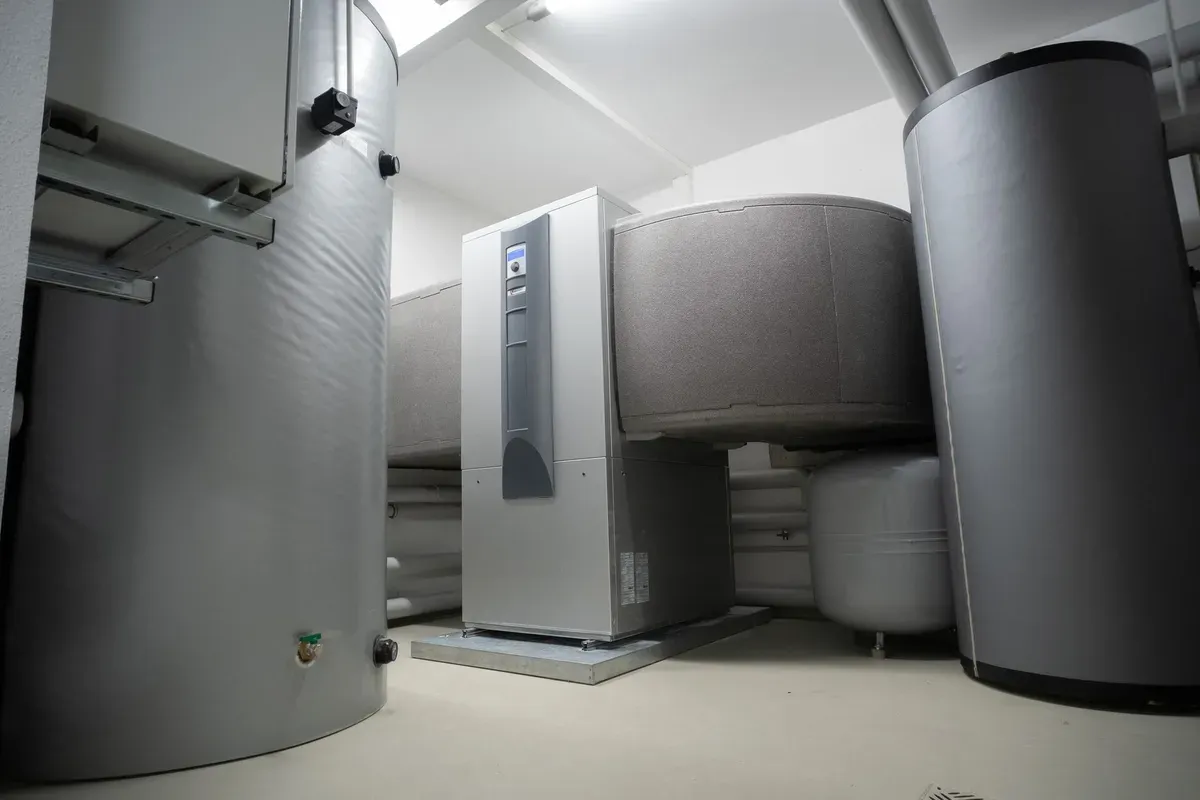
Option 1: Surface backup tank system (the most common starting point)
A surface tank paired with a booster pump is what most Free State homeowners install first. The tank sits on a concrete plinth beside the house, feeds by gravity or pump into the household plumbing, and the whole system is installed in a day by a qualified plumber.
Tank prices vary by brand and capacity. According to waterpointsa.co.za, a 5,000L JoJo tank costs between R4,500 and R7,500. A kamanoindustrial.co.za listing puts a typical 5,000L plastic tank in Bloemfontein at approximately R5,500. The 5,000L and 5,250L range from other manufacturers sits at R5,199 to R6,499 at retail (waterpointsa.co.za). For tighter spaces, Eco Tanks produces 2,000L to 2,550L slimline units at R5,699 to R6,999 (waterpointsa.co.za), which can fit along a narrow side passage.
Nel Tanks manufactures using a rotomoulded process without weld seams (neltanks.co.za), which eliminates the most common failure point in budget tanks. The absence of a seam is worth checking when comparing prices, because a leaking weld in year three erases any initial saving.
The pump is where most DIY budgets underestimate. A new budget 0.75kW booster pump costs R1,500 to R3,000 (waterpointsa.co.za). A mid-range DAB unit with a smart controller costs R4,900 to R7,000 (waterpointsa.co.za). An automatic pump controller alone runs R589 to R1,350 (waterpointsa.co.za). Add plumber call-out and labour at R1,200 to R2,800 (waterpointsa.co.za), plus the PIRB-registered plumber’s Certificate of Compliance for the municipal connection, and the total installed cost for a complete automated inline 1,000L system starts at R10,000 to R12,000 (waterpointsa.co.za). Scaling to a full surface system with a larger tank takes the true landed cost to R14,000 to R55,000, depending on tank size, pump specification, and plumbing complexity (waterpointsa.co.za).
For homeowners who want a fixed price with no component sourcing, Watermojo’s fully integrated 5,250L medium installation is priced at R26,950 (watermojo.co.za), which covers supply, delivery, concrete plinth, pump, and plumbing connection in one invoice.
Option 2: Borehole
A borehole offers true independence from the municipal network, but the entry cost is substantially higher. A 60m borehole example from liquaflo.co.za comes to R82,600 fully itemised, covering drilling, casing, pump, rising main, and surface connections. This is a point-in-time example from a single supplier; actual cost in Bloemfontein will depend on geological conditions, borehole depth required, and whether the aquifer yield is commercially viable.
Mangaung currently charges a monthly borehole levy of R70 for properties without a public water meter (Mangaung Metropolitan Municipality). This fee is contested. Civil society groups have argued in late 2026 that charging households entirely off the grid for infrastructure they do not use could constitute an unlawful levy, especially where these fees were introduced without public consultation or formal regulatory sign-off. The fee exists, the legal dispute is ongoing, and you should budget for it until a court rules otherwise.
Compare this to the City of Mbombela, which charges R406.50 per month (approximately R470 including VAT) for the same type of levy (businesstech.co.za). Mangaung’s R70 rate is currently much lower, but the trajectory matters: municipal levies can and do increase annually even after a household has gone off-grid.
Option 3: Tanker delivery (short-term bridge only)
Municipal water tankers were eventually deployed in Mangaung after sustained pressure from the DA caucus in 2026. Tanker delivery is an emergency measure, not a long-term solution, and supply is inconsistent. It is worth knowing about if your tank runs dry during an extended outage, but it cannot replace a fixed backup system.
Specification and cost comparison table
| Solution | Tank/System Size | Retail Component Cost | Typical All-In Installed Cost | Autonomous Cover (4 persons) | Key Risk |
|---|---|---|---|---|---|
| Entry surface tank (DIY-sourced) | 2,500L | R2,600 to R3,500 (tank) + R3,000 to R4,500 (pump and fittings) | R10,000 to R14,000 | Approximately 4 days at 150L/person/day | Wrong pipe class or pump spec; CoC non-compliance |
| 5,000L surface tank system | 5,000L | R4,500 to R7,500 (tank) + R3,000 to R7,000 (pump and fittings) | R18,000 to R32,000 | Approximately 8 days at 150L/person/day | Plinth cost and site prep add R2,000 to R5,000 in Bloemfontein |
| Watermojo 5,250L integrated package | 5,250L | Fixed supply-and-install price | R26,950 | Approximately 8 to 9 days at 150L/person/day | Single supplier dependency; confirm warranty terms |
| Large surface system (10,000L+) | 10,000L+ | Varies by supplier | R35,000 to R55,000 | 16+ days at 150L/person/day | Site access, plinth engineering, planning approval for large footprint |
| Borehole (60m example) | Unlimited (aquifer-dependent) | N/A | R82,600 (liquaflo.co.za example) | Indefinite if aquifer yield is adequate | Geological risk; R70/month municipal levy; unresolved legal status of levy |
Cost-of-ownership comparison over five years
Capital cost is only part of the picture. The table below models the five-year total cost of ownership for the two most common choices for a Bloemfontein family of four, using verified figures. It assumes one pump service or minor repair per year for the surface system, and the current R70/month Mangaung borehole levy for the borehole.
| Cost Element | 5,000L Surface Tank System | 60m Borehole |
|---|---|---|
| Year 0 install | R18,000 to R32,000 | R82,600 |
| Annual municipal levy | None (tank supplements municipal supply) | R840 (R70 x 12 months) |
| 5-year levy total | R0 | R4,200 (minimum; subject to increase) |
| Annual pump maintenance / repair allowance | R1,200 to R2,800 per call-out (waterpointsa.co.za) | R1,500 to R4,000 (submersible pump service) |
| Pump replacement (once in 5 years) | R1,500 to R3,000 (0.75kW budget unit) or R4,900 to R7,000 (DAB mid-range) | R4,000 to R12,000 (submersible) |
| 5-year total cost (mid estimate) | Approximately R34,000 to R52,000 | Approximately R97,000 to R115,000 |
| Water independence level | Partial (depends on refill from municipal network or rainwater) | Full, subject to aquifer yield |
The surface tank system costs roughly a third as much over five years for partial independence. The borehole costs more upfront and more annually, but it removes dependence on the municipal network entirely, provided the geology cooperates. Neither option is universally superior. The choice depends on your outage frequency, your household’s risk tolerance, and whether your site geology supports a viable aquifer.
If you want to know which solution is realistic for your specific address before spending a rand, check my address for a free feasibility report.
Does your Bloemfontein address qualify for backup water?
What can go wrong: the installation and maintenance traps
The compliance rules are not optional. Any connection to municipal plumbing requires a Plumbing Certificate of Compliance issued by a PIRB-registered plumber. Using an unregistered plumber exposes you to municipal fines of R1,000 to R2,000, and an illegal cross-connection (where backup water can flow back into the municipal main) carries fines of R2,000 to R4,000 per offense under South African municipal by-laws. Cross-connections are also a genuine public health hazard.
Free State town planning schemes require building lines of 2m to 4.5m from lateral and rear boundaries. A large tank placed inside this setback can trigger a planning compliance issue, particularly in higher-density Bloemfontein suburbs. Measure before you buy.
Contamination is a persistent problem in surface tanks. The most common issues include bird contamination from open overflows, algae in tanks exposed to sunlight, and sediment from unfiltered rainwater inlets (andyplumbers.co.za). Fit a sealed, lockable lid and inspect it every six months. A dead organic contaminant in an unlidded tank can render hundreds of litres of stored water undrinkable overnight.
Poor installation can create costs that dwarf the original system price. Using the wrong pipe class on a borehole installation is a documented failure mode, and repair costs in such cases can reach R20,000 on top of an already-paid installation cost. It is the clearest argument for using a registered installer who can be held accountable, rather than the cheapest quote from an unlicensed operator.
BEE procurement rules do not apply to private homeowners selecting installers or suppliers. Those rules govern government and municipal tenders and large corporate supply chains (South African Procurement Laws). You are free to choose whichever registered, qualified contractor offers the best verified combination of price and workmanship.
Tank brand notes for Bloemfontein buyers
The two most commonly compared brands in South African forums are JoJo and Eco Tanks. For most homeowners the functional performance at equivalent capacities is similar; the choice often comes down to price at time of purchase and colour match to the property.
Nel Tanks’ rotomoulded seam-free construction (neltanks.co.za) is a differentiator worth asking about if you are comparing on longevity rather than upfront cost alone. The absence of a welded seam eliminates the most common long-term failure point and is worth a small price premium if you plan to keep the system for a decade or more.
At the entry level, a 1,000L slimline tank with a 350W pump and inline flow switch can be sourced and installed for a low total outlay. That size provides less than two days of supply for a family of four at 150L/person/day, a viable entry point for someone who wants to test the concept, but not a complete solution for extended Mangaung outages that can last several weeks.
The honest summary: what 2026 looks like from here
The Welbedacht pipeline Phase 2 will not be fully operational before 2027 at the earliest, and the implementation range extends to 2032. The proposed 11% tariff increase for 2026/2027 means that the water you do receive will cost more each year. The R4 billion infrastructure backlog cannot be addressed quickly even with full political will and adequate funding, neither of which is currently guaranteed. The Free State water crisis persists despite R156 billion in national infrastructure funding, and 25 of the province’s 78 water supply systems remain in high or critical risk according to Blue Drop data.
For Free State homeowners, the practical calculus is straightforward. A 5,000L surface tank system installed correctly by a PIRB-registered plumber, with an automatic pump controller and a compliant CoC, costs between R18,000 and R32,000 all-in and provides approximately eight days of supply for a family of four. That is the most affordable path to meaningful water security available in Bloemfontein right now. A borehole offers full independence at roughly R82,600 for a 60m installation, but requires geological assessment, carries the R70/month Mangaung levy, and involves a live legal dispute about that levy’s validity. Both options dramatically outperform waiting for infrastructure repair on the current municipal timeline.
Whatever path you choose, do not use an unregistered plumber, do not skip the CoC, and do not place a tank inside the building line without checking your local town planning scheme. The savings from cutting those corners are reliably smaller than the costs of fixing the consequences.
To see which backup water options suit your specific Bloemfontein address and plot layout, check my address for a free feasibility report and vetted installer referral.
Get started
Does your Bloemfontein address qualify for backup water?
Vetted local installers · honest advice first
Illustration: waterpointsa.co.za