- Mbombela boreholes typically need 40m to 110m of drilling; yields range from 500 to 2,500 litres per hour but geology varies sharply between suburbs.
- eMalahleni sandstone sits at 40m to 60m, yet Highveld aquifers can exceed 80m and carry high mineral loads from coal-belt geology.
- Govan Mbeki (Secunda) starts at R600 per metre; total borehole setup averages R60,000 to R100,000 before pump, filtration or solar is added.
- A complete residential borehole system across Mpumalanga runs R80,000 to R150,000-plus once pump, filtration, casing and compliance costs are included.
- Backup tank systems installed cost R20,000 to R55,000 and can pay for themselves quickly in avoided disruption, but they do not solve the source problem.
- A Water Use Licence Application costs R115 in fees but takes an average of 300 days to process, according to Farmers Weekly.
- Dry boreholes, iron clogging and electrical burnout are the three most common failure modes in these towns. Costs to recover range from R2,000 to R30,000.
Water interruptions in Mbombela, eMalahleni and Govan Mbeki are no longer occasional inconveniences. Municipal debt, ageing asbestos pipe networks and load-shedding-triggered pump failures have pushed residents and businesses into the market for private water solutions at a pace the industry has not seen before. The problem is that vendors rarely tell you what the geology under your specific street looks like, what happens when your borehole hits iron-saturated rock, or what the real five-year cost of ownership looks like compared with keeping a tank topped from the municipal supply.
This article uses verified local drilling data, municipal compliance rules and unfiltered owner accounts to give you the comparison you actually need.
Why the Municipal Supply Is Failing Across All Three Towns
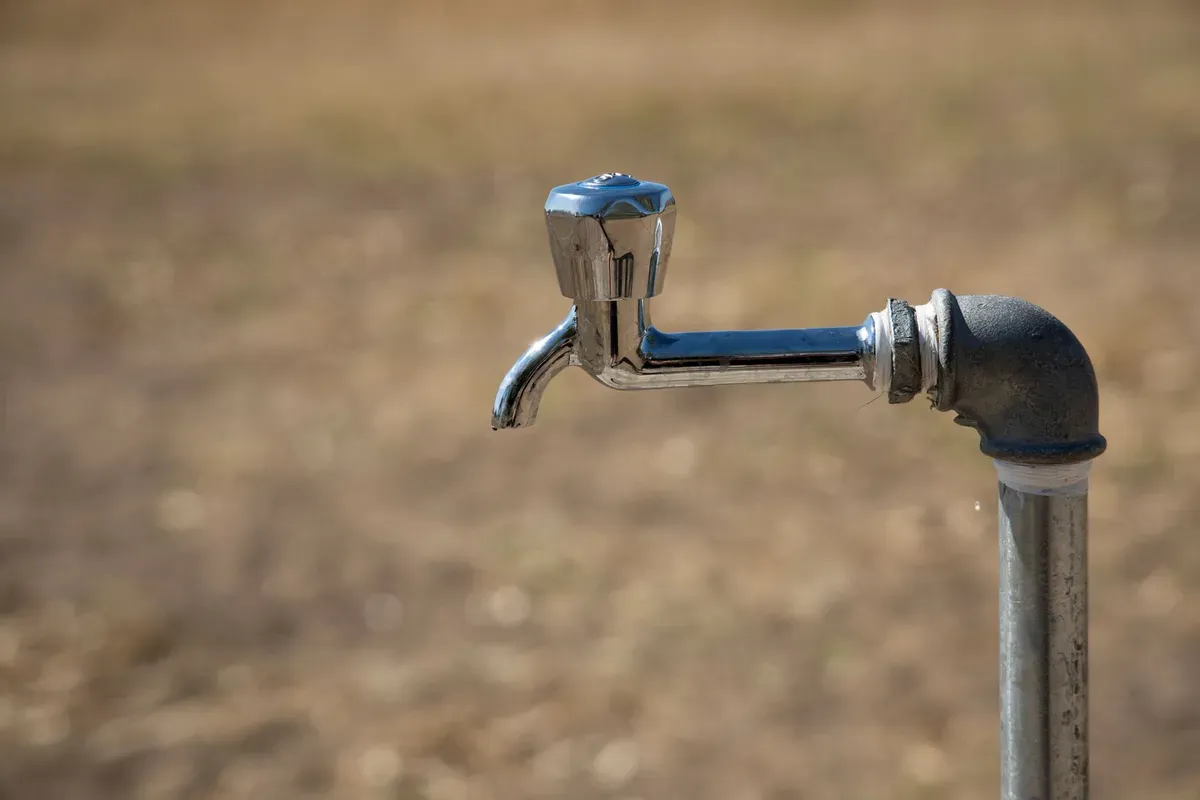
The failure pattern is consistent. Infrastructure has aged past its engineering lifespan and maintenance has been reactive for decades. Tshidi Mndzebele, CEO of engineering firm AvenirHoldings, put it plainly:
“The failure occurs within municipal distribution systems where infrastructure has exceeded its engineering lifespan. For decades, maintenance has been reactive instead of proactive.”
In White River, part of the Mbombela local municipality, DA Councillor Rowan Torr described a specific infrastructure problem that residents there know well:
“The municipality has been failing to provide clean water… Water is conveyed in asbestos pipes that can no longer retain the needed high-water pressures.”
In Secunda, residents on community forums have been forced to triangulate the truth from contradictory official statements. One resident, Yolanda V., captured the mood precisely:
“I watch 3 different sites and all shows no water pressure. We don’t get any feedback… Just to take a bucket bath is 40 Lt. Who is lying to us the most now.”
Another Secunda resident described the compounding effect of infrastructure and power failures in the same breath:
“First it was a cable fault, then they said a pump burned out and now they say residents are using too much water…”
The Mbombela upgrade at James Kleynhans Water Treatment Works received a R393 million budget (according to GroundUp), yet outages persist because capital projects alone cannot substitute for operational continuity. Nationally, the scale of infrastructure decay is captured by one telling number: Johannesburg Water reported non-revenue water of 44.8% for 2024/25, meaning nearly half of treated water is lost before it reaches a tap.
Option 1: Borehole Drilling, Town by Town
Mbombela (Nelspruit and White River)
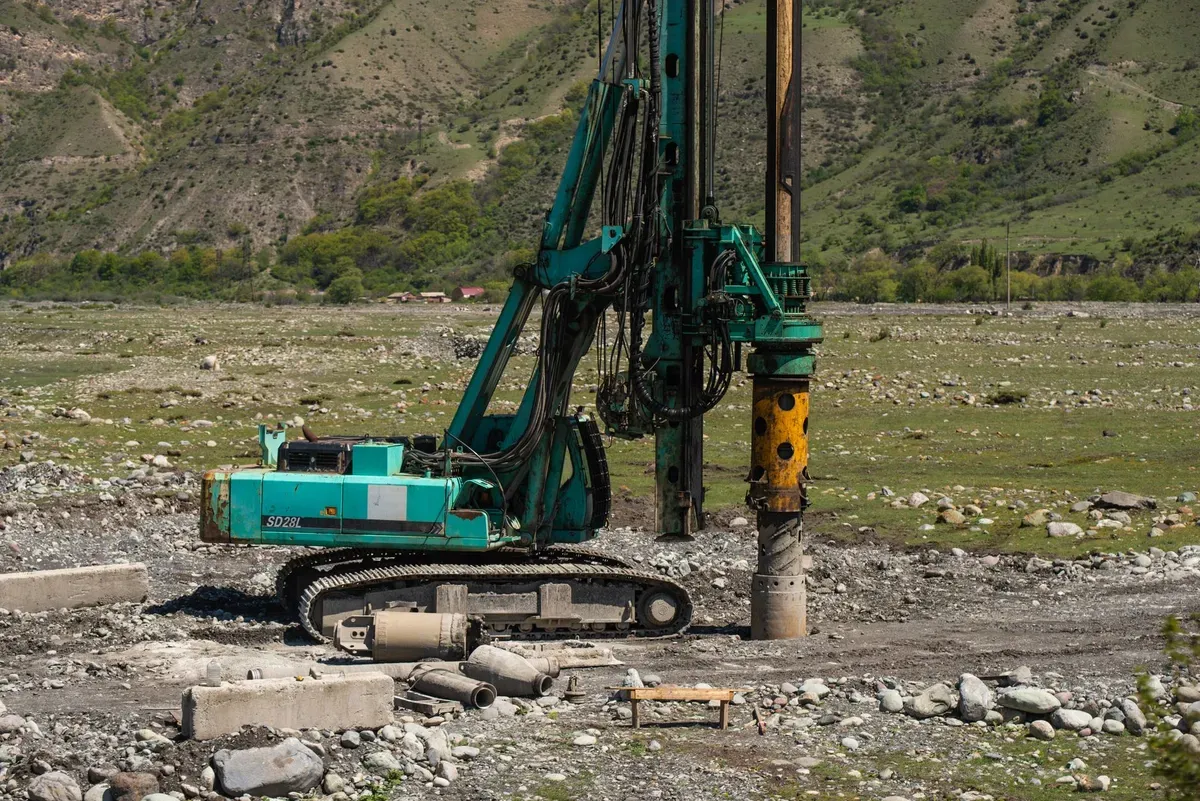
The Inkomati-Usuthu Catchment Management Agency and local driller Ntusko Water Solutions confirm that boreholes in the Mbombela region typically need to reach 40m to 110m, with community boreholes commonly hitting a primary source around 60m. Yields when water is found range from 500 to 2,500 litres per hour, but that range hides enormous local variation. The fractured granite and quartzite geology of the Lowveld means two boreholes on the same street can produce completely different results.
Drilling costs in Mbombela run R300 to R540 per metre (OurPower / Borehole Repairs Johannesburg data), giving a drilling-only cost of R41,000 to R98,000 at typical depths. Geophysical siting before you drill adds R5,000 to R10,000 but cuts the risk of a dry hole. Ntusko Water Solutions quotes standard residential drilling in Mpumalanga at R12,000 to R45,000 for simpler, shallower work, but that figure does not include pump, casing, or filtration. A complete residential system, pump through to commissioning, costs R80,000 to R150,000-plus (verified industry data).
Residents in the Nelspruiters Facebook group are already doing their own due diligence on installers. One member posted in early 2026:
“Looking for borehole drilling companies in White River area. Have Danie Cilliers, Hancolodi and Savuki… any others with references?”
The request for references is the right instinct. Site access is a practical constraint vendors rarely mention in their quotes. RPMT Borehole Drilling, which operates in the region, noted:
“Just getting a 25 tonne drill rig onto the property can be difficult to say the least. In quite a few cases there are two choices, the start of the driveway, or the middle of the driveway!”
Mbombela’s local municipality requires owners to install and maintain a meter on any borehole drawing water. This is not optional. Non-compliance exposes you to enforcement action and can complicate insurance claims.
eMalahleni (Witbank)
SRK Consulting data shows sandstone formations here sit at 40m to 60m, but Highveld aquifers can push past 80m. The coal-mining heritage of the Witbank basin is the dominant water quality risk. Groundwater in this area frequently carries elevated sulphur, iron and in some zones dissolved coal-related compounds. OurPower quotes eMalahleni drilling at R500 to R1,500 per metre, reflecting the harder dolerite and coal-measure geology, giving total setup costs of R60,000 to R120,000 before pump and filtration. The variance at the top of that range is real: deep drilling in hard rock here is expensive.
One MyBroadband forum member who drilled to 50m to 60m described the real numbers that vendors do not put in their initial quote:
“I paid around 55k for 50m – 60m drilling, with casing. Borehole pump was around 30k. Filtration system around 27k. My water was too sulphuric and irony.”
That is a total of around R112,000 before the soil rehabilitation, compliance metering or electrical protection was added. The filtration cost alone (R27,000) reflects the reality of Highveld borehole water quality and should be budgeted as a fixed, not optional, line item in eMalahleni.
Govan Mbeki (Secunda)
OurPower prices Govan Mbeki drilling from R600 per metre, with total setup averaging R60,000 to R100,000. The Sasol industrial corridor has influenced local groundwater chemistry across parts of the municipality and geophysical siting is strongly recommended before committing to a drill position. One April 2026 Facebook post from a Secunda resident illustrated a practical complication many owners overlook:
“Looking for borehole drilling in Secunda… low-clearance drilling machine is required due to a overhead barrier. Include casing, drilling, testing for the best place to drill.”
Low-clearance rigs cost more per metre and not every driller carries them. Get this confirmed in writing before signing any quote.
The community solidarity that emerges during outages in Secunda is notable. One resident, Erthney A., proposed a practical workaround while infrastructure remained broken:
“Could someone please publish a list of addresses of residents who have borehole water and are willing to share please… They can offer a certain amount of water ie 100 or 200 litres a day also listing if it is fit for consumption or can be use as grey water.”
The Three Most Common Borehole Failures in Mpumalanga
1. Iron Clogging and Biofouling
Iron-rich groundwater is the dominant water quality problem across all three towns. A local driller active in the region described the failure mode on a community group:
“Fact: Most ‘dry’ boreholes aren’t dry, they’re just CLOGGED. Over time, silt, sand, and iron oxide settle at the bottom and block your water veins.”
Reviving an iron-clogged borehole costs R10,000 to R30,000 (Council for Geoscience study and local driller data). The preventive measure is a 130-micron pre-filter ahead of the pump. One forum member described learning this the hard way:
“I have those small 130 micron filter in front of my pump. My previous pump was full of ‘sediment’ and I think that played a part in its premature service life. So far it looks much better.”
2. Dry Boreholes
The risk is real and unevenly distributed. Multiple owners on national forums have reported boreholes drying up on the same street while neighbours retain water, pointing to narrow fracture zones that local geology maps cannot reliably predict. Diagnosing a dry borehole costs R2,000 to R5,000. Re-drilling deeper, if the geology supports it, costs R800 to R1,000 per metre (Mpumalanga local driller data).
3. Electrical Damage from Load-Shedding Surges
Submersible pumps are vulnerable to voltage surges when Eskom power is restored after an outage. A surge protector on the borehole circuit costs R800 to R2,000 installed (local driller data) and should be treated as mandatory. A full pump replacement and system upgrade costs R15,000 to R50,000 when a pump fails without this protection. Routine annual maintenance for submersible pumps runs R1,000 to R2,750.
Option 2: Wellpoint Systems
Wellpoints draw from the shallow water table, typically between 3m and 8m depth, and suit properties with a high natural water table and low demand, primarily irrigation and grey water. Installation costs R4,500 to R9,985 (verified industry data), making it the cheapest entry point into groundwater independence. One owner on a national forum reported a real-world savings outcome:
“Total cost with wellpoint and pumps around plus-minus R15,000 however dads water bill dropped by more than 50%.” (Forum member discussing wellpoint savings)
The critical limitation in Mpumalanga is water quality. The same iron-rich geology that affects deep boreholes also affects shallow wellpoints. One owner reported staining within a month of installation: “I will use my wellpoint but the water seems to have a high iron content as the walls are turning brown and I had the wellpoint installed a month ago.” (Cape-based forum member, issue directly relevant to Mpumalanga conditions)
Wellpoints are not suitable for potable use without filtration and SANS 241 testing, which costs R1,000 to R3,300 per analysis. In eMalahleni and Govan Mbeki, where industrial and mining activity has influenced shallow groundwater, wellpoints for drinking water require particular caution.
Option 3: Municipal Backup Tank Systems
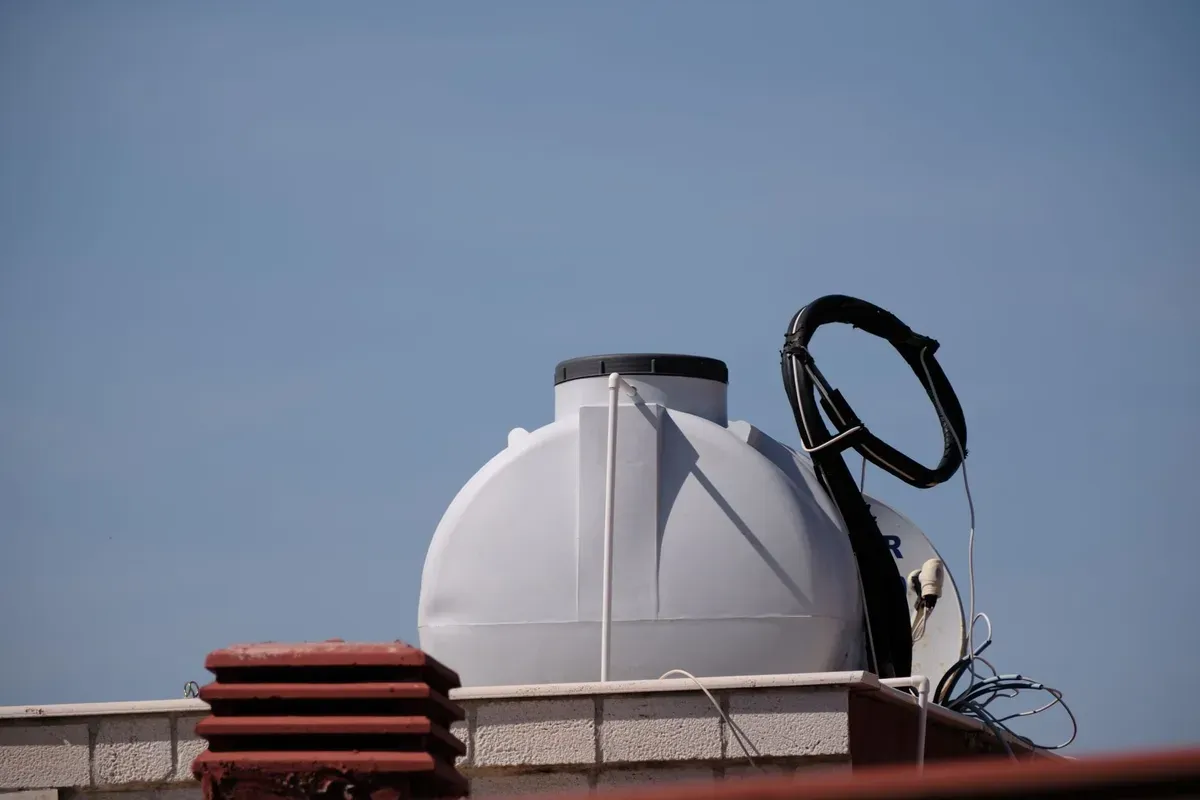
A backup tank does not give you an independent water source. It gives you a buffer of municipal water during outages. That distinction matters. A fully installed 10,000-litre JoJo tank setup costs R27,000 to R60,000 (jojo.co.za). Two 1,000-litre slimline tanks with all fixtures and labour can be done for around R18,000, as one Reddit user reported:
“I had 2 slimline 1kl tanks installed with all the fixtures and labour for a little more than [R18k]. Get a few quotes but that seems right. It’s made such a difference to my family with the water issues we’ve had over the last year.” (Reddit user, r/johannesburg)
WaterQuotes (waterquotes.co.za) puts the broader installed backup system range at R20,000 to R55,000, noting that the outlay typically pays for itself within a few years of avoided disruption costs for most households.
The practical limit of a tank system was illustrated by a Secunda resident: “My Jojo tank het deur die water gekry en water druk is baie laag by buite kraan in tuin.” (Secunda resident, community forum) A tank fills only when municipal pressure is adequate. If pressure is consistently low, a booster pump is needed, adding R3,000 to R8,000 to the installation. And if a non-return valve is not correctly fitted, there is a real risk of pumping your stored water back into the municipal line when mains pressure drops. One cautionary forum account described exactly this: “Reminds me of my friend whose gardener started the pump for the jojo with muni water stored inside. He did not flip one or two valves and he pumped my guys whole jojo back into the municipal system that was dry.” (National forum, plumbing installation error)
Compliance: What You Are Required to Do Before You Drill
The National Water Act requires a Water Use Licence for most commercial and high-volume borehole uses. The DWS application fee is R115, but the real cost of preparing a compliant application, including hydrogeological reports and legal sign-off, runs from R10,000 to over R100,000 depending on the scale of the project (dws.gov.za). The average processing time for a Water Use Licence Application (WULA) is 300 days, according to Farmers Weekly. Plan for this delay or it will halt a commercial project mid-stream.
Mbombela specifically requires a registered meter on every borehole drawing water. The Citizen, summarising the national regulatory landscape, quoted an observer who captured the practical tension many owners face: “Here in South Africa, we’re world leaders in thinking up law and regulations without considering their impact in the real world, where people live and where the laws are impossible to enforce.” That frustration is understandable, but the metre requirement in Mbombela is actively enforced and the WULA process is unavoidable for commercial users.
Cost and Performance Comparison Table
| System | Mbombela Install Cost | eMalahleni Install Cost | Govan Mbeki Install Cost | Annual Maintenance | Key Failure Risk | Independent of Municipal Supply? |
|---|---|---|---|---|---|---|
| Borehole (complete residential) | R80,000 to R150,000+ | R80,000 to R150,000+ (filtration likely adds R20,000 to R30,000) | R80,000 to R150,000+ | R1,000 to R2,750 (pump); R1,000 to R3,300 (SANS 241 test) | Iron clogging, dry hole, surge burnout | Yes (once operational) |
| Wellpoint | R4,500 to R9,985 (plus filtration) | R4,500 to R9,985 (industrial water quality risk; filtration likely required) | R4,500 to R9,985 | R500 to R1,500 (filter cartridges) | High iron, seasonal water table drop | Partially (grey water / irrigation) |
| Backup tank (10,000L JoJo, installed) | R27,000 to R60,000 | R27,000 to R60,000 | R27,000 to R60,000 | Minimal (cleaning, valve checks) | Low pressure prevents fill; backflow without non-return valve | No (buffers municipal supply only) |
| Solar direct-drive pump add-on (borehole) | R18,000 to R28,000 | R18,000 to R28,000 | R18,000 to R28,000 | Panel cleaning; inverter checks | Daytime-only pumping without battery | Yes (grid-independent operation) |
| Hybrid battery solar pump (borehole) | R38,000 to R52,000 | R38,000 to R52,000 | R38,000 to R52,000 | Battery health checks annually | Battery degradation after 5 to 7 years | Yes (24-hour operation) |
All costs in 2026 ZAR. Sources: OurPower, Ntusko Water Solutions, jojo.co.za, Mpumalanga local driller data. Filtration, compliance metering and WULA costs are excluded from drilling figures above and must be budgeted separately.
Which borehole system actually works in your Mpumalanga town?
Cost of Ownership: Five-Year Comparison
The upfront cost comparison is misleading without a five-year ownership view. Here is a realistic model for a typical Mpumalanga household using approximately 15,000 litres per month:
Backup tank system (10,000L installed at R45,000): Year one cost R45,000. No municipal water saving, but outage exposure is reduced. If outages average 3 days per month (a conservative estimate for these towns), avoided spoilage, tanker purchases and productivity losses could save R5,000 to R15,000 per year. Five-year total outlay: roughly R45,000 to R50,000 (maintenance is minimal). This system pays back in disruption avoidance but does not reduce your municipal water bill.
Complete borehole system (installed at R120,000, eMalahleni example): Year one cost R120,000. Annual maintenance R3,000 to R6,000 (pump service plus one water test). Municipal water cost saving at average Mpumalanga tariffs: roughly R12,000 to R25,000 per year depending on your current bill. One owner on a national forum calculated: “I did the same calcs and put a borehole, tank and booster pump in two years ago. Total cost was around R100K but I drilled nearly 100 meters deep… I’ve saved around R50K in water in two years so the break even point on a borehole is very short (around 4 years for me).” (Borehole ROI discussion, national forum) That calculation holds for heavy users. Light users will see a longer payback period of 7 to 10 years. Five-year total outlay for a medium-use household: roughly R135,000 to R145,000, with water bill savings partially offsetting the cost from year two onward.
Wellpoint (installed at R12,000 including filtration): Year one R12,000. The forum member cited above saw a 50% reduction in their father’s water bill at total cost around R15,000. This is the strongest return on investment for irrigation-heavy properties where shallow water table quality is acceptable. Five-year total cost: R15,000 to R20,000. Limitation: potable use requires ongoing SANS 241 testing and in eMalahleni and Govan Mbeki, the shallow geology makes potable wellpoint water a genuinely high-risk assumption.
What Owners in These Towns Wish They Had Known First
Across forums and community groups, the regrets cluster around three themes:
Skipping geophysical siting: Multiple owners report drilling to 80m and beyond with nothing to show. “I know of 4 houses up the road from me all on the same street where their boreholes have dried up this year, this past week a neighbor drilled a borehole I believe more than 100m and had nothing to show for it.” (Forum member, national borehole discussion) Geophysical siting at R5,000 to R10,000 is cheap insurance against a R50,000-plus dry hole.
Underbudgeting for filtration: In eMalahleni especially, the sulphur and iron burden makes filtration a mandatory cost, not an optional upgrade. The MyBroadband member who paid R27,000 for filtration alone was not buying luxury, they were buying water that could actually be used. Budget for it from day one.
Missing the surge protector: The interaction between load-shedding and submersible pump electronics is well-documented. An R800 to R2,000 surge protector prevents a R15,000 to R50,000 pump replacement event. Every installer should include this by default, but not all do. Ask for it explicitly in your quote.
Water contamination surprises also surface. One borehole owner posted: “I want help my borehole water has some green stuff and roots, what must I do. NB I DONT HAVE MONEY TO DRILL A NEW HOLE.” (Borehole owner, community group) Biological contamination from surface water ingress is a casing and sealing issue, not always a dealbreaker, but it requires immediate testing and remediation. Annual SANS 241 testing at R1,000 to R3,300 catches this early before it becomes a health problem.
The Regulatory Reality
Compliance in South Africa’s water sector is genuinely complicated to navigate. A WULA application fee of R115 sounds trivial, but the underlying hydrogeological report and professional sign-off can push your compliance cost to R10,000 or well above R100,000 for commercial abstraction. The 300-day average processing time for a WULA (Farmers Weekly) means commercial projects must plan this into their timeline from the very first meeting with a driller.
Residential boreholes for domestic use have lighter requirements, but the Mbombela metering obligation is firm and the national registration requirement under the National Water Act applies broadly. The Citizen captured the frustration of the gap between regulation and enforcement reality, but enforcement does happen, particularly when properties change hands or when a neighbour complains. Get your compliance in order upfront.
The Honest Bottom Line by Town
Mbombela (Nelspruit and White River): Borehole geology is moderately favourable, yields can be good, and the 60m depth that hits a primary source in community projects is achievable. Budget R80,000 to R150,000-plus for a complete residential system, do not skip geophysical siting, and register your meter as required by mbombela.gov.za. A backup tank at R27,000 to R60,000 is a sensible first step while you wait for a WULA if commercial abstraction is needed.
eMalahleni (Witbank): The coal-belt geology makes filtration a fixed cost, not a variable. Budget R20,000 to R30,000 for filtration on top of the R60,000 to R120,000 drilling and pump setup. SANS 241 testing annually is non-negotiable here. If your budget is under R100,000, a backup tank system gives you reliable outage protection without the water quality risk of untreated Highveld groundwater.
Govan Mbeki (Secunda): Industrial groundwater chemistry near the Sasol corridor is a genuine risk. Geophysical siting matters more here than in Mbombela. Low-clearance rig requirements add cost on constrained residential stands. If the chemistry in your specific area comes back clean on a hydrogeological assessment, a borehole can reach break-even in 4 to 6 years for medium to heavy users. If not, a large backup tank system with a booster pump is the more predictable investment.
To find out which system is viable at your specific address in Mpumalanga, including local water table depth data and geology type, check my address and get a property-specific assessment before you commit to any installation.
Get started
Which borehole system actually works in your Mpumalanga town?
Vetted local installers · honest advice first
Photo: Zulfugar Karimov / Pexels