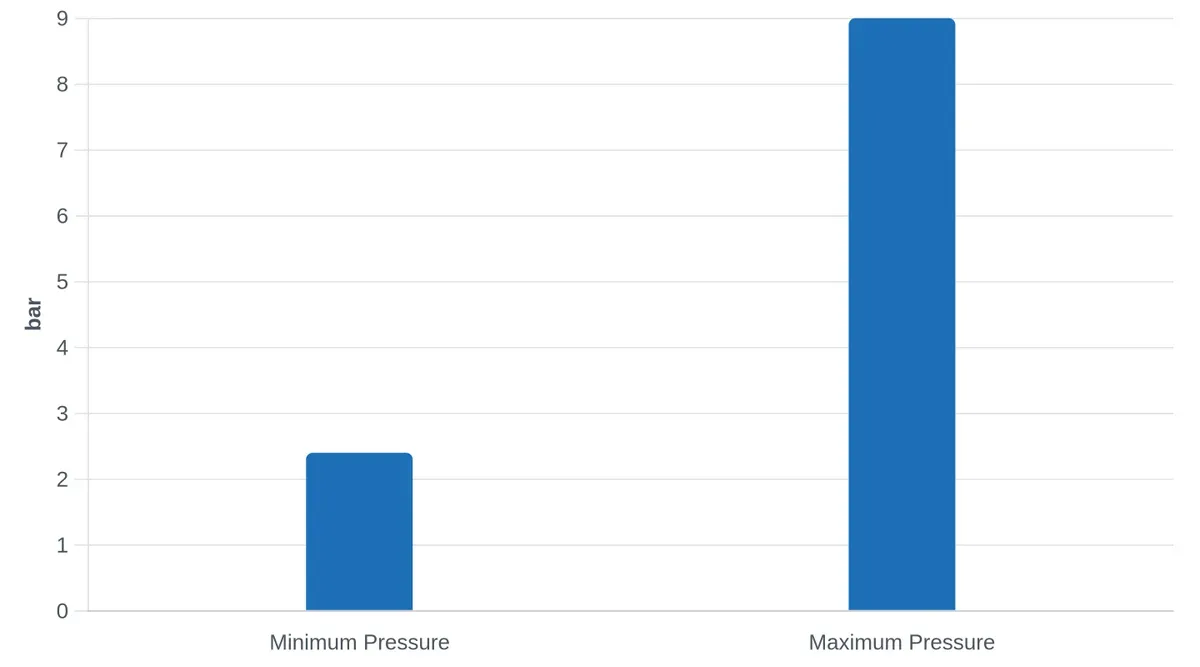
- City of Cape Town data shows municipal supply pressure ranges from as low as 2.4 bar to as high as 9 bar, often in the same suburb on the same day.
- According to Kwikot, roughly 70% of South African household insurance claims are related to geyser events, most of them pressure-related.
- A standard 150-litre geyser replacement, fully installed, costs R6,500 to R11,500 (Kwikot). Collateral ceiling and wall damage adds a further R3,000 to R15,000 (EnergyBee).
- A Pressure Reducing Valve (PRV) installed preventatively costs R1,200 to R2,500, a fraction of a single claim excess of R2,500 to R5,000 (EnergyBee).
- A complete pressurised backup water system costs R40,000 to R65,000 (waterpointsa.co.za), but a DIY-integrated basic setup has been completed by homeowners for under R10,000.
- Only a PIRB-registered plumber can legally issue a Plumbing Certificate of Compliance required for insurance validity in South Africa.
The pressure problem no one talks about until something explodes
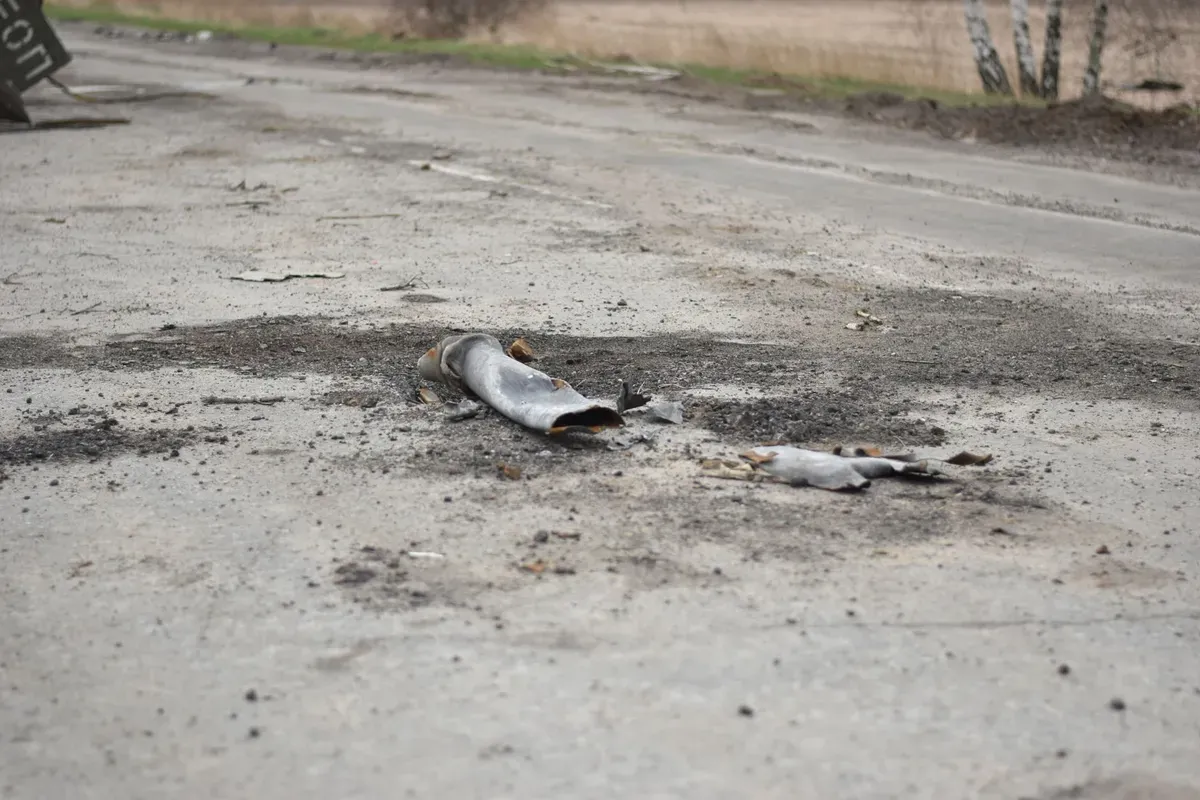
Most South African homeowners think about water pressure the moment it disappears. The taps run dry, the shower stutters, and frustration sets in. What very few homeowners consider is the damage done at the other extreme, when pressure surges to levels that quietly destroy the most expensive components in their plumbing system.
According to City of Cape Town data, the municipal network delivers water at pressures ranging from 2.4 bar (240 kPa) to 9 bar (900 kPa). That is not a typo. The same mains supply that delivers a trickle during peak evening demand in summer can punch through at nine times atmospheric pressure during a low-demand overnight period. Standard residential geysers rated at 600 kPa (6 bar) have safety valves that are designed to fail at exactly 900 kPa under SANS 10252-1. When the municipal supply hits that upper range, the safety valve is not a last resort. It is the only thing standing between your ceiling and a pressurised flood.
“I had a strong suspicion my geyser has burst or is in the process of bursting when I discovered more and more water dripping outside by the overflow. It’s mounted in the ceiling of my garage so a quick jump on the ladder to check the geyser drip tray and it was welling up with water and slowly dripping out of the thermostat probe hole.”
MyBroadband user ‘SauRoNZA’, describing the warning signs of an impending geyser burst
These are not freak events. They are predictable outcomes of infrastructure that was designed for stable pressure but is now operating under extraordinary stress. Johannesburg Water carries a R26.9-billion infrastructure backlog (johannesburgwater.co.za). Tshwane’s backlog sits at R22.8 billion (tshwane.gov.za). The Durban Upper uMkhomazi Water Project, costing R30 billion, is not expected to complete until 2032 (ecr.co.za). In the meantime, pressure fluctuations, unplanned outages and throttled supply are the daily reality for millions of South African households.
“Water pressure was low since late on Sunday. Now no water. So tired of this ****.”
MyBroadband user in Johannesburg experiencing supply throttling and outages
What pressure fluctuations actually break, and what it costs to fix them
The damage model has two distinct failure modes: destruction by over-pressure and destruction by under-pressure. Both are preventable. Neither is covered without a fight.
Over-pressure failure: the geyser
The 600 kPa geyser is the most vulnerable appliance in a South African home. When inlet pressure exceeds its design limits repeatedly, the pressure relief valve (PRV) weeps, then drips, then fails. The thermostat and element are next. In a worst case, the vessel itself ruptures. According to Kwikot, geysers account for roughly 70% of household insurance claims in South Africa.
“Geyser burst (small little hole), water dripped onto the blanket and then into the ceiling causing a huge discolouration and wet patch that needed a replacement.”
MyBroadband user, May 2022, on the collateral damage from even a minor rupture
What does this cost? A standard like-for-like 150-litre electric geyser, fully installed, runs R6,500 to R11,500 according to Kwikot. Some homeowners pay more: one MyBroadband user confirmed paying R13,500 for an installation on an external wall. If you are upgrading to a solar flat-plate or heat pump system, Servicelink SA and EnergyBee put the cost at R27,500 to R35,000 and above.
Insurance does not always cover the gap. Policies cap geyser replacement at a fixed schedule. As one homeowner learned the hard way:
“Policy only covers burst geysers for a certain amount (150 litre = R7000, 200 litre = R7500 etc.) Excess of R1000. So if a 150 litre geyser needs replacing at a cost of R12 000, the insurance doesn’t even cover it.”
MyBroadband user, April 2018, on insurance shortfalls
Standard insurance excesses for plumbing failure claims sit at R2,500 to R5,000 (EnergyBee). Collateral water damage to ceilings, walls and floors, if uninsured, adds R3,000 to R15,000 to the bill. According to Santam, burst water pipes are the second most claimed-for incident in South African homes after geysers. The combined liability from a single pressure event can easily land between R10,000 and R30,000 before VAT.
Under-pressure failure: the pump
Low pressure is equally destructive, just slower. Booster pumps running off municipal supply at below 1 to 1.5 bar (General Research Findings) enter a condition called cavitation, where vapour bubbles form inside the pump casing and implode against the impeller. It sounds like gravel in a blender, and it destroys the pump from the inside over weeks or months.
Multi-storey buildings face a compounding problem. Pressure drops by roughly 30 kPa per floor (abacassolution.co.za). A ground-floor reading of 3 bar becomes approximately 2.1 bar on the third floor and around 1.2 bar on the sixth. If municipal supply dips during peak demand, upper-floor residents see near-zero pressure and their pressure-dependent appliances, washing machines, combi-boilers, low-flow showerheads, all begin to malfunction.
“Water pressure is next to non-existant. Water comes out of the shower for a total of 15 seconds before going completely dry.”
MyBroadband user in Cape Town, on extreme low-pressure conditions
The five warning signs you must not ignore
Waiting for a full failure is the most expensive strategy available to a South African homeowner. These five signs indicate that a pressure event is building, and each one has a cheap fix that closes the exposure before the expensive failure arrives.
- The PRV dripping or weeping at the geyser: This is the pressure relief valve doing exactly what it was designed to do. It means inlet pressure is repeatedly approaching or exceeding the geyser’s rated limit. Preventative replacement of a faulty PRV costs R700 to R1,800 (General Pricing / EnergyBee). Waiting costs R6,500 to R11,500.
- Taps that hammer or bang when closed (water hammer): This is a surge wave caused by rapid pressure changes in the main. It stresses every joint, valve and fitting in the system.
- Intermittent or no pressure during evening peak hours: Cape Town’s pressure management system covers 170 zones covering 68% of the city’s water network (capetown.gov.za), saving 20 million litres per day through deliberate throttling. If your pressure drops reliably between 4 pm and 8 pm, you are inside a managed zone, and you need buffer storage.
- The overflow pipe outside the house dripping continuously: This is the geyser PRV cycling. It means the relief valve is working harder than it should. The geyser is operating in a danger window.
- Discoloured water or reduced flow from taps without explanation: This can indicate pipe sediment disturbed by pressure fluctuations, a sign that the mains feeding your property is in poor condition.
The installation hierarchy: what to fit, in what order
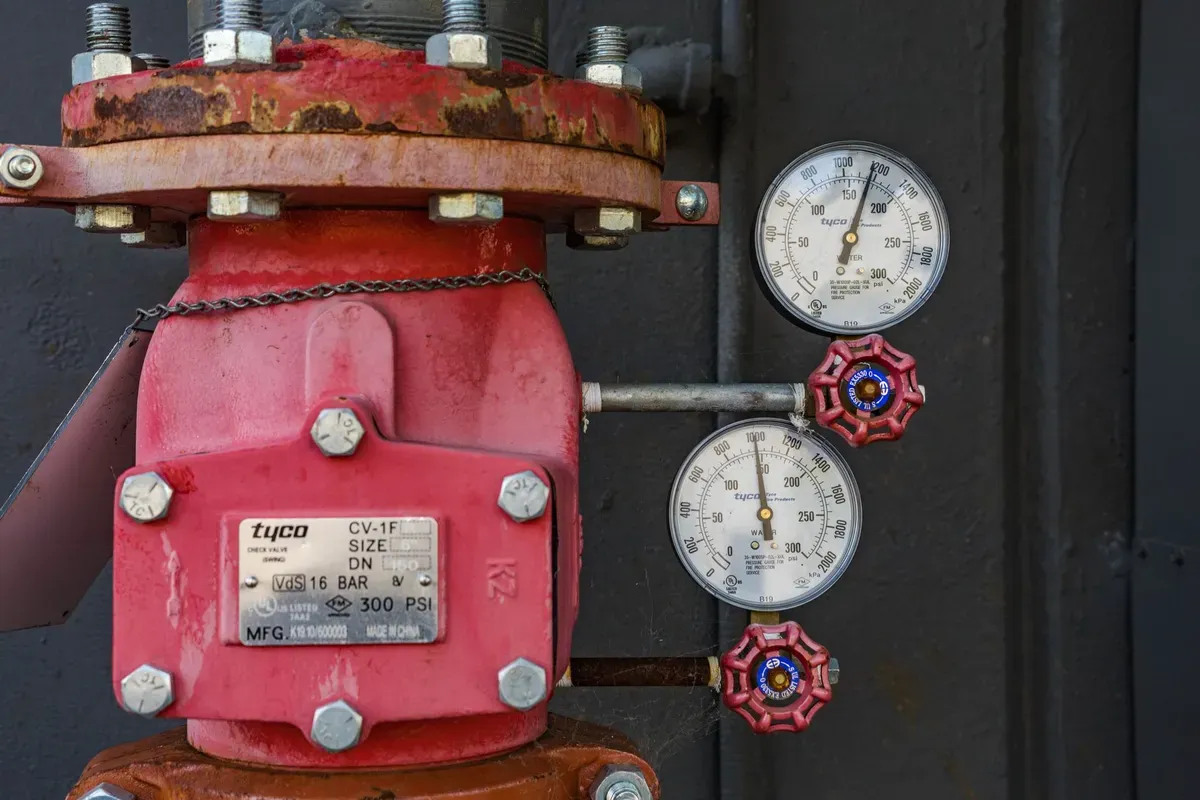
The right protection depends on your specific failure risk. This hierarchy moves from least to most expensive and addresses the most common failure modes first.
Step 1: Fit a whole-house Pressure Reducing Valve (R1,200 to R2,500)
A PRV installed on the municipal inlet, before the geyser and before any pump, caps the pressure entering your system at a safe level, typically set to 4 bar for residential use. This is the single highest-return investment available to a South African homeowner. For R1,200 to R2,500 (General Research Findings), it eliminates the primary cause of geyser PRV failure, water hammer, and pipe-joint stress. It should be installed by a PIRB-registered plumber and included on the Plumbing Certificate of Compliance. Without a CoC, your insurance policy may not respond to a subsequent claim.
Step 2: Fit a pressure tank to buffer demand (R778 and up)
A pressure tank stores a volume of water under pre-charge pressure and releases it on demand before the pump activates. This prevents the pump from short-cycling (starting and stopping dozens of times per hour), which is the primary cause of pump motor burnout. An 8-litre vertical pressure tank from Leo Pump costs R778 at waterpumpsonline.co.za. Larger bladder tanks of 100 litres or more cost proportionally more but offer meaningful buffer for multi-person households.
“I think you should strongly consider a water pressure tank in your plumbing setup. Roughly for the cost of one 100Ah battery you could get a 100l tank that keeps pressurized water on standby for multiple toilet flushes and short showers. Re-filling the pressure tank with the booster pump should take less time… and should help to extend the life of your batteries and pump.”
PowerForum user, on the case for pressure tanks to protect hardware
Step 3: Install a storage tank and booster pump (R9,000 to R65,000 depending on scope)
Once PRV protection and pressure buffering are in place, the next layer is storage autonomy: a tank that fills from municipal supply when available and feeds the house through a booster pump when supply is interrupted or pressure is insufficient. This is where costs and complexity scale significantly.
The tank itself is straightforward. A 2,500-litre vertical polyethylene tank costs roughly R5,200 in Johannesburg (General Research Findings). JoJo tanks carry a 10-year warranty covering structural integrity and UV stabilisation (jojo.co.za). However, a critical installation note: a full 5,000-litre tank weighs over 5,000 kg (jojo.co.za) and must sit on a sound, level, smooth concrete pad. Installing on unconsolidated earth or uneven ground voids the warranty and risks structural cracking.
The pump choice involves a genuine trade-off. A basic 0.37 kW to 0.75 kW centrifugal booster pump costs R2,300 to R3,910 (waterpumpsonline.co.za). A premium Variable Speed Drive (VSD) pump setup, such as the Grundfos SCALA range or the DAB EsyBox Mini, costs up to R12,000 (powerforum.co.za). VSD pumps maintain constant outlet pressure regardless of demand fluctuations, run more quietly, and consume less electricity during partial-load conditions. They also include built-in dry-run protection that shuts the pump off automatically if the tank empties (grundfos.com), preventing the most common cause of pump destruction in a backup system.
“Price difference is R2500 for standard vs R12000 for VSD pump. Is this additional cost 1) warranted and 2) neccesary?… I figured that I may as well go for a VSD pump for convenience. With the solar… I want reliable auto system with minimal manual switching and noise. The 2 obvious choices are the Jojo 0.75kw VSD or the DAB EsyBox Mini…”
PowerForum user, weighing up VSD vs. standard pump costs
Running cost for a 0.75 HP (approximately 550W) fixed-speed booster pump running four hours a day is estimated at R150 to R200 per month (General Research Findings). VSD pumps running at partial load will generally cost less per month in electricity, though the initial capital outlay is higher.
Labour for professional integration by a PIRB-registered plumber, excluding materials, runs R4,500 to R5,500 (andyplumbers.co.za). The plumbing is not optional and is not simple. As one homeowner found out:
“I bought a R6,000 JoJo tank online thinking that was the hard part. Turns out connecting it to the house cost more than the tank itself… The lesson: the tank is just a container. The plumbing makes it a water backup system.”
Homeowner via Andy Plumbers 2026 guide, on the hidden cost of integration
Step 4: Add filtration and backflow prevention
Water stored in a tank must comply with SANS 10252 (waterpointsa.co.za), which governs water supply and backflow prevention. At minimum, a correctly installed non-return valve prevents stored water from flowing back into the municipal supply, which is both a compliance requirement and an operational necessity. The consequences of skipping this step can be severe:
“LOL. Reminds me of my friend whose gardener started the pump for the jojo with muni water stored inside. He did not flip one or two valves and he pumped my guys whole jojo back into the municipal system that was dry. LMFAO. He was livid.”
W@P on MyBroadband, on the consequences of incorrect valving
Three-stage pre-filtration (sediment, carbon, fine particulate) before the storage tank protects the pump and pressure tank from grit. Filter media lasts 3 to 5 years with regular backwashing (mybroadband.co.za). One detailed MyBroadband user described a full filtration setup including a 55W inline UV filter at R1,800 with replacement lamps at R450 each, noting the original UV bulb was still running two years later and the three-stage filters had been replaced twice in that period.
DIY versus professional installation: the real numbers
The gap between a DIY install and a full professional system is real, but the DIY route has genuine limits. One MyBroadband user in an unspecified region documented a complete 1,000-litre system including a 0.37 kW booster pump, pressure controller, three-stage filters, piping, non-return valves and ball valve for under R9,000 total. The result: “Today there was no water in the area and I didn’t know because the setup works so well.”
Another user in Somerset West built a baseline system including a submersible pump, a jet pump with a 20-litre pressure tank and labour for R5,300 total. These numbers are achievable, but they require plumbing competence, correct compliance documentation, and an understanding that any error in valve configuration or non-return valve installation can result in a system failure more expensive than the savings made.
Professional turnkey quotes for a 2,500-litre integrated system range from R20,000 (a baseline Reddit r/Johannesburg quote including ground levelling, tank mounting and copper piping) to R29,000 and above for slimline tank configurations. A fixed-price 2,500-litre ‘Essential Home System’ from profusionh2o.co.za including VAT, plumbing and electrical work in Gauteng is priced at R31,968. A complete pressurised backup system at the high end of specification runs R40,000 to R65,000 (waterpointsa.co.za).
Ready to install pressure protection for your home?
Cost-of-ownership comparison table
| Scenario | Upfront cost | Annual running cost (est.) | Expected lifespan | Key risk avoided |
|---|---|---|---|---|
| No protection (status quo) | R0 | R0 until failure | Until first failure | None. Single geyser event: R6,500 to R26,500 all-in. |
| PRV only (whole-house inlet) | R1,200 to R2,500 | Minimal (valve service every 3 to 5 years, R700 to R1,800) | 5 to 10 years | Over-pressure geyser failure, water hammer pipe stress |
| PRV plus pressure tank (8L to 50L) | R2,000 to R5,000 | Negligible | 10 to 15 years (waterpointsa.co.za) | Pump short-cycling, motor burnout, pressure fluctuation damage |
| Basic DIY backup system (1,000L tank, 0.37 kW pump, filters) | R9,000 to R15,000 | R150 to R200/month electricity, plus filter replacements every 3 to 5 years (mybroadband.co.za) | Pump: 3 to 7 years. Tank: 10 years with warranty. | Supply interruptions, low-pressure pump cavitation |
| Professional integrated system (2,500L, VSD pump, filtration, CoC) | R20,000 to R65,000 | R100 to R200/month electricity (VSD saves vs. fixed speed at partial load), filter and UV lamp maintenance | Tank: 10 years. Pump: 7 to 15 years with VSD. Full system: 10 to 15 years (waterpointsa.co.za) | Complete supply independence, all pressure risks, compliance and insurance validity |
Compliance, insurance and the PIRB requirement
This is the section most DIY guides omit, and it matters enormously for South African homeowners. Only a plumber registered with the Plumbing Industry Registration Board (PIRB) can legally issue a Plumbing Certificate of Compliance (plumber-pretoria.co.za). Without a CoC, a water backup system that connects to the municipal supply and to the household plumbing may void your homeowner’s insurance policy for any subsequent plumbing-related claim. SANS 10252 governs water supply and backflow prevention compliance for all such installations (waterpointsa.co.za).
This is not a theoretical risk. Insurance companies routinely investigate the compliance status of a system before paying out on a related claim. If your booster pump was installed without a CoC and your geyser later bursts because of a pressure surge that the pump system failed to buffer correctly, the insurer has grounds to decline the claim or reduce the settlement to below your loss. The R4,500 to R5,500 labour cost for a PIRB-registered plumber (andyplumbers.co.za) is partly a compliance cost, not purely an installation cost.
What it actually costs to do nothing: a realistic failure scenario
To put the numbers in context, consider a realistic but entirely typical scenario for a Johannesburg homeowner in a suburb where Johannesburg Water’s R26.9-billion infrastructure backlog is felt as routine pressure fluctuations:
- Municipal pressure surges overnight to 8 bar. The geyser PRV, already weeping, fails. The geyser dumps its full contents into the ceiling cavity.
- Geyser replacement, fully installed: R9,500 (a figure confirmed as typical by multiple MyBroadband users in 2025 and 2026).
- Ceiling repair and repainting for water damage: R6,000 to R12,000 (within EnergyBee’s R3,000 to R15,000 range).
- Insurance excess: R2,500 to R5,000.
- Total out-of-pocket: R12,000 to R26,500 for a single event.
A PRV installed the week before the event would have cost R1,200 to R2,500. That is the entire cost argument for preventative action in a single comparison.
The financial ROI of a full backup system is a more nuanced question. As one honest homeowner noted on MyBroadband:
“My justification for the whole exercise was water security, so I’m not really bothered about ‘savings’ but by the time I factor in the pump running costs along with everything else I’m probably breaking even.”
MyBroadband forum user, on the reality of financial ROI versus water security as the primary driver
That is the right frame. A complete backup system is primarily an infrastructure resilience investment, not a water-bill saving tool. The case for it rests on the R26.9-billion infrastructure backlog, the 8-bar surge potential in the mains, and the R30-billion Durban supply project that will not be complete until 2032. If your area has a track record of pressure events or outages, the system pays for itself the first time you do not lose a geyser.
The installation checklist before you spend a cent
Before calling a plumber or ordering a tank, work through these steps:
- Fit a pressure gauge on your municipal inlet. A basic glycerine-filled gauge costs under R200. Read it at 6 am and at 7 pm on consecutive days. If you see more than a 2-bar swing, you have a pressure fluctuation problem that a PRV will solve.
- Inspect the geyser PRV for weeping. Run your hand under the overflow pipe outlet. Any moisture between heating cycles is a warning sign.
- Identify your water supply zone. Cape Town’s 170 pressure management zones cover 68% of the city’s network (capetown.gov.za). Knowing your zone tells you whether low-pressure events are planned or accidental.
- Measure your available tank footprint and calculate the slab requirement. A 5,000-litre tank at full capacity exceeds 5,000 kg (jojo.co.za). A standard 100mm reinforced slab is the minimum safe base.
- Get at least two quotes from PIRB-registered plumbers. The range between a R20,000 and R31,968 installed 2,500-litre system (reddit r/Johannesburg vs. profusionh2o.co.za) reflects real market variation, not necessarily quality difference. Ask each plumber to specify tank make, pump model, PRV rating, non-return valve specification, and whether filtration is included.
- Confirm your insurance position before and after installation. Ask your insurer in writing whether a SANS 10252-compliant system with a valid CoC affects your geyser and plumbing cover.
To find out what backup water infrastructure is appropriate for your specific address, suburb and municipal supply zone, check my address and get a tailored assessment based on your location’s pressure history and supply reliability.
Get started
Ready to install pressure protection for your home?
Vetted local installers · honest advice first
Illustration: waterpointsa.co.za