Key Points
- Nelson Mandela Bay’s municipal water interruption rate is 45.1%, making backup water a practical necessity, not a luxury (Stats SA / www.gov.za).
- Borehole yields in the Port Elizabeth region range from 0.1 to 2.0 litres per second depending on aquifer type (Department of Water and Sanitation). Many residential sites fall at the lower end.
- Coastal suburbs like Summerstrand face a real saltwater intrusion risk if boreholes are over-pumped. This damage can be irreversible.
- Borehole total installed cost easily reaches R80,000 to R120,000 or more once drilling, pump, compliance, and storage are included. A dry hole still costs you.
- A rainwater tank system (3 x 5,000 litre JoJo tanks) can be operational for roughly R18,000 to R25,000 all-in, with near-zero running costs.
- NMBM By-law Clause 77 requires backflow preventers on any borehole connected to the municipal supply. Registration with the municipality is legally compulsory after drilling.
- Under current DWS directives, borehole users in Nelson Mandela Bay must reduce abstraction by 20%.
- Domestic water use under NMB rationing is capped at 50 litres per person per day, or 15 kilolitres per household per month.
- The best long-term setup for most NMB homeowners combines both systems: borehole for garden and grey water, tanks for potable or emergency backup.
Why Nelson Mandela Bay Homeowners Are Rethinking Water Right Now
Port Elizabeth, now officially Gqeberha, sits at the sharp end of South Africa’s urban water crisis. According to Stats SA and www.gov.za, 45.1% of Nelson Mandela Bay households experience municipal water interruptions. That is not a temporary glitch. It is the operational baseline of the Integrated Catchment Water Supply (ICWS) system, which serves a metro that has been in some form of water emergency for the better part of a decade. Critical infrastructure failures across the metro have been well documented, and Nelson Mandela Bay needs nearly R1 billion to tackle water losses and ageing pipes across a network where non-revenue water loss exceeds 60%.
Under formal NMB rationing, domestic use is restricted to 50 litres per person per day, or 15 kilolitres per household per month (nelsonmandelabay.gov.za). Exceed the Step 6 threshold of more than 1.6 kilolitres per day and a punitive tariff applies, a rate designed to deter waste, not a standard charge (nelsonmandelabay.gov.za).
“If you have water you have no power. If you have power you have no water… I’ve had so many geyser elements die on me. Such bad quality water as well… Up the hill no water. Down the hill no power. It’s all just broken.”
Reddit user Ancient_Swordfish806, describing local infrastructure failures in Gqeberha
That frustration is widely shared. Boreholes and water tanks are both real solutions, but they solve different problems, carry very different risks, and cost very different amounts over time. This guide cuts through vendor pitches and gives you the numbers you need to decide.
Understanding the Aquifer Reality in Port Elizabeth and Gqeberha
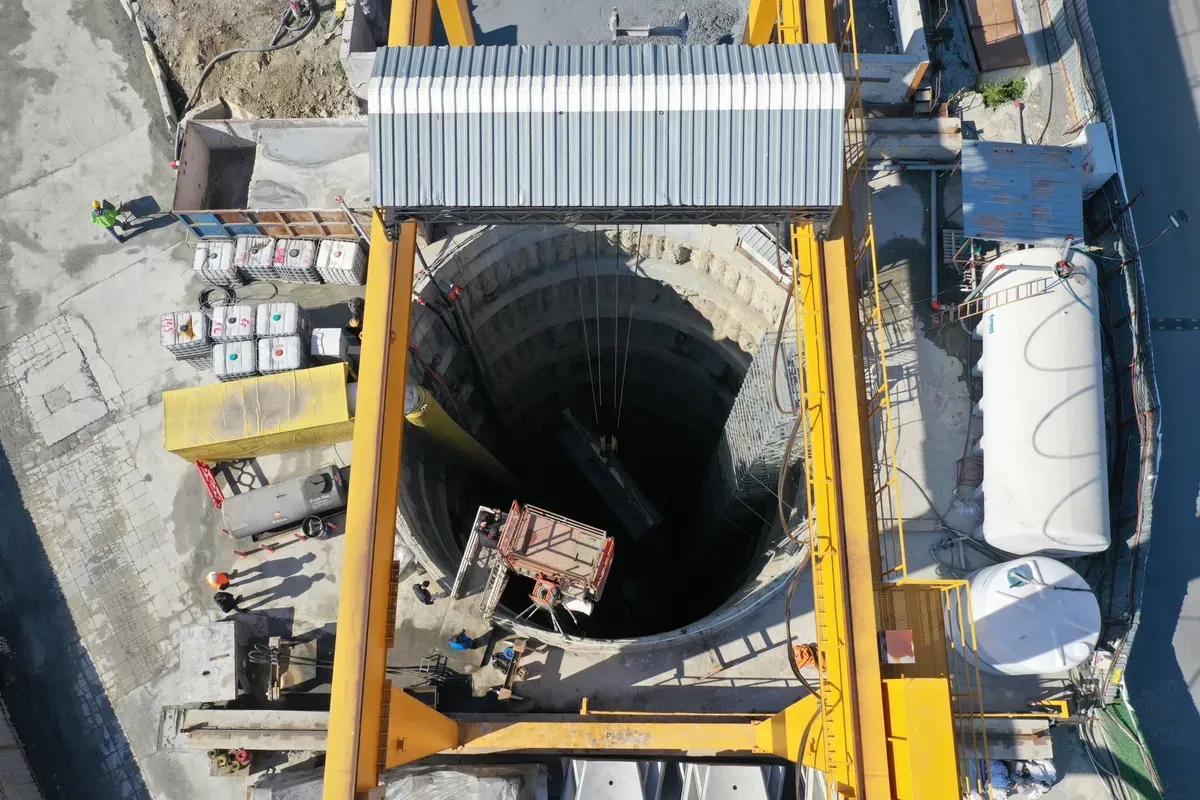
Before spending anything, understand what is under your plot. The groundwater geology of the Port Elizabeth area is not uniform. The Department of Water and Sanitation (DWS) records borehole yields in the region at 0.1 to 0.5 litres per second in lower-yield areas, rising to 0.5 to 2.0 litres per second in moderate fractured aquifer zones. Converting those figures into more useful household units: 0.5 l/s equals 1,800 litres per hour, while 0.1 l/s delivers just 360 litres per hour.
WaterQuotes sets the threshold for meaningful municipal supply reduction at 500 to 1,000 litres per hour. At 200 litres per hour or less, the same source advises treating a borehole as a garden-only supply. Many residential sites in the metro, particularly in areas with shallow sedimentary geology, fall at or below that garden-only threshold.
At the exceptional end of the spectrum: in June 2022, Gift of the Givers struck a yield of 14,000 litres per hour at the Elizabeth Donkin Psychiatric Hospital, as reported by easterncapeindustrialnews.co.za. That figure illustrates what fractured aquifer conditions can deliver, but it is very much the exception, not what a Kabega Park or Walmer homeowner should budget for.
Dam levels across the Nelson Mandela Bay supply system have dropped below 30%, with daily consumption exceeding allocated limits, a drought-driven pressure on the aquifer system that makes individual yield assessments even more important before committing to a drill.
The Coastal Saltwater Intrusion Problem
Suburbs close to the coast face a risk that inland areas do not. Excessive pumping draws the water table down. As it drops, saltwater from the ocean migrates into the freshwater lens, contaminating it permanently without expensive desalination intervention.
“Over-abstraction from the boreholes, particularly in Summerstrand, will see saline leaking into the aquifer… However, it is quite easy to see who is abusing boreholes by the state of their garden.”
Erick Kritzinger, owner of Eastern Cape Borehole Services, speaking to The Herald
“Once the water table drops too far, it invites saltwater intrusion which can only be resolved through desalination. Then we will have gone full circle, having accomplished nothing…”
Dr. Denise Schael, research assistant at NMU School of Botany, via Daily Maverick
Summerstrand, Humewood, and other beachfront suburbs are the highest-risk zones for this. If your property sits within two kilometres of the shoreline, obtain a hydrogeological site assessment before committing to drilling, not after.
Borehole Costs in Nelson Mandela Bay: The Real Numbers
Drillers in the Eastern Cape typically quote per metre drilled, with rates ranging from roughly R400 to R700 per metre depending on geology and rig type. Residential boreholes in the Port Elizabeth area commonly reach depths of 60 to 120 metres. That drilling cost alone sits at R24,000 to R84,000 before a single piece of equipment is installed. And it applies whether you strike water or not.
“There is no guarantee that you will find groundwater, so you could end up paying a lot for nothing.”
MyBroadband contributor on the dry hole risk
“Yes, there are boreholes, but they cost a fortune (R60,000+) and can run dry if too many people do that.”
Local owner on MyBroadband, cautioning about aquifer depletion
Add the pump, and the number climbs steeply.
“Don’t forget the price of a submersible pump for the borehole which, depending on which you go for, can cost R50k or even more for a reliable solar pump with dedicated panels.”
MyBroadband forum member on hidden borehole costs
Beyond the pump, a compliant installation in Nelson Mandela Bay requires the backflow preventer mandated by NMBM By-law Clause 77, a pressure tank or header tank, pipework to the house (often 20 to 60 metres), water quality testing, and a borehole casing seal. For low-yield boreholes, WaterPointSA notes that a 48-hour recovery period between pumping sessions may be necessary, which means you also need holding storage to bridge that gap.
Borehole All-In Cost Table
| Cost Item | Low Estimate (ZAR) | High Estimate (ZAR) | Notes |
|---|---|---|---|
| Drilling (80m average) | R32,000 | R56,000 | Charged per metre, regardless of yield |
| Submersible pump (grid-tied) | R8,000 | R18,000 | Basic AC pump, panel and controller extra |
| Solar pump with dedicated panels | R35,000 | R55,000+ | Preferred for load-shedding resilience |
| Pressure or header tank | R2,500 | R6,000 | Required for consistent household pressure |
| Backflow preventer (Clause 77) | R800 | R2,500 | Legally required by NMBM |
| Pipework and civil works | R4,000 | R12,000 | Varies with distance from borehole to house |
| Water quality testing | R1,500 | R4,000 | E.coli, TDS, hardness, nitrates minimum |
| SANS 10299 compliance inspection | R1,500 | R3,500 | Required by waterpointsa.co.za guidelines |
| NMBM registration and admin | R500 | R1,500 | Legally compulsory per nelsonmandelabay.gov.za |
| Total (grid pump scenario) | R50,800 | R103,500 | Excludes holding tank if low yield |
| Total (solar pump scenario) | R78,000 | R140,000+ | Recommended for load-shedding resilience |
These are installation costs only. They say nothing about the annual operating costs that follow.
“The monthly reality starts with electricity… A borehole is not a once-off cost. It is an operating system, one that consumes electricity, requires maintenance… and occasionally demands repair or replacement in ways that many first-time owners do not fully anticipate.”
WaterQuotes on the true 10-year operating cost of a borehole system
Tank System Costs in Nelson Mandela Bay: What You Actually Pay
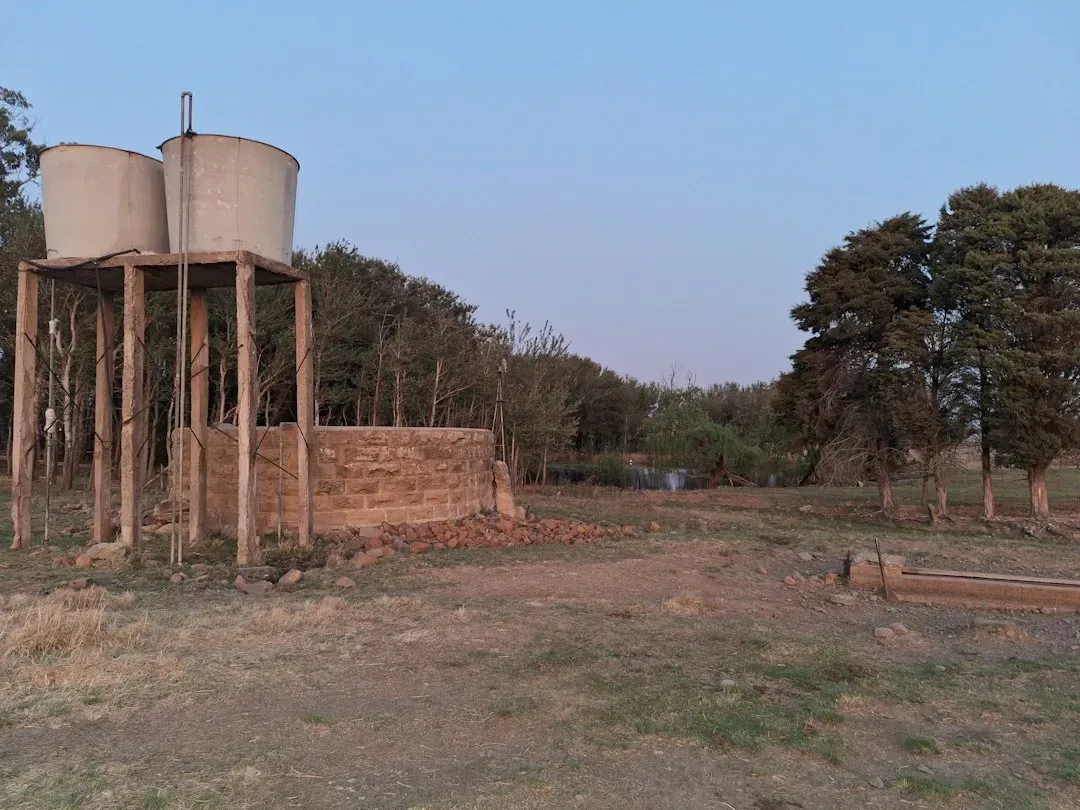
A rainwater harvesting or municipal top-up tank system has a far simpler cost profile. The core components are the tank or tanks, guttering and downpipe diverters, a first-flush device, a transfer pump with controller, and pipework to the house.
JoJo and similar HDPE tanks are widely available from builders merchants and water solution suppliers across the Eastern Cape. Prices for a standard 5,000-litre vertical tank run from roughly R4,500 to R6,500 depending on grade and supplier. A 10,000-litre tank costs approximately R9,500 to R13,000.
“I went off grid with water and haven’t looked back. Still paying the water availability fee to the muni… 3×5000 litre Jojo Tanks = +-R15000, Pump with electronic controller = +-R3000… Rainwater from the roofs.”
Forum user ‘Wut’ on MyBroadband, describing a rainwater harvesting setup
That post describes 15,000 litres of storage for approximately R18,000, with a pressure pump for another R3,000. Add installation labour, guttering upgrades, and first-flush diverters, and a full 15,000-litre harvesting system in Gqeberha typically lands between R22,000 and R35,000 installed.
Tank System All-In Cost Table
| Cost Item | Low Estimate (ZAR) | High Estimate (ZAR) | Notes |
|---|---|---|---|
| 3 x 5,000-litre JoJo tanks | R13,500 | R19,500 | Vertical, standard grade |
| Transfer pump with controller | R2,500 | R5,500 | Basic pressure pump for household use |
| First-flush diverter and filter | R800 | R2,000 | Critical for sediment and bird contamination |
| Guttering upgrades and downpipe links | R2,000 | R6,000 | Depends on existing condition |
| Pipework and plumbing to house | R2,500 | R7,000 | Non-potable circuit or dual plumbing |
| Tank stand or base slab (if required) | R1,500 | R4,000 | Firm, level base is essential |
| Total | R22,800 | R44,000 | No licence required; straightforward compliance |
Running costs are minimal: electricity to the small transfer pump (a fraction of a submersible borehole pump draw), occasional filter replacement, and annual tank cleaning. There are no annual abstraction restrictions, no drilling risk, and no aquifer dependency.
Check my address to get a property-specific feasibility report and priced recommendation for your suburb in Port Elizabeth or Gqeberha.
Legal Compliance: What NMB Homeowners Must Know Before Drilling
Many homeowners assume the driller handles the paperwork. That assumption is dangerous.
“Many homeowners skip this step because they assume that the driller will handle it… The legal responsibility ultimately rests with the property owner. While a contractor may assist, compliance remains the homeowner’s obligation.”
Legal experts on installer disclosure and compliance responsibility
Here is what the law actually requires in Nelson Mandela Bay:
- NMBM Borehole Registration: It is legally compulsory to register the borehole with the municipality once drilling is complete, using the official NMBM Borehole Registration form (nelsonmandelabay.gov.za). The Department of Water and Sanitation estimates that 80,000 to 100,000 boreholes are drilled nationally each year, with the vast majority remaining unregistered. An unregistered borehole in Nelson Mandela Bay is a liability, not an asset.
- NMBM By-law Clause 77: Any borehole connected to the municipal reticulation must be fitted with an approved backflow preventer (nelsonmandelabay.gov.za). This is non-negotiable.
- SANS 10299:2003: All borehole installations must comply with this standard, which governs siting, design, construction, and test-pumping procedures (waterpointsa.co.za).
- National Water Act Schedule 1: Domestic boreholes used solely for reasonable household purposes generally do not require a formal water-use licence, but local municipal by-laws still apply (waterpointsa.co.za).
- DWS 20% Abstraction Reduction Directive: Active borehole users in Nelson Mandela Bay are required to reduce abstraction by 20% under a current DWS directive (nelsonmandelabay.gov.za).
Chemical shortages at NMB treatment plants and widespread supply interruptions have already forced many residents to manage their own water independently, which makes compliance even more important, since an unregistered or non-compliant installation can complicate insurance claims and property sales.
“Many insurance policies may not cover damages caused by non-compliant boreholes. Just like with any structural insurance claim, where we’d look into whether your home was built by a registered builder, the same applies to borehole installations.”
MiWay executive head of claims, on insurance rejections for non-compliant boreholes
Water Safety: Tanks Are Not Risk-Free Either
JoJo tanks carry their own health considerations. Water safety experts note that stored water above 20 degrees Celsius creates conditions favourable to Legionella bacteria growth. In a coastal city where summer temperatures regularly exceed 25 degrees and tanks sit in direct sun, water temperature management matters. Proper tank covers, shading where possible, and regular cleaning (at minimum annually) are not optional extras but basic maintenance requirements.
Rainwater harvested from roofs also picks up bird droppings, dust, atmospheric pollution, and roof-coating chemicals. First-flush diverters remove the most contaminated initial runoff, but even filtered rainwater should not be used for drinking or cooking without additional treatment such as UV sterilisation or ceramic filtration.
Borehole water in the NMB area frequently tests high in iron, manganese, and in some areas elevated nitrate levels that require attention, particularly for households with infants. The question of whether to treat, and how, should be answered by a water quality test before connecting any borehole to household plumbing, not after.
“Guys what would I need if I wanted to connect my borehole to the house (not for drinking) but for other uses? Would a plumber be able to do it?”
MyBroadband forum user on integrating borehole water into house plumbing
This is exactly the right instinct: treating borehole water as non-potable by default until a test says otherwise, and ensuring a plumber familiar with the NMBM By-law Clause 77 backflow requirement handles the connection.
Theft: A Practical Risk in Gqeberha That Vendors Rarely Mention
Both systems carry theft risk in Nelson Mandela Bay. Copper pipework, submersible pumps, and control boxes are targeted. So are the tanks themselves.
“They drained all three [5,000-litre] tanks and the way they removed the water pump was skilful. It shows they were professionals because they ensured there was no leakage.”
NMB AIM councillor Mkhuseli Jack to The Herald, describing theft from his Newton Park business
Borehole pump cables and control equipment are a known theft target on farms and in peri-urban areas. One forum contributor noted a full replacement for under R5,000 in a rural context, but urban installations with solar panels and sophisticated controllers carry far higher replacement values, the same R50,000-plus mentioned by the MyBroadband community members quoted above. A R46-million municipal borehole project in St George’s Park was rendered inoperable by theft and vandalism, illustrating that even large-scale groundwater schemes are not immune. Factor physical security measures, including locking pump houses and anti-vandal casings, into your planning and your budget.
Cost of Ownership Comparison: 10-Year Horizon
The table below compares a mid-range borehole system against a mid-range tank harvesting system over ten years for a typical four-person NMB household. All figures in ZAR. Municipal water savings are estimated at the Step 4 tariff rate, not the punitive Step 6 rate, to remain conservative.
| Cost Category | Borehole (Mid-Range, Solar Pump) | Tank System (3 x 5,000L Harvesting) |
|---|---|---|
| Year 1 capital cost | R110,000 | R30,000 |
| Annual electricity (pump running) | R2,400 to R4,800 (solar reduces this significantly) | R600 to R1,200 (small transfer pump only) |
| Annual maintenance (filters, servicing) | R2,000 to R5,000 | R500 to R1,500 |
| Major repair or replacement (pump, 10yr) | R15,000 to R30,000 | R2,500 to R5,000 |
| Water quality testing (annual) | R1,500 to R4,000 | R0 to R1,000 (if used non-potable only) |
| Compliance and registration (Year 1) | R2,500 to R5,500 | R0 (no licence required) |
| Estimated 10-year total outlay | R158,000 to R230,000+ | R45,000 to R65,000 |
| Estimated annual municipal bill saving (conservative) | R6,000 to R14,400 (if yield is adequate) | R3,600 to R7,200 (dependent on rainfall) |
| Approximate break-even point | 12 to 20+ years (yield-dependent) | 6 to 10 years |
| Risk of zero return on investment | Yes, dry hole risk is real | Very low |
| DWS restriction applies | Yes, 20% abstraction reduction required | No |
These numbers make a compelling case for tanks as the lower-risk, faster-payback option for the majority of NMB homeowners. Where a borehole does strike adequate yield, the long-term water saving potential is higher, but it carries a capital exposure that tanks simply do not.
Ready to install your borehole or tank in Nelson Mandela Bay?
The Hybrid Strategy: Why Some NMB Owners Do Both
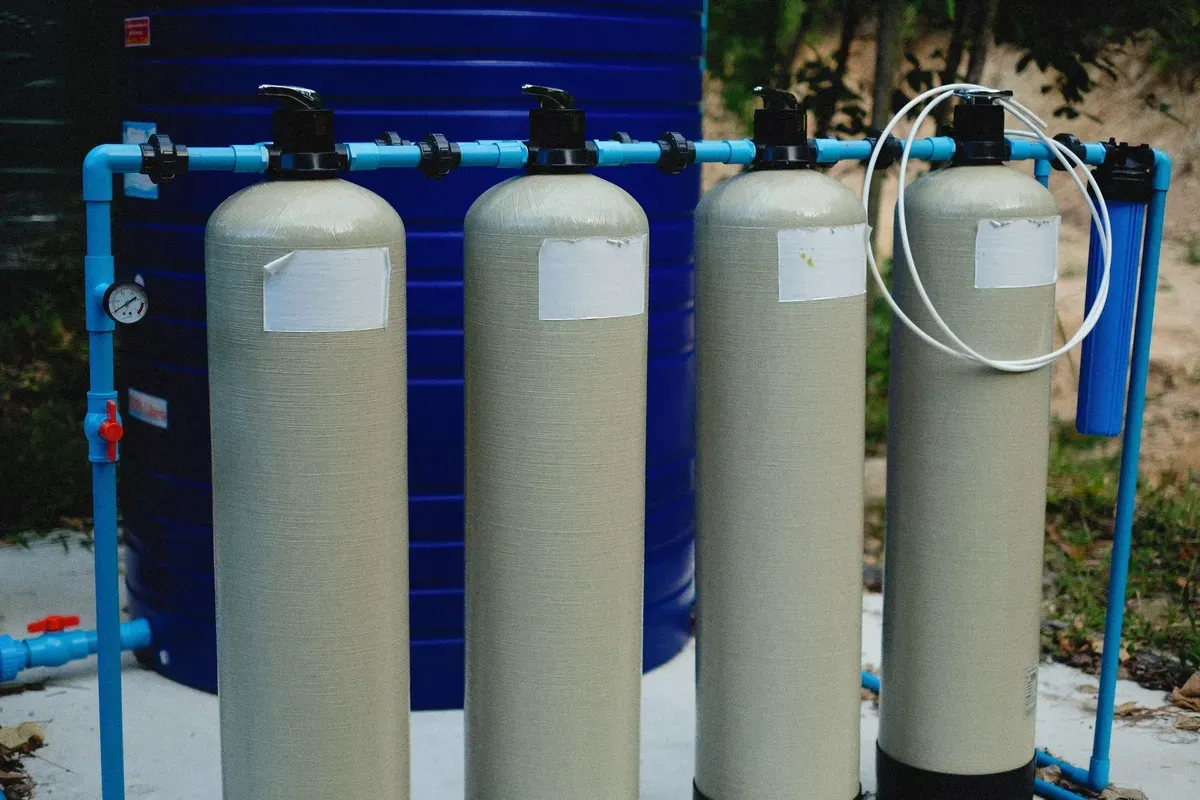
The two systems are not mutually exclusive. Several forum contributors have landed on a hybrid model that uses a borehole for garden irrigation and greywater top-up, while tanks provide the buffer storage that smooths out both the borehole’s recovery cycle and the municipal supply interruptions.
“You can take the borehole water and fill up water [tanks]…”
Local forum user, discussing combining boreholes and tanks for supply continuity during municipal outages
WaterPointSA notes that low-yield boreholes need up to 48 hours of recovery time between pumping sessions. If you pump into a 10,000-litre holding tank during the recovery period, the household always has accessible water even when the borehole pump is off and the municipal supply is interrupted. This combination effectively turns a marginal borehole into a practical system.
The critical compliance requirement in this configuration is the backflow preventer under Clause 77, which must be installed wherever borehole water and municipal water exist in the same property plumbing system. Without it, borehole water pressure can back-siphon into the municipal network during a pressure drop, which is both a by-law violation and a public health risk.
What NMB Homeowners Regret Not Knowing
Based on community forum discussions and the owner voices gathered here, the most common regrets follow a consistent pattern:
- Not getting a hydrogeological survey before drilling. The difference between a 1,800 litre-per-hour borehole and a 180 litre-per-hour garden trickle is the difference between water independence and a very expensive garden tap. A survey costs R2,000 to R5,000. Drilling a dry or poor hole costs R30,000 to R60,000.
- Underestimating the total installed cost. Drilling quotes rarely include the pump, pipework, compliance, testing, and storage. A R35,000 drilling quote becomes a R90,000 to R130,000 project once everything is included.
- Skipping the water quality test. High iron content can stain laundry and surfaces within weeks. Elevated nitrate levels in borehole water require treatment, particularly where infants are in the household. Neither problem is visible to the eye.
- Ignoring the registration requirement. An unregistered borehole is a liability at property sale time and may void insurance claims.
- Not planning for theft. Both pump equipment and tanks are targeted. Physical security measures are part of the system cost, not an optional extra.
“Port Elizabeth never had a problem like this before. Everything worked! Thank God I had rainwater tanks…”
Middle-income tank owner, expressing relief amid ICWS failures on MyBroadband
That sentiment captures the core value proposition of a tank system: it is not glamorous, it is not groundbreaking, but when the municipal supply fails at 45.1% frequency, having 10,000 to 15,000 litres on-site means your household keeps functioning. National Treasury reforms and billing write-offs have further squeezed the NMBM budget, making a private backup system an increasingly necessary investment rather than a discretionary upgrade.
Quick Decision Framework for NMB Homeowners
Use this to orient your thinking before engaging any vendor:
- Is your suburb coastal (within 2km of the sea)? Get a hydrogeological assessment before considering a borehole. Saltwater intrusion is a real and irreversible risk.
- Do you have adequate roof catchment area? A 100 square metre roof in Gqeberha (average annual rainfall approximately 630mm) can collect roughly 63,000 litres per year before evaporation losses. That is meaningful storage replenishment.
- What is your primary need? Garden irrigation only: a low-yield borehole may suffice. Full household backup: you need either a high-yield borehole or a large tank system, ideally both.
- What is your capital budget? Under R50,000: tanks are the only viable option. R80,000 to R150,000+: a borehole with solar pump becomes feasible, but not guaranteed to yield adequately.
- How risk-tolerant are you? A tank system delivers a known return on a known investment. A borehole is a venture with real upside and real downside.
To find out what groundwater conditions and system options look like for your specific street address in Port Elizabeth or Gqeberha, check my address on WaterPointSA’s property lookup tool.
Get started
Ready to install your borehole or tank in Nelson Mandela Bay?
Vetted local installers · honest advice first
Photo: Павел Хлыстунов / Pexels