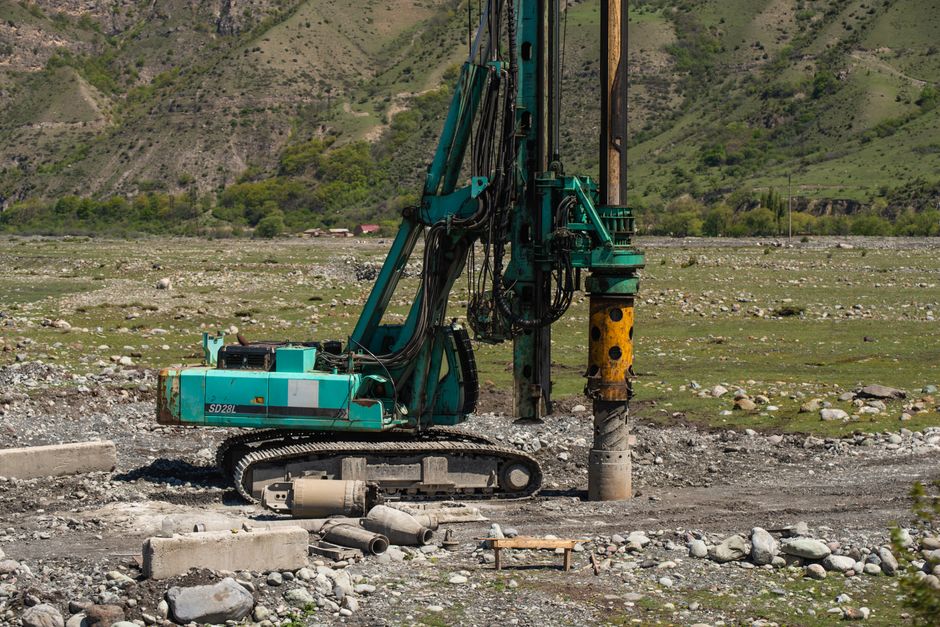
Key points
- Drilling rates in Pretoria run R380 to R700 per metre, and a fully equipped domestic system costs R60,000 to R140,000 all-in.
- The average domestic borehole reaches 90m depth; water table sits 40m to 100m below surface depending on suburb.
- Dolomitic zones, including Centurion, Valhalla, Laudium, and Hennopspark, attract a 15% to 30% drilling cost premium, and Bronberrick and Eldoraigne are outright banned.
- Yields vary enormously: Pretoria East typically delivers 1,500 to 3,000 L/h, while dolomitic southern and western suburbs can exceed 10,000 L/h where drilling is permitted.
- Domestic use under 50 kilolitres per day is exempt from a National Water Use Licence, but domestic borehole users are exempt from the strict new national groundwater registration rules that apply to larger extractors.
- A compliant borehole adds property value; a non-compliant one becomes the new owner’s legal liability at transfer.
Why Pretoria homeowners are drilling now
Municipal water security in Tshwane has deteriorated to a point where backup water is no longer a luxury conversation. Outages measured in hours have become outages measured in days, with multiple Pretoria suburbs facing repeated multi-day shutdowns in 2026.
“Here in Pretoria outages is now measured in days not hours anymore. Just the last 3 weeks: 3 days then 4 days, currently off again. Unfortunately solar has become a necessity no matter what you pay. It makes no financial sense for me to install solar (less than R500 usage per month) yet I am installing it as you cannot live without power in modern life anymore.”
That same logic now applies to water. The result is a drilling market under pressure, with demand running ahead of contractor capacity. As one MyBroadband commenter put it bluntly:
“Pricing seems to be extremely high, demand is currently at an all time high I suppose.”
As Polity.org.za reports, boreholes are booming in a drying South Africa, with failing municipal systems sparking an unprecedented surge in urban drilling. This article gives you the verified numbers behind those inflated quotes, suburb-level yield and depth realities, the legal framework you cannot ignore, and a cost-of-ownership model so you can decide whether drilling makes financial sense for your specific property.
Understanding what you are actually paying for
A borehole quote is not one number. It is a stack of separate line items, each of which varies by geology, depth, suburb, and contractor. Here is how the components break down.
Drilling rate per metre
Standard residential percussion drilling in Pretoria costs R380 to R700 per metre. Rotary drilling for harder rock formations pushes toward the top of that range or beyond. At the national average depth of 90 metres, drilling alone therefore costs R34,200 to R63,000 before a single pipe or pump enters the ground.
Pretoria East specifically sees rates of R300 to R700 per metre for standard percussion work, reflecting the relatively accessible granite formations in that area.
Casing material
The Borehole Water Association recommends uPVC casing for standard residential installations. Steel casing, used in unstable sandy formations, costs more but provides collapse protection that can save the entire installation. Specifying the casing material and diameter in writing before signing any contract is essential, it is often the largest materials cost in the project.
“I had a poor formation forced me to take precautions of casing all the way down to my 60m depth but the hole is very strong. A shift of sand won’t just crush my borehole closed.”
Pump, pressure system, and electrical
A submersible pump, surface pressure tank, control box, rising main, and electrical connection typically add R15,000 to R35,000 depending on depth and flow rate required. Solar-powered pump sets sit at the higher end of this range but eliminate ongoing electricity costs.
Storage tank
A standard 5,000-litre JoJo tank costs R5,500 to R13,500. Most domestic setups pair the borehole with one or two tanks plus a pressure booster pump for household pressure, adding R10,000 to R25,000 once plumbing and installation labour are included.
Hydrologist survey
A pre-drilling geohydrological survey costs R3,500 to R20,000. It is optional in the sense that you can drill without one, but it is not optional in the sense that drilling blind in Pretoria’s varied geology is a genuine financial risk. The survey identifies fracture zones, guides siting, and can confirm whether your suburb is in a dolomitic risk area before you commit to drilling costs.
Suburb-by-suburb depth, yield, and cost reality
Pretoria sits on a geologically diverse base. Bushveld Igneous Complex rocks dominate the north and east, while carbonate rocks, including dolomite, underlie much of the south and west. That geology dictates everything: depth to water, yield, drilling difficulty, and in some cases whether you can drill at all.
| Area | Typical depth to water | Typical residential yield | Drilling rate per metre | Key notes |
|---|---|---|---|---|
| Pretoria East (Garsfontein, Faerie Glen, Equestria) | 50m to 90m | 1,500 to 3,000 L/h | R300 to R700 | Good granite fractures; generally favourable |
| Brooklyn, Waterkloof, Groenkloof | 60m to 100m | 400 to 2,500 L/h | R380 to R700 | Variable; older suburbs with dense infrastructure |
| Centurion (general, non-prohibited) | 40m to 80m | Frequently exceeding 10,000 L/h | R437 to R910 (15% to 30% dolomite premium) | Dolomitic; high yields where permitted; strict siting rules |
| Bronberrick, Eldoraigne | N/A | N/A | N/A | Drilling prohibited; sinkhole risk |
| Valhalla, Laudium, Hennopspark, Wierdapark, Irene, Lyttelton, Highveld, Monument Park | Variable | Variable | R437 to R910+ | Prohibited or heavily restricted due to dolomite; verify before drilling |
| Soshanguve, Mabopane (northern suburbs) | 60m to 130m | 400 to 1,500 L/h | R380 to R700 | Deeper water table; yields more variable |
| Atteridgeville, Laudium (non-dolomitic sections) | 70m to 110m | 400 to 1,200 L/h | R380 to R700 | Check dolomite maps before committing; mixed formations |
The dolomite premium of 15% to 30% applies wherever drilling is permitted in those zones. On a R700-per-metre rate, that becomes R805 to R910 per metre. At 80 metres depth, the drilling line item alone moves from R56,000 to R64,400 to R72,800, before any other cost.
The ‘blown yield’ trap: why the driller’s first number is not your number
Yield figures quoted immediately after drilling are routinely overstated. A freshly drilled hole in fractured rock will often produce at a very high rate for the first few hours as drilling water and loosened material flush through the fracture. That is not the sustainable yield.
“We had a case where a driller reported a blown yield of around 30,000 litres per hour. However, after completing an extended constant drawdown test, we found that the borehole yielded 30,000 litres per hour for about eight hours, and then dropped off completely. The final yield was closer to 1,200 litres per hour.”
The practical implication: always insist on a minimum four-hour constant rate test before accepting any yield figure, and ideally commission a 72-hour extended test for high-demand applications. Typical sustainable residential yields across Pretoria run 400 to 2,500 L/h. If a driller is quoting you 10,000 L/h for a suburban home in Pretoria East, that number requires independent verification.
What a fully installed system actually costs: the complete breakdown
A representative benchmark for a 90-metre domestic borehole installation in Pretoria is approximately R99,020 all in. That figure sits within the R60,000 to R140,000 range for a fully equipped domestic system.
Here is what a representative mid-range Pretoria East installation looks like at current rates:
| Line item | Low estimate | Mid estimate | High estimate |
|---|---|---|---|
| Geohydrologist survey | R3,500 | R8,000 | R20,000 |
| Drilling (90m at R380 to R700/m) | R34,200 | R48,600 | R63,000 |
| Submersible pump, rising main, control box | R12,000 | R20,000 | R35,000 |
| 5,000L storage tank and pressure system | R8,000 | R14,000 | R22,000 |
| Electrical connection and plumbing | R4,000 | R8,000 | R15,000 |
| Water quality testing and filtration | R2,000 | R5,000 | R12,000 |
| Total installed | R63,700 | R103,600 | R167,000 |
Note that full casing to total depth in a poor formation significantly increases the materials cost, which is why the upper boundary can exceed the headline R140,000 figure on deep or complex installations. The R60,000 to R140,000 range is realistic for standard residential installs where partial casing suffices.
Cost of ownership: borehole versus municipal water over ten years
The financial case for a borehole depends on how much municipal water you currently consume and what you pay for it. City of Tshwane upper-block municipal tariffs mean a household spending heavily on water each month can face a substantial annual bill, and that bill grows every year with tariff increases.
| Scenario | Year 1 | Year 5 | Year 10 |
|---|---|---|---|
| Municipal only (upper-block spend, 5% annual tariff increase assumed) | Baseline annual bill | ~27% higher than Year 1 | ~63% higher than Year 1 |
| Borehole (R99,020 install) plus R2,500/year maintenance | Capital-heavy | Flat ongoing cost | Negligible municipal spend |
The break-even on a mid-range install against upper-block municipal tariffs, assuming annual tariff increases, typically falls around the seven to nine year mark for a moderate-volume household. Heavy users, particularly those irrigating gardens or running smallholdings, reach break-even far sooner. One owner described exactly this:
“I’ve saved around R50K in water in two years so the break even point on a borehole is very short (around 4 years for me).”
Another confirmed similar long-term economics:
“I don’t count usage now after installing a Borehole. Best R40k I ever spent. It will pay itself over many times over the years. Maintenance is just a change of filters every few months, and checking the pumps. Around 19kl per month and winter it is about 15kl.”
Inus Dreckmeyr, a Pretoria-based electrical engineer living fully off-grid, describes the maintenance cost picture from the other end of the spectrum:
“We have no connection to the grid and supply our own water from an on-property borehole. These maintenance costs are so trivial that we do not even include them in our budgets.”
Ongoing and unexpected maintenance costs
A borehole is not install-and-forget. Here are the realistic maintenance numbers you should budget for.
- Annual filter changes and basic servicing: R1,500 to R4,000
- Pump replacement (submersible pumps typically last 5 to 10 years depending on water quality and run hours): R8,000 to R25,000
- Yield restoration via mechanical cleaning, chemical treatment, or airlifting: R7,000 to R20,000
- Water quality testing (recommended annually): R500 to R2,500
Emergency callouts are not cheap either, and weekend failures are common given that pumps tend to fail under peak summer load.
“Our borehole pump failed on a Saturday morning and Water Pro’s was the only company that answered. Joseph was professional, found the problem quickly, and had it fixed in a few hours.”
A tripping pump is often the first sign of a deeper problem: over-pumping beyond the sustainable yield, worn motor windings, or a collapsed screen. Catching it early keeps repair costs manageable rather than requiring full replacement.
Ready to find out whether your address makes drilling worthwhile before you spend a cent on a quote? Check my address for a suburb-level feasibility report and vetted installer contacts.
Water quality: what to expect from your geology
Pretoria borehole water quality varies significantly by formation. Granite-sourced water in Pretoria East is typically low in dissolved minerals but can carry fine silica sediment immediately after drilling. Dolomitic aquifers in Centurion may carry elevated calcium and magnesium levels. Shallow boreholes near agricultural or industrial areas can pick up nitrate contamination.
Always test before you plumb borehole water into household supply. The minimum test panel should include pH, TDS, hardness, nitrates, coliform bacteria, and iron. Budget R500 to R2,500 for a credible laboratory analysis aligned with SANS 241 potable water standards.
The legal framework: what registration actually means
Domestic borehole use under 50 kilolitres per day is exempt from requiring a National Water Use Licence under Schedule 1 of the National Water Act. For context, 50 kilolitres per day is 50,000 litres, far beyond the needs of any standard residential property. Most households extracting 15 to 25 kilolitres per month fall comfortably within this exemption.
The Department of Water and Sanitation has confirmed that domestic borehole users are also exempt from the strict new national groundwater registration rules being rolled out in 2026, providing legal peace of mind to homeowners installing private boreholes to survive municipal water-shedding. DWS is officially targeting late 2026 to gazette the new groundwater rules, but has confirmed they will not retroactively target domestic boreholes.
However, exemption from a licence is not the same as exemption from all regulation. Boreholes must be sited at least 50 metres apart. Drilling in prohibited dolomitic zones is unlawful regardless of intended volume. And in Gauteng specifically, some catchments are heavily over-allocated.
“One might meet all the requirements and submit an application, only to have it approved for a reduced volume or declined altogether.”
The compliance risk at property transfer is material and often overlooked:
“The legal responsibility ultimately rests with the property owner. While a contractor may assist, compliance remains the homeowner’s obligation. A borehole can add value to a property, but only if it’s compliant. Buyers need to ask for the paperwork up front. And if the borehole isn’t compliant, it becomes the new owner’s liability.”
Dolomite risk zones: the suburbs where you cannot drill
This is the section that saves money before a single drill bit touches ground. The following suburbs are entirely prohibited for borehole drilling due to dolomite and sinkhole risk: Bronberrick and Eldoraigne.
The broader list of suburbs requiring extreme caution, specialist geotechnical assessment, and in many cases carrying blanket prohibitions includes: Valhalla, Laudium, Hennopspark, Wierdapark, Lyttelton, Highveld, Irene, and Monument Park.
If your suburb appears on this list, the conversation shifts entirely. Your backup water solution will need to be a rainwater harvesting system, supplementary storage from municipal supply, or a water delivery arrangement. No legitimate contractor should drill in Bronberrick or Eldoraigne, and any quote you receive for those addresses should be declined immediately.
Outside the prohibited zones, Centurion’s dolomitic areas can actually produce exceptional yields, frequently exceeding 10,000 L/h where drilling is permitted. The premium of 15% to 30% on drilling costs is real, but so is the yield upside for correctly sited installations.
How to evaluate a quote: the five questions to ask every driller
Given that demand is at record levels and pricing pressure is significant, here is a practical filter for evaluating any quote you receive.
- Is the driller a registered member of the Borehole Water Association of Southern Africa? BWA membership is not a guarantee of quality but it establishes a baseline commitment to industry standards.
- What is the quoted rate per metre, and what drilling method? Percussion drilling is standard for most Pretoria geology. Rotary is faster in soft formations but costlier. Get the per-metre rate in writing so you can compare apples to apples.
- How will yield be reported, and will an extended drawdown test be performed? A blown yield figure without a sustained drawdown test is not a yield figure.
- What casing diameter and material is specified? The BWA recommends uPVC. Steel is acceptable for specific formations. Insist on the specification in writing.
- Does the quote include a water quality test? Any complete installation quote should include at minimum a basic chemistry panel before commissioning.
Find a vetted driller for your Pretoria borehole
A realistic picture for Pretoria East specifically
Pretoria East remains the most consistently productive residential drilling area in the Tshwane municipality. The granite and quartzite formations of Faerie Glen, Garsfontein, Equestria, Moreleta Park, and Lynnwood East provide reliable fracture zones at 50m to 90m depth. Yields of 1,500 to 3,000 L/h are typical, and the geology is relatively straightforward for percussion drilling at R300 to R700 per metre.
The practical outcome is what ‘joker08’ describes above: a system that pays for itself through eliminated municipal consumption over time, with maintenance costs that amount to little more than periodic filter changes. The key variable is the initial yield test and a correctly sized pump matched to the sustainable, not blown, yield figure.
Summary: what you should budget in 2026
For a standard domestic installation in a non-dolomitic Pretoria suburb, the honest budget range is R60,000 to R140,000 all-in, with a representative 90-metre installation costing approximately R99,020. Add a 15% to 30% premium for any property in a dolomitic zone where drilling is permitted. Ongoing annual maintenance should be budgeted at R2,500 to R5,000 for a well-managed system, with a pump replacement reserve held for the seven to ten year mark. At City of Tshwane upper-block tariffs, a high-volume household typically reaches break-even within four to eight years of installation, sooner if you are irrigating a large garden.
Before you request a single quote, confirm your suburb’s dolomite status and verify that your property is not in a prohibited drilling zone. That one step costs nothing and could save you the entire capital outlay.
To find out exactly what your address is zoned for and which local installers serve your suburb, check my address.
Get started
Find a vetted driller for your Pretoria borehole
Vetted local installers · honest advice first
Photo: Павел Хлыстунов / Pexels