Key Points
- Emfuleni’s non-revenue water loss stands at 74%, meaning nearly three-quarters of treated water never reaches a tap (Local Press / Rand Water Notifications).
- Emfuleni proposed a 15.3% water tariff increase for 2025/2026, on top of a 15.2% Rand Water bulk tariff hike (Emfuleni Local Municipality Data / Vfplus; Rand Water Data).
- Installers recommend a 48 to 72-hour emergency buffer, requiring 2,500L to 5,000L of storage for the typical Vaal Triangle home.
- A professionally installed municipal backup tank-and-pump system costs R10,000 to R25,000 and runs at roughly R100 per month, making it the cheapest credible option.
- A complete residential borehole costs R80,000 to R250,000 and carries a payback period of 5.7 to 9.7 years (BoreholeHub 2026 ROI Calculator). An unregistered borehole in Emfuleni can trigger a levy of up to R3,000 per month (vfplus.org.za).
- Rainwater harvesting is well suited to the Vaal’s wet-summer climate but needs large storage to survive the dry winter, with July averaging just 3.9mm of rain (worldweatheronline.com).
- Atmospheric Water Generation (AWG) units are poorly matched to dry inland conditions and cost R0.70 to R2.20 per litre to run, far more than any other option.
Why the Vaal Triangle Cannot Wait Any Longer
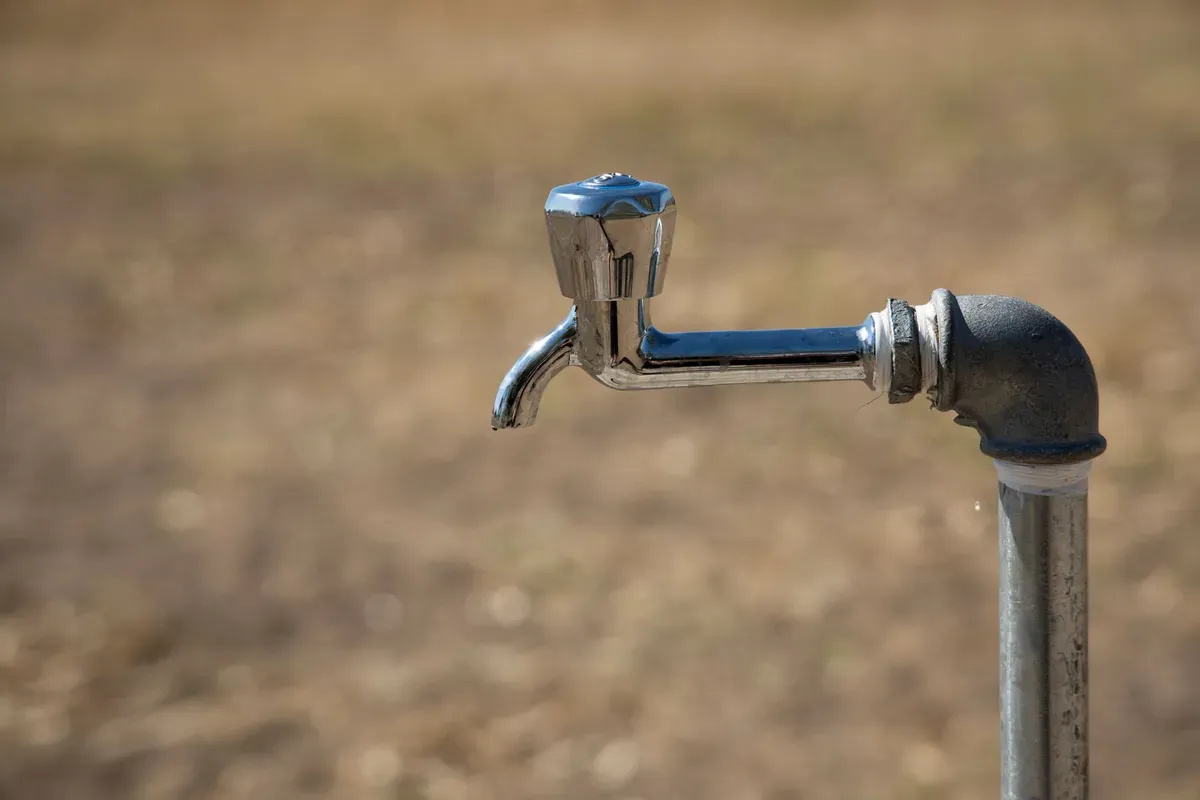
Residents of Vanderbijlpark, Vereeniging and Meyerton have lived with water interruptions long enough that many no longer bother reporting them. The underlying numbers explain why the situation does not improve on its own. Emfuleni Local Municipality loses 74% of the treated water it receives to leaks, theft and billing failures, according to Local Press and Rand Water Notifications. That is not a rounding error. It means that for every litre Rand Water delivers to Emfuleni’s bulk supply point, only roughly 26 cents’ worth reaches a paying customer.
The financial consequence lands directly on homeowners. Emfuleni proposed a 15.3% water tariff increase for 2025/2026, mirroring Rand Water’s own 15.2% bulk tariff increase. DA Councillor Dady Mollo put the frustration plainly:
“These tariff hikes have become completely unaffordable to residents who already suffer from near-daily service interruptions… A 15.30% increase in water tariffs, with no credible plan to stabilize or improve supply… Paying more for something you do not receive is an abject insult.”
And when the system does fail completely, recovery is not quick. As WaterCAN executive director Dr. Ferrial Adam has warned:
“depleted municipal reservoirs can take weeks to recover, particularly where storage and pumping capacity are inadequate”
That warning is not hypothetical in the Vaal. Kingsol Chabalala (MPL) described the human reality after localized pipe collapses in the area:
“Some residents have gone for months without water. This situation is a violation of the fundamental human right of Emfuleni residents.”
The only rational response is to stop relying on a single point of failure and to install your own buffer. The question is which buffer makes financial sense.
Your Options: A Plain-Language Overview
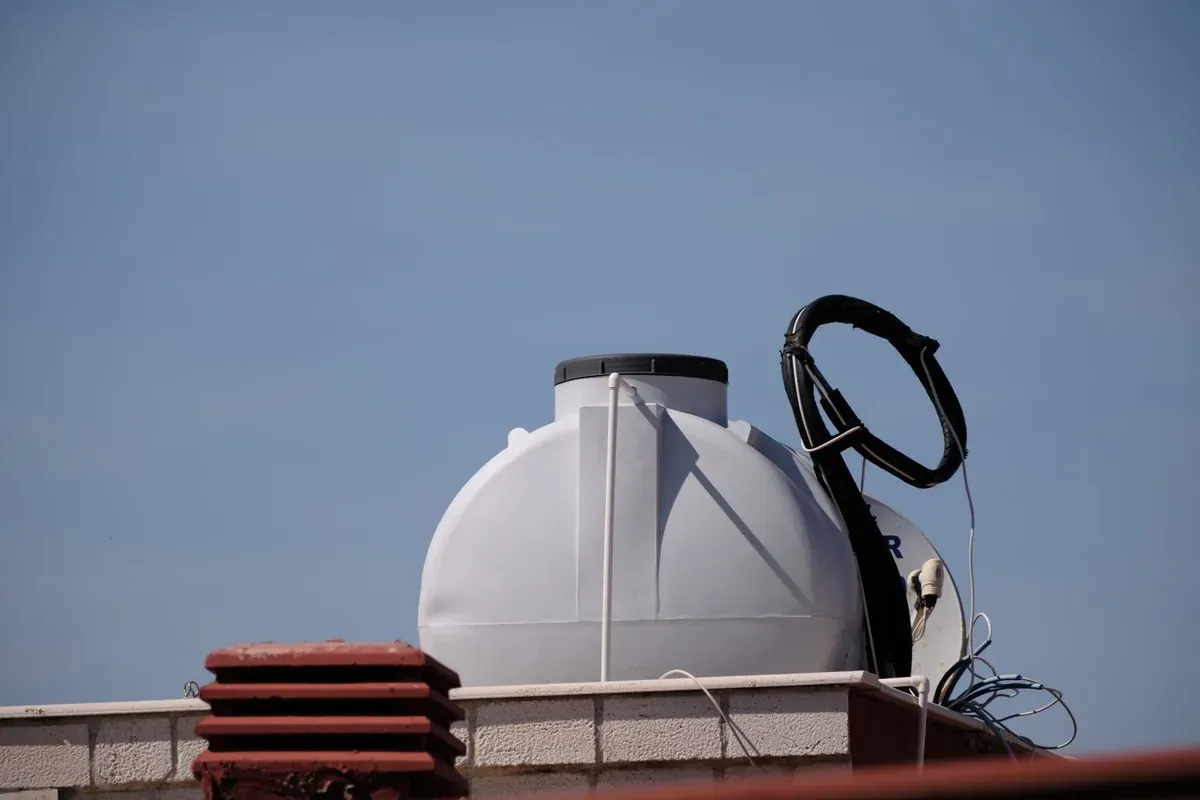
Four categories of backup water system are sold and installed in the Vaal Triangle today. Each has a different risk profile, capital cost, running cost and suitability for the local climate and geology. We work through each in turn before comparing them side by side.
Option 1: Municipal Backup Tank and Pump System
The most common setup in Gauteng suburbs: a polyethylene tank (typically SANS 1731:2017 compliant) is plumbed in line with your municipal supply. When pressure is present, the tank refills automatically. When supply fails, a pressure pump draws from the tank and maintains normal household pressure. No water source changes, no permits for the water itself, no quality testing obligations.
Installers recommend 2,500L to 5,000L of storage to cover the 48 to 72-hour emergency buffer appropriate for Sedibeng conditions. South African Water Policy data puts the average four-bedroom suburban home at 950 litres per day, so a 2,500L tank covers just under three days of normal use and roughly five days if the household is disciplined.
A homeowner on the r/johannesburg Reddit community described a typical professional installation:
“I was quoted R20k for a 2500lt tank including all fixtures and copper piping, the ground needs to be leveled, tank mounted against wall and lifted on lintels, lever valve and the electric box and power pump… It’s made such a difference to my family with the water issues we’ve had over the last year. Significantly lower stress and anxiety compared to my neighbours.”
That R20,000 sits in the middle of the R10,000 to R25,000 range that industry estimates identify for a professionally installed system. At the DIY-assisted end, one owner itemised their supplementary costs as follows:
“Jojo tank float – R300; Tank to pump connector kits – R300; Piping and connectors – R1500; Electrical wiring and conduit – R2000 (50m of cable and conduit).”
The critical sizing warning comes from an owner who went too small:
“It cost me R12k back then. I too could only fit a 1000L tank due to space constraints… 1000L is far too little, I can only last 3 days if I economise.”
The lesson: buy the largest tank your site allows. The price difference between a 1,000L and a 2,500L tank is small relative to the cost of a second installation. Electricity to run the pump runs at R70 to R80 per month (JoJo Smart Series estimate), and total monthly operating costs come in at roughly R100 per month (Research Findings). Over five years, that is R6,000 in running costs on top of the capital outlay.
Option 2: Residential Borehole
A borehole offers true independence from Emfuleni’s infrastructure, which is its main appeal. The economics are harder than many homeowners expect.
Drilling rates in the Vaal Triangle run at R300 to R500 per metre (Local Drillers). A residential 60m borehole in Vanderbijlpark was quoted at R82,600 all-in by LiquaFlo Borehole Solutions in April 2025. The full system cost, including casing, submersible pump, pressure vessel, pipework and electrical installation, sits at R80,000 to R250,000 (Research Findings).
Running costs are higher than most marketing material suggests. A 1.1kW submersible pump running three hours a day costs roughly R347 per month in electricity at current Eskom rates (WaterQuotes 2026). Maintenance and filtration add R150 to R300 per month (Andy Plumbers, Randburg, 2026). SANS 241 water quality testing adds R70 to R237 per month (Professional Borehole Water Testing SA, 2026). Total monthly operating cost: R600 to R900 (Research Findings). The BoreholeHub 2026 ROI Calculator puts payback at 5.7 to 9.7 years for a typical household.
One local owner flagged a quality issue specific to the Vaal’s rocky geology:
“I had a borehole done awhile ago… water has a lot of fine ‘dust’ in it. I assume it is from the drilling through the rocks… you can smell the ‘dust-smell’ when hold the water at your nose.”
That means additional filtration investment on top of the numbers above.
The regulatory picture adds further complexity. Boreholes in the Emfuleni/Metsi-a-Lekoa area must be registered. An unregistered borehole can trigger a levy of up to R3,000 per month, billed as 30kL of municipal water (vfplus.org.za). The registration letter must be kept on site at all times (Metsi-a-Lekoa Groundwater Use Registration Guidelines). Critically, even after registration, the municipality’s position is unambiguous:
“Municipal water meter to the property/erf will not be removed and owner will still be liable for the basic water charges payment.”
That means you pay the monthly fixed water charge regardless of how much borehole water you use. Factor that into any ROI calculation.
Option 3: Rainwater Harvesting
The Vaal region receives 713mm to 749mm of annual rainfall (worldweatheronline.com), concentrated almost entirely in the summer months. July, the driest month, averages just 3.9mm. That seasonal pattern creates a specific challenge: you must store enough summer rain to carry you through a dry winter that can last five to six months.
A standard 120m2 IBR metal roof can harvest approximately 69,100 litres per year (sapropertytools.co.za), but only if storage is large enough to hold the summer peaks. A fully installed JoJo home integration rainwater harvesting system costs R27,000 to R60,000 (JoJo System Estimates), or R20,000 to R55,000 based on Research Findings for a fully installed system. Monthly maintenance and chemical costs run at R100 to R165 (Enviroleg 2026), with total monthly operating costs of R200 to R250 (Research Findings).
One owner demonstrated the low-cost entry point for a non-plumbed, irrigation-focused version:
“I went for the 2200L JoJo tank. I cast a concrete slab to raise it off the ground, linked it to my garage’s gutter downpipe and used a stopcock with a hose connector for connecting a water hose. Quick and simple.”
That approach, costing well under R10,000 in materials, supplements rather than replaces municipal supply. For full household backup, you need plumbed integration, treatment, and enough total storage to ride out the dry season. Midvaal homeowners must also note that routing stormwater into the municipal sewer attracts a monthly fine of R2,000 until rectified (midvaal.gov.za), so proper diversion and overflow management is not optional.
Option 4: Atmospheric Water Generation (AWG)
AWG units extract moisture from the air to produce drinking water. The entry-level 20-litre-per-day home unit retails at R15,999 (SkyTap and Air Water). Running costs based on current electricity tariffs are R0.70 to R2.20 per litre (AWG Running Cost Estimates), making this the most expensive water on this list by a wide margin. At R2.20 per litre, supplying 950 litres per day to a four-bedroom home would cost R2,090 per day in electricity alone, which is obviously not how these units are used in practice.
The practical ceiling is the rated 20 litres per day, and even that figure is conditional. AWG units require a minimum operating temperature of 10 degrees Celsius and a minimum relative humidity of 28% to 35% (reddrok.net). The Vaal Highveld is dry and cool in winter. Industry analysts are direct about the gap between rated and real output:
“Quoting that figure without the conditions is like quoting a car’s fuel economy from a downhill run… On a dry day a unit may produce a seventh of its rated figure. Nothing about it is unlimited, and anyone using that word is not being straight with you.”
AWG has genuine applications for potable drinking water supplementation in coastal or high-humidity inland areas, but as a primary backup water source for a Vaal Triangle home, the output is insufficient and the running costs are punishing.
Full Cost Comparison: Capital, Running Costs and Payback
| System | Capital Cost (installed) | Monthly Running Cost | 5-Year Total Cost | Coverage (950L/day home) | Key Risk |
|---|---|---|---|---|---|
| Municipal Backup Tank and Pump (2,500L) | R10,000 to R25,000 | ~R100 | R16,000 to R31,000 | 2 to 3 days per fill | Relies on municipal supply to refill |
| Municipal Backup Tank and Pump (5,000L) | R20,000 to R35,000 | ~R100 | R26,000 to R41,000 | 5 to 6 days per fill | Relies on municipal supply to refill |
| Residential Borehole (60m, full system) | R80,000 to R250,000 | R600 to R900 | R116,000 to R304,000 | Unlimited (aquifer permitting) | Water quality, registration, geology risk |
| Rainwater Harvesting (plumbed, 5,000L+) | R27,000 to R60,000 | R200 to R250 | R39,000 to R75,000 | Seasonal (dry winter risk) | Storage must carry 5 to 6 dry months |
| AWG Unit (20L/day rated) | R15,999 | R400+ (electricity only, partial use) | R40,000+ | 20L/day maximum (often less) | Low output in dry inland conditions |
Is your Vaal Triangle home eligible for the cheapest backup option?
The Honest Cost-of-Ownership Verdict
Over a five-year horizon, the municipal backup tank-and-pump system delivers water security at the lowest total cost for the vast majority of Vaal Triangle homeowners. A 2,500L professionally installed system costs R10,000 to R25,000 upfront and roughly R100 per month to run, totalling R16,000 to R31,000 over five years. It requires no permits for the water source, no quality testing, no drilling risk and no seasonal gaps in supply. Its limitation is that it cannot help you if the municipal supply fails for longer than two to three days without refilling. That is why the installer recommendation to size up to 5,000L is worth the extra R10,000: it doubles your buffer for a fraction of the total system cost.
A borehole is the right choice if your site has confirmed good-quality groundwater, you plan to stay in the property long enough to reach the 5.7 to 9.7-year payback, you are prepared for R600 to R900 per month in running costs, and you have already navigated Metsi-a-Lekoa’s registration process. Do not drill without a hydrological assessment: the geology in parts of Vanderbijlpark and Vereeniging produces the turbid, dusty water one local owner described, requiring ongoing filtration investment.
Rainwater harvesting works well as a secondary system, particularly for toilet flushing, irrigation and laundry, where non-potable water is acceptable (outlets must display the SANS 3088 PV5 non-potable symbol). As a sole backup source it carries real dry-season risk in the Vaal unless you install enough storage to carry five to six months of reduced or zero rainfall.
AWG is not recommended as a primary backup solution for the Vaal Triangle. The inland climate, low winter humidity and high per-litre electricity cost make it a poor fit. Its appropriate role here is supplementing drinking water, not covering household demand.
What to Do Before You Buy Anything
Before spending a rand, do three things. First, check whether your property has space for a 2,500L to 5,000L tank and whether the site can be levelled for a stable base. Second, if you are considering a borehole, ask a registered hydrogeologist whether groundwater in your specific suburb is reliable and what quality to expect. The Vaal Triangle is not uniform: some areas have excellent aquifers, others do not. Third, if you are in Emfuleni, download the Metsi-a-Lekoa borehole registration requirements before drilling, and budget for the R1,185 upfront application fee (using the Johannesburg Municipality fee as a comparable benchmark, noting local fees should be confirmed directly with Metsi-a-Lekoa).
For most homeowners reading this in Vanderbijlpark, Vereeniging or Meyerton, the answer is not glamorous: a correctly sized backup tank, installed by a reputable plumber, is the cheapest, fastest and most reliable way to stop the next outage from disrupting your household. Size it to 2,500L at minimum. Budget R15,000 to R25,000 for a solid professional job. Accept that it supplements rather than replaces the municipal supply, and plan for a borehole or rainwater system only once you have that primary buffer in place.
Ready to find out exactly which system fits your property? Check my address and get a tailored recommendation for your specific suburb and site conditions.
Get started
Is your Vaal Triangle home eligible for the cheapest backup option?
Vetted local installers · honest advice first
Photo: Engin Akyurt / Pexels