Key points
- A DIY tank-and-pump install starts at roughly R11,000. A fully installed turnkey system in Johannesburg runs R30,000 to R39,000.
- The Department of Water and Sanitation baseline is 150 litres per person per day. Average South African consumption is 218 litres per person per day, so size your tank for the higher figure if budget allows.
- JoJo Tanks imposed a 31 percent price increase in April 2026, citing force majeure. Budget accordingly and confirm current pricing before ordering.
- Most pump warranties explicitly exclude load-shedding surge damage. Geekware Tech states this bluntly in writing. Adendorff voids cover for lightning and power-surge damage. JoJo requires a pump cover to validate the warranty at all.
- Pressure-vessel bladders, float valves and pipe joints are the most common failure points. Budget R125 to R499 for a replacement bladder and a few hundred rand per year for small consumables.
- A VSD booster pump draws continuous inverter power. One homeowner discovered his single 5 kWh battery was no longer enough after installing a VSD unit.
- Stored municipal water loses its chlorine residual over time. Once free chlorine is gone, bacterial regrowth begins. Treat or turn over tank water regularly.
Why every South African homeowner needs to do this calculation now
Municipal water interruptions are no longer an occasional inconvenience. Whether the trigger is ageing infrastructure, drought restrictions, pipe bursts worsened by intermittent pressure, or the same load-shedding cycles that already killed thousands of pumps and geysers, the question has shifted from “should I install a backup water system” to “which system gives me the best rand-per-litre return.”
This guide answers that question with real installation bills, real component prices, and real failure stories from South African homeowners, not marketing copy.
Step one: size your system honestly
Before you spend a rand, work out your daily household demand. According to dailymaverick.co.za, the average South African uses 218 litres per person per day. The Department of Water and Sanitation baseline for backup system sizing is 150 litres per person per day (iol.co.za), which covers drinking, cooking, toilet flushing and basic hygiene but cuts out long showers. A standard shower runs at 15 litres per minute (sapropertytools.co.za), so a five-minute shower alone consumes 75 litres.
A practical rule: use 150 litres per person per day as your floor and 218 litres as your ceiling. For a family of four, that means a minimum of 600 litres of usable storage for one day of independence, or 1,200 litres for two days. Add 20 percent headroom for the tank not being fully topped up when a cut hits.
Tank options and current pricing
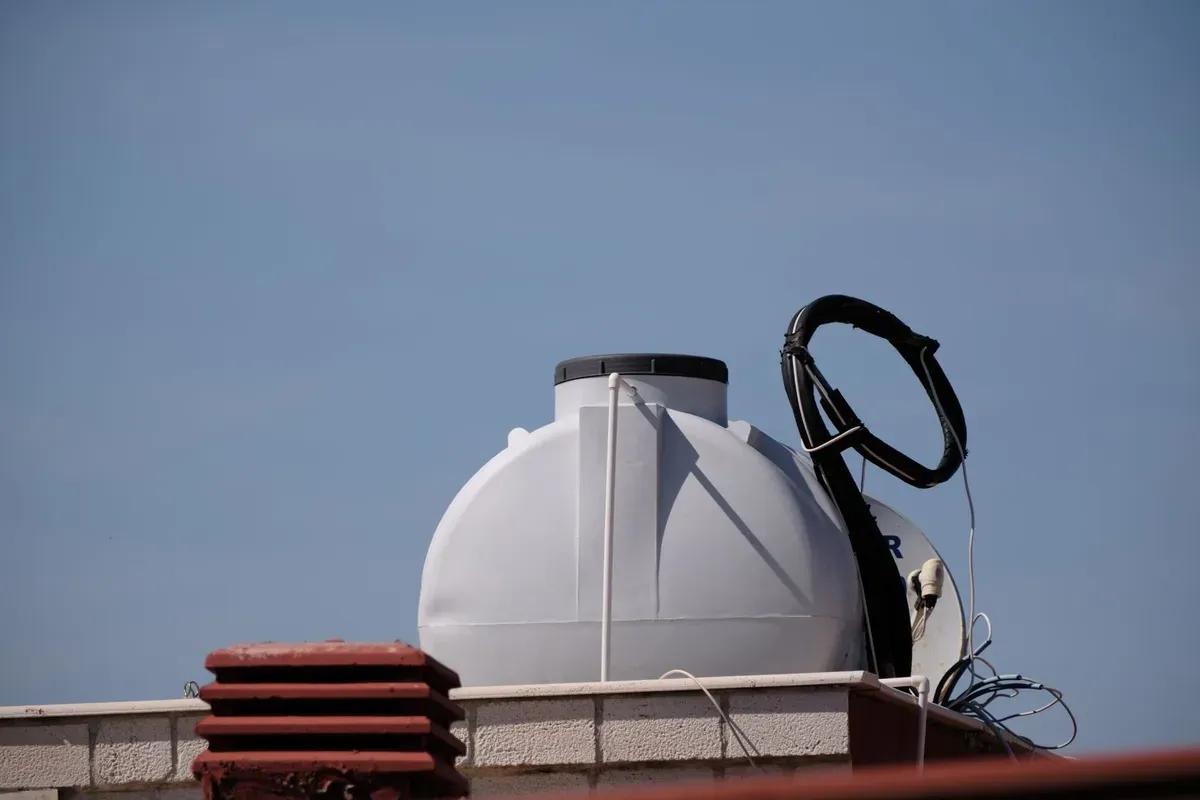
JoJo Tanks imposed a 31 percent price increase in April 2026, citing force majeure (facebook.com). The figures below reflect prices at time of writing. Always verify with the supplier before committing.
| Tank | Capacity | Price | Suitable for |
|---|---|---|---|
| JoJo entry-level | 260 L | ~R1,000 | Single person, toilet flushing only |
| JoJo slimline | 1,000 L | ~R2,800 | 2-person household, 2 days basic use |
| Standard vertical tank | 2,400 to 2,500 L | R2,000 to R3,500 | Family of 4, up to 4 days basic use |
Lead time matters: jojo.co.za explicitly states 7 to 10 calendar days for stock items. If a crisis has already started, you may need to source locally from a builder’s merchant.
“I did mine myself and it cost me probably about R11k. Concrete slab – R2,500 (I used premix, but would be cheaper if I bought individual cement, sand and stone) 2,500L Africa tank – R2,000. DAB Pump – R2,000 (usually R4,500, got it on clearance). JoJo tank float – R300.”
Pumps: the component that determines whether your system actually works
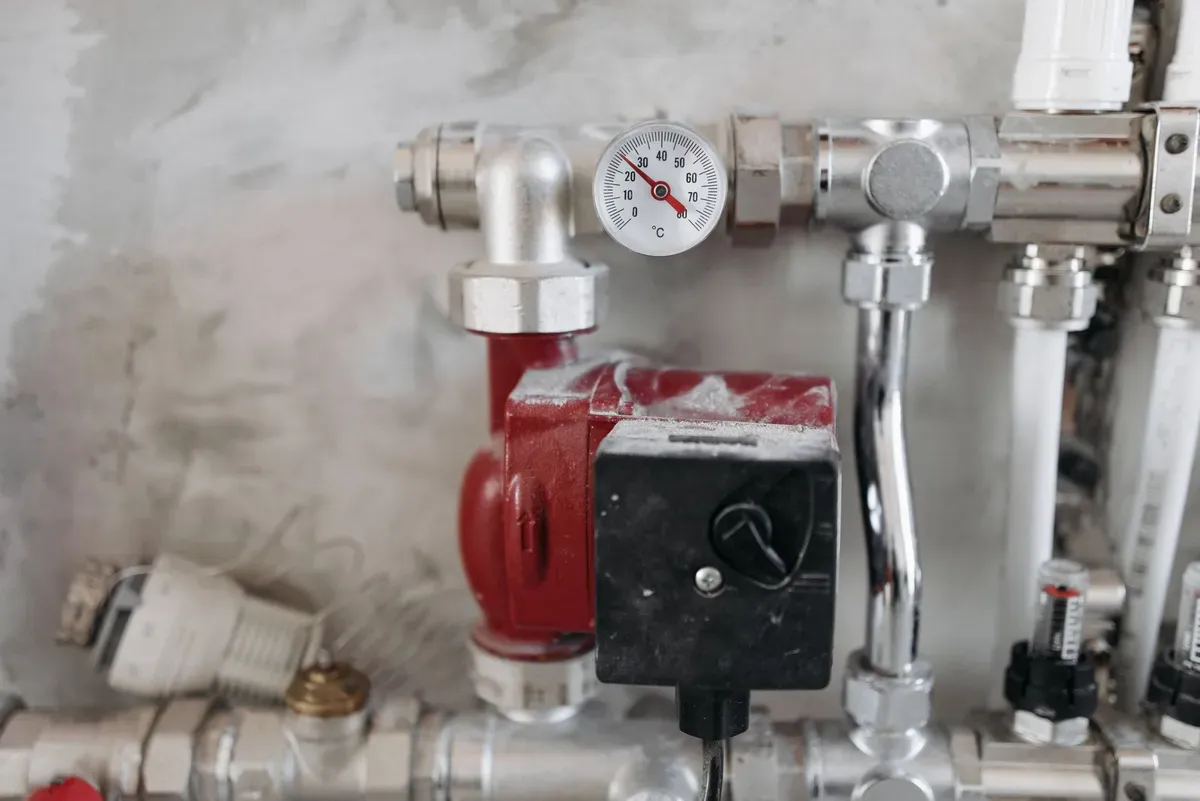
The tank stores water. The pump delivers it at usable pressure. These are not interchangeable decisions.
Standard fixed-speed booster pumps
A standard 0.75 kW booster pump costs around R2,000 from Builders (builders.co.za). It does the job for most households and draws a predictable, manageable load from an inverter or solar system. Simplicity is a real advantage: fewer electronics mean fewer failure modes.
“VSD is good from a performance aspect but electronics can be troublesome. Can’t really recommend any pump, mine is 5 years old permanently connected, was the cheapest 0.37 kW unit I could find, has never skipped a beat.”
VSD booster pumps
A JoJo 0.75 kW VSD (Variable Speed Drive) Booster Pump costs between R6,699 and R8,399 (jojo.co.za). The variable speed motor adjusts output to match demand, which reduces pressure spikes and extends pump life. The trade-off is continuous inverter draw and more complex electronics.
“I also realised this week that due to me installing a backup water supply, I’ll no longer be able to make use of municipal water pressure due to needing a VSD pump that’ll need to be powered by my system all the time. Upgrading my system will simply have to happen now, a single 5 kWh battery just won’t be enough anymore.”
If your solar or inverter system is already stretched, factor pump power consumption into your battery sizing before you commit to a VSD unit.
Pressure controllers
Every pump needs a pressure controller to prevent dry-run burnout and control start-stop cycles. Options range considerably in quality and price:
| Controller | Price range | Source |
|---|---|---|
| Generic (AQD 01 / PC-10) | R550 to R789 | h2owarehouse.co.za |
| Leo PS-04B | R685 to R2,080 | pumps.co.za |
| DAB Auto-Reset Electronic | ~R1,599 | pumps.co.za |
| Grundfos PM 1 Pressure Manager | ~R2,496 | builders.co.za |
The cheapest controllers are also the most likely to fail after a pressure fluctuation. One homeowner described the cost of trusting a budget controller:
“I found out the hard way when some idjit from the monkeypality found my meter ‘not registering’ any water consumption and opened the supply valve – municipal pressure must have dipped to below my pump’s rated pressure (8 bar) a few times and burnt out my pump controller.”
Budget at least R1,599 for a controller with auto-reset. The R789 saving on a generic unit is not worth the R2,000-plus pump replacement that follows a failure.
Pressure vessels
A pressure vessel (accumulator tank) buffers the pump against short-draw cycles, protecting both the pump motor and your inverter. A 24-litre rubber membrane vessel costs R125 to R199 (waterpumps.co.za). A 100-litre bladder tank costs R486 to R499 (diyshop.co.za). Bladder quality varies significantly:
“Membrane was installed and now not even 2 months down the line is broken again… the fact that it did not last even 2 months make me query if it is a quality product.”
“The bladder fitted my 19L pressure tank perfectly and is thicker and more robust than the original.”
Buy a named brand or specifically compare wall thickness before purchasing. A bladder failure causes constant pump cycling, which kills the motor and drains the battery.
“The idea is to trap an air cushion in there that the water pump pressurizes when it is running… The accumulated pressure in the cylinder will amount to around 50% of pressurized volume… before the pump has to kick in again. Not only does this save quite a bit of inverter juice…”
Complete cost breakdown: DIY vs. turnkey
| Component | DIY cost | Turnkey included? | Source |
|---|---|---|---|
| 2,500 L tank | R2,000 to R3,500 | Yes | jojo.co.za |
| Standard 0.75 kW pump | ~R2,000 | Yes | builders.co.za |
| Float valve | ~R300 | Yes | jojo.co.za |
| Tank-to-pump connector kit | ~R300 | Yes | mybroadband.co.za |
| Piping and connectors | ~R1,500 | Yes | mybroadband.co.za |
| Electrical wiring | ~R2,000 | Yes | mybroadband.co.za |
| Concrete slab (DIY premix) | ~R2,500 | Yes (included in turnkey) | mybroadband.co.za |
| Pressure controller (mid-range) | R1,599 | Sometimes | pumps.co.za |
| Pressure vessel (24 L) | R125 to R199 | Sometimes | waterpumps.co.za |
| Professional labour (if applicable) | R0 (DIY) to R35,000 | Yes | kandua.com |
| Realistic DIY total | ~R11,000 | mybroadband.co.za | |
| Turnkey total (suburban Joburg) | R30,000 to R39,000 | mybroadband.co.za |
“I’m getting quotes of R30,000 to R39,000 fully installed, with a slab thrown. That seems a bit much to me, I was thinking under R30,000. I don’t want to do it myself.”
“I have just installed a 1,000 L tank, pump and piping. If Jhb water is off I just close two valves, switch on the pump and have water to the geyser, basins and toilets. R13,900.00.”
The gap between R13,900 and R39,000 reflects tank size, integration complexity, slab specification, and whether the installer includes filtration. Verify exactly what is in each quote before comparing figures.
Cost-of-ownership comparison: what you actually pay per litre
Hardware price is only part of the story. Below is a five-year cost-of-ownership comparison for three common configurations, based on a family of four using the DWS baseline of 150 litres per person per day (600 litres per day total).
| Configuration | Install cost | Annual maintenance estimate | 5-year total | Notes |
|---|---|---|---|---|
| DIY: 2,500 L tank, standard pump, basic controller | ~R11,000 | ~R800 (bladder, float, seals) | ~R15,000 | Lowest upfront. Highest DIY skill requirement. No filtration. |
| Semi-pro: 2,500 L tank, VSD pump, mid-range controller, filtration | ~R22,000 to R28,000 | ~R1,500 (filter media, bladder, siliphos top-up) | ~R30,000 to R36,000 | Filtration adds R5,415 to R6,417 (osmotech.co.za). Siliphos ~R800 to R1,000 per fill, every 9 to 12 months. |
| Turnkey: integrated system with slab, full plumbing, 3-stage Big Blue filter with UV | R30,000 to R39,000 | ~R2,000 (filter cartridges, UV lamp, annual service) | ~R40,000 to R49,000 | Highest upfront. Warranty often intact. Labour guaranteed. |
On a per-litre basis: if a 2,500-litre tank is used to full capacity 100 times over five years (a conservative estimate in most South African metros), the DIY system delivers water at roughly R0.06 per litre in capital cost alone. The turnkey system lands closer to R0.16 per litre. Neither figure includes the municipality’s own tariff for refilling the tank, which adds a further real cost.
Filtration: when is it necessary and what does it cost?
Municipal water stored in a tank is not static. Chlorine residual dissipates over time, and once it is gone, bacterial regrowth begins.
“Over time the free chlorine evaporates. The water is still microbially safe [initially]… [but then] new microbes feast on this, multiply and are fruitful, causing the microbe count to shoot up.”
If water sits in your tank for more than a few days without turnover, treat it before drinking. A 3-Stage 20-inch Big Blue whole-house system with UV sterilizer costs R5,415 to R6,417 (osmotech.co.za). A 7-stage reverse osmosis system with UV costs R2,645 (reverseosmosis.co.za), suitable for drinking water only. A mobile 5-stage RO with UV in 12V configuration costs R4,416 (purewater4life.co.za), useful where mains power is unreliable during cuts.
Borehole water demands even more caution. SABC News has reported that unregistered borehole installers routinely skip water quality testing, and that borehole water commonly contains lime and E. coli (sabcnews.com). Do not add a borehole to your system without independent laboratory testing.
The warranty gap that most installers do not tell you about
This is where backup water systems routinely let South African homeowners down. Read the fine print on every component you buy.
- Geekware Tech states explicitly that equipment damaged by power outages (load shedding) is not covered under warranties (geekwaretech.co.za).
- Adendorff Machinery Mart voids its 1-year warranty for damage caused by lightning or power surges (adendorff.co.za).
- JoJo Tanks states that a pump cover is required to validate the pump warranty (jojo.co.za). Without the cover, your claim is void regardless of the failure mode.
- Zodiac limits its mechanical seal warranty to 2 years (zodiac.co.za).
The practical implication: fit a surge protector on every pump circuit, install the JoJo pump cover before the pump runs for the first time, and keep purchase invoices and installation photos. Without documentation, a warranty claim after a surge event has almost no chance of succeeding.
“Last month JoJo tank pump tripped a circuit on the DB. Found pump to be faulty… I learnt my lesson with some of the electrical connections I did on the JoJo tank pump. Had to redo everything there because the ‘copper’ lugs rusted.”
The five most common failure points (and how to prevent them)
1. Micro-leaks in pipe joints
A small leak anywhere downstream causes the pressure to bleed slowly, triggering the controller to restart the pump repeatedly. Every unnecessary start cycle shortens pump life and drains inverter capacity.
“Lesson learned the hard way: use the blue pipes and PVC glue everything, no leaks, which means your pressure switch does not switch on all the time, only when you open a tap.”
2. Bladder failure
Low-quality bladders fail within weeks. Buy a named-brand replacement and check wall thickness specifications. Budget R125 to R499 per replacement (waterpumps.co.za, diyshop.co.za).
3. Float valve sticking
A sticking float valve either overfills and wastes water, or underfills and leaves you dry when you need it. The JoJo float valve costs around R300 (jojo.co.za) and should be treated as a consumable, inspected annually.
4. Pressure controller failure after a surge
As described above, a voltage fluctuation when the municipality restores supply can burn out a cheap controller instantly. Fit a dedicated surge protector and choose a controller with auto-reset capability at minimum.
5. Pump running continuously
“If the pressure pump from the JoJo to the building is continuously running, it could also be the pressure switch that has failed? One can try the restart button, to try reset?”
A pump that never stops is either fighting a leak, has a failed controller, or has a bladder that has lost its air charge. Diagnose immediately. A pump running 24 hours a day at 0.75 kW draws around 18 kWh per day, equivalent to roughly R36 to R54 per day at current residential tariffs, and will burn out within days.
Smart monitoring: the low-cost upgrade that pays for itself
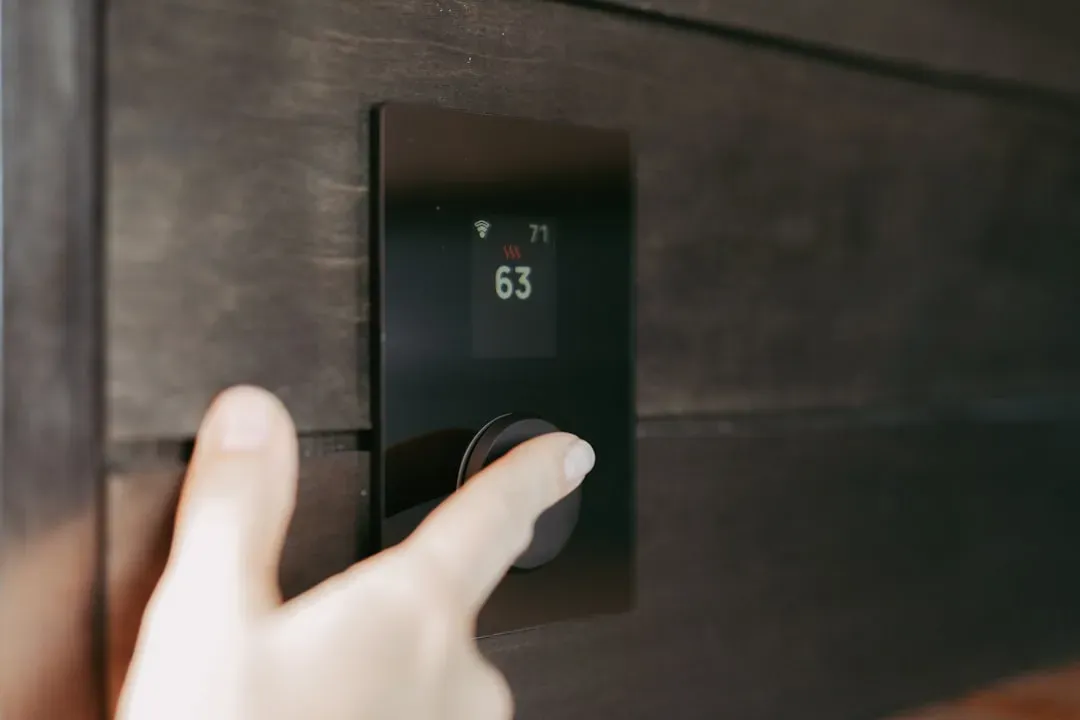
Home automation tools (Home Assistant, Shelly devices, or simple flow meters) allow you to set alerts for abnormal consumption before a small problem becomes a large one.
“Recently I added a scene where if more than 5,000 L of water is pumped in 24 hours it will send me an alert (possible tank or pipe leak, or float switch failure).”
A Shelly flow meter or a basic pulse-output water meter costs under R1,000. Compared to the cost of a flooded slab or a burnt-out pump, it is a straightforward investment.
Grey water reuse: where it helps and where it does not
Grey water from the shower or basin can supplement toilet flushing during an outage. However, storage beyond 24 hours creates a real hygiene problem.
“Most online articles advise against letting grey water sit for more than 24 hours due to bacteria, sludge and smell… So after filling it with water collected from the shower, it starts to smell after a while.”
Grey water systems work best as same-day diversion, not as stored backup. Do not connect grey water storage to your potable supply under any circumstances.
DIY vs. professional installation: an honest assessment
DIY saves money but transfers risk. A plumber who installs a manifold incorrectly can create backflow into the municipal main, which is illegal under the National Water Act and can contaminate supply to neighbours. The R7,000 to R35,000 professional installation range (kandua.com) reflects this: complex integration, certificate of compliance, and liability transfer to the installer.
“I split the incoming municipal feed in a manifold, one end to the house, the other to the tank… I can’t recall the cost of the JoJo, but the pump was about R4,000, plumbing supplies about R2,000. Labour was my time.”
If you are confident with plumbing and electrical work, the DIY route is viable for a simple tank-and-pump installation. For any system that ties into the municipal main or requires a certificate for insurance purposes, use a registered plumber.
Ready to size and install your water-shedding backup system?
What to do right now if you have no system yet
- Calculate your daily household demand using 150 litres per person per day as the floor.
- Identify your installation space (a level concrete slab is required, not optional).
- Confirm current tank pricing directly with jojo.co.za or your nearest stockist given the April 2026 price increase.
- Factor in lead time: jojo.co.za states 7 to 10 calendar days for stock items. Order before the next crisis, not during it.
- Budget realistically: R11,000 minimum for a basic DIY system, R30,000 to R39,000 for a turnkey Johannesburg installation.
- Read every warranty document before purchase and identify what is excluded.
The most expensive backup water system is the one you buy twice because the first one failed in circumstances that voided the warranty. Buy deliberately, install correctly, and service it annually.
To find out what backup water options are available at your specific address in South Africa, check my address.
Get started
Ready to size and install your water-shedding backup system?
Vetted local installers · honest advice first
Photo: Nicolaas Swart / Unsplash