Key points
- A budget wellpoint in Lower Claremont starts at R6,850 (WaterPointSA); a fully specified install with a 1.1-1.5kW pump runs R7,000 to R12,000 (wellpointinstallationcapetown.co.za).
- Skipping a geohydrologist survey (R10,450 to R20,000) can cost far more: dry-hole fees run R2,500 to R4,000 per failed attempt, and some homeowners have paid for three misses in a row.
- City of Cape Town registration is 100% free. You must notify the City at least 14 days before drilling, display the issued sign, and keep extractions below 10,000 litres per day unless you also register with national DWS.
- Running costs are modest: a standard 1hp Pedrollo pump costs less than R1.00 per hour to run (Craft Wellpoints), against a Step 3 municipal tariff of R42.18 per kilolitre (capetown.gov.za, 2026/27). Middle-income households using a wellpoint for garden irrigation reduce summertime municipal water consumption by 60% to 80% (scielo.org.za).
Cape Town’s Southern Suburbs sit above one of the Western Cape’s most accessible shallow aquifers, and after years of punishing municipal tariff hikes, homeowners from Claremont to Constantia are drilling in larger numbers than ever. Yet the market is patchy: quotes range from R4,000 for a bare-bones installation to north of R30,000 for a full turnkey system with filtration, automation and compliance hardware. This guide unpacks every cost line so you can evaluate a quote with confidence, understand your legal obligations, and calculate whether a wellpoint will actually pay back in your specific suburb.
Why Southern Suburbs Homeowners Are Installing Wellpoints Right Now
Cape Town’s dams sat at 75.7% in October 2026 (Municipal updates), which sounds comfortable until you factor in distribution losses, population growth and the City’s ongoing tariff escalation. As GroundUp reported in August 2026, a five-year delay in the City’s bulk desalination scheme means water demand is on course to exceed dam capacity within two years, a structural supply risk that no dam-level headline fully captures. The 2026/27 Step 3 domestic water tariff (above 10.5 kl to 35 kl per month) is now R42.18 per kilolitre including VAT (capetown.gov.za). A household that uses 25 kl per month, not unusual for a Claremont or Constantia property with a pool and established garden, pays roughly R1,054 in water charges alone in that band, every single month.
Garden irrigation is the biggest lever. Research published via africacheck.org found that garden watering accounts for 37.6% of total annual municipal water use for middle- to higher-income suburban households. Switch that portion to wellpoint water and the tariff saving is immediate. Research via scielo.org.za confirms that households using wellpoints exclusively for garden irrigation achieve a 60% to 80% reduction in summertime municipal water consumption, and that properties with groundwater access points use just 65.3% of the potable water a comparable standard household consumes.
“My saving grace is that my water bill is reduced since I use wellpoint water.”
One forum commenter put it plainly about the broader frustration driving installations: “CoCT going ballistic with their punitive water tariffs which had still not come down.” As Time Out Cape Town noted ahead of the July 2026 changes, a Western Cape High Court ruling forced the City to uncouple fixed water charges from property values and revert to meter size, directly reshaping payback calculations for Southern Suburbs homeowners. A wellpoint does not eliminate your municipal water bill, but it should reduce it meaningfully for outdoor use.
What the Groundwater Reality Looks Like Under Your Property
Before discussing drilling costs, it is worth being honest about what you are drilling into. Claims about the state of Cape Town’s urban aquifers are contested. The dossier records that 80% of monitored boreholes across Cape Town recorded a sustained drop in groundwater levels ranging from nearly 2 metres to as much as 17 metres. However, as hydrogeologist Roger Parsons argued in the Daily Maverick in April 2026, the idea of a widespread urban aquifer crisis is highly exaggerated. The honest position is that local conditions vary enormously, block by block, suburb by suburb, and no city-wide generalisation replaces a site-specific assessment.
The Cape Flats Aquifer, which underlies much of the Southern Suburbs corridor, is extensively exploited. Wellpoints are shallow installations, typically targeting the saturated zone within the top 10 to 20 metres. Typical wellpoint yields sit around 1,500 litres per hour (Wellpoint Installation Cape Town), but actual performance depends entirely on local conditions. One owner documented pumping 500 to 700 litres per hour and filling a 2,200-litre JoJo tank by running the pump for one hour on, one hour off from early morning.
“About a year ago I had a wellpoint put in… So far I’ve been pumping 2kl or more a day into a 2.2kl jojo tank. I run the pump an hour at a time, every second hour. It yields between 500-700l per hour.”
In rockier parts of the Southern Suburbs, particularly elevated sections of Constantia and Tokai, shallow aquifer access can be marginal or absent entirely. One forum commenter stated bluntly: “Borehole would require drilling over 100m down and I don’t have that kind of cash to spend on a borehole. Well point not an option.” This is the realistic ceiling some properties face. Scheduled municipal infrastructure outages across Southern Suburbs areas including Claremont and Kenilworth underline why homeowners want private backup access, but only a site survey can tell you whether your specific stand will deliver it.
The Full Cost Breakdown: Every Line Item Explained
Step 1: Geohydrologist Site Survey
A licensed geohydrologist will map aquifer depth, assess contamination risk from nearby infrastructure, and give you a probability estimate for a successful installation. Groundwater Surveys prices this at R10,450 to R20,000. That range feels steep until you consider what skipping it costs.
“A reputable hydrologist to find a site with more than 90% probability is R20k. Most will balk at this until they drill a dry hole. You pay for the drilling whether you hit water or not… My neighbor paid for 3 dry holes, because he believes in his mom’s uncle’s cousin that throws a hat.”
Dry-hole fees from local contractors run R2,500 to R4,000 per failed attempt (Local contractor disclaimers). Three dry holes without a survey costs R7,500 to R12,000 in sunk costs, plus the demoralisation. A survey at the upper end of R20,000 is often the cheaper option. Thabo M, in a WaterPointSA community review, described exactly this outcome: “Showed me the real boreholes near me – 4 of them came back dry. Saved me R60k before I drilled. Went with a tank instead.”
Step 2: Drilling and Casing
Borehole drilling costs R420 to R1,650 per metre (Local Pros). For a standard wellpoint targeting the shallow aquifer at 6 to 15 metres depth, total drilling costs are relatively contained. The risk of escalating into deep-rock drilling is why geology matters: in Constantia Valley, some properties require 150 metres of drilling before hitting sustainable yield, which at even R420 per metre means R63,000 in drilling alone before a single pump is fitted.
For straightforward shallow installations, a budget wellpoint in Lower Claremont starts at R6,850 (WaterPointSA). A standard wellpoint installed with a pump runs R7,000 to R12,000 (Wellpoint Installation Cape Town). At the very low end of the market, independent installers have been quoted at R4,000 on local Facebook groups (Facebook, water-shedding Western Cape group).
“These guys are very reliable and cheap did my well point for R4000 I’m so happy.”
Be cautious about the cheapest quotes. One homeowner on a local water-shedding Facebook group shared a cautionary experience: “I was told I would always have water but my wellpoint dried up after a year. I met a gentleman who has experience and he asked me whether the person who did my wellpoint looked for water first and I said no.” Poor siting, not equipment failure, is the most common cause of early wellpoint failure.
Step 3: Pump Selection and Installation
Pump costs vary widely by specification and source:
- Metabo 0.90kW P3300G wellpoint pump: R1,999 (Brights Hardware), suitable for DIY or budget retrofits.
- Refurbished Foras or Pedrollo wellpoint pumps (0.75kW to 1.5kW): R1,968 to R3,250 (Just Pump Water).
- 1.1 to 1.5kW pump supplied and fitted by a professional installer: R6,500 to R12,000 (Wellpoint Installation Cape Town 2026 Pricing Guide).
- Automatic controller with dry-run cut-out: R1,200 to R3,000 (Wellpoint Installation Cape Town 2026 Pricing Guide). A dry-run cut-out is not optional on an unattended installation; a pump running dry will burn out within minutes.
The DIY route is viable for homeowners with plumbing confidence. One MyBroadband user described finding a legacy wellpoint pipe on their property: “I jist had a black pipe and galvanise bend sticking out of the ground. There was a rusty pump in the garage. After speaking to my neighbour, I bought a pump, connected it to the black pipe, primed it and have free water since. In Cape Town.” A pump cost on its own starts from around R2,000 for a basic unit. That same user noted: “900w pump, wellpoint, controlled by a float switch… The tap is right next to my little veggie garden so now I can water the garden via gravity feed without the pump, saving electricity in the process.”
On pipe material, one experienced DIYer had clear advice: “My suggestion, use the blue pipes, it can be pvc welded, which is a lot better than the black irrigation pipes (which leaks all the time). Plumbing from blue pipes to copper is easy, just use the correct fittings.”
Step 4: Water Quality Testing
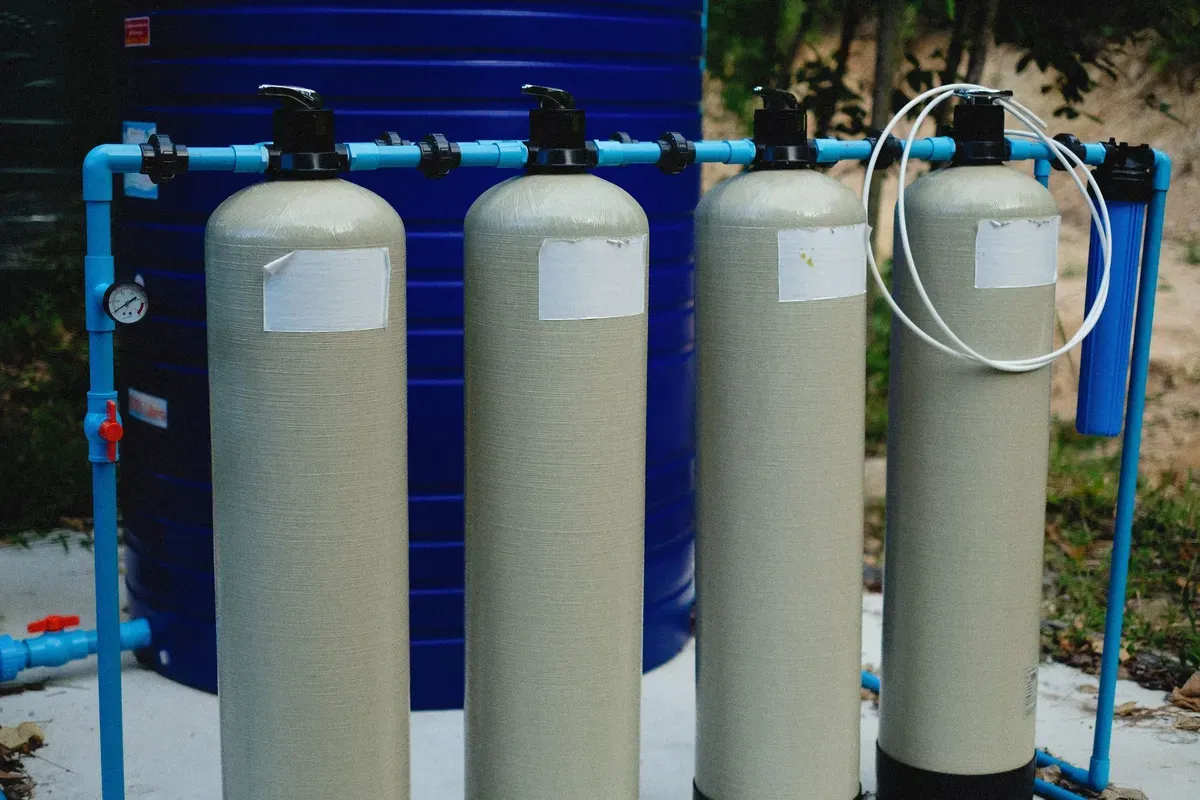
Wellpoint water is not potable by default. Standard water quality testing runs R1,500 to R5,000 (Envirocare Western Cape). A full potable (drinking) test to SANS 241 laboratory standard costs R1,800 to R4,500 (Local installer pricing guides). For most Southern Suburbs homeowners using wellpoint water exclusively for irrigation, pool top-up or toilet flushing, the basic test is sufficient. Anyone intending to use the water indoors or for drinking needs the full SANS 241 panel.
Step 5: Compliance Hardware
If your wellpoint is plumbed anywhere near or connected to the municipal reticulation, you are legally required to install backflow prevention devices. Compliance hardware including backflow preventers and valves, plus a registered plumber’s Certificate of Compliance, costs R2,500 to R5,000 (waterquotes.co.za). This cost is not optional. Former Mayco Member for Water and Waste Alderman Xanthea Limberg stated directly:
“It is critical that alternative water installations do not contaminate the drinking water supply… If these installations are not compliant, and/or the correct backflow prevention device has not been installed, it can result in untreated water contaminating the municipal drinking water supply, resulting in water quality incidents and related health risks.”
Optional: Filtration
Properties with elevated iron or sediment in the shallow aquifer (common in parts of Claremont and Kenilworth) may need additional filtration. Sediment and iron filtration installation costs R1,800 to R4,500 (Local contractor disclaimers). This is only necessary if testing reveals it; do not pay for filtration before you have a water quality report.
Full Cost and Specification Table
| Cost Item | Low | High | Source | Notes |
|---|---|---|---|---|
| Geohydrologist survey | R10,450 | R20,000 | Groundwater Surveys | Strongly recommended before any drilling |
| Drilling (per metre) | R420/m | R1,650/m | Local Pros | Shallow wellpoints: 6-15m typical |
| Budget wellpoint install (Lower Claremont) | R6,850 | R6,850 | WaterPointSA | Entry-level package |
| Standard wellpoint with pump (installed) | R7,000 | R12,000 | Wellpoint Installation Cape Town | Most common residential scenario |
| Independent budget installer | R4,000 | R4,000 | Facebook (water-shedding WC) | Bare bones; verify site assessment is included |
| 1.1-1.5kW pump (supplied and fitted) | R6,500 | R12,000 | Wellpoint Installation CT 2026 Guide | Pro installation; includes labour |
| Metabo 0.90kW pump (DIY purchase) | R1,999 | R1,999 | Brights Hardware | DIY option; suitable for lighter duty |
| Refurbished Foras/Pedrollo (0.75-1.5kW) | R1,968 | R3,250 | Just Pump Water | Refurbished; check warranty terms |
| Automatic controller with dry-run cut-out | R1,200 | R3,000 | Wellpoint Installation CT 2026 Guide | Prevents pump burn-out on unattended systems |
| Water quality test (standard) | R1,500 | R5,000 | Envirocare Western Cape | Do before any indoor or potable use |
| Full potable test (SANS 241 lab analysis) | R1,800 | R4,500 | Local installer pricing guides | Required if any drinking water use is intended |
| Sediment and iron filtration (if needed) | R1,800 | R4,500 | Local contractor disclaimers | Only required if testing identifies problem |
| Compliance hardware and plumber CoC | R2,500 | R5,000 | waterquotes.co.za | Required if connected near municipal supply |
| CoCT registration and display sign | R0 | R0 | capetown.gov.za | 100% free; 14 days pre-drilling notice required |
| Dry-hole fee (if no water found) | R2,500 | R4,000 | Local contractor disclaimers | Per failed attempt; still payable |
| Annual pump service/check | R850 | R1,800 | Cape Wellpoints / WP Installation CT | Annual recurring cost |
City of Cape Town Permits, Registration and Bylaws: What You Must Do
City of Cape Town registration is 100% free (capetown.gov.za), but the process is not optional and the obligations attached to it are real. As the Department of Water and Sanitation has emphasised, all private groundwater abstractors are expected to register or update their water use records. Here is what is required:
- Notify the City at least 14 days before sinking any new borehole or wellpoint (capetown.gov.za).
- Register the installation and display the issued sign visibly on your property at all times.
- Keep extraction below 10,000 litres (10 cubic metres) per day. If you exceed this threshold, you must additionally register with the national Department of Water and Sanitation’s WARMS system (www.gov.za). Mandatory yield and SANAS-accredited laboratory water quality testing for that registration costs R2,000 to R7,000 (boreholeza.co.za).
- Use borehole or wellpoint water for irrigation only on Tuesdays and Saturdays, before 9:00 or after 18:00, for a maximum of one hour per session (City of Cape Town bylaws).
- Install compliant backflow prevention if the water is plumbed near municipal lines.
The penalties for non-compliance are not trivial. A spot fine for lacking a display sign or unregistered use under the CoCT Water By-Law runs up to R1,500 (capetown.gov.za). ESI Attorneys note that severe or repeat offences, particularly cross-contamination into the municipal grid, can result in fines of up to R10,000, forced capping or decommissioning, or up to five years imprisonment (esilaw.co.za).
There is a vocal strand of resistance to registration on local social media. Several homeowners have expressed frustration with what they see as overreach. One commenter went as far as saying they “won’t get rid of your water bill” and questioned registration entirely, while another said “CoCT can go and F themselves.” Others warned that the sign “will end up costing you more than the entire cost of sinking the borehole.” These sentiments are understandable given the history of Day Zero politics in this city. However, the legal position is clear, the registration itself costs nothing, and the backflow prevention requirement protects your neighbours as well as your own household. The responsible path is compliance.
Check my address to see what borehole and wellpoint data exists for your street before you contact a single installer.
Annual Operating Costs and Cost-of-Ownership Comparison
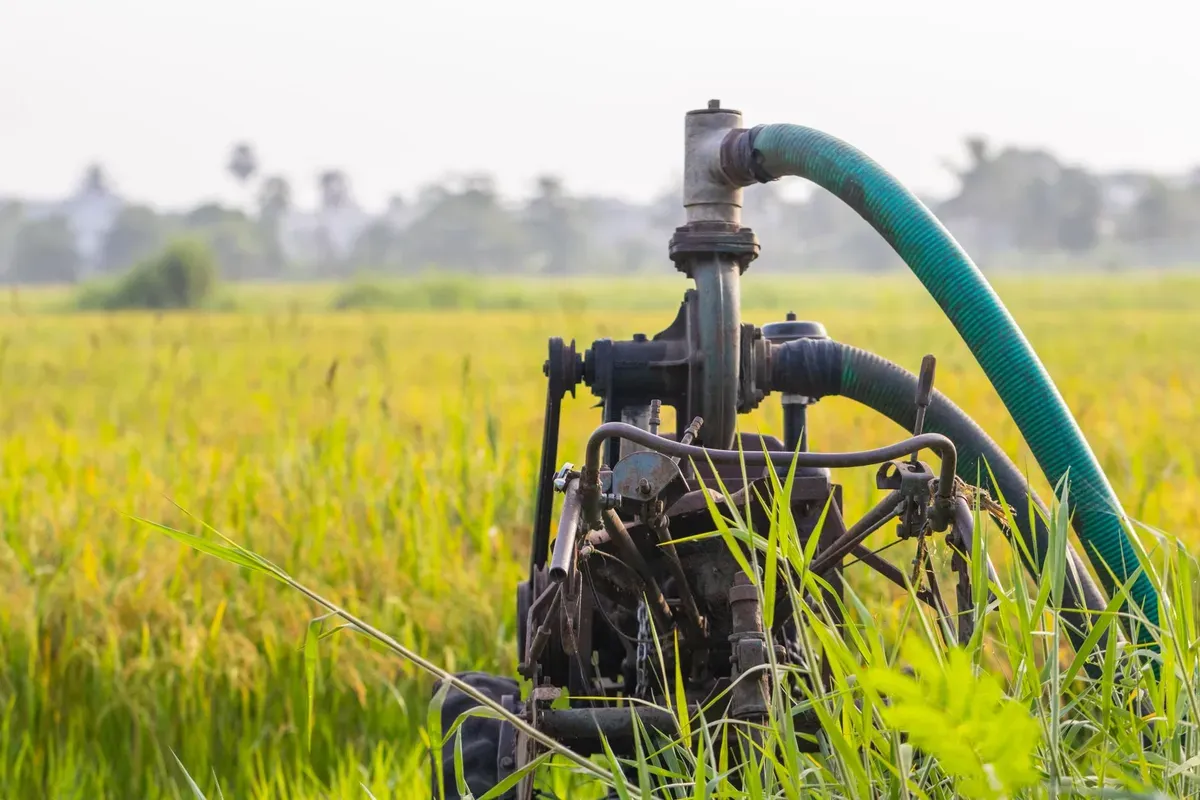
Once installed, a wellpoint is one of the cheapest water sources available to a Cape Town homeowner. Craft Wellpoints confirms that a standard 1hp Pedrollo pump costs less than R1.00 per hour to run. The City of Cape Town’s residential electricity tariffs changed from 1 July 2026, with the rate below 600 kWh monthly consumption rising to R4.14/kWh and the rate above 600 kWh rising to R4.94/kWh (City of Cape Town). At the lower tariff, a 0.75kW pump running for two hours per day costs approximately R6.21 per day, or around R186 per month in electricity. Even at the above-600 kWh tariff, daily running cost for the same pump is approximately R7.41, or around R222 per month.
Compare that to municipal water at R42.18 per kilolitre (Step 3 tariff, capetown.gov.za 2026/27). A wellpoint yielding 1,500 litres per hour and running for two hours per day delivers 3,000 litres, or 3 kilolitres. At Step 3 rates, 3 kl of municipal water costs R126.54 per day. The wellpoint delivers the same volume for under R10 in electricity. The savings for a property with active garden irrigation are substantial on a per-litre basis.
| Scenario | Upfront Cost | Monthly Running Cost | Monthly Municipal Saving (est.) | Simple Payback Period |
|---|---|---|---|---|
| Budget DIY wellpoint (pump only, existing pipe) | approx. R2,500 | approx. R150-R220 electricity | R400-R1,000+ | 3-6 months |
| Standard wellpoint with pump (pro installed) | R7,000-R12,000 | approx. R150-R220 electricity + R71-R150 service (annualised) | R500-R1,200 | 12-24 months |
| Full turnkey (survey, drill, pump, filtration, compliance) | R28,000-R45,000+ | approx. R220-R370 electricity + service | R700-R1,500 | 3-5 years |
| Municipal water only (Step 3, 25 kl/month) | R0 | approx. R1,054 water tariff | n/a | n/a |
Note: monthly saving estimates assume wellpoint water substitutes garden irrigation and pool top-up water that would otherwise come from the municipal supply at Step 3 rates. Actual savings depend on your specific usage pattern, wellpoint yield and extraction hours. These estimates use the 2026/27 municipal tariff of R42.18/kl (capetown.gov.za) and the post-July 2026 electricity tariffs confirmed by the City of Cape Town.
One owner put it practically: “I also recently put in a wellpoint and got a 2500L tank… This alone has saved me about R400pm on the water bill because I can use that water for the pool.” Another noted automation as the key to maximising yield without waste: “From 6h20 every morning, it runs for an hour every second hour (inching) until the tank is full… Recently I added a scene where if more than 5000l of water is pumped in 24 hours it will send me an alert.”
What Can Go Wrong: Honest Risk Register
No cost guide is complete without the failure modes. The main risks and their financial implications:
- Dry hole: R2,500 to R4,000 per failed attempt. Mitigated almost entirely by a pre-drilling geohydrologist survey.
- Wellpoint drying out post-installation: Common in areas of high extraction density. A dropping water table can strand a shallow wellpoint within one to two summers. Groundwater level trends vary significantly by suburb; a site-specific assessment is the only reliable guide.
- Pumping air (partial drawdown): A wellpoint pumping air intermittently may indicate the water table is dropping below the intake. One owner reported: “I noticed yesterday evening my wellpoint was pumping air for 20min. This morning I had water again.” An automatic dry-run cut-out protects the pump; poor yield siting does not have a hardware fix.
- Contractor reliability: One prospective customer reported contacting five contractors with only two responding, and both failed to show for scheduled appointments. Christoff A. confirmed the same experience: “I gave up.” Factor in time and frustration when comparing quotes from vetted vs. unvetted installers.
- Contamination: Shallow aquifers in dense suburban areas are vulnerable to agricultural chemicals, stormwater ingress and septic leach. Always test before use.
Practical Checklist Before You Commit
- Check your street’s drilling history via the CoCT groundwater portal or a geohydrologist search. Dry patterns repeat spatially.
- Budget for the survey. R10,450 to R20,000 (Groundwater Surveys) is the single highest-return investment in the project.
- Notify CoCT at least 14 days before drilling (capetown.gov.za). Free registration; do not skip it.
- Get at least three quotes from installers. Factor in whether site assessment is included or whether you are paying only for drilling.
- Include water quality testing (R1,500 to R5,000, Envirocare Western Cape) and compliance hardware (R2,500 to R5,000, waterquotes.co.za) in your budget from day one.
- Install a dry-run cut-out controller (R1,200 to R3,000) regardless of how confident you are in the yield. Pumps burn out in minutes when run dry.
- Annual service (R850 to R1,800, Cape Wellpoints) is not optional if you want the system to last.
Every address in Cape Town’s Southern Suburbs sits above a different hydrogeological reality. The difference between a R7,000 system that pays back in 18 months and a R45,000 project that still runs dry in summer almost always comes down to what was checked before the first drill turned.
Use our address-level suitability tool to see what the drilling data for your specific street looks like before you call a single contractor: Check my address.
Get started
Ready to install your wellpoint in Cape Town?
Vetted local installers · honest advice first
Illustration: waterpointsa.co.za