Key points
- Constantia wetland pockets hold the water table as shallow as 1.1m to 1.7m below ground in late summer, but upper Constantia sits on decomposed granite requiring 50m to 90m of drilling.
- Rondebosch measures 3.3m below surface in April, with roughly 2 metres of seasonal swing between end-of-winter and end-of-summer levels.
- A standard wellpoint in sandy, high-water-table ground costs R6,850 to R12,000 all-in. A deep borehole in rocky substrates can reach R40,000 to R170,000+ once pump, casing and VAT are added.
- Cape Town dam levels fell from 62.2% to 49.2% between January and late March 2026, and municipal water tariffs rose 7.3% with sanitation up 11.1% in the 2026/2027 budget, making the payback case for private water supply stronger than ever.
Why Southern Suburbs homeowners are asking this question right now
Cape Town’s dam system did not have a good summer. Between January and late March 2026, combined storage dropped from 62.2% to 49.2%, according to capetowndamlevels.co.za. The City of Cape Town’s 2026 Water Outlook warns of below-average rainfall forecasts and rising household demand, and while the City has a strict daily consumption target of 975 million litres, that target depends on every household pulling its weight. At the same time, residential water tariffs climbed 7.3% and sanitation charges rose 11.1% in the 2026/2027 budget, according to justmoney.co.za.
As The South African reported in August 2026, dam levels are 13% lower than this time last year after one of the driest Julys on record, and there is no meaningful rain in sight. UCT climate scientists and municipal officials speaking on CapeTalk have reinforced the urgency: Southern Suburbs homeowners who rely entirely on municipal supply are one dry winter away from severe restrictions.
That is why the question of wellpoint installation in Cape Town’s Southern Suburbs, Constantia, Claremont, Rondebosch and Tokai, is being asked with renewed urgency. The answer is not the same for every street. Geology and soil type divide these suburbs sharply, and choosing the wrong solution can mean spending R60,000+ on a borehole where a R6,850 wellpoint would have done the job, or wasting R8,000 on a wellpoint that hits bedrock at 3 metres.
Suburb-by-suburb geology and water table depth
The Southern Suburbs corridor sits at the foot of Table Mountain and the Constantiaberg range, which means geology changes dramatically within a few kilometres. Understanding your substrate before you spend a rand on equipment is the most important step.
Constantia
Constantia is split into two very different zones. The low-lying wetland pockets, such as the Mount Prospect area, hold the water table as shallow as 1.1m to 1.7m below ground level in mid-to-late summer. In these spots, a basic wellpoint is technically feasible. However, upper Constantia is underlain by decomposed granite and sandstone. Here, the water-bearing zone sits 50m to 90m down, far beyond the reach of any wellpoint. At R500 to R1,500 per metre for drilling in Cape Town, that translates to R25,000 to R135,000 in drilling costs alone before a pump, casing, pressure tank or electrical connection is added. In these parts of Constantia, the honest answer is often a backup tank, not a borehole.
Claremont
Claremont sits on a similar deep aquifer profile, with the water-bearing zone typically 50m to 90m below surface. DIY wellpoint attempts in Claremont frequently strike hard bedrock or iron ferricrete, locally called ‘coffee klip’, at 3 to 4 metres, ending the project before it starts. Residents who have tried to jet a wellpoint in clay-rich or rocky ground have learned the hard way that shallow groundwater extraction is not viable here. A professional hydrogeological assessment before any drilling spend is strongly advised.
Rondebosch
Rondebosch is among the more promising suburbs for wellpoints. Measured water table depth in April (late summer) is 3.3m below surface, with a seasonal swing of approximately 2 metres between end-of-winter and end-of-summer levels. That means at the height of winter recharge, the water table can sit as shallow as 1.3m to 1.5m. Sandy alluvial soils in parts of Rondebosch allow jetting to proceed without hitting rock, making a professional wellpoint installation viable at the lower end of the cost range.
Tokai
Tokai shares characteristics with Rondebosch in terms of sandy to loamy soils and generally shallower water tables in low-lying areas. It is one of the more wellpoint-friendly suburbs in the corridor, although properties closer to the slopes of the Constantiaberg again risk running into the granite basement at depth. A site-specific assessment is still recommended before installation.
Wellpoint vs borehole vs backup tank: the triage decision
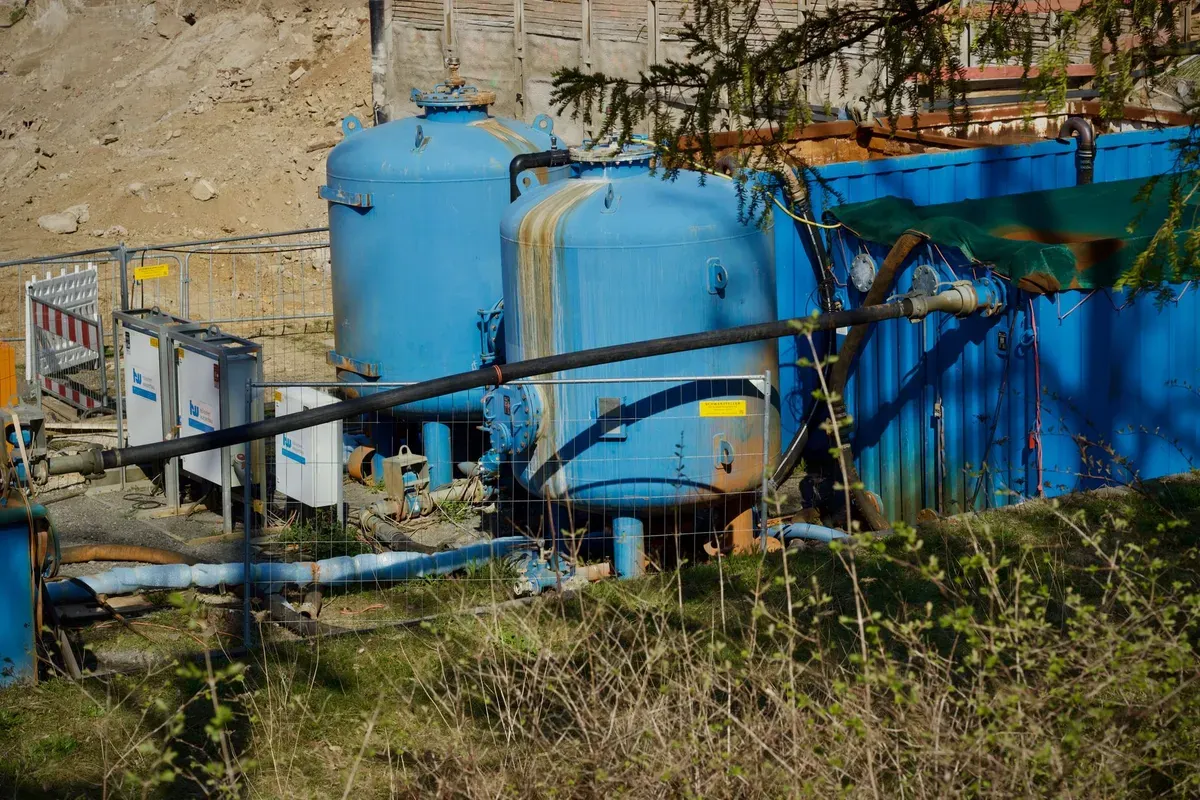
Before spending anything, use this three-step triage. The goal is the cheapest adequate fix, not the most impressive infrastructure.
| Solution | Best suited for | Typical ZAR cost | Key risk |
|---|---|---|---|
| Backup JoJo tank (municipal supply top-up) | Any suburb; covers water-shedding and short outages | R7,000-R12,000 installed | Depends on municipal supply being restored |
| Wellpoint (shallow, under 15m) | Sandy soils, high water table, Rondebosch, Tokai low-lying areas | R6,850-R12,000 all-in | Seasonal water table drop; iron/low pH water quality issues |
| Deep borehole (20m+) | Rocky or clay substrates, upper Constantia, Claremont | R40,000-R170,000+ | No guarantee of water; significant property access for drilling rigs |
If your suburb sits on sandy, shallow-water-table ground and your primary need is garden irrigation during municipal restrictions, a wellpoint at R6,850 to R12,000 is almost certainly the right call. If you are in upper Constantia or rocky Claremont, spending R60,000 to R100,000+ on a borehole for garden irrigation is rarely justified, a R7,000 backup tank covers municipal water-shedding at a fraction of the cost and zero geological risk.
Check my address to get a suburb-specific feasibility report and a priced recommendation before you commit to any installation.
What a wellpoint installation actually costs in 2026
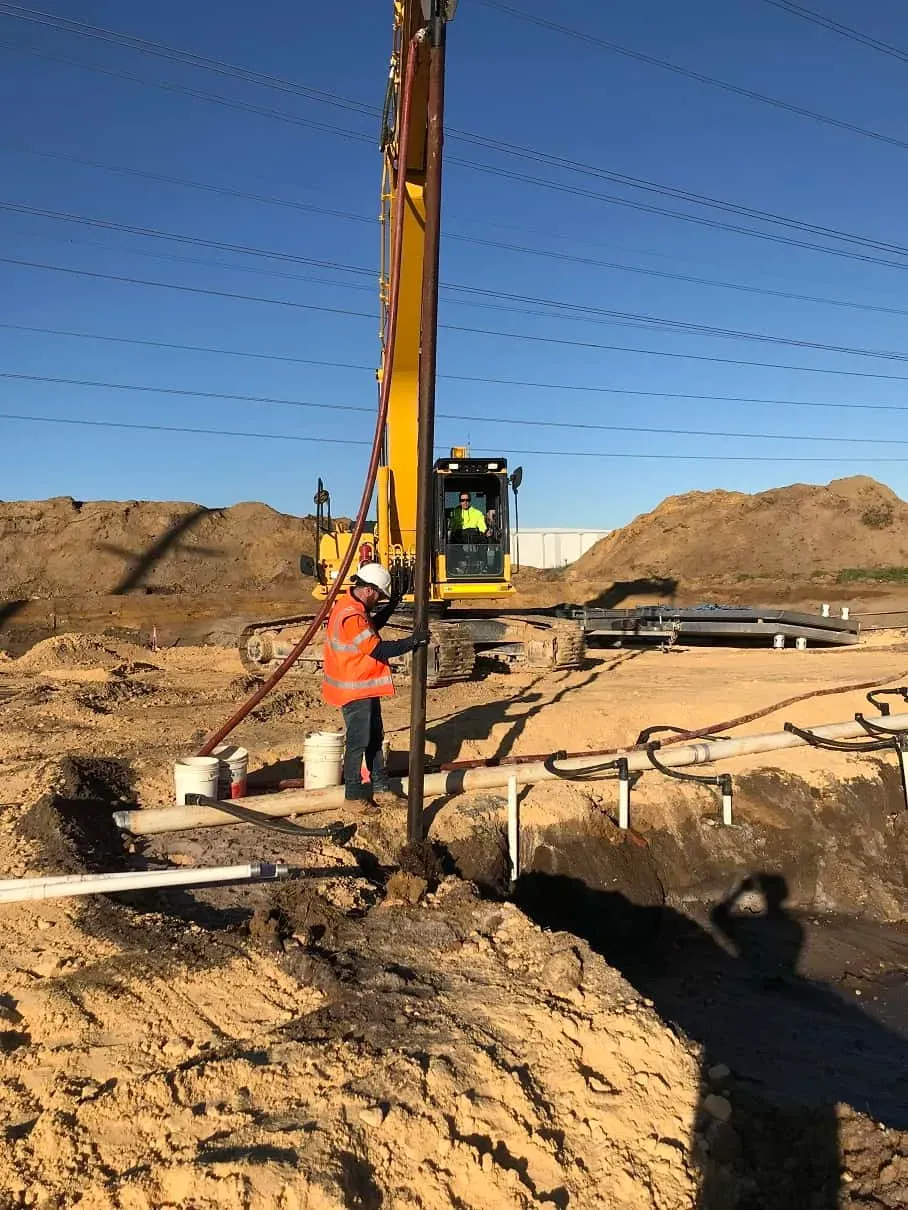
A complete wellpoint installation in suitable ground, pump, rising main, filter pipe, surface fittings and electrical connection, runs R6,850 to R8,500 for a standard shallow system, and up to R12,000 for slightly deeper or more complex setups, based on current installer pricing. Deep borehole installations, where geology demands it, range from R40,000 to R170,000+ at 2026 drilling rates of R320 to R1,500 per metre.
Replacement pump costs give a sense of the ongoing equipment market: a Metabo 0.9kW wellpoint pump retails at around R1,999 and a Max 0.75kW booster set at around R2,799 (both from Brights Hardware). These are not one-off expenses, pumps in high-use garden irrigation systems typically need servicing or replacement every few years.
Do not skip water quality testing before using any groundwater for domestic purposes. A standard chemistry-only panel costs R1,750 from specialist labs such as H2O Guru. Southern Suburbs groundwater near the Table Mountain slopes frequently carries low, acidic pH and elevated iron and manganese, the combination that causes orange staining on garden walls and destroys irrigation fittings over time. Testing is non-negotiable if there are horse paddocks, old septic systems or agricultural activity nearby.
Ready to install a wellpoint in the Southern Suburbs?
Permits, registration and legal requirements
The City of Cape Town requires homeowners to register any wellpoint or borehole at least 14 days before drilling begins, according to Cape Decking’s breakdown of CoCT rules. You will need certified ID, proof of address, a drainage layout plan and your municipal account number. You are also required to display the official City signage on your property after installation, failure to do so can result in a municipal inspector fine.
On the national water-use authorisation side, a General Authorisation (WARMS) for basic Schedule 1 domestic use takes 4 to 8 weeks. A full Water Use Licence, required for higher-volume or commercial extraction, takes 6 to 18 months according to Umvoto. If you plan to share a borehole with a neighbour, the legally correct protection mechanism is a praedial servitude registered by notarial cession, verbal agreements offer no enforceable protection.
Drilling rigs weigh up to 15 tonnes and can cause significant damage to paving, garden walls and soft ground. Confirm access routes and potential damage liability with your installer before signing any contract.
What can go wrong: real owner experiences
The groundwater industry in South Africa has both excellent and unreliable operators. One owner described a borehole project that ran well over schedule but delivered results: “A supposed 3 day job turned to a 10 day project, of which these guys excelled and worked long hours getting casing driven into our borehole… The project cost was slightly higher due to the sand formation we encountered, but it all made sense in the end. We are now off the water mains, and we use our borehole only.”, community voice via HelloPeter
Not every project ends well. Another owner reported: “We paid this company BBP Bruwer Borehole Pumps R20,000 upfront to do a water borehole… after drilling the borehole and finding good water at a depth of 119 metres they dropped the casing down the hole and it broke off at a depth of 33 metres… now I’m sitting with a borehole which I can do nothing with.”, community voice via HelloPeter
The lessons are consistent: vet your installer thoroughly, never pay the full amount upfront, and get yield and water quality confirmed in writing before final payment.
The honest verdict: should you drill in the Southern Suburbs?
If you are in low-lying Rondebosch or Tokai with sandy soil and a confirmed shallow water table, a wellpoint installation at R6,850 to R12,000 is a sensible investment for garden irrigation, the geology supports it and the cost is proportionate. You will likely recoup the installation cost within two to three growing seasons given the current tariff trajectory.
If you are in upper Constantia, most of Claremont or on any property that backs onto rocky slope, the calculus changes. A borehole at R40,000 to R170,000+ carries real geological risk, there is no guarantee of water, and a dry hole costs as much as a wet one. In that scenario, a R7,000 to R12,000 municipal backup tank is the cheaper, lower-risk path to water security through periods of water-shedding and supply interruption. Spend on a hydro survey before you commit to a drill, and consider whether the backup tank solves your actual problem first.
The IOL coverage of Cape Town’s water security planning makes clear that the City is investing in long-term supply infrastructure, but that timeline does not help a homeowner facing restrictions this summer. Private groundwater and backup storage remain the most practical near-term hedge.
Check my address for a free suburb-level feasibility report, it cross-references real groundwater data with your street address and tells you whether a wellpoint, borehole or backup tank is the right call before you spend a rand.
Get started
Ready to install a wellpoint in the Southern Suburbs?
Vetted local installers · honest advice first
Illustration: waterpointsa.co.za