- According to Borehole Pros, 73% of boreholes tested for the first time fail SANS 241:2015 standards, most owners are unaware until they test.
- SANS 241:2015 sets hard limits: nitrate at 11 mg/L (as N), iron at 0.3 mg/L, fluoride at 1.5 mg/L, TDS at 1,200 mg/L, and zero E. coli per 100 mL for any drinking or bathing use.
- Regional risk varies enormously: Free State agricultural areas, Limpopo rural communities, Gauteng peri-urban fringes, and the Karoo each carry distinct failure modes.
- A full SANS 241 panel from a SANAS-accredited lab costs R1,500 to R4,278 depending on scope and whether you handle sampling yourself.
- Wellpoint water that fails for drinking can still be perfectly legal and effective for garden irrigation, but children’s pools and laundry demand the same zero-E.-coli standard as drinking water.
- Treatment adds R1,800 to R30,000-plus to your cost of ownership depending on what your test reveals.
Why “it looks clean” is not a water quality argument
South Africans have drilled and sunk wellpoints faster than any time in the country’s recorded history over the past several years, driven by load-shedding disrupting municipal pump stations, rising tariffs, and the lingering trauma of Cape Town’s near-Day Zero and the Hammanskraal cholera outbreak. The marketing around wellpoints and boreholes is relentlessly optimistic: save money, be independent, never run dry. What it rarely mentions is the water quality dimension.
The number that should anchor every conversation about wellpoint water is this one: according to Borehole Pros, 73% of boreholes tested for the first time fail SANS 241:2015 standards. That is not a marginal pass rate. It means that if you sink a wellpoint and simply connect it to your house without testing, the odds are against you drinking compliant water.
“Also remember that water quality could be so bad that its not worth trying at all… if its clear in a glass it doesnt mean its safe to drink or to use in your house.”
South African homeowner on a local forum
This article maps actual SANS 241 failure modes by region, explains exactly which limits apply to drinking versus irrigation versus a children’s pool, shows you what testing costs and how to avoid the 24-hour microbiological sample trap, and closes with a frank cost-of-ownership comparison. There are no invented numbers here. If a figure is uncertain, this article says so.
SANS 241:2015, the limits that actually matter for your household
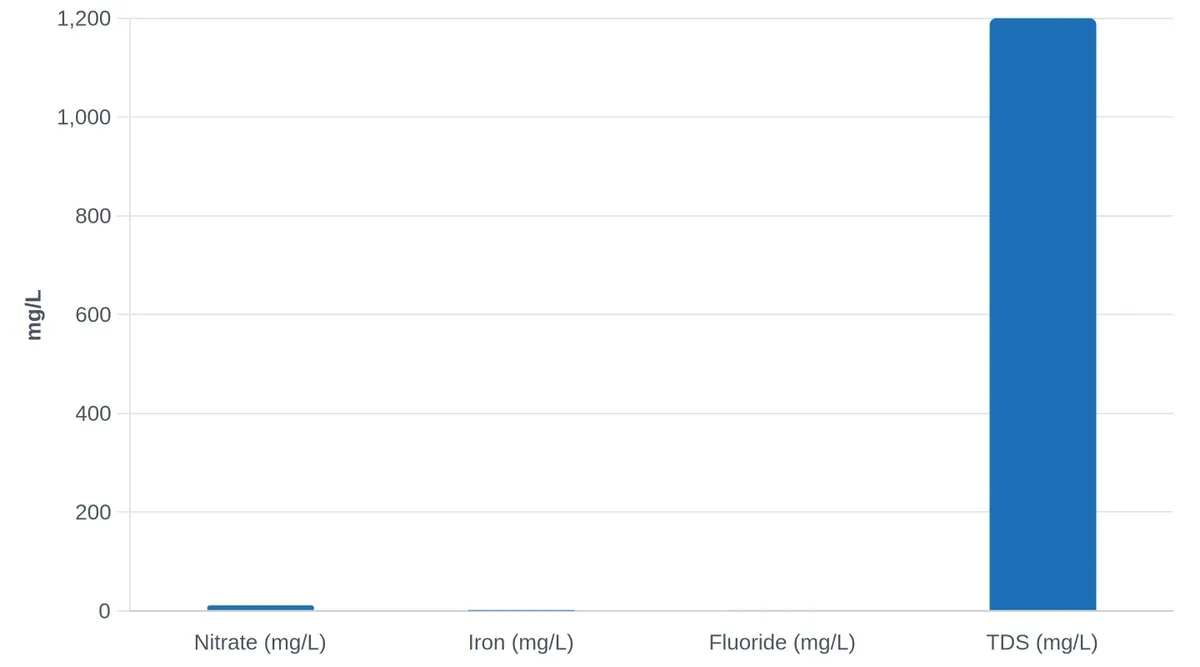
SANS 241:2015 is South Africa’s national drinking water standard, maintained by the Department of Water and Sanitation. It is not a suggestion. If you supply water from a private source for human consumption, this standard applies. The key parameters most frequently breached by wellpoint and borehole water in South Africa are:
| Parameter | SANS 241 Limit | Common SA Failure Scenario | Source |
|---|---|---|---|
| E. coli / Faecal coliforms | 0 per 100 mL | Peri-urban, agricultural, near informal settlements | Envirocare Laboratory |
| Nitrate (NO3-N) | Max 11 mg/L | Farming areas, Free State, Limpopo livestock zones | DWS / Envirocare |
| Iron (Fe) | Max 0.3 mg/L | Cape Flats sandstone, Bushveld, Highveld | SANS 241:2015 / Envirocare |
| Fluoride (F) | Max 1.5 mg/L | Limpopo, Northern Cape deep aquifers | DWS / fluoridealert.org |
| Total Dissolved Solids (TDS) | Max 1,200 mg/L | Karoo basin, coastal aquifers with saltwater intrusion | Envirocare Laboratory |
Two points about this table are worth pausing on. First, the E. coli limit of zero per 100 mL means any detection at all is a failure. There is no “trace amount” that is acceptable for water used for drinking, cooking, filling a children’s pool, or topping up a household water system. Second, the iron limit of 0.3 mg/L is extremely tight. Field samples regularly come in at 2 to 5 mg/L in affected areas, that is 7 to 17 times the allowable limit, and the visible result is exactly what owners describe.
“Water stained everything it touches to a rusty yellow colour and smells like rusting brass.”
RedViking, describing iron and manganese failures in Table Mountain Sandstone and hard rock areas
Iron at those concentrations will also react spectacularly with pool chlorine, turning pool water green within hours. One owner put it plainly: “I already use it in the pool (makes it bright green but otherwise fine)… There’s enough iron to have stained our walls, one that was repaired and painted less than a year ago is already somewhat orange.” That is not a pool chemistry problem. That is an untreated water quality problem.
Regional compliance: what the data actually shows
Free State (Mangaung and agricultural belts)
The Water Research Commission tested 75 dairy farms in the Mangaung region. The results, published via scielo.org.za, are stark: 37 out of 75 farms exceeded SANS 241 nitrate and nitrite limits, 45 failed total coliform thresholds, and 22 failed on E. coli specifically. In percentage terms, roughly 49% exceeded nitrate limits, 60% failed coliforms, and 29% had detectable faecal E. coli. If you are drawing groundwater in any densely farmed part of the Free State, nitrate and biological contamination are your first two tests, not your last resort.
The mechanism is well understood: livestock effluent and fertiliser applications infiltrate shallow aquifers, especially after rain events. Wellpoints drawing from depths of less than 20 metres are most exposed.
Limpopo (Vhembe District and fluoride belt)
Research published on researchgate.net by the University of Venda and Tshwane University of Technology found that 33.3% of tested rural boreholes in the Vhembe District were positive for diarrhoeagenic E. coli over a five-month monitoring period. This is a structural problem in areas where pit latrines sit above shallow unconfined aquifers.
Limpopo also sits within South Africa’s fluoride belt. Deep aquifers in crystalline basement geology can return fluoride readings well above the 1.5 mg/L SANS 241 limit. Chronic fluoride ingestion above this level causes dental and skeletal fluorosis. Reverse osmosis is the only reliably effective household treatment for fluoride at elevated concentrations. A standard activated carbon filter does not remove fluoride.
“Many boreholes in SA, especially in areas near informal settlements or livestock farms are laced with coliform contamination, so even though it looks and taste good, you may end up with dysentery or worse.”
MyBroadband forum user, warning about localised land-use risks to groundwater
Gauteng (peri-urban fringes and Dinokeng)
Gauteng’s density creates a layered contamination risk. Near-surface aquifers in the peri-urban belt around Pretoria, Centurion, and Midrand receive infiltration from ageing municipal sewer infrastructure, informal settlement sanitation, and decades of agricultural legacy. One owner sounded an explicit warning:
“Always check the water situation… Do also a water test. We had drinkable water at the cottage. Now it is slightly contaminated with coli. If you have a bore hole in or near Dinokeng check your water. On a large area around that area the water has one element/mineral a bit over the recommended level.”
Jouko, on agricultural and rural contamination in the Dinokeng area
The Hammanskraal cholera crisis (which was driven by municipal infrastructure failure rather than private boreholes, but drew attention to all groundwater quality questions in the north of Tshwane) has made Pretoria-area homeowners far more vigilant. The response from one owner captures the prevailing mood:
“After Hammanskraal I didn’t trust anything. They tested ours, fitted a R2k filter, and now I let my kids drink it.”
Nomsa T. (Pretoria), via waterpointsa.co.za
Gauteng also sits on dolomite geology in places, which produces hard water with elevated calcium and magnesium. TDS readings of 600 to 900 mg/L are common in parts of the West Rand and Krugersdorp. Still within SANS 241 limits, but hard enough to scale geysers and clog irrigation drippers over time.
Western Cape (Cape Flats aquifer and Mountain belt)
The Cape Flats aquifer is heavily over-abstracted in places and receives recharge from stormwater and leakage from ageing infrastructure. Iron and manganese are the dominant aesthetic failures in Table Mountain sandstone geology, as confirmed repeatedly by Cape-area owners. One owner in Cape Town described the treatment solution that finally worked:
“My journey and 2 cents worth… My source borehole water was initially tested to have high dissolved iron and manganese, after my filtration process, my drinking water is above municipal standards. So, water is first ozonated, kills bacteria, viruses with added benefit of making metals insoluble so they can be filtered out…”
Kawak, on successful filtration following a SANS 241 test
Cape Town’s municipal water tariff at the 45th kilolitre tier sits at R162 per kilolitre, according to Borehole Payback data. That is a powerful financial incentive to use wellpoint water for irrigation. But the iron and sediment load in many Cape aquifers means unfiltered water causes chronic problems with pool equipment and drip irrigation systems.
The Karoo (radon and TDS risk)
Shallow Karoo Basin aquifers carry a specific risk that is rarely discussed in the wellpoint marketing materials: elevated radon. Research from the University of Pretoria recorded baseline pre-fracking radon levels of up to 183 Bq/L in Karoo aquifer samples, and measurements in the Greater Timbavati catchment showed groundwater radon concentrations ranging from 188 to 51,400 Bq per cubic metre. The WHO guideline for drinking water radon is 100 Bq/L. Note that SANS 241:2015 does not currently specify a radon limit, so a standard SANS 241 panel will not detect this. Karoo homeowners who intend to drink borehole water should request a specific radiological parameter test from their SANAS-accredited lab.
TDS in Karoo groundwater is also frequently elevated above 1,000 mg/L due to the evaporite geology of the basin. Reverse osmosis is effective for both TDS reduction and partial radon removal via degassing.
Drinking water versus irrigation versus kids’ pools: the rules are not the same
A common and understandable misunderstanding is that wellpoint water which passes a basic “irrigation safe” assessment is also safe for other household uses. It is not. The relevant standard for each application:
- Drinking and cooking: Full SANS 241 compliance required. Zero E. coli. All chemical parameters within limits.
- Garden irrigation (non-edible plants): South Africa’s SANS 1049 and the DWS guidelines for reclaimed water allow higher TDS, higher coliform counts, and elevated iron for subsurface or surface irrigation of lawns and ornamentals. Many wells that fail SANS 241 are perfectly usable for irrigation.
- Vegetable garden irrigation: E. coli matters here. Overhead irrigation of leafy greens with E.-coli-positive water presents a direct human health risk. The same zero-E.-coli standard applies in practice.
- Children’s swimming pools: Per Envirocare Laboratory, the SANS 241 E. coli limit of zero per 100 mL applies. Iron above 0.3 mg/L will cause immediate pool water discolouration and react with chlorine. Filling a pool directly from an untested wellpoint is genuinely risky if children will swim in it.
- Laundry: High iron will stain white fabrics permanently within weeks. High manganese has the same effect. One owner noted a practical workaround: “My wellpoint water has what I suspect lime in it. We let the water settle in the tanks before using the water for laundry.” Settling removes coarse particulate but does not reduce dissolved iron or manganese meaningfully.
A pool contractor offered the clearest professional summary:
“Using a well point/borehole to refill a swimming pool is never a good idea unless it’s treated first to remove chemical imbalances and other nasty stuff before it gets pumped into the pool. That being said, I always recommend to my clients that they pump the water into a holding tank first, treat it there, and then pump…”
SA Pool Contractor on MyBroadband
The holding tank approach makes financial sense. It gives you a place to dose and settle before any use, keeps your pool and appliances protected, and lets you run a pump at off-peak electricity times.
How to get a credible SANS 241 test (and avoid the 24-hour trap)
A SANS 241 test is only valid if it is conducted by a SANAS-accredited laboratory. The South African National Accreditation System publishes the list at sanas.co.za. Do not use a non-accredited lab if your intention is to certify your water for consumption or comply with any permit condition.
Test costs vary by scope and service level:
| Test tier | What it covers | Cost range | Source |
|---|---|---|---|
| Basic potability / chemistry only | pH, TDS, key metals, no microbiology | R1,000 to R1,650 | H2O Guru |
| Full SANS 241 panel (owner handles sampling) | Chemistry plus E. coli and total coliforms | R1,500 to R3,000 | H2O Guru / SANS 241 |
| Extended basic panel | Full panel plus additional trace metals, organics | Up to R4,278 | sanswater.co.za |
| Turnkey concierge service | Lab sends technician, handles courier and report | Up to R4,200 | Water Experts |
The single most common testing mistake South African owners make is not getting the microbiological sample to the lab in time. According to MyBroadband forum experience, microbiological samples must reach the lab within 24 hours of collection and must be kept chilled below 10 degrees Celsius in transit. Results for a full panel take 7 to 12 working days, per Cape Water Tech.
One owner learned this the expensive way:
“It is expensive and must be tested within 24 hours after the sample is collected… They couldn’t do the microbial tests as the sample was too old.”
AchmatK on MyBroadband, on lab logistics and the 24-hour limit
The practical advice: if you are submitting samples yourself, call the lab before you collect. Confirm their cut-off time for same-day receipt, use a sterile lab-supplied bottle for the microbiological sample, and pack it in an ice-cooler for transport. Do not collect on a Friday unless the lab has Saturday intake.
What treatment actually costs, the honest numbers
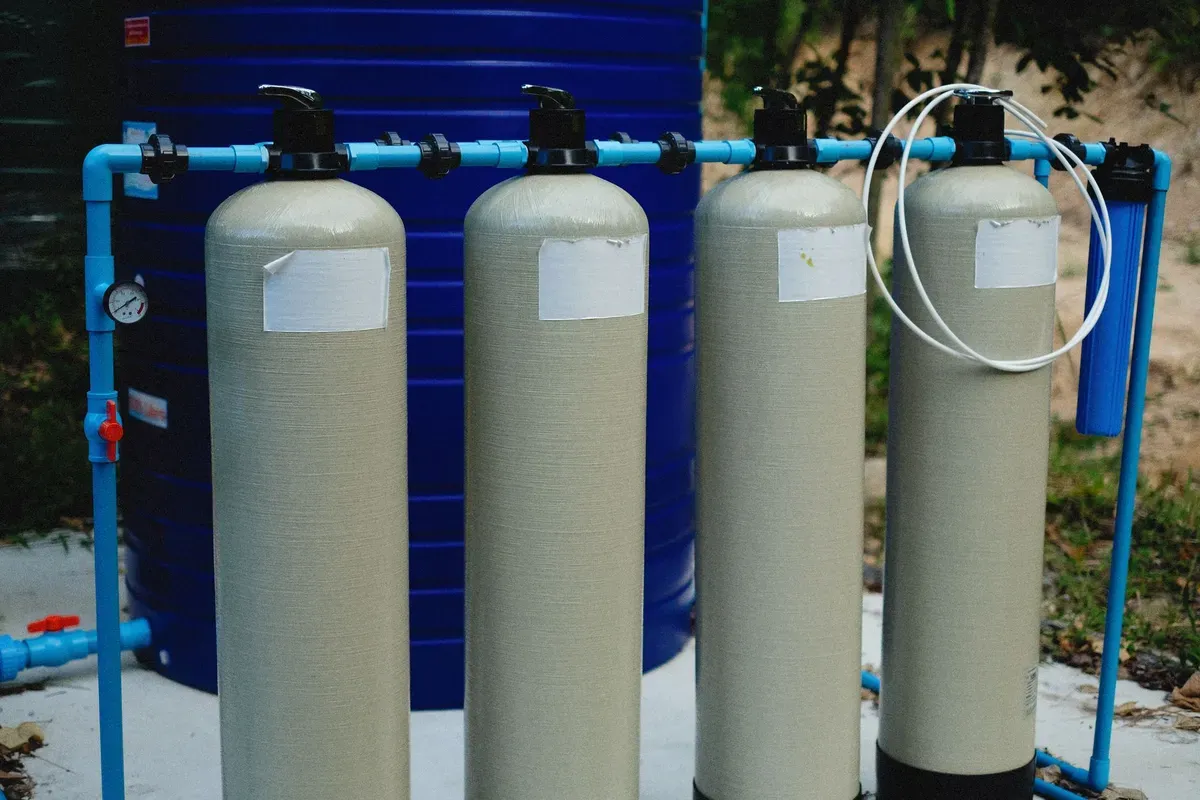
Once your test results are back, the treatment cost depends entirely on what failed. This is where the honest conversation diverges sharply from the marketing:
- E. coli only, no chemical failures: UV sterilisation plus a sediment pre-filter. Budget R2,000 to R5,000 installed. Annual UV lamp replacement adds R400 to R800 per year.
- High iron and manganese: Oxidising filtration (ozonation or aeration plus filter media such as DMI-65 or Birm) is the standard approach. Systems start around R8,000 and scale upward for high flow rates. Filter media requires periodic replacement.
- High fluoride or high TDS: Reverse osmosis. Entry-level domestic RO systems start at R4,140 according to Reverse Osmosis supplier data. A whole-house RO system capable of high flow rates costs significantly more. RO membranes require replacement roughly every two to three years.
- Multiple failures (iron, E. coli, and TDS combined): This is the scenario one Cape Town owner described: “our well point water really looked bad so we probably would’ve needed to replace big blue filters very frequently… opted for the auto backwash valves in the dmi-65, gac and sand (zeolite) vessels.” Multi-stage systems at this level cost R15,000 to R40,000 installed.
Filter maintenance is an ongoing cost that surprises most owners. One Reddit user shared a concrete figure: “Need to change our filters every 6-9 months costs about R2500 per filter change for all filters.” Over three years, that is R5,000 to R10,000 in filter consumables alone, before any membrane or lamp replacements.
One owner who ran a careful cost analysis concluded:
“My justification for the whole exercise was water security, so I’m not really bothered about ‘savings’ but by the time I factor in the pump running costs along with everything else I’m probably breaking even.”
bwana on MyBroadband, on the true financial return of residential groundwater systems
That is an honest and defensible outcome for water security. It is not what the sales brochures say.
There is, however, a real savings case for irrigation-only wellpoints in high-tariff municipalities. A standard monthly water bill for 30 kilolitres per month in eThekwini runs to R2,253, according to Borehole Payback data. Cape Town’s 45th-kilolitre rate is R162 per kilolitre. If a wellpoint eliminates garden irrigation from your municipal bill, typically 30 to 60% of consumption for a suburban household, the payback on a wellpoint installation costing R6,850 to R12,000 (WaterPointSA pricing) is measured in months, not years, before treatment costs. One owner confirmed the headline number: “Total cost with wellpoint and pumps around +-15k however dads water bill dropped by more than 50%.” (Tabac, MyBroadband)
Cost-of-ownership comparison: wellpoint water for different uses
| Use case | Installation (WaterPointSA) | Testing cost | Treatment cost (if needed) | 3-year hidden costs | Realistic savings potential |
|---|---|---|---|---|---|
| Lawn and ornamental irrigation only | R6,850 to R12,000 | R1,000 to R1,650 (basic) | Low to nil | R5,000 to R15,000 | High, eliminates highest-tariff municipal volume |
| Children’s pool top-up | R6,850 to R12,000 | R1,500 to R3,000 (full SANS 241) | R2,000 to R8,000 (UV or iron filter) | R5,000 to R20,000 | Moderate, depends on pool size and tariff |
| Drinking water (full household) | R6,850 to R12,000 | R1,500 to R4,278 (extended SANS 241) | R4,140 to R40,000 (RO or multi-stage) | R10,000 to R30,000-plus | Low to break-even over 3 years in most scenarios |
| Drinking water (point-of-use RO only) | R6,850 to R12,000 | R1,500 to R3,000 | R4,140 (entry-level RO under sink) | R5,000 to R12,000 | Good, rest of house uses wellpoint for non-drinking uses |
Note: hidden ownership costs of R5,000 to R30,000-plus over three years (piping, controller, testing, filtration, registration) are per WaterPointSA estimates and will vary with water chemistry. A replacement 0.90 kW Metabo jet pump costs R1,999 (Brights Hardware, 2026 pricing) and typically needs replacement every four to eight years depending on run hours and water quality.
One owner validated the split-use approach directly: “If you are planning to use it for drinking then reverse osmosis purifier at the drinking point goes without saying!” (Mark Mentor, PowerForum). Running your wellpoint water for irrigation and laundry while using a point-of-use RO for drinking water is genuinely the most cost-effective configuration for households where the full panel reveals chemical failures.
Another owner confirmed that honest testing by the right company prevents expensive over-engineering:
“Another company quoted me R28k. These guys tested it and said a R1,800 filter was all I needed. It was.”
Johan B. (Centurion), via waterpointsa.co.za
What degrades over time: the re-testing obligation
A clean test result is not a permanent certification. Groundwater quality changes with rainfall patterns, surrounding land use, and aquifer drawdown. The most sobering data point on this is anecdotal but consistent across multiple forums:
“We have a borehole at work, tested the water quality about 15 years ago, was pristine. Tested it again around 3 years ago, full of sewage runoff, ecoli and various other pathogens.”
MyBroadband forum user, on biological contamination and groundwater quality degradation over time
Best practice, supported by the DWS, is to retest annually for microbiological parameters and every two to three years for the full chemical panel. If your neighbourhood undergoes development, new road construction, or you notice a change in taste, colour, or smell, test immediately, do not wait for the scheduled interval. A basic potability retest costs R1,000 to R1,650 (H2O Guru) and takes less than two weeks to return results.
Also test after any major rainfall event if your wellpoint is shallow (less than 15 metres). Surface contamination infiltrates shallow aquifers fastest during high-rainfall periods, which is when most people believe their water is most plentiful and therefore most safe. The reverse is often true for biology.
The conversation your installer should be having with you (and often is not)
A responsible wellpoint installer tests before and after installation. The test before installation tells you whether the aquifer you are tapping is viable for your intended use. The test after installation confirms that the drilling and casing process itself did not introduce surface contamination into the aquifer.
If an installer quotes only on hardware and drilling without mentioning a SANS 241 test, that is a signal. The test is not optional if you intend any human contact use. Drilling costs in 2026 run from R350 to R1,500 per metre (Borehole Payback), and a full Gauteng or Pretoria installation runs R60,000 to R120,000 for a deep borehole with pump, casing, and pressure vessel. A SANS 241 test at R1,500 to R3,000 is less than 5% of that investment for the assurance that the water is actually safe to use as intended.
WaterPointSA budget wellpoint installations start at R6,850 and premium installations at R12,000. At those price points, a R2,200 full SANS 241 test represents between 18% and 32% of the installation cost. That is not an optional extra. It is the due diligence that determines whether the whole investment makes sense for its intended purpose.
Summary: what this means for your buying decision
The evidence across all regions and use cases points to the same conclusion: wellpoint and borehole water in South Africa is frequently useful and frequently profitable, for irrigation, pool top-up (treated), and household backup, but it is not automatically safe to drink. The 73% first-test failure rate from Borehole Pros is the figure that should sit at the front of every buying decision, not as a reason to avoid wellpoints, but as the reason to test before you use.
The clearest framework for any buyer is:
- Determine your intended use before you sink the wellpoint.
- Commission a SANS 241 test from a SANAS-accredited lab that matches the scope of your use (basic chemistry for irrigation only; full panel for any human contact use).
- Get treatment recommendations based on your actual results, not a generic upsell.
- Build re-testing into your annual maintenance calendar.
- Never rely on colour, smell, or taste as a proxy for safety.
Your wellpoint’s water quality depends on your specific geology, your depth, and the land use within several hundred metres of your property. The regional patterns in this article point you toward the right questions to ask. Only a test answers them.
To find out what water quality risks are typical for your specific address and which treatment options are proportionate to what is actually in your water, check my address on the WaterPointSA tool.
Get started
Does your wellpoint meet SANS 241 standards for your region?
Vetted local installers · honest advice first